
Los Arcos to Viana: Day 8 of the Camino Francés

Walking from Los Arcos to Viana takes Camino Francés pilgrims through the open countryside of Navarra and the small towns of Sansol and Torres del Río. The route measures approximately 18 kilometers, or 11 miles, and includes rolling hills, exposed farmland, and one of the most distinctive Romanesque churches along the Camino.
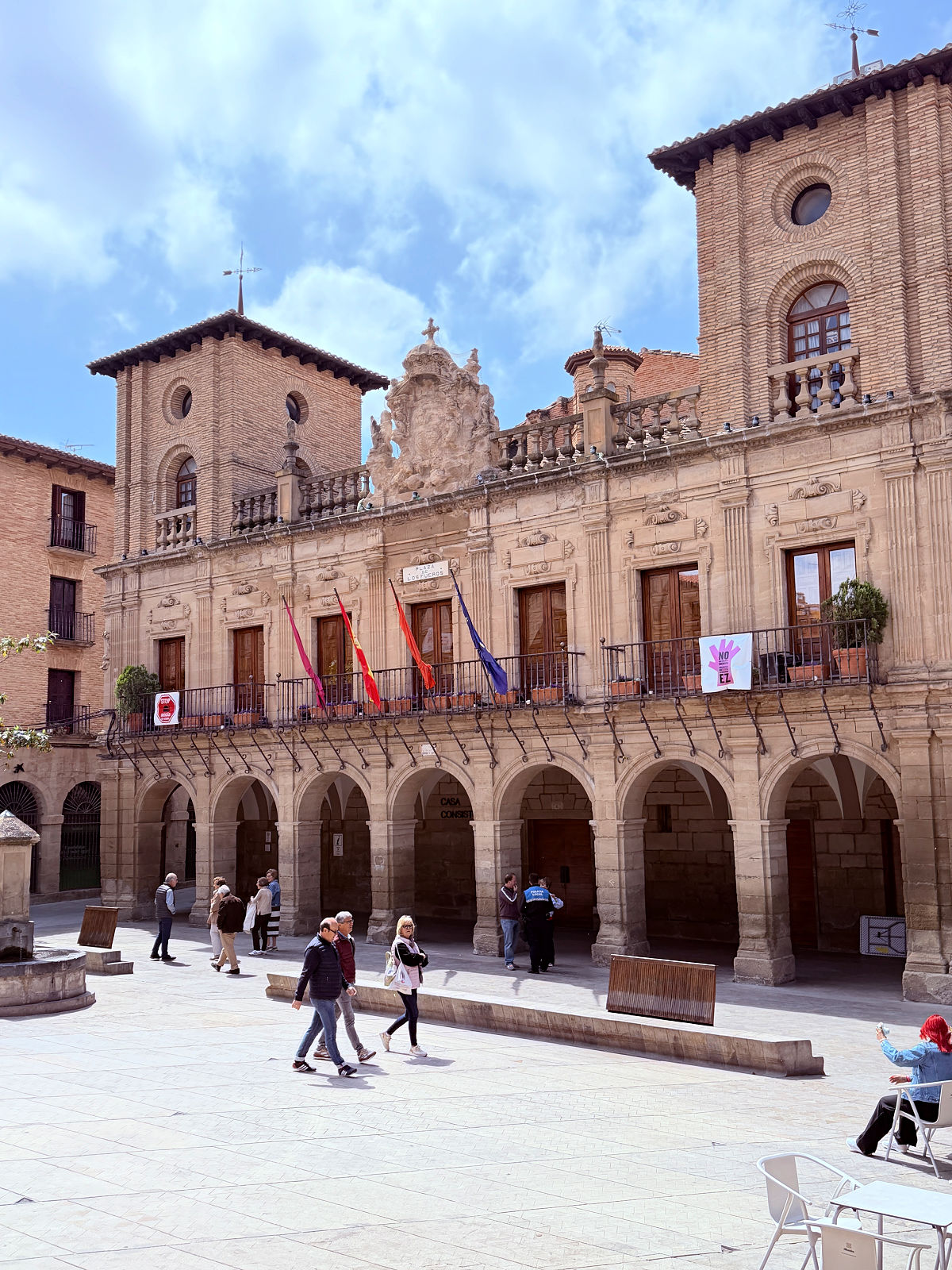
This was Friday, May 1—the twelfth day of our trip and our eighth day of walking. May Day is a national holiday in Spain, so many businesses were closed. Fortunately, locked doors did not prevent us from enjoying the Spanish countryside, a few drops of rain, and incredibly good company.
My step count for the day was 33,088. Apparently an 11-mile Camino stage requires several thousand bonus steps for finding food, locating bathrooms, checking into an albergue, and wandering around the destination after claiming you are finished walking.
Follow the full journey in my Camino de Santiago series.
Los Arcos to Viana Route at a Glance
- Date: Friday, May 1
- Camino walking day: Day 8
- Starting point: Los Arcos, Spain
- Ending point: Viana, Spain
- Distance: Approximately 18 kilometers (11 miles)
- My recorded steps: 33,088
- Places along the route: Sansol and Torres del Río
- Terrain: Open farmland, rolling hills, village streets, and a few steeper climbs and descents
- Where we stayed: Albergue Izar
A Holiday Morning in Los Arcos
Because it was a holiday, we could not count on cafés and shops being open. We ate breakfast from food we had purchased earlier and prepared cold-cut sandwiches to carry with us.
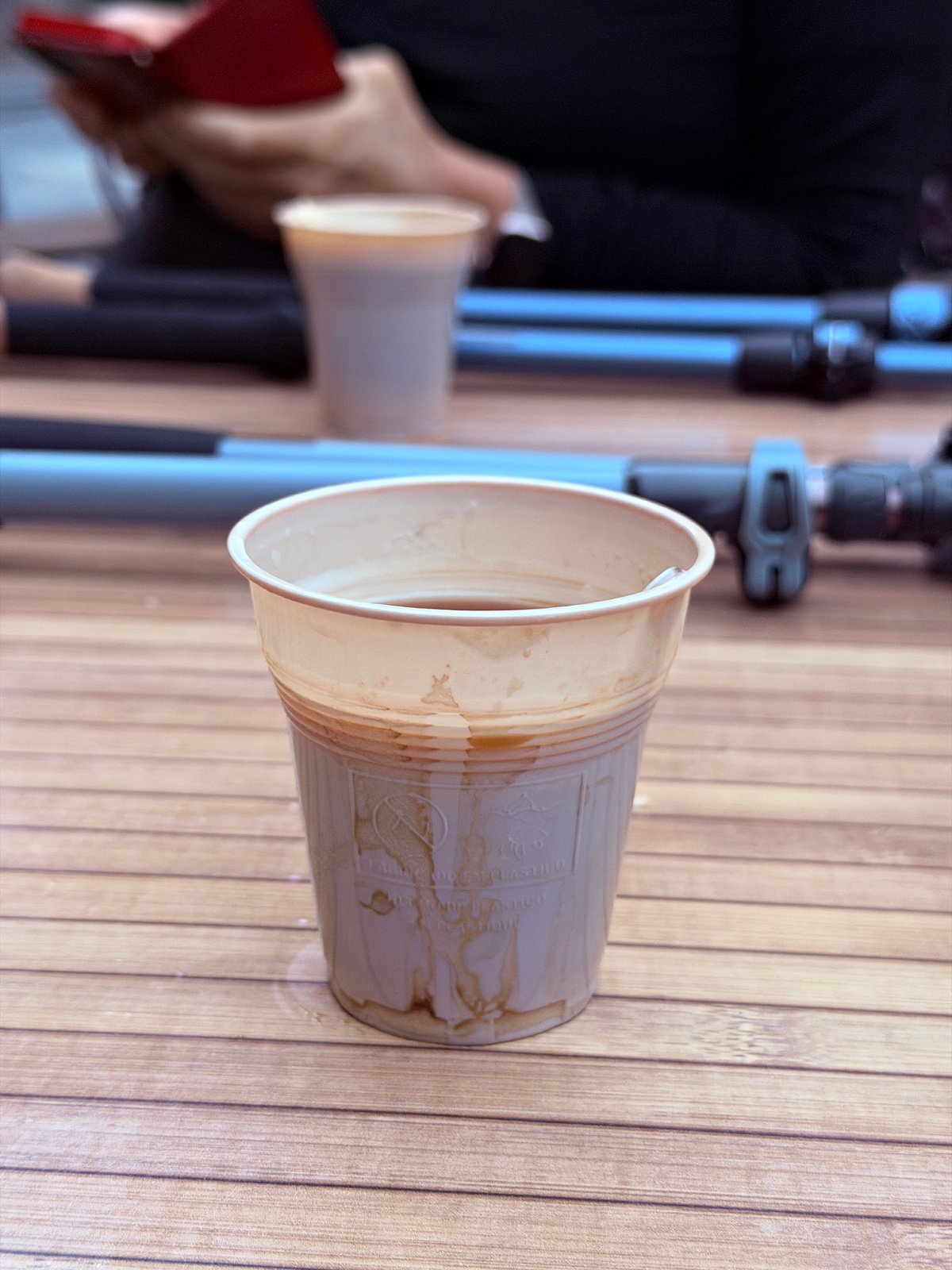
It was not the sort of breakfast that inspires an elaborate menu description, but it accomplished the important work of feeding us before another day on foot. The Camino rewards people who buy food before a holiday. Everyone else gets an unplanned fasting experience.
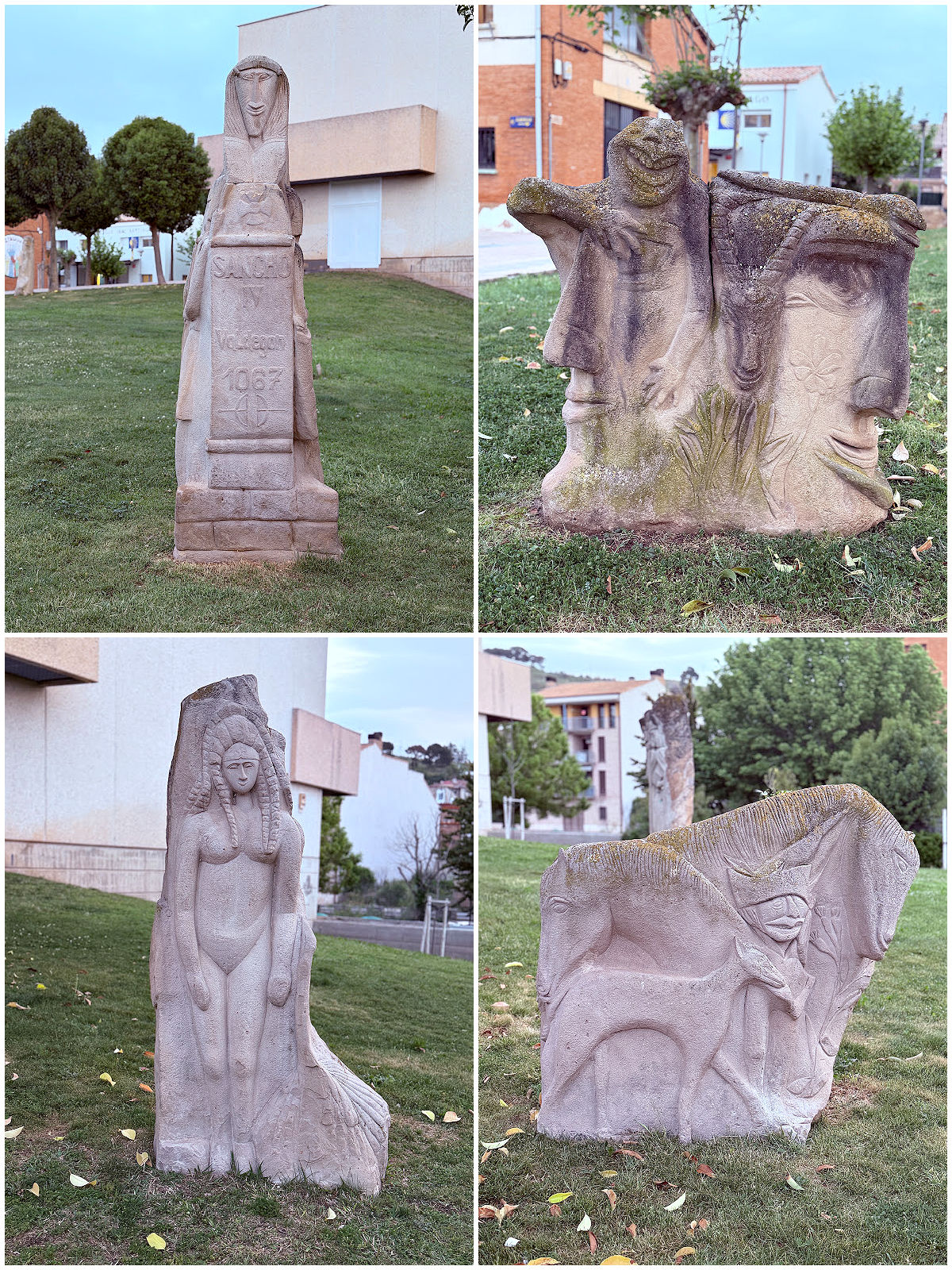
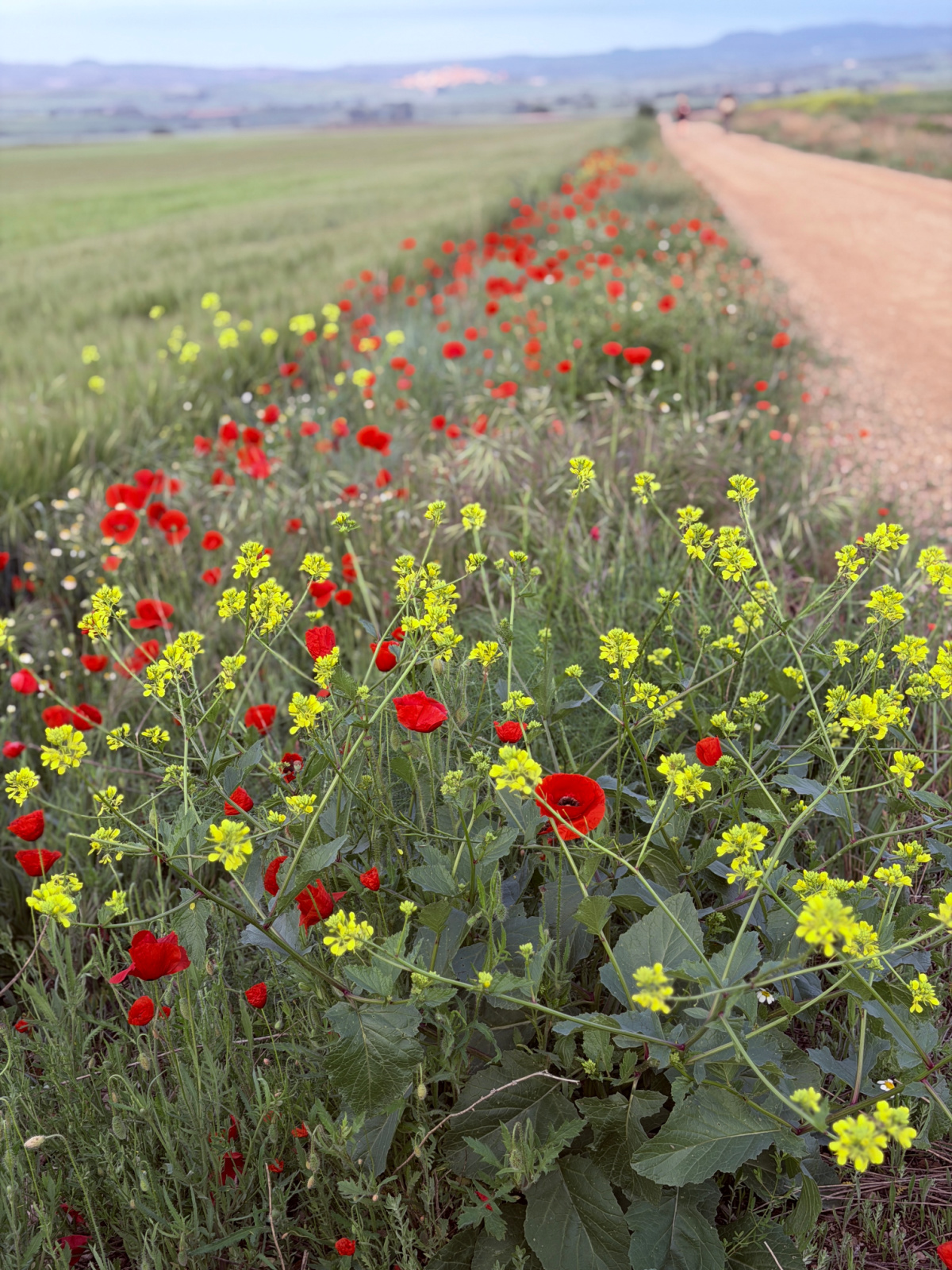
We left Los Arcos and headed into the countryside. Red flowers and poppies brightened the fields along the trail. A few drops of rain fell during the day, but the weather never became the thunderous production we had experienced leaving Estella.
A Necessary Stop in Sansol
The first village on the route was Sansol. By then, finding a bathroom had become a priority, and fortunately, I found one.
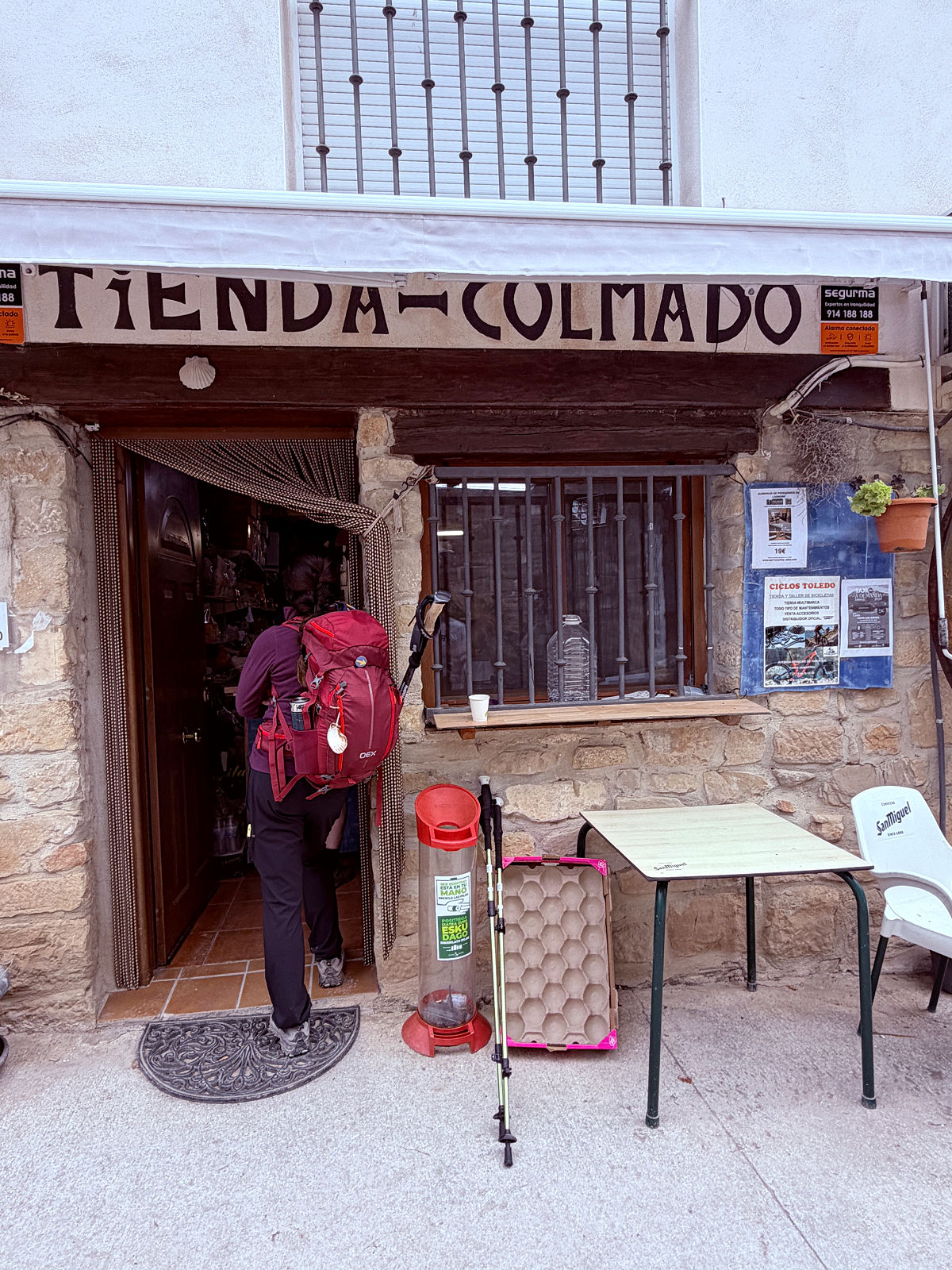
Camino posts tend to emphasize ancient churches, beautiful landscapes, and spiritual discoveries. Those things matter. So do available bathrooms. Anyone who has walked mile after mile between villages understands that the two categories are not mutually exclusive.
From Sansol, we could see Torres del Río across the valley. The towns sit less than a kilometer apart, although the descent and climb between them make the distance feel less neighborly than it appears.
Torres del Río and One Last Pain au Chocolat
In Torres del Río, I found what would be my final pain au chocolat of this portion of the Camino. After days of chocolate croissants appearing regularly at breakfast stops, the last one deserved recognition.
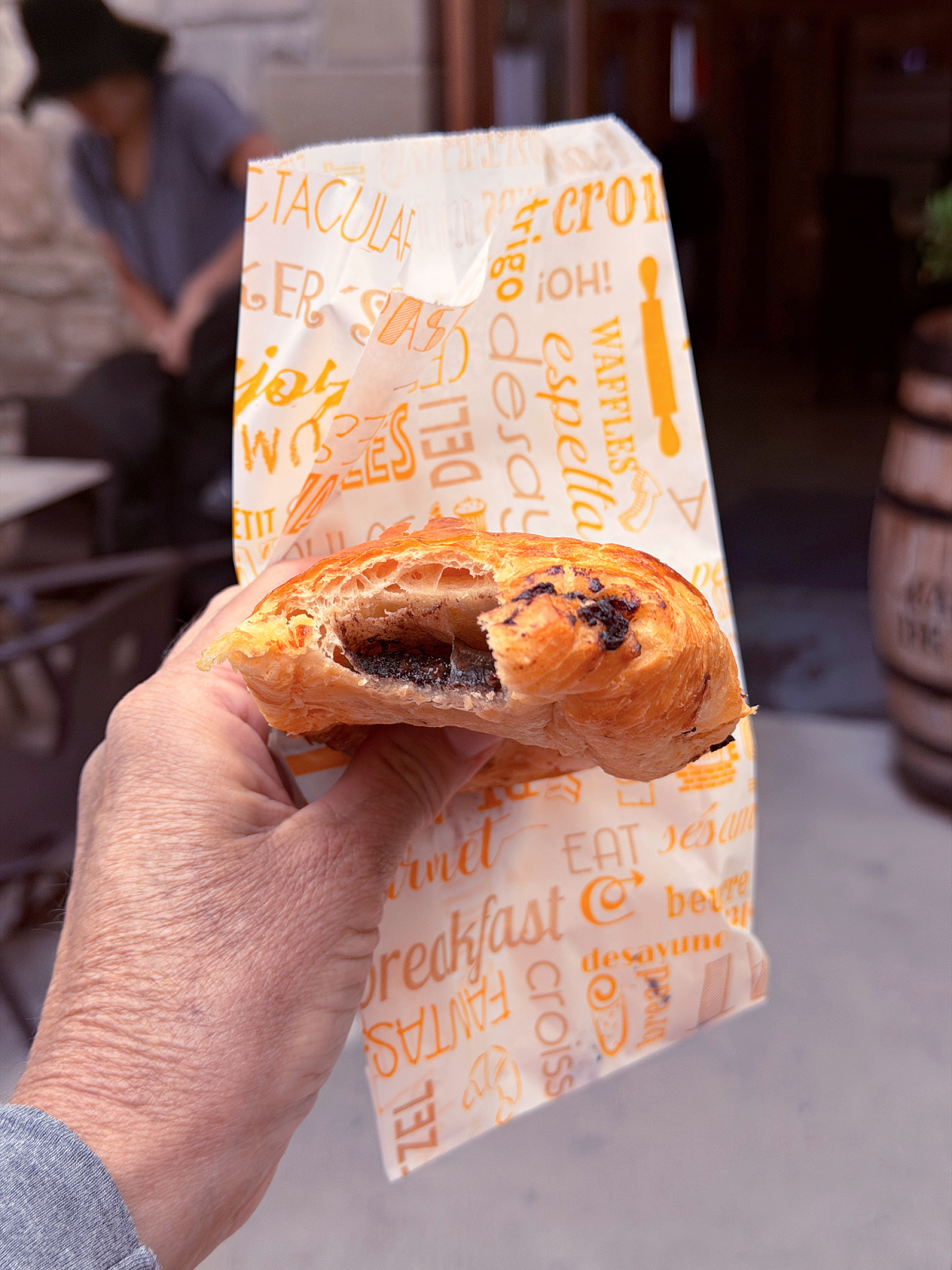
We also ran into one of our Camino friends at a restaurant. Even on a holiday with many places closed, members of our Camino family had a way of appearing wherever food or a place to sit could be found.
Iglesia del Santo Sepulcro
While in Torres del Río, we visited the Iglesia del Santo Sepulcro, or Church of the Holy Sepulchre. The small octagonal church dates to the 12th century and is one of the most unusual Romanesque buildings on the Camino Francés.
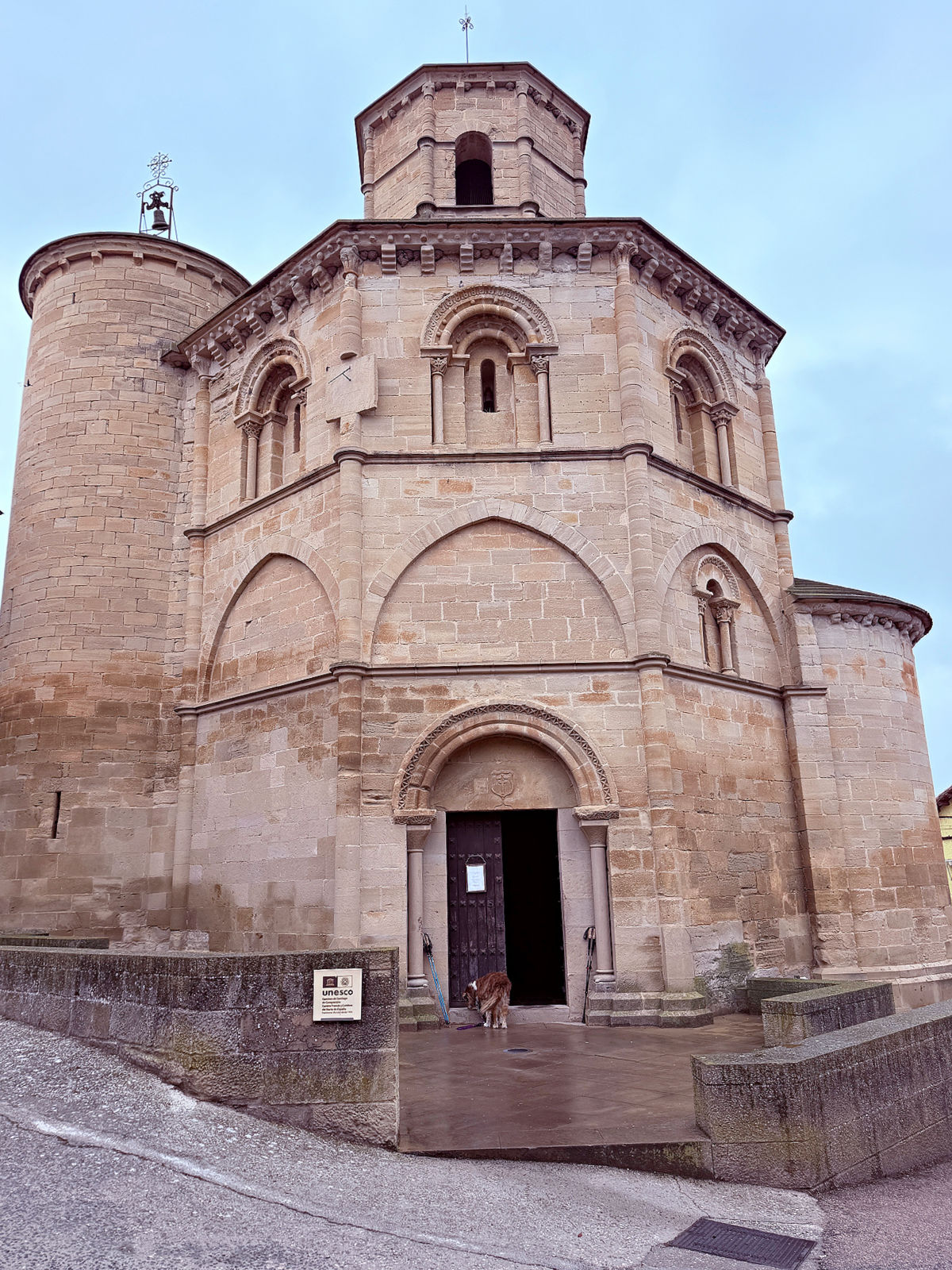
Its octagonal design directly echoes the Church of the Holy Sepulchre in Jerusalem. Inside, the vault is unlike anything else on the Camino—ribs of Hispano-Muslim design cross to form an eight-pointed star, with light filtering through delicate stone grillwork above. Historians still debate whether Templar or Hospitaller knights were behind its construction; no one really knows for certain, which somehow makes the tiny church feel even more mysterious.
Sound familiar? The Codex Calixtinus, the same 12th-century pilgrim guidebook that warned medieval travelers about the Río Salado back on Day 6, also warned pilgrims about the river here. Apparently nine hundred years ago, every river along this stretch had a reputation to protect.
Its compact design stands apart from the larger churches we had encountered in other towns. It would be easy to hurry past Torres del Río while concentrating on the remaining miles to Viana, but the church made the village worth more than a quick rest stop.
The Camino kept proving that some of its most interesting places were not in the largest cities. Sometimes they were tucked into a small village between a bathroom break and a pastry.
Resting in the Woods
After leaving Torres del Río, the route continued across rolling, exposed countryside with repeated climbs and descents. At one point, we stopped to rest in a wooded area and encountered another familiar pilgrim.
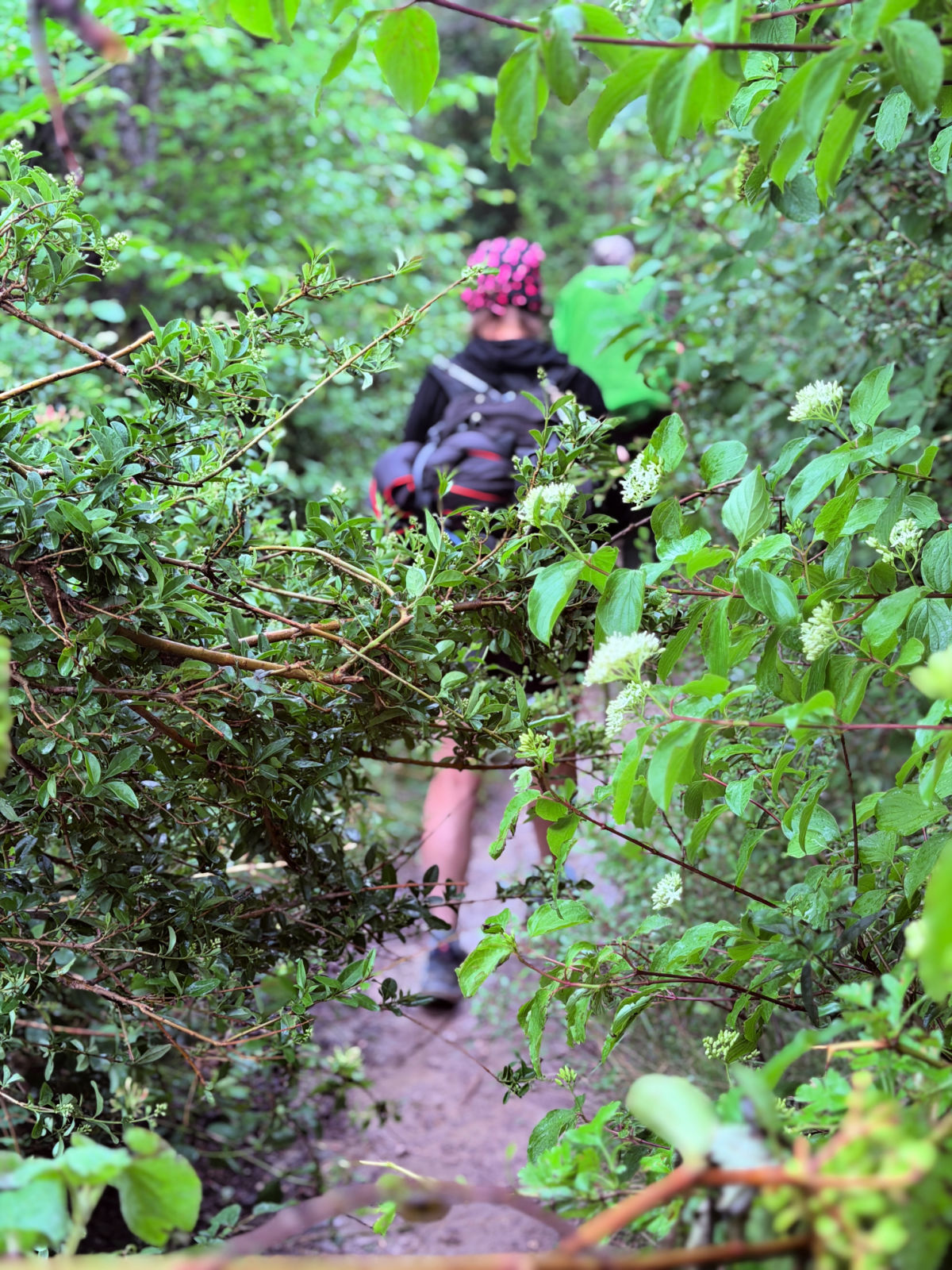
These chance meetings had become part of the rhythm of the Camino. Someone might be ahead of us in the morning, behind us after lunch, and sitting beside us later in the day. We were all walking our own Camino, but our routes kept overlapping.
Eventually, we reached Viana alongside several members of our Camino family. Good company made the miles easier, even when the terrain did not.
Staying at Albergue Izar
We stayed at Albergue Izar, a private pilgrim albergue near Viana’s historic center. Diane and I slept in a midsize bunk room with two Austrian sisters and Korean pilgrims.
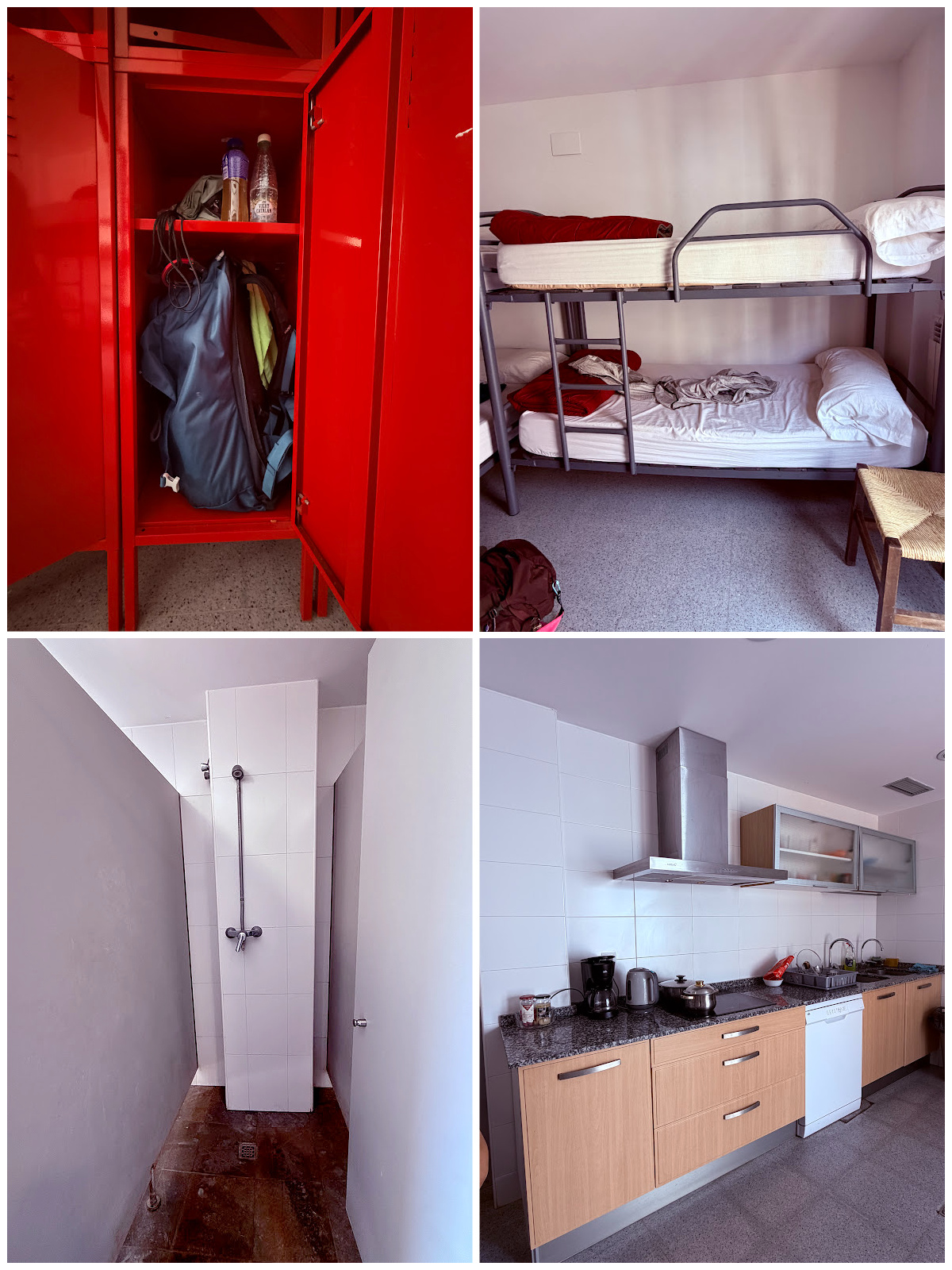
Diane ended up with a top bunk. After I had paid for an extra bed in Zubiri to avoid that exact situation, I appreciated her willingness to take one for the team.
By this point, sharing a room with people from several countries felt completely normal. Camino lodging compresses the world into a collection of bunk beds, backpacks, charging cables, and people quietly trying not to wake one another.
A Practical Shopping Trip
We stopped at a nearby bar and I enjoyed a bag of Chaskis, a salty packaged snack, along with a Radler. We then ventured into town where we did a little bit of shopping and I bought an ice cream cone and deodorant. Essentials, you know?
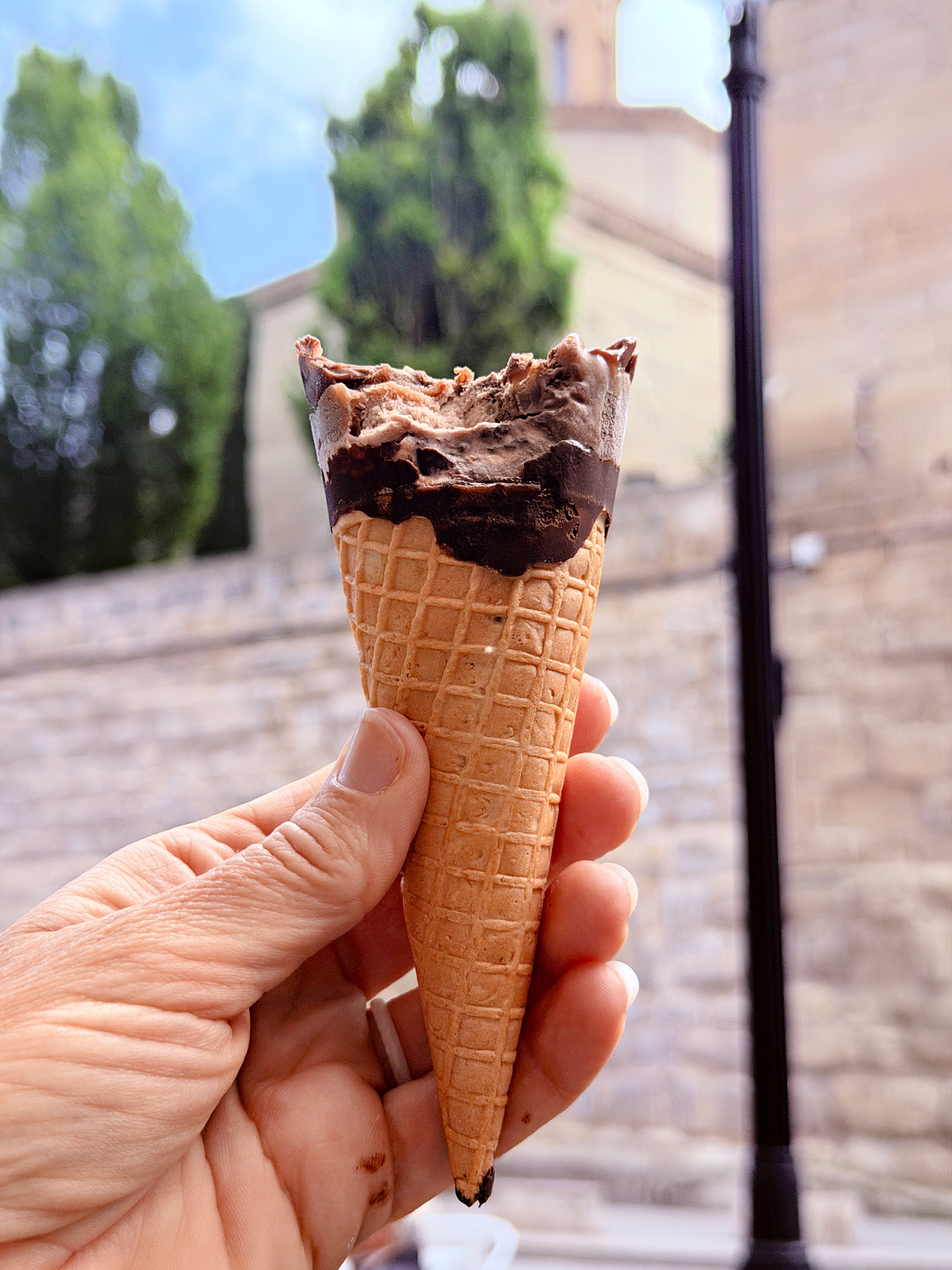
After eight days of walking, deodorant was arguably a community service.
Dinner at the Albergue
Dinner was served at the albergue and included wine, garbanzo soup, pasta, thin pork chops, and yogurt. The pork chops were thin but juicy, and the meal gave us plenty to eat after more than 33,000 steps.
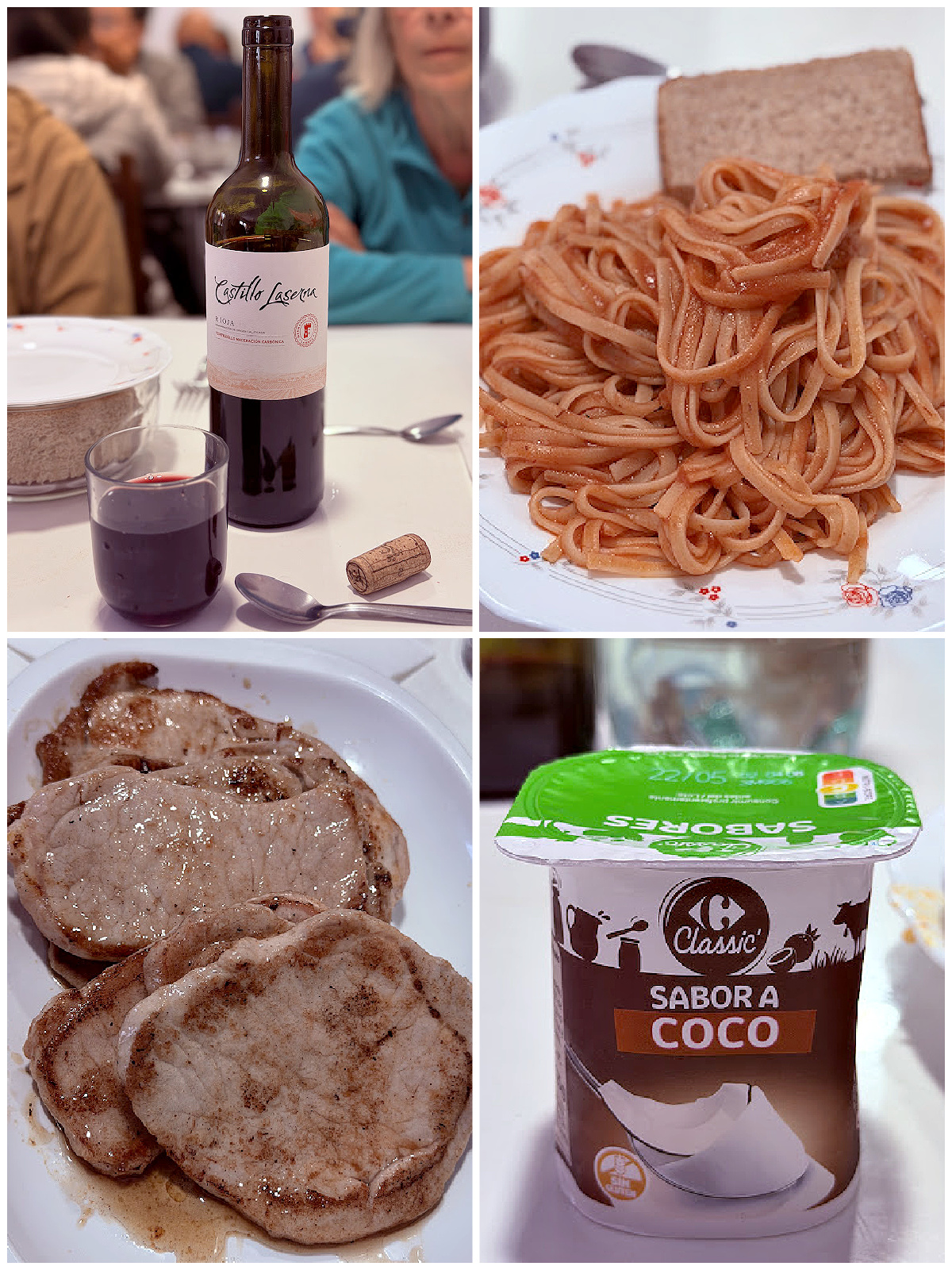
A communal meal also meant that we did not have to search for an open restaurant on a national holiday. We could stay where we were, eat with other pilgrims, and let someone else worry about what was open.
A Notorious Neighbor
Before turning in, we learned Viana holds a surprising claim to fame: Cesare Borgia—son of Pope Alexander VI, and the real-life inspiration for Machiavelli’s The Prince—is buried here. He was killed in an ambush just outside the town walls in 1507 while fighting for his brother-in-law, the King of Navarre, and a marble slab marking his grave still sits at the Iglesia de Santa María. It’s a strange thing to learn on a national holiday between a chocolate pastry and a communal albergue dinner—but that’s the Camino for you.
Exploring the Ruins of San Pedro
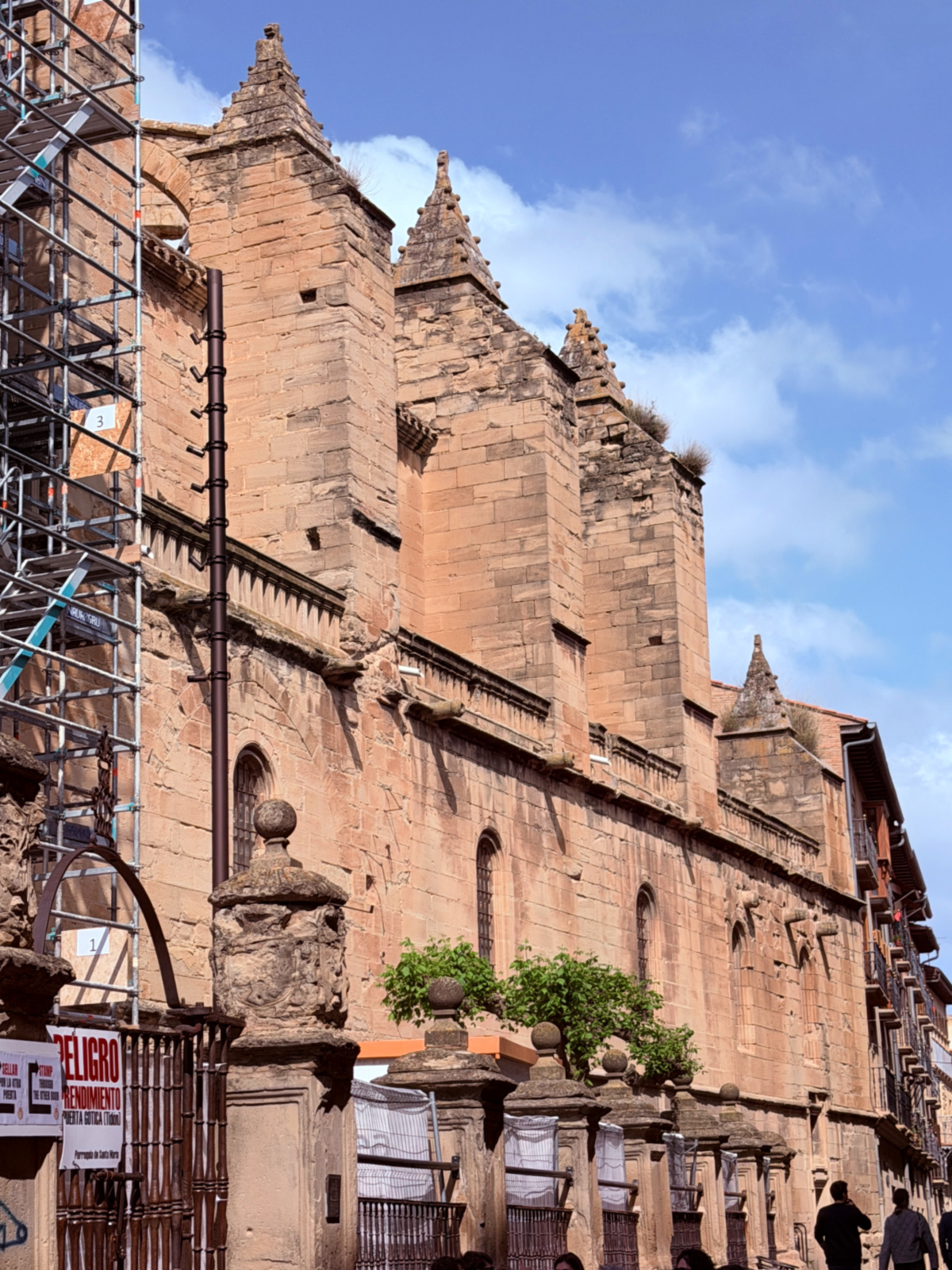
Later, I showed two of our Camino friends the ruins of the Iglesia de San Pedro. Built along the western edge of Viana’s old walls, San Pedro was the town’s first church and also served a defensive purpose.
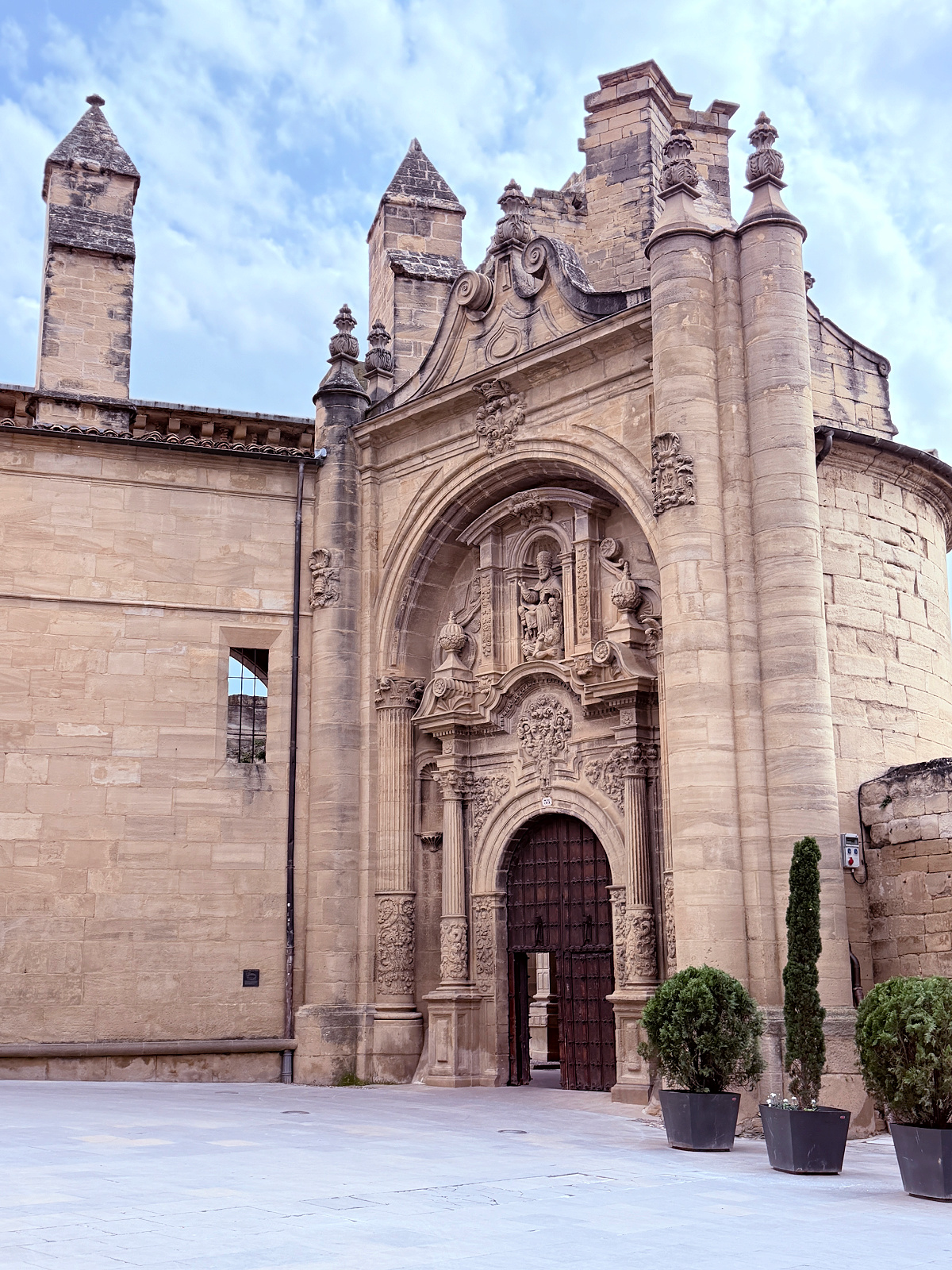
Only part of the church remains, but the open ruins create one of Viana’s most memorable sights. After spending the day walking through the countryside, it was worth using a few more of those 33,088 steps to see them.
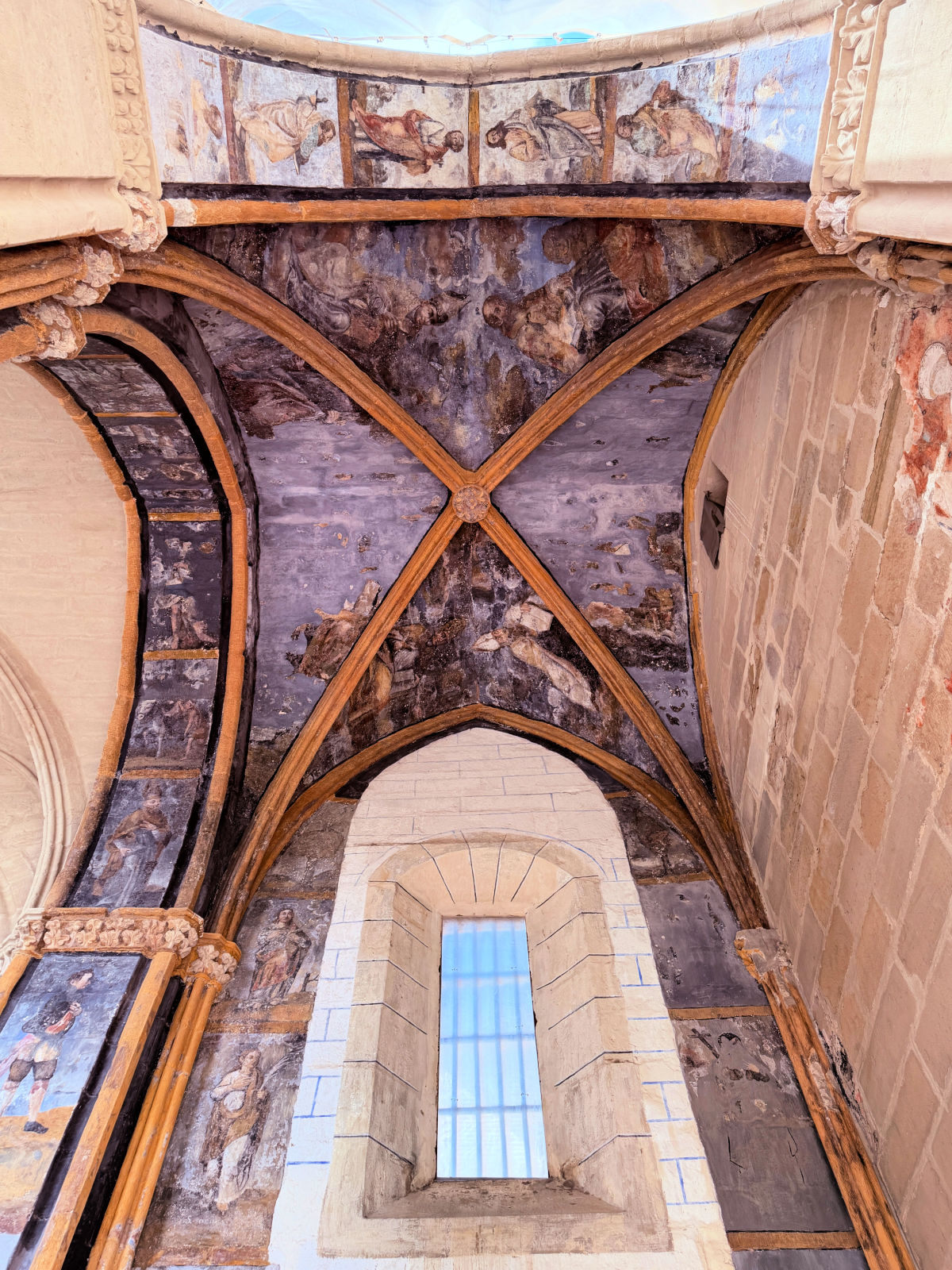
Exploring after a full day of walking still made questionable physical sense. Curiosity continued to overrule my legs.
What Day 8 Taught Me
The walk from Los Arcos to Viana was shaped by things we could not control. It was a national holiday, many businesses were closed, and a little rain followed us through the countryside.
None of that spoiled the day. We had food in our packs, found a bathroom when it mattered, visited an extraordinary church, rested in the woods, learned we were sleeping a short walk from a five-hundred-year-old grave with quite a story attached to it, and kept running into people who had become part of our Camino family.
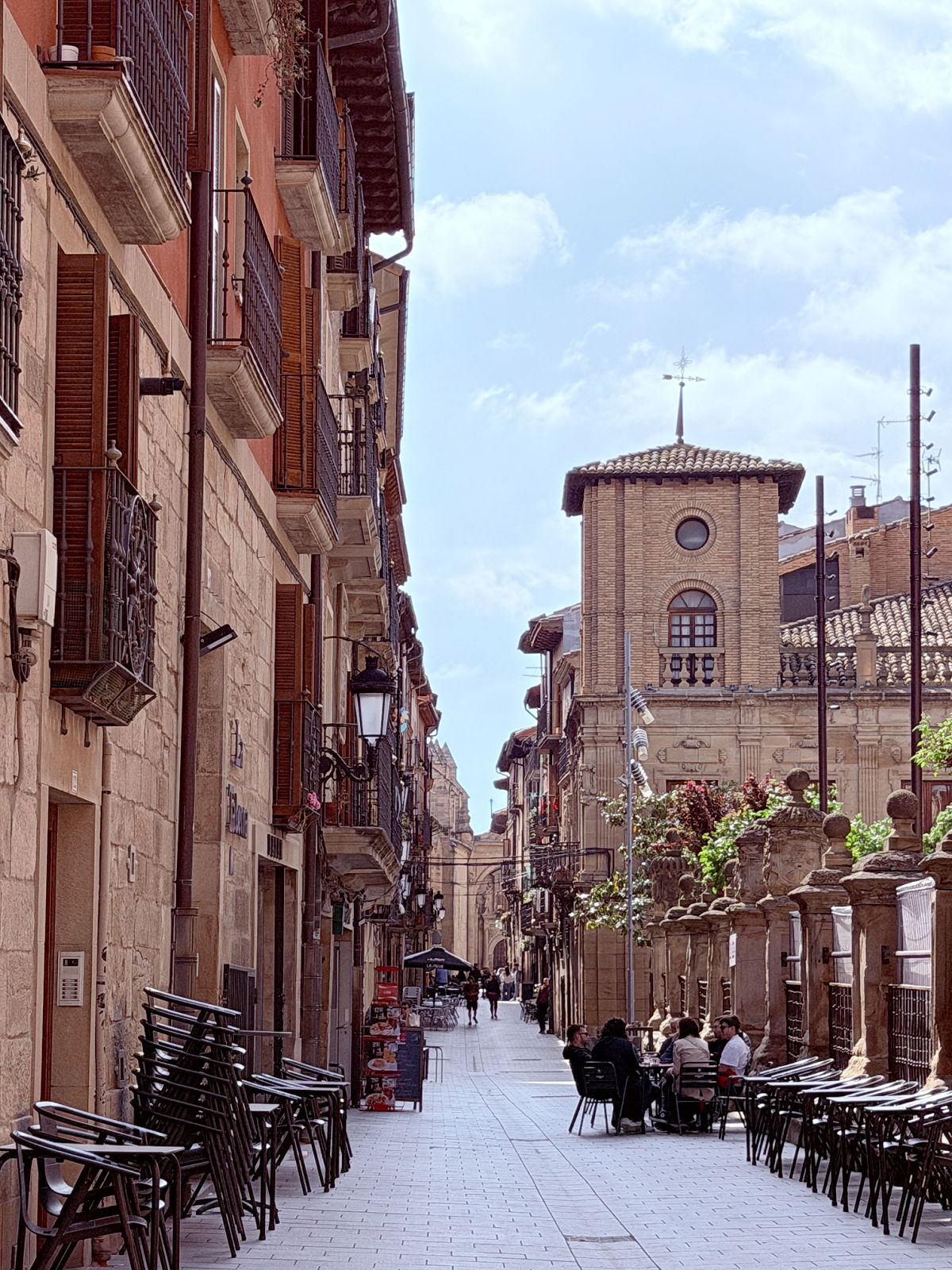
The farther we walked, the clearer it became that a good Camino day did not require every shop to be open or every detail to go according to plan. Sometimes good weather, red poppies, a chocolate pastry, and the right people were enough.
Ready for the Final Leg?
The following morning, we would leave Viana and walk to Logroño. It would be our ninth walking day and the final stage of our first 100 miles on the Camino.
Have you ever traveled during a national holiday and found nearly everything closed? Did it disrupt your plans—or lead to a better day than you expected?
