
Puente la Reina to Estella: Day 6 of the Camino Francés

Walking from Puente la Reina to Estella takes Camino Francés pilgrims across the medieval bridge that gives Puente la Reina its name and through the Navarrese towns of Mañeru, Cirauqui, Lorca, and Villatuerta. The roughly 22-kilometer route passes vineyards, olive groves, farmland, hilltop villages, and a stretch of genuine Roman road before reaching Estella beside the Ega River.
This was Wednesday, April 29—the tenth day of our trip and our sixth day of walking the Camino. My iPhone recorded 37,509 steps. I did not quite reach 40,000, but my legs were not interested in hearing that I had fallen short.
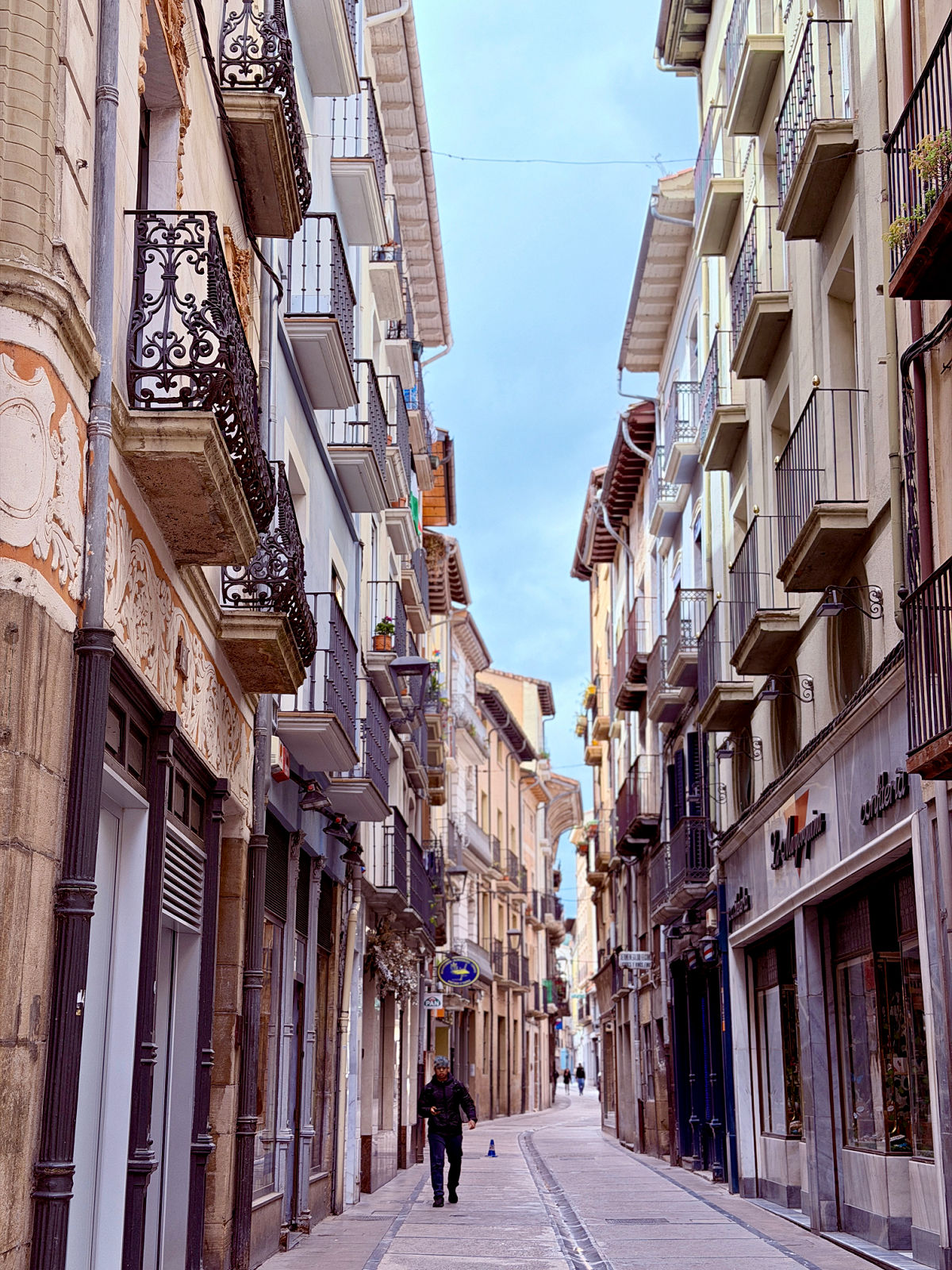
Follow the full journey in my Camino de Santiago series.
Puente la Reina to Estella Route at a Glance
- Date: Wednesday, April 29
- Camino walking day: Day 6
- Starting point: Puente la Reina, Spain
- Ending point: Estella, Spain
- Distance: Approximately 21–22 kilometers (13–14 miles)
- My recorded steps: 37,509
- Places along the route: Mañeru, Cirauqui, Lorca, and Villatuerta
- Terrain: Paved streets, farm tracks, rolling hills, steep climbs into villages, and sections of old stone road
- Where we stayed: Hostería de Curtidores
The stage was shorter than our walk from Pamplona to Puente la Reina, but “shorter” had become one of those Camino words that required context. More than 13 miles is still a considerable walk when it is your sixth consecutive day on the trail.
Breakfast in Puente la Reina
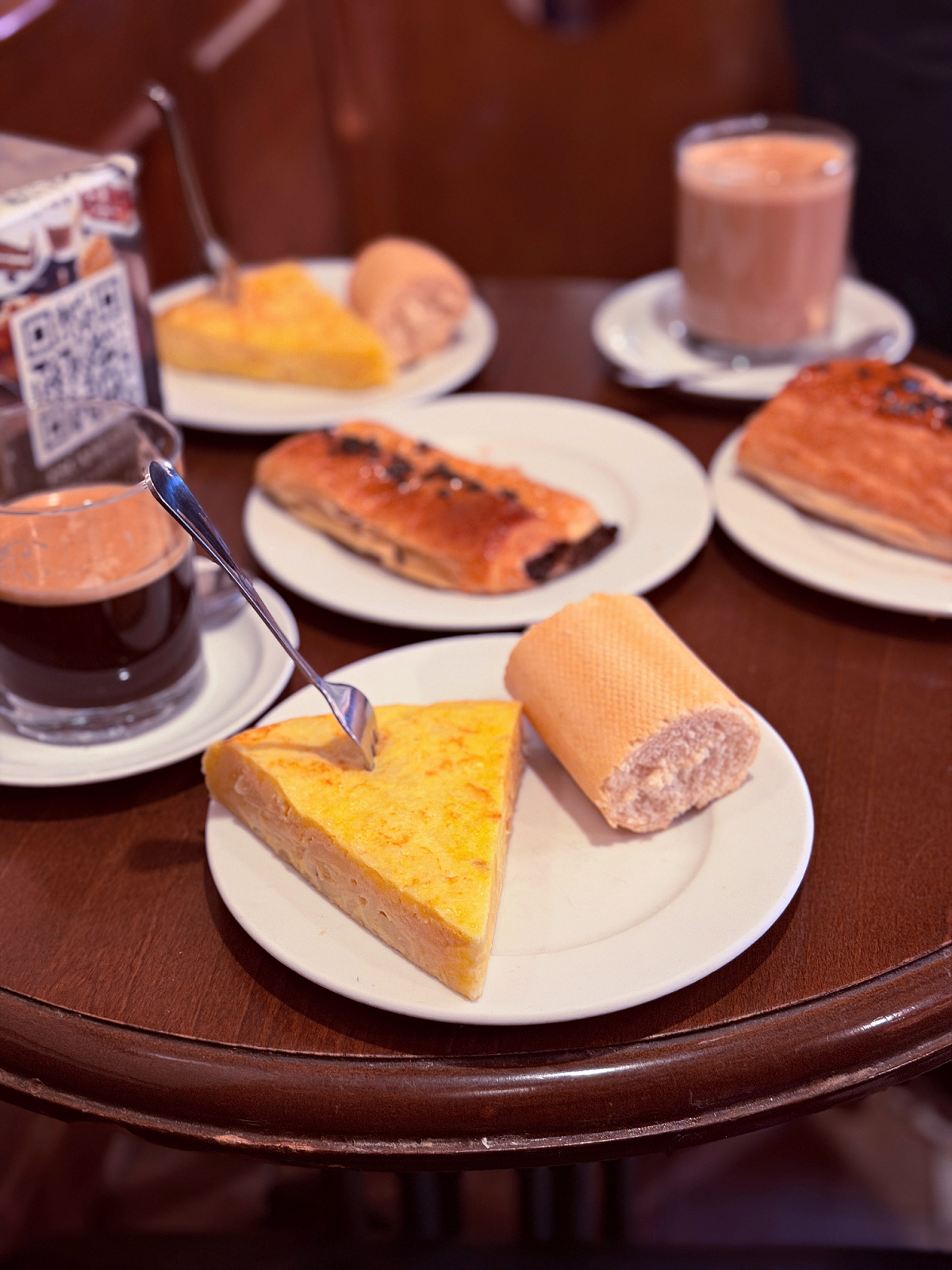
We began the morning with tortilla, a chocolate croissant, and coffee. Breakfast for the two of us cost €12.20.
Then we left Puente la Reina on foot and crossed its famous medieval bridge over the Arga River. The bridge was built to help pilgrims continue west toward Santiago, and centuries later, Diane and I joined the steady stream of walkers doing exactly that.
Walking Toward Mañeru and Cirauqui
Once we left town, the Camino carried us through fields, vineyards, and olive groves toward Mañeru. The route may not have included a landmark as dramatic as Alto del Perdón, but it continued to rise and fall throughout the day.
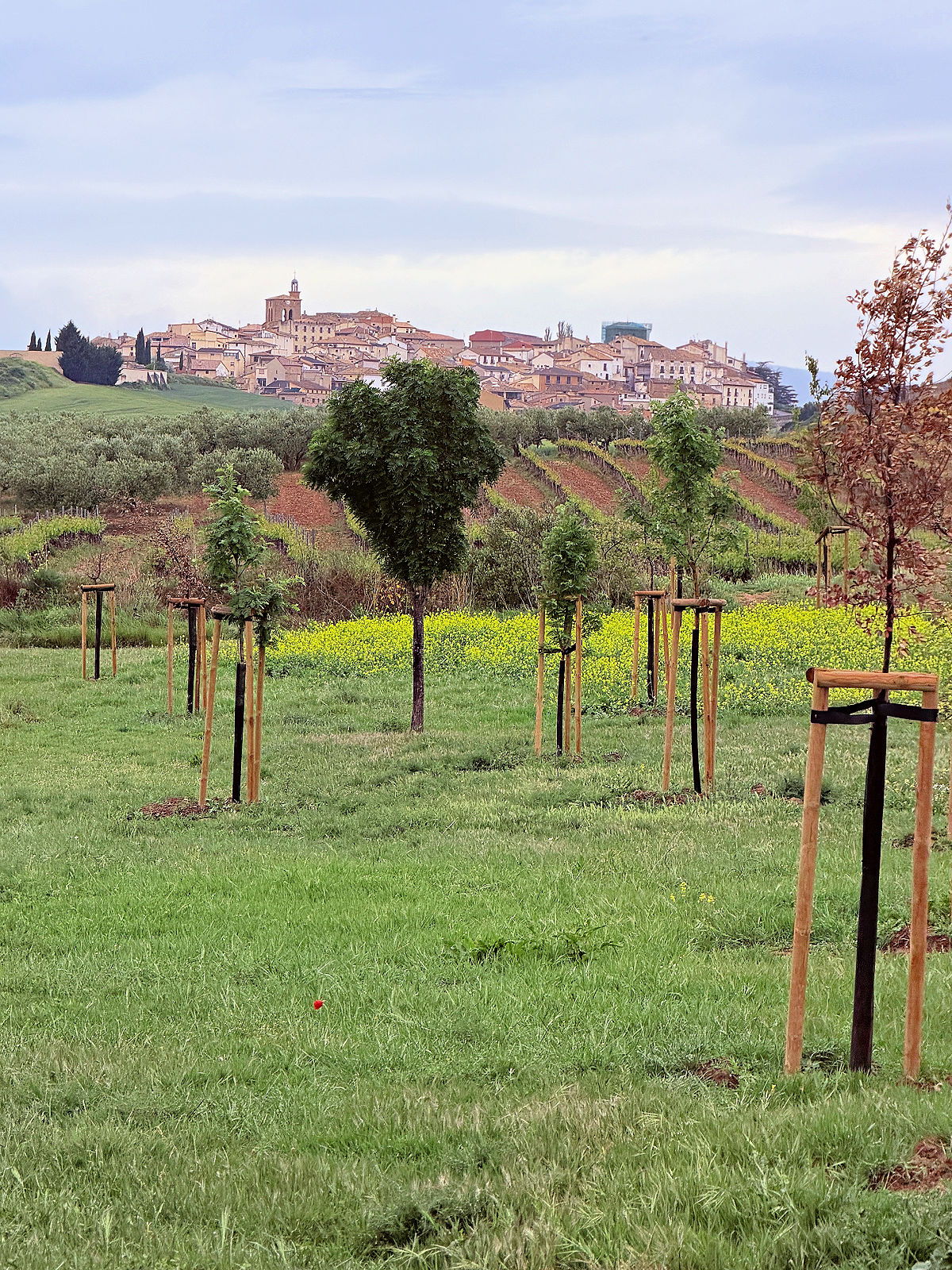
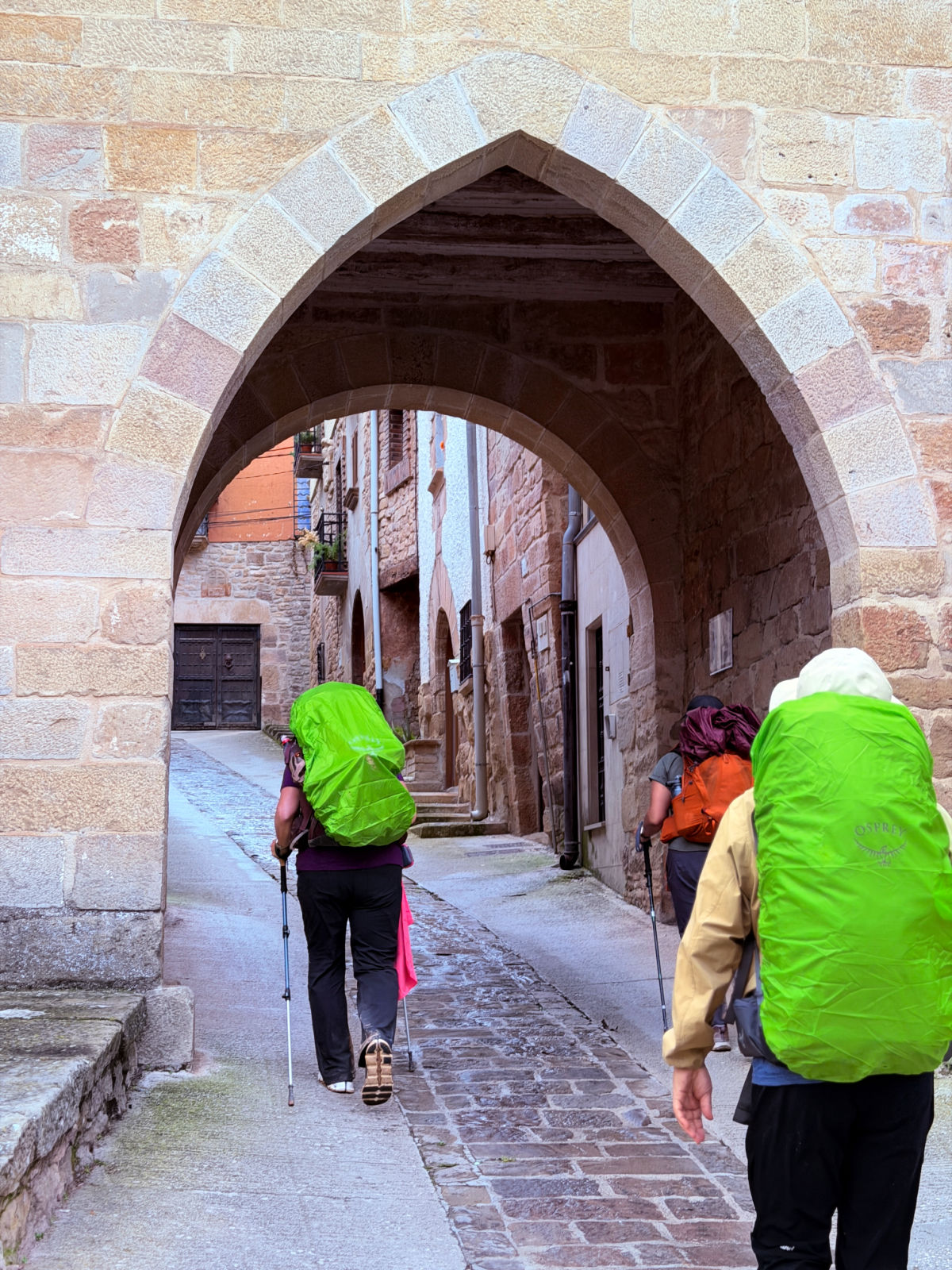
From Mañeru, we walked toward Cirauqui, a hilltop village whose narrow streets climb toward the center in tight, winding rings. Cirauqui looks lovely from a distance. The climb into it is slightly less charming when viewed by tired legs at close range.
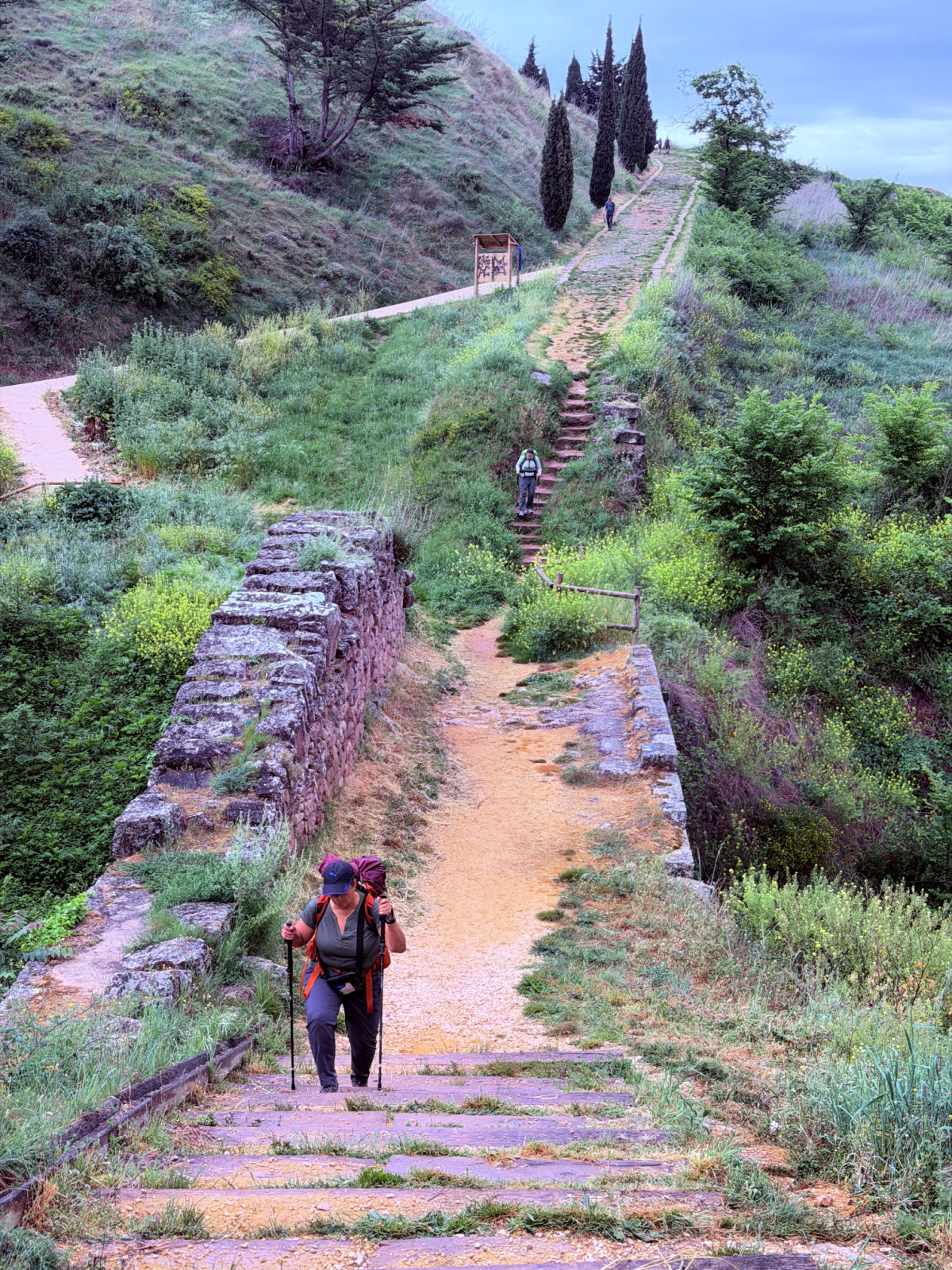
Beyond the village, the Camino drops onto a stretch of genuine Roman road, crossing a stone bridge that has carried travelers for roughly two thousand years—a few millennia of history under some very tired feet. The uneven surface added another layer to the day, and another reason to watch where we put those feet.
The River That Tried to Scare Off Pilgrims
Not long after Cirauqui, the Camino crosses the Río Salado near Lorca. It’s an unremarkable little stream today, but the medieval pilgrim guidebook known as the Codex Calixtinus warned 12th-century travelers not to let their horses drink from it, insisting the water was poisonous. Legend held that local con men waited on the banks with knives, ready to skin any horse unlucky enough to die from it.
Modern historians suspect this had less to do with the water and more to do with steering pilgrims toward paid services along the route—the original Camino hustle, nine centuries before ours. Diane and I crossed without incident, and neither of us lost a horse.
The Camino Family Keeps Growing
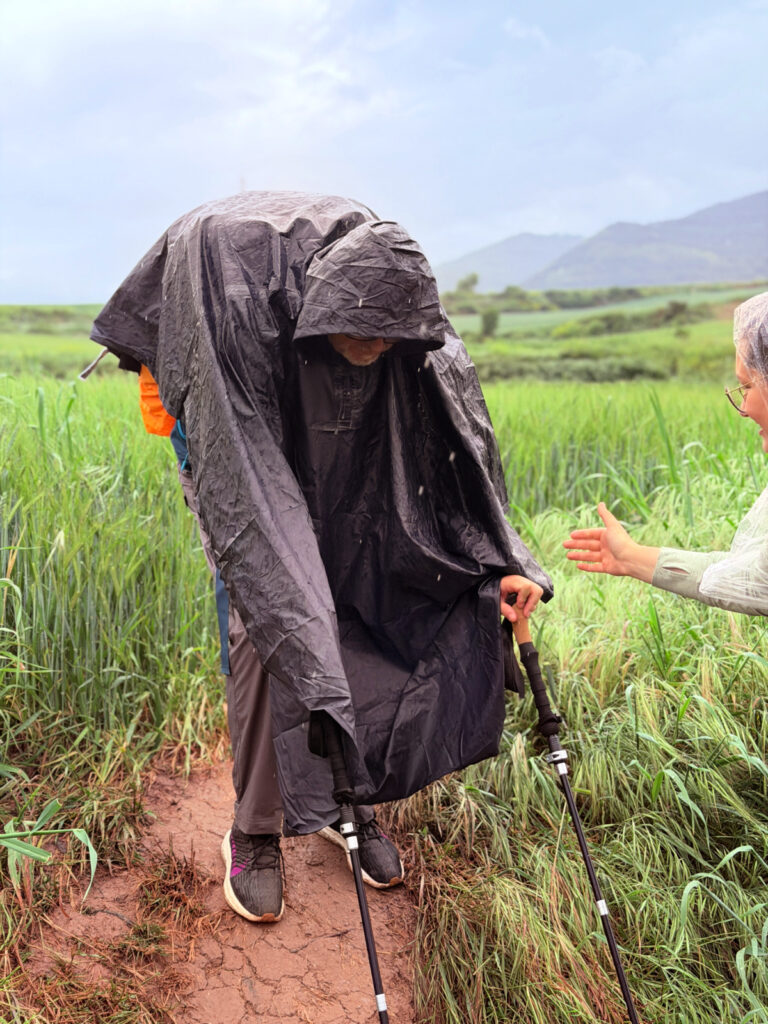
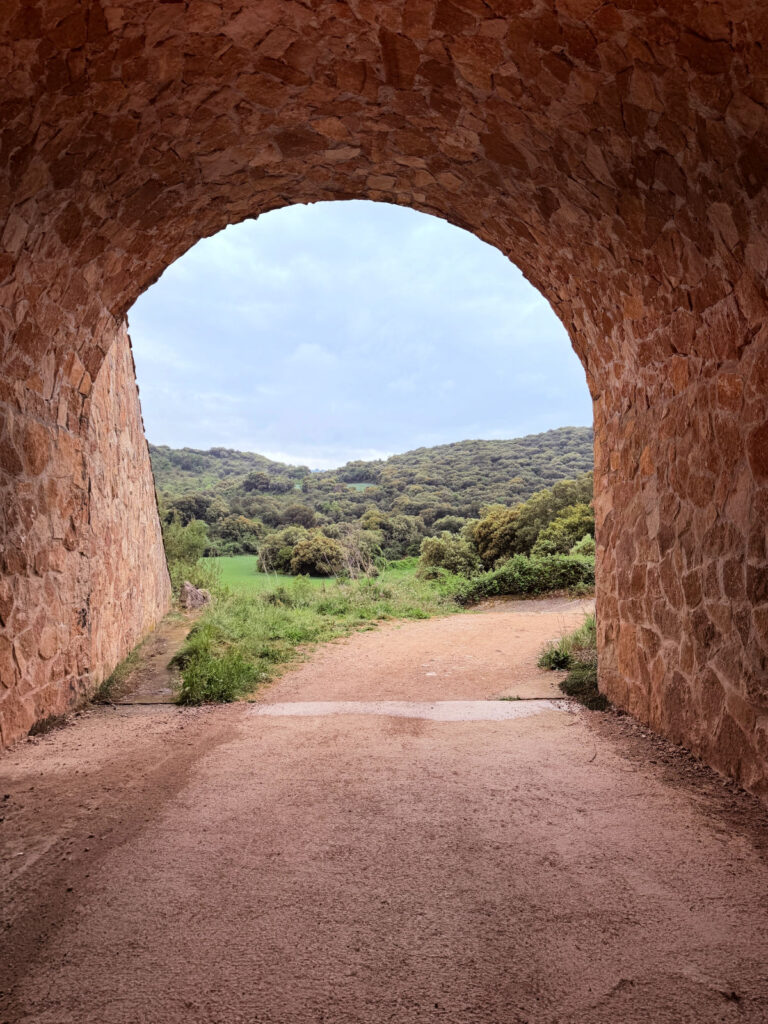
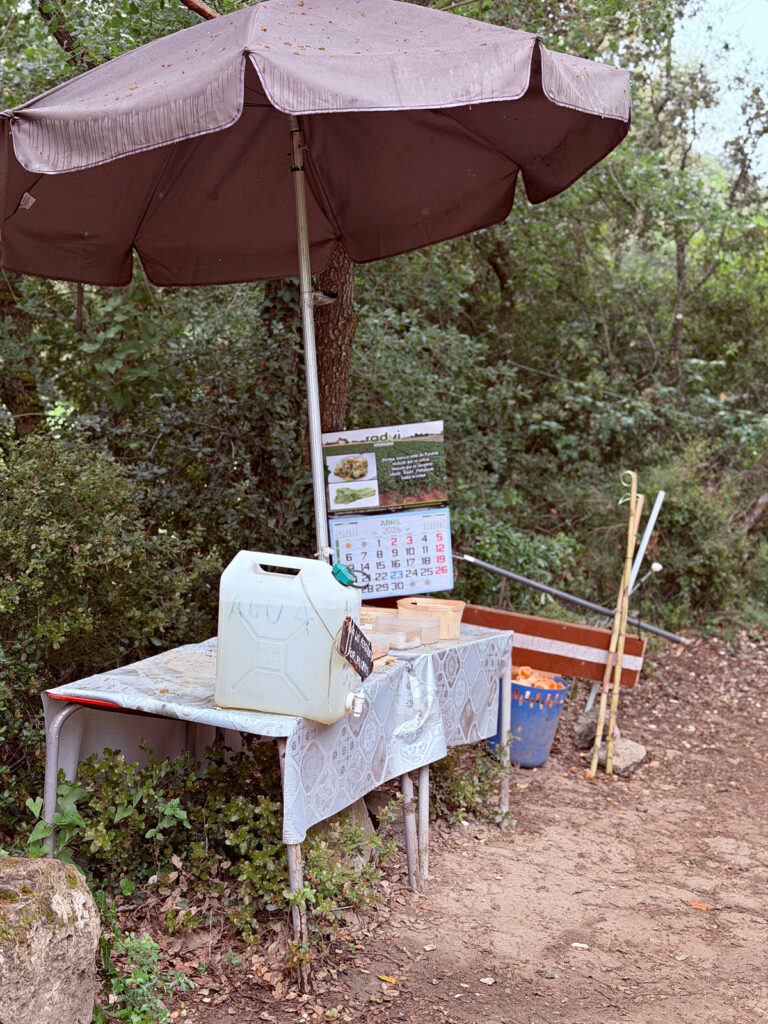
We continued enjoying time with the friends we had met along the Camino. By now, our Camino family had grown into a loose collection of people who might walk together, separate for a while, and reunite over a meal at the end of the day.
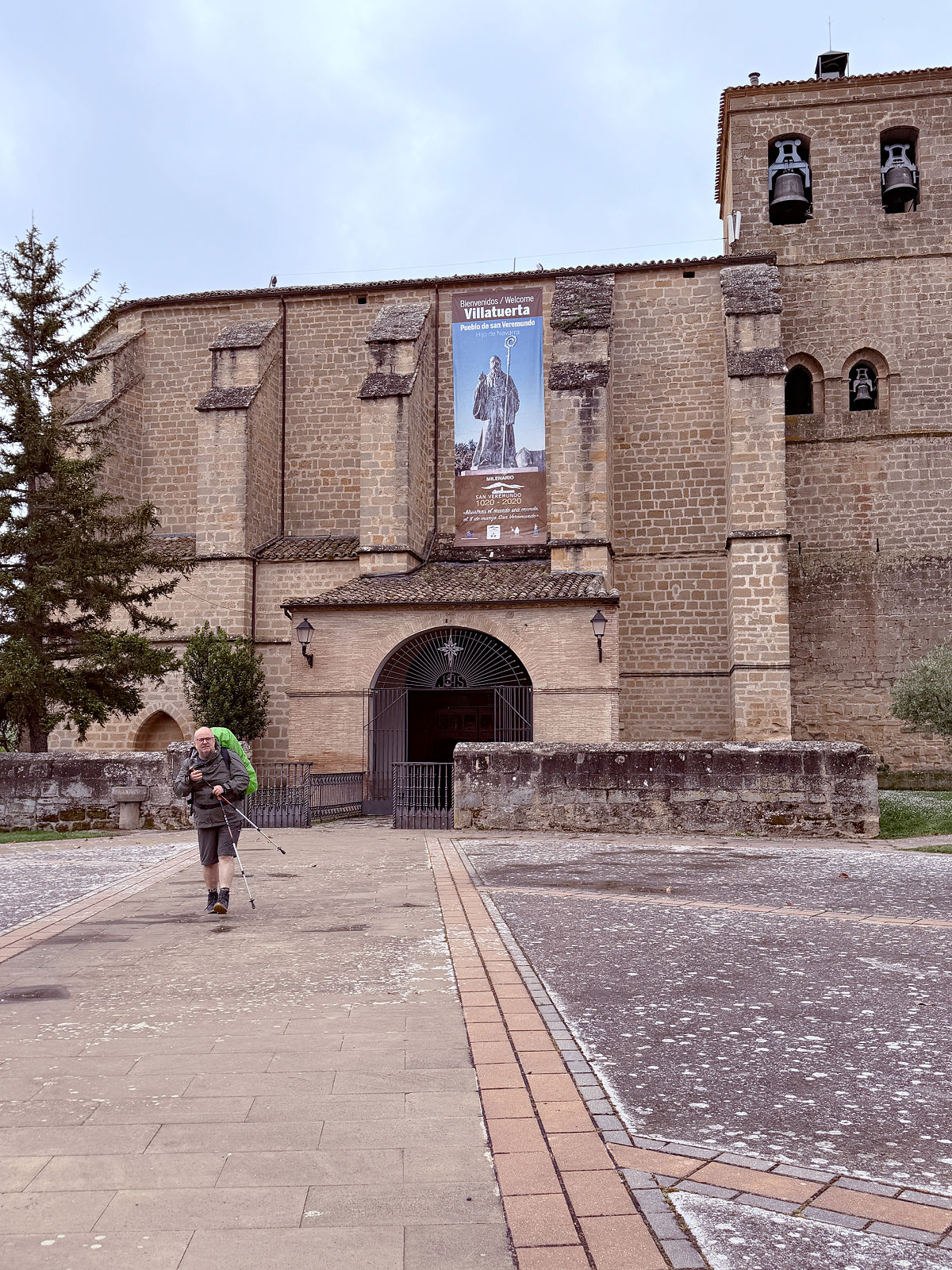
We passed through Lorca and continued toward Villatuerta before making the final approach into Estella. The distance was adding up, but having familiar people along the route made the day more enjoyable.
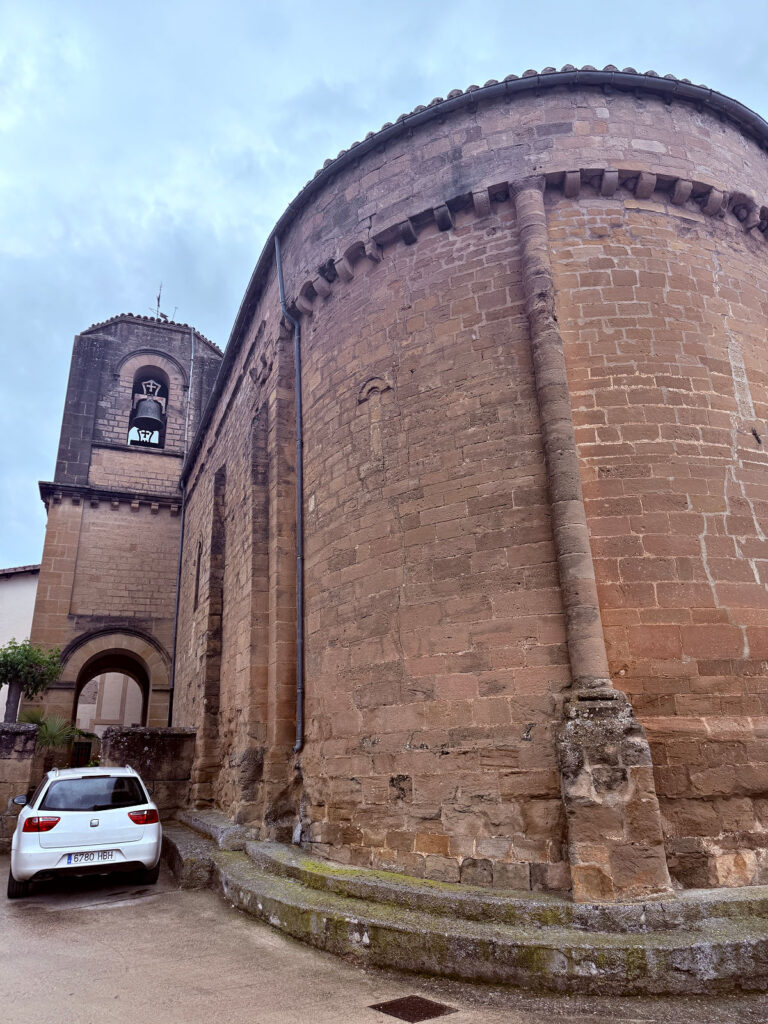
Arriving in Estella
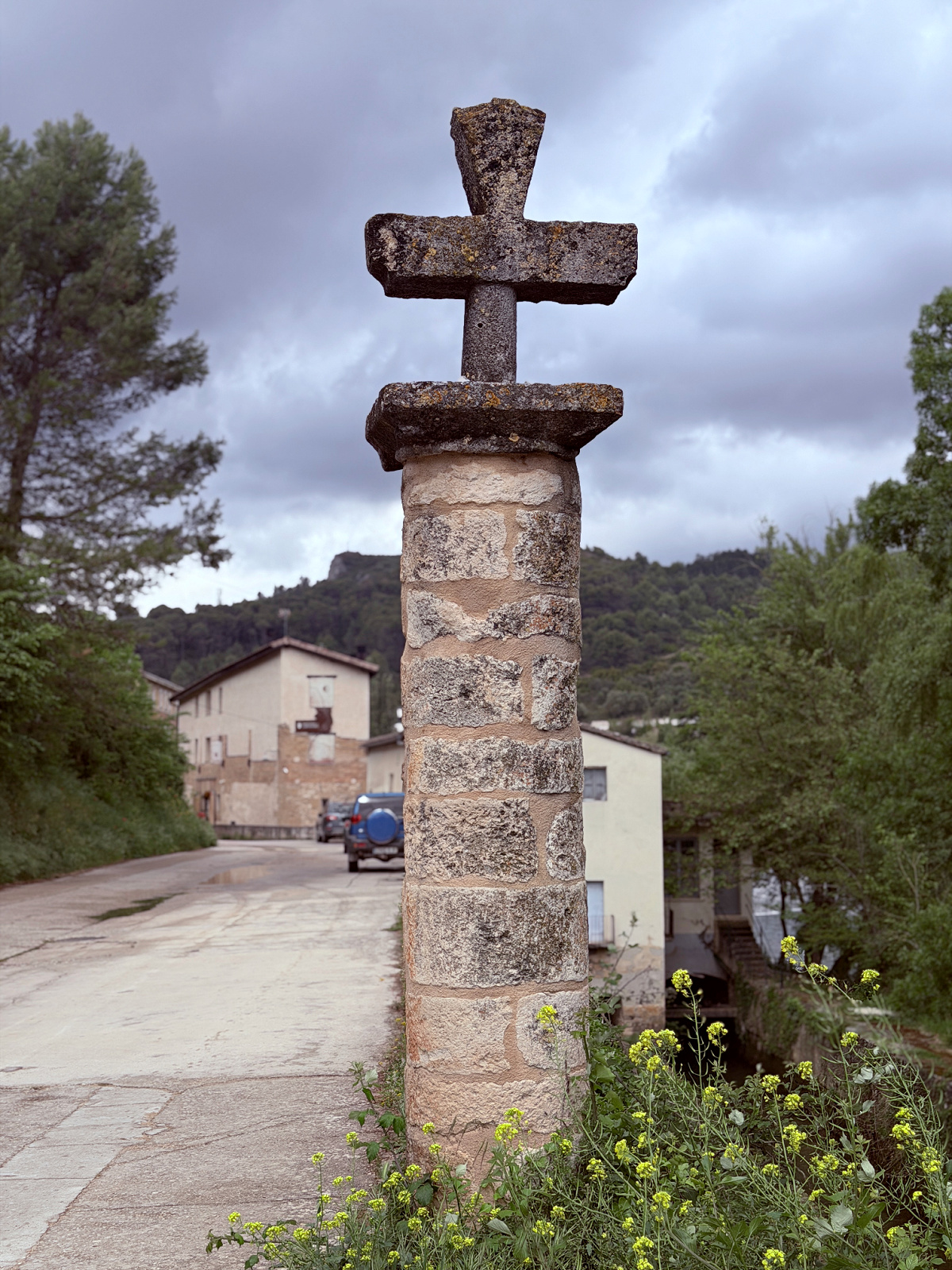
Estella, also known as Lizarra in Basque, sits along the Ega River and is nicknamed the “Toledo of the North” for its dense cluster of Romanesque and Gothic architecture—a legacy of its history as a seat of the medieval Kingdom of Navarre. Its compact historic center is filled with old churches, stone bridges, and narrow streets, including the Palacio de los Reyes de Navarra, one of the only surviving Romanesque civil buildings anywhere in Spain, and the church of San Pedro de la Rúa, known for its unusual twisted cloister column.
After reaching our albergue, Diane took a shower while I went out to explore. Walking around a city after spending all day walking toward it might not sound logical, but curiosity sometimes overrules sore legs.
It was also nice to explore without my full backpack. After carrying everything for miles, walking with only a phone can make a person feel suspiciously weightless.
Staying at Hostería de Curtidores
We stayed at Hostería de Curtidores, an albergue located beside the Ega River in a restored former tannery. The historic building had once been used by workers who processed animal hides, but it now welcomes Camino pilgrims.
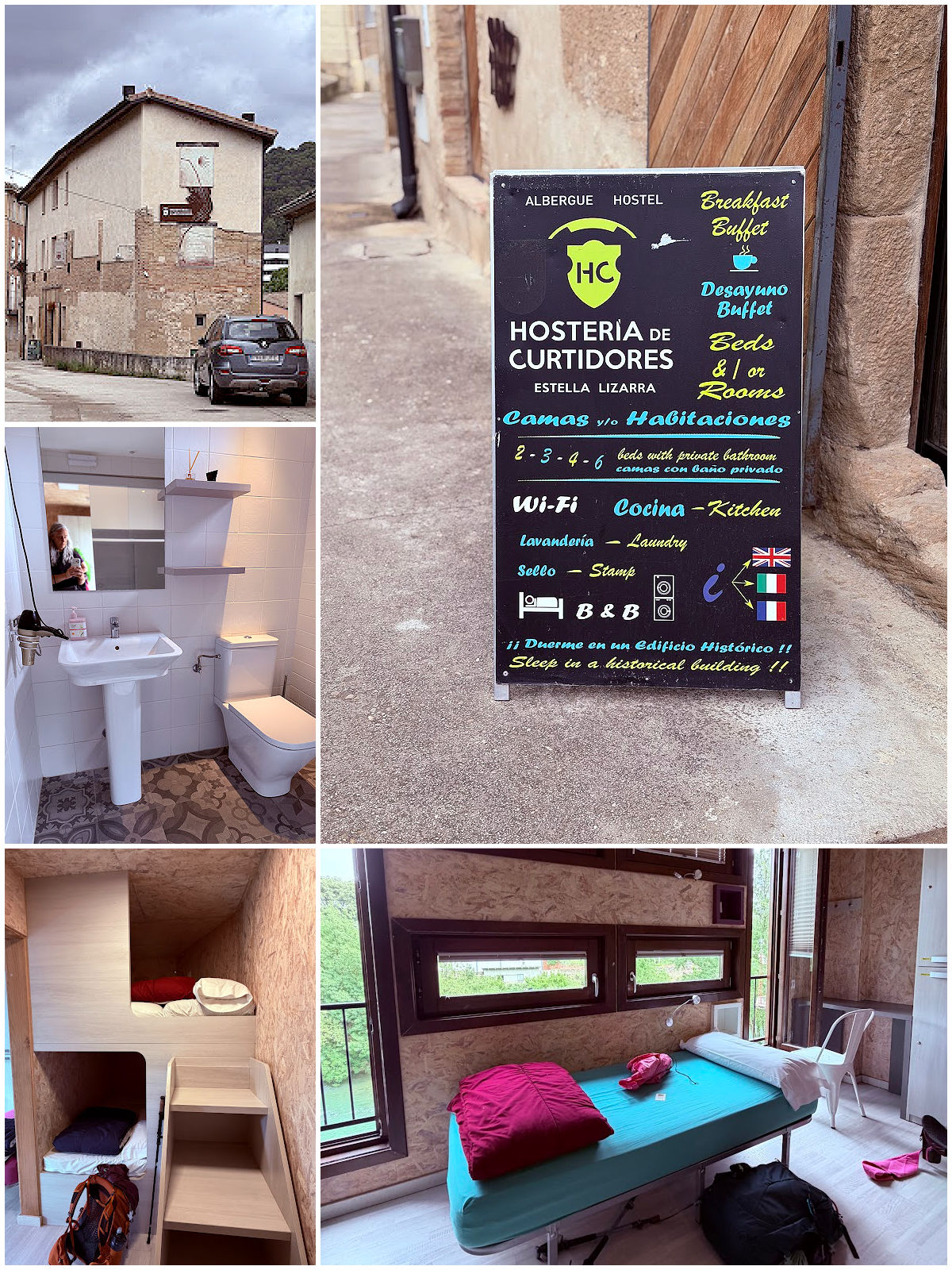
Diane and I shared a four-person room with our Camino friend from Pennsylvania and another woman we had met along the way. This time, we did not pay for an imaginary roommate to keep the room to ourselves. After several days on the Camino, sharing with two other women felt entirely manageable, and we were not complaining.
We took advantage of the laundry facilities and washed everything. The washer cost €4, and the dryer was €3. Seven euros for a collection of clean Camino clothes felt like a fine investment.
One practical lesson from our stay: make sure you receive the building’s entry code when you check in. You do not want to return from dinner and discover that the final challenge of the day is getting through the front door.
Dinner at Casa Carmen
That evening, we joined more of our Camino family for dinner at Casa Carmen.
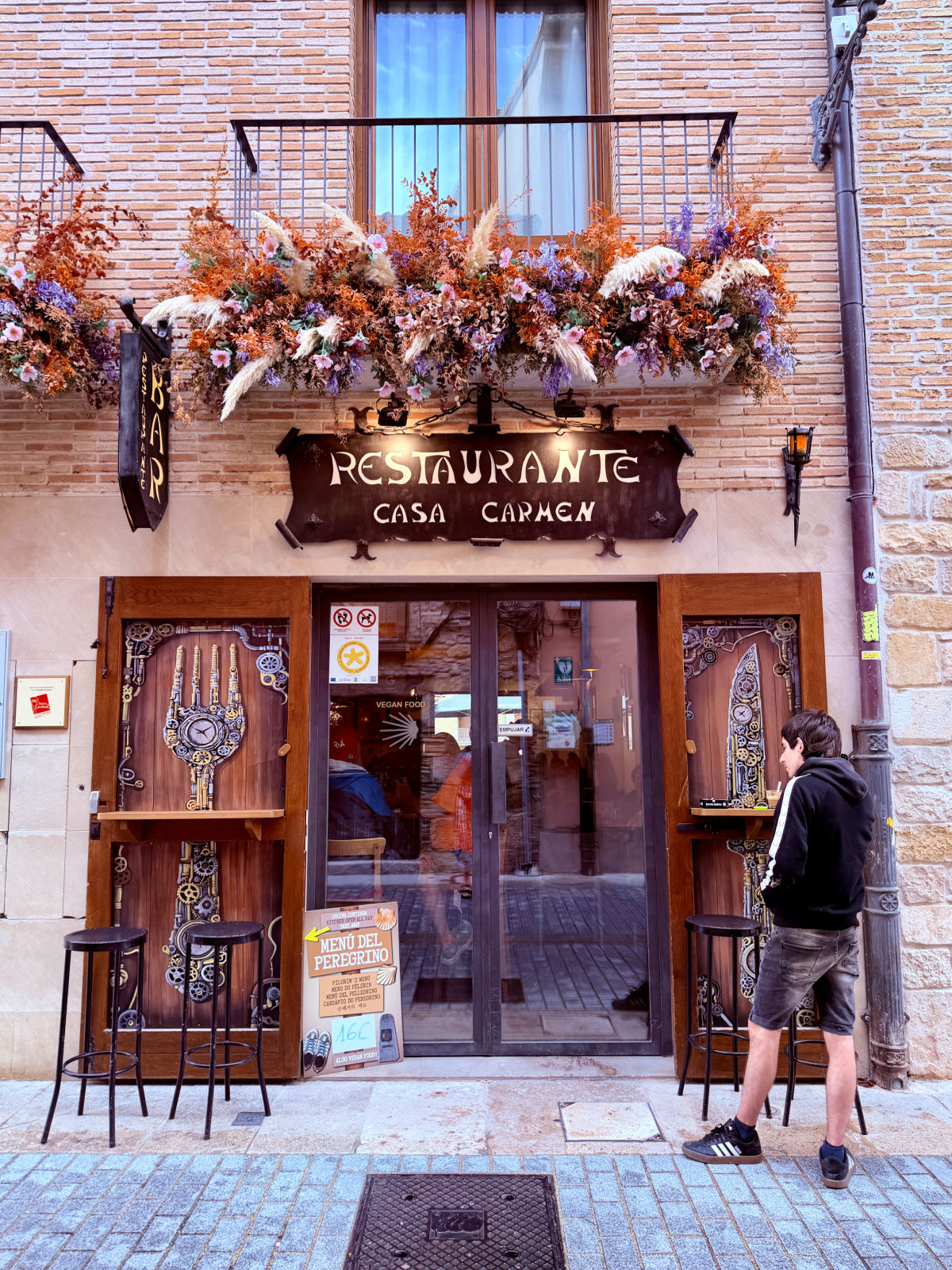
I ordered another burger, and it was amazingly good.
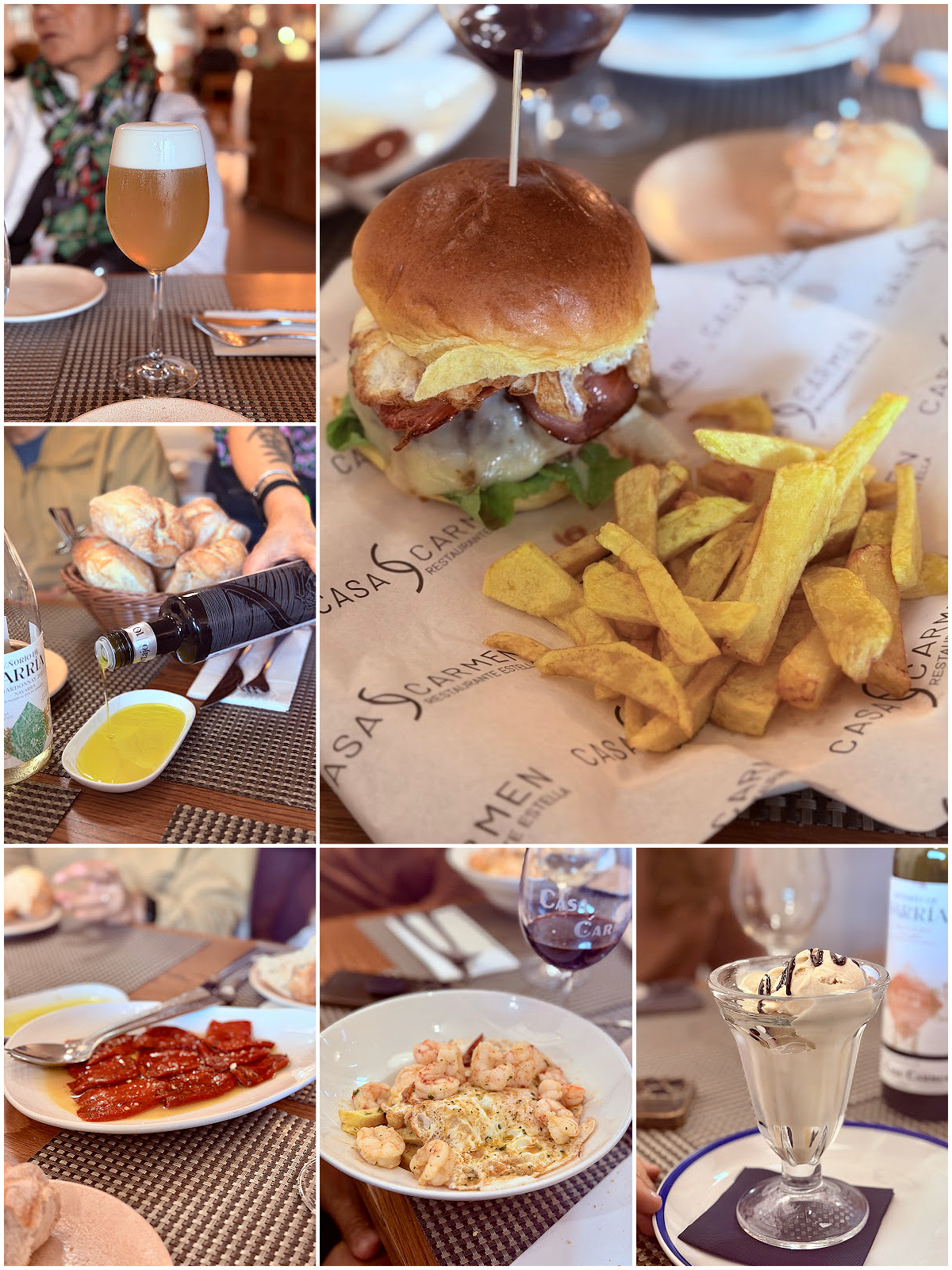
At this point, burgers had become something of a Camino subplot. This one, however, was not merely familiar food chosen because nothing else appealed to me. It was a genuinely delicious burger and fully earned its place in the story.
What Day 6 Taught Me
The walk from Puente la Reina to Estella did not revolve around one enormous challenge. Instead, it offered rolling terrain, repeated climbs, old villages, a Roman road, a river with a nine-hundred-year-old reputation it didn’t deserve, and mile after mile of putting one foot in front of the other.
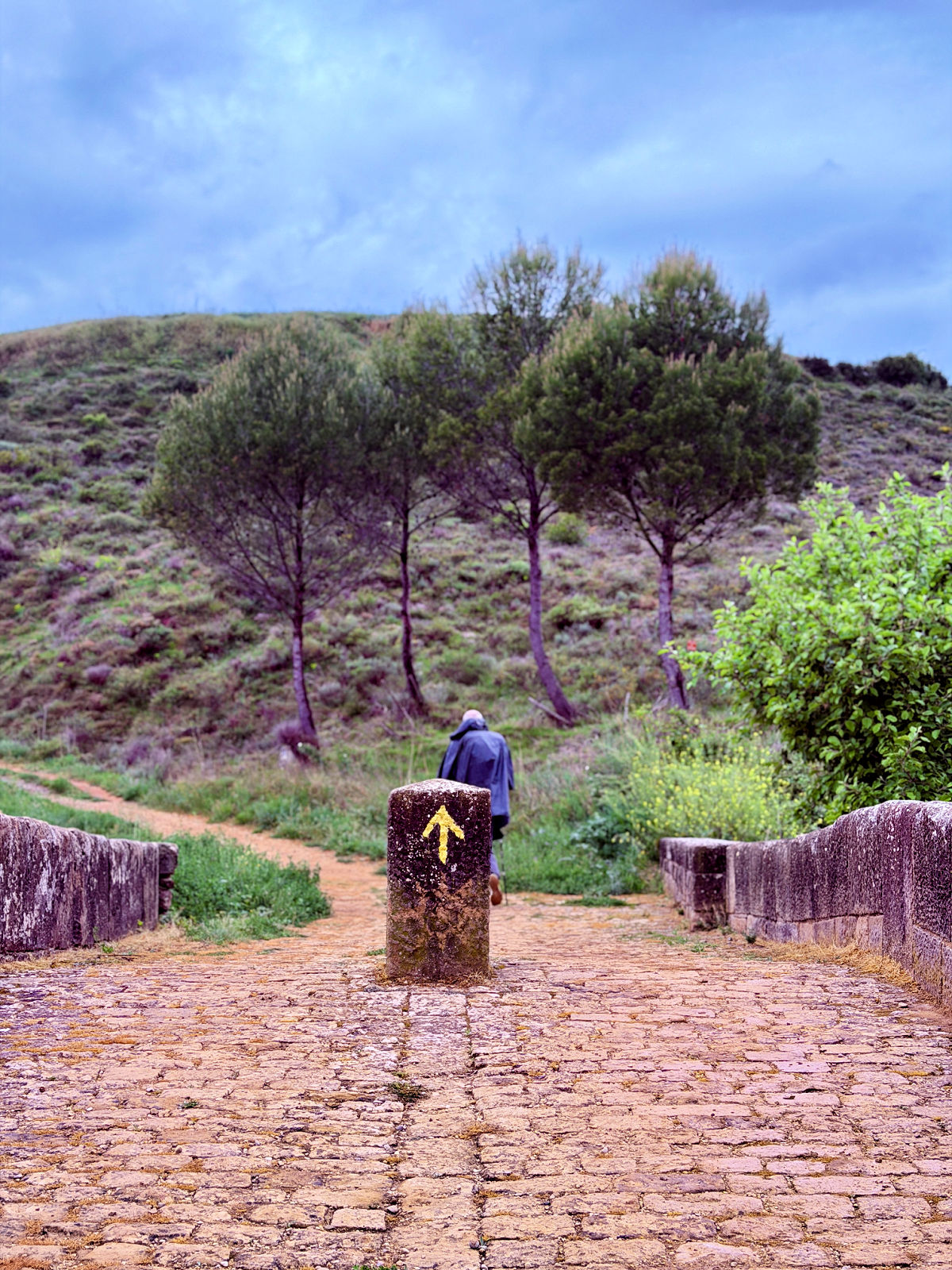
The day also showed how normal Camino life had begun to feel. We walked with friends, shared a room with other women, washed all our clothes, explored a new town, and gathered around another dinner table. These routines would have seemed unusual before the trip. On Day 6, they simply felt like our life.
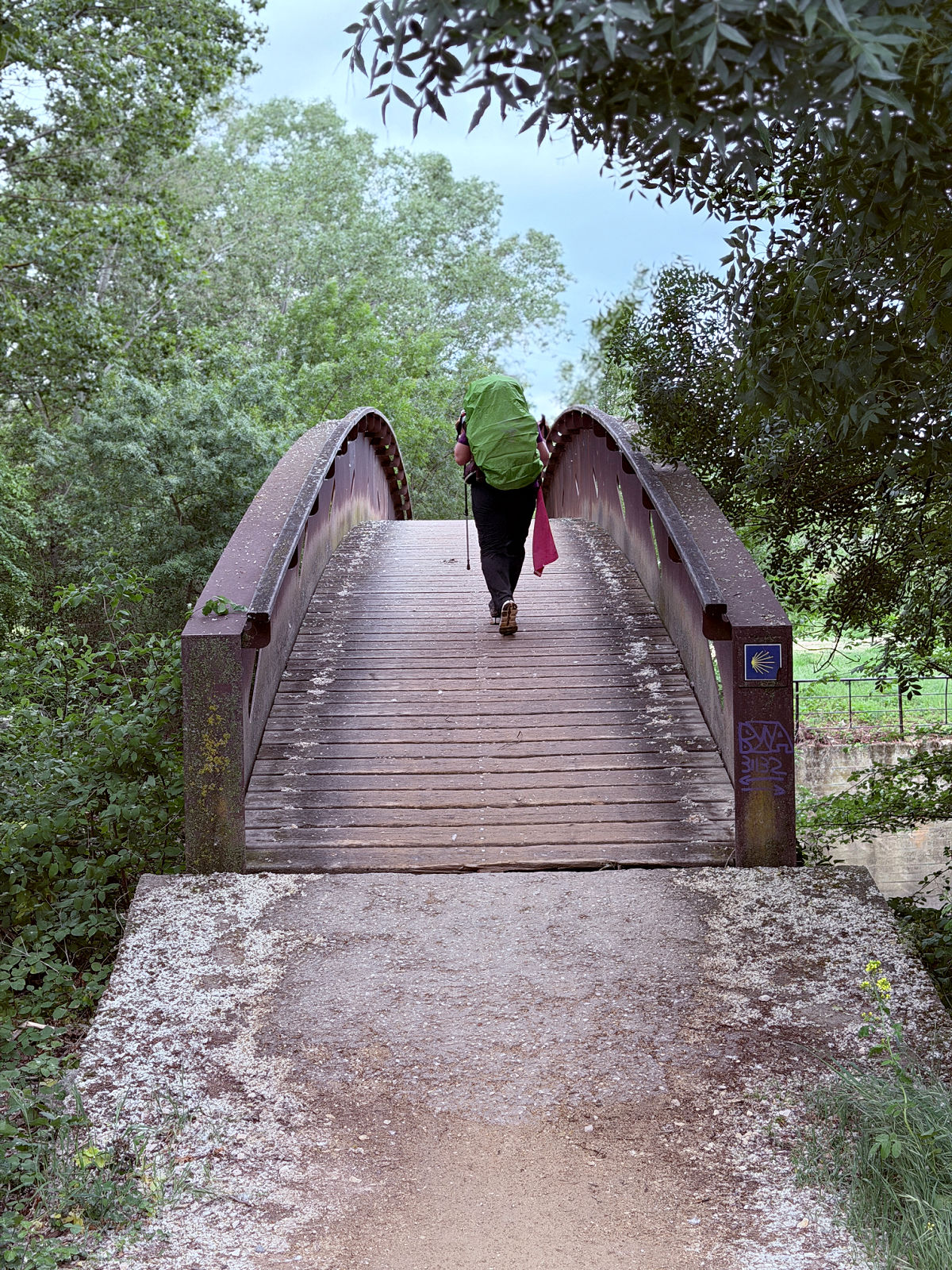
I did not reach 40,000 steps, but 37,509 was close enough. Frankly, my legs were not demanding a recount.
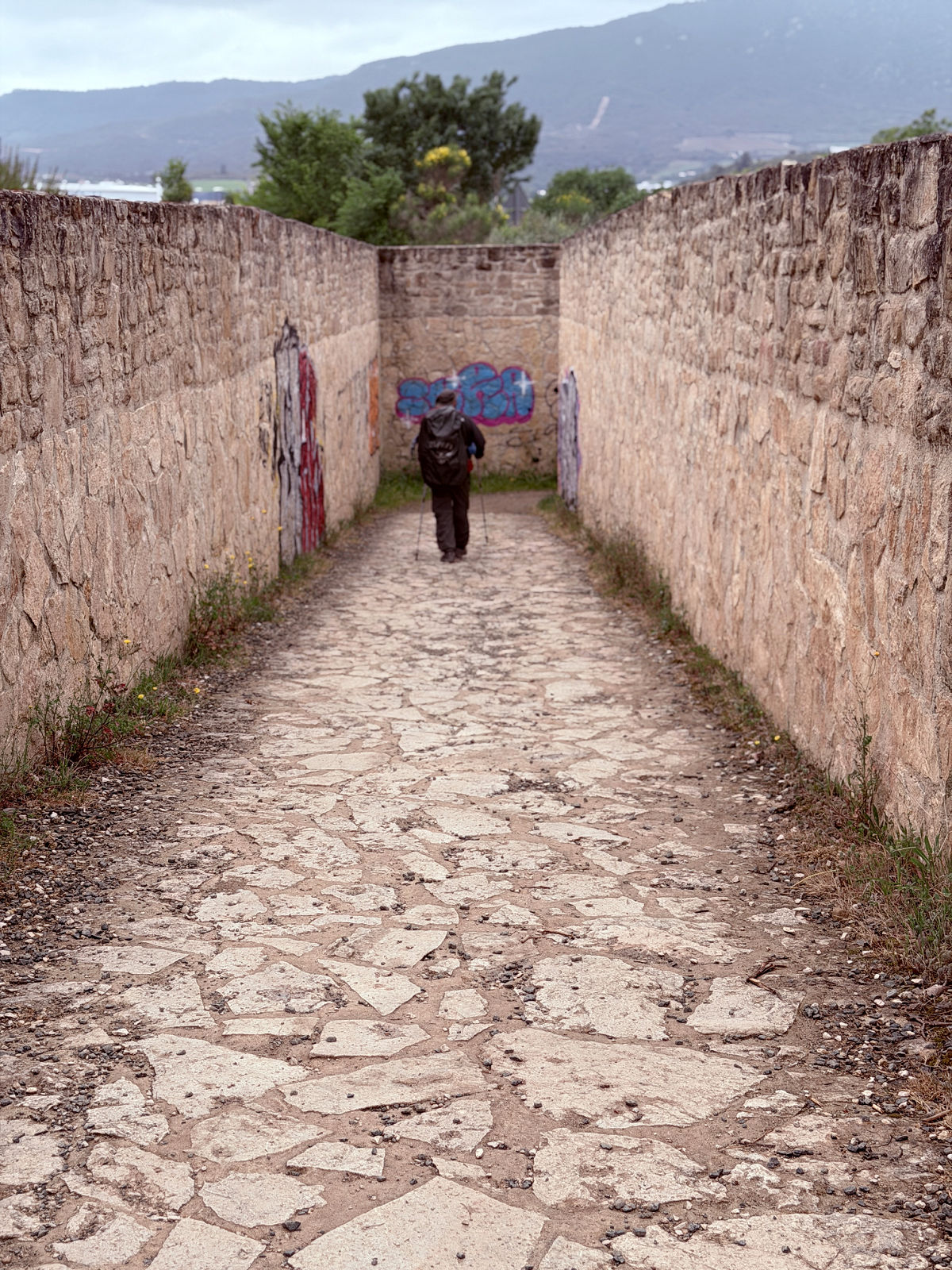
If you have ever wanted to take a very long walk, the Camino is worth considering. It is physically demanding, but the miles come with old bridges, new friendships, unexpected meals, and the chance to see places that most travelers hurry past.
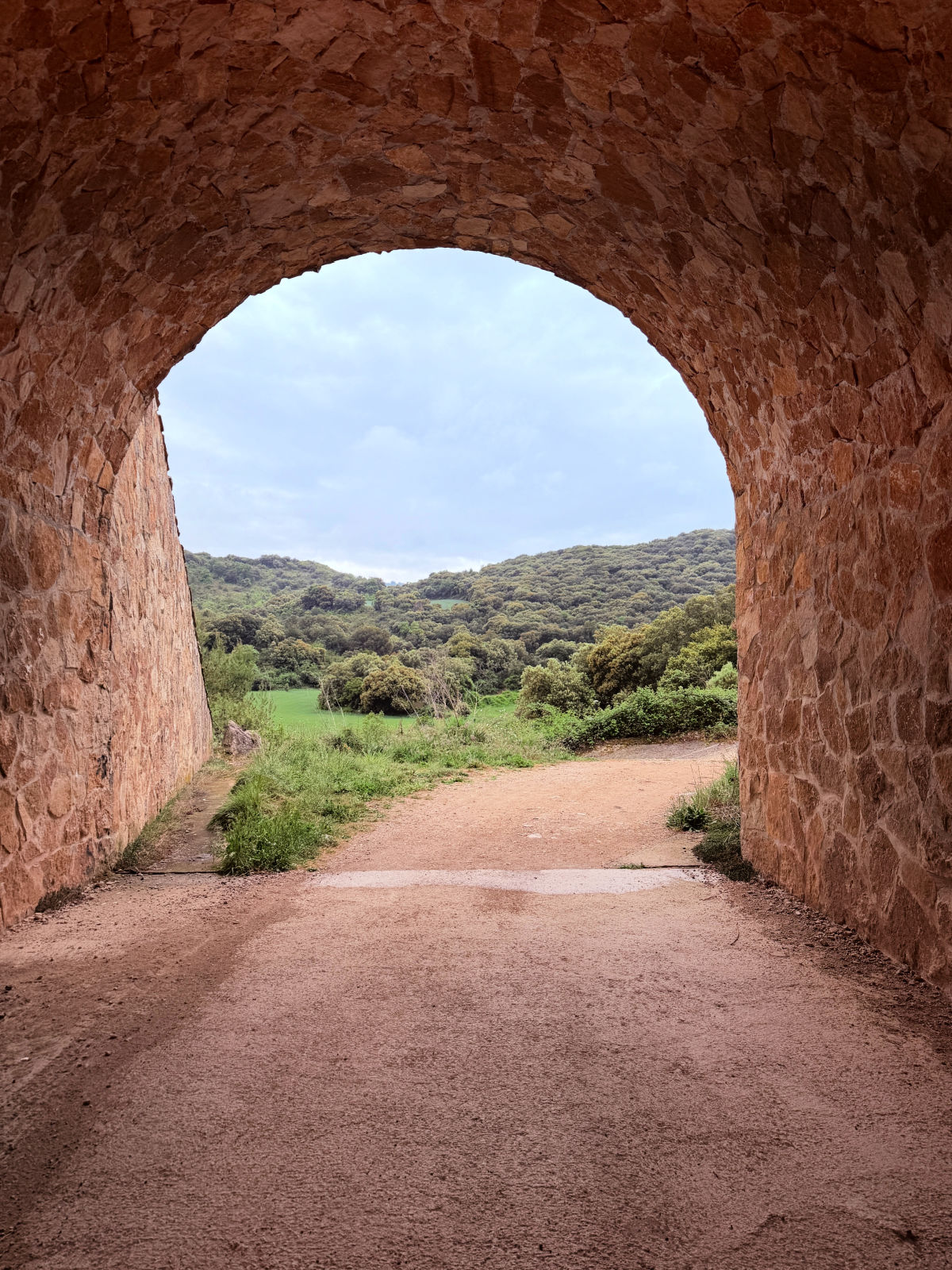
Ready for the Next Leg?
The next morning, we would leave Estella and continue toward Los Arcos, with Audrey planning to walk alongside us. The route would also take us past one of the Camino’s most unusual stops: a fountain where pilgrims can choose between water and wine.
Have you ever taken a trip that settled into its own daily rhythm? What part of the routine did you enjoy most?
