
Pamplona to Puente la Reina: Day 5 of the Camino Francés.

Walking from Pamplona to Puente la Reina is one of the most recognizable stages of the Camino Francés. The route leaves the historic streets of Pamplona, crosses open farmland, and climbs to Alto del Perdón before descending over loose rocks toward Uterga, Muruzábal, Obanos, and Puente la Reina.
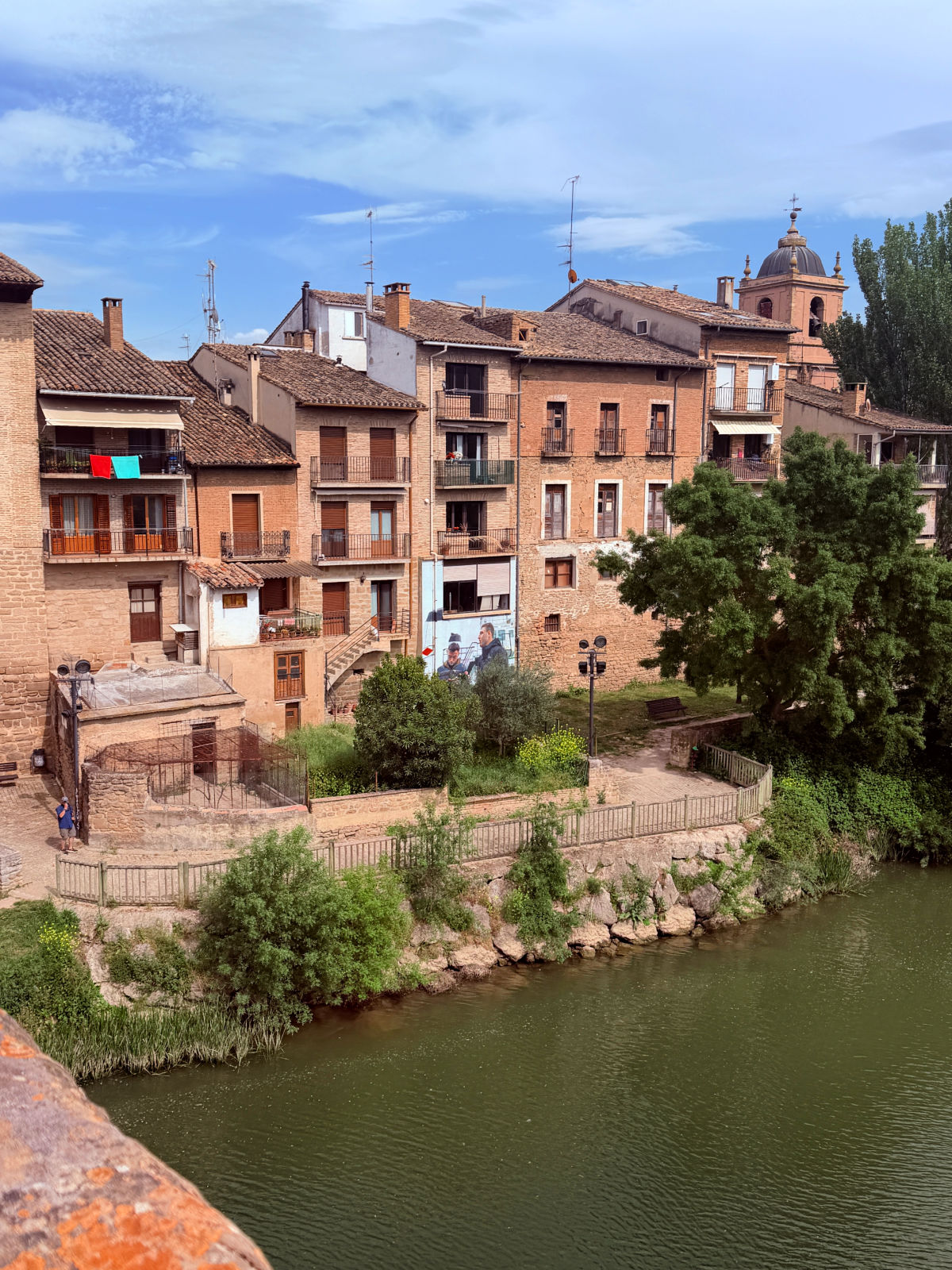
The stage is generally listed at approximately 24 kilometers, or about 15 miles, although my records put our walk closer to 23 kilometers. Either way, it was a long day over varied terrain, and the climb was only half the challenge. The rocky descent on the other side was waiting to collect whatever energy our legs had left.
This was Tuesday, April 28—the ninth day of our trip and our fifth day of walking the Camino. Apple recorded more than 38,000 steps. The soreness in my legs suggested that, for once, technology was not exaggerating.
Follow the full journey in my Camino de Santiago series.
Pamplona to Puente la Reina Route at a Glance
- Date: Tuesday, April 28
- Camino walking day: Day 5
- Starting point: Pamplona, Spain
- Ending point: Puente la Reina, Spain
- Distance: Approximately 23–24 kilometers (14–15 miles)
- My recorded steps: More than 38,000
- Places along the route: Cizur Menor, Zariquiegui, Alto del Perdón, Uterga, Muruzábal, and Obanos
- Terrain: City streets, paths through farmland, a sustained climb, and a steep, rocky descent
- Where we stayed: Hotel Rural Bidean
We had been blessed with good weather so far, and that continued as we left Pamplona. Good weather cannot flatten a mountain or remove rocks from a trail, but it certainly makes both easier to tolerate.
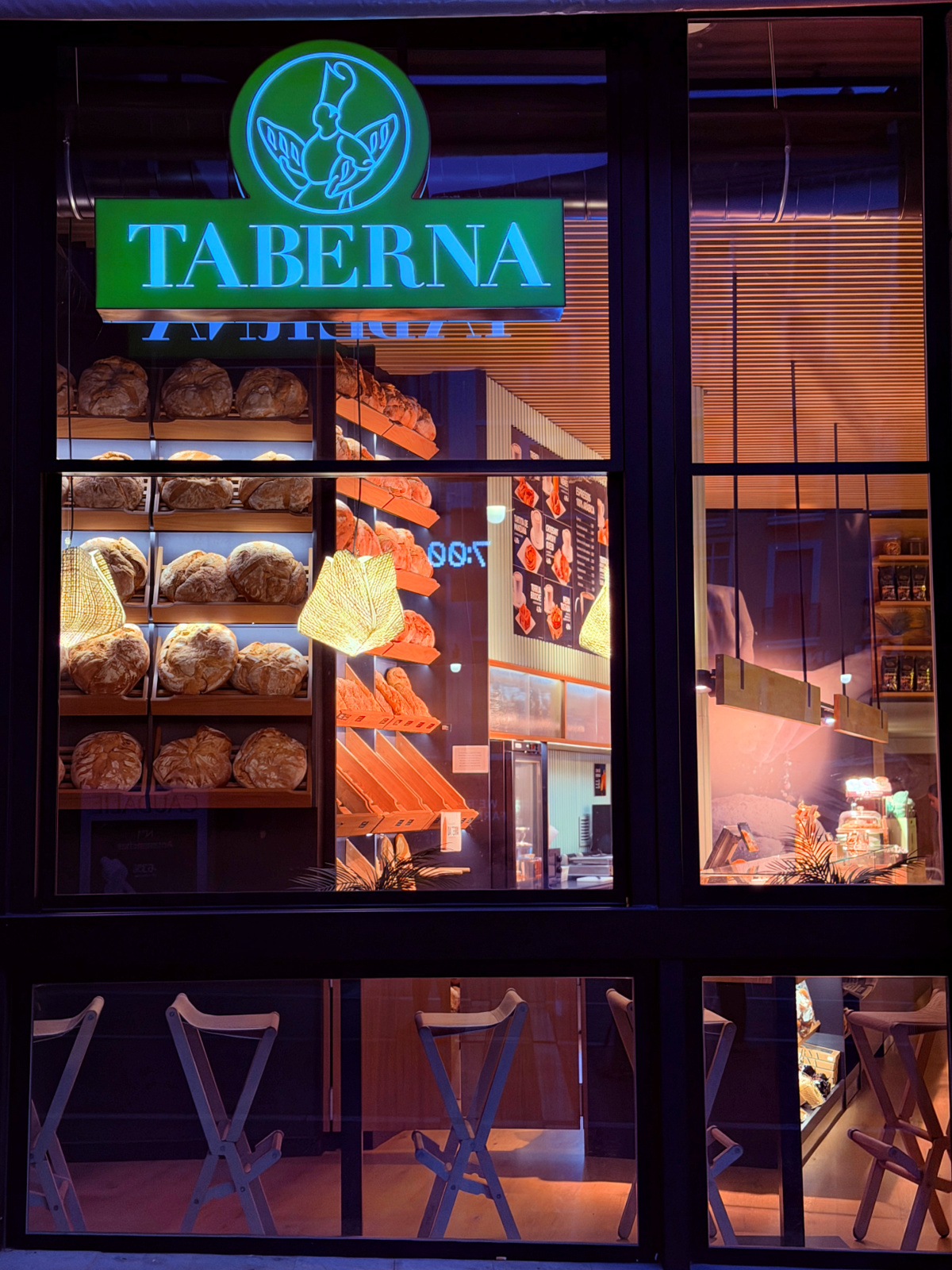
Leaving Pamplona on Foot
We left Pamplona on foot—naturally—and followed the Camino out of the historic center. After walking into the city the previous afternoon, we now retraced part of our path past Pamplona City Hall and continued through the city toward the University of Navarra.
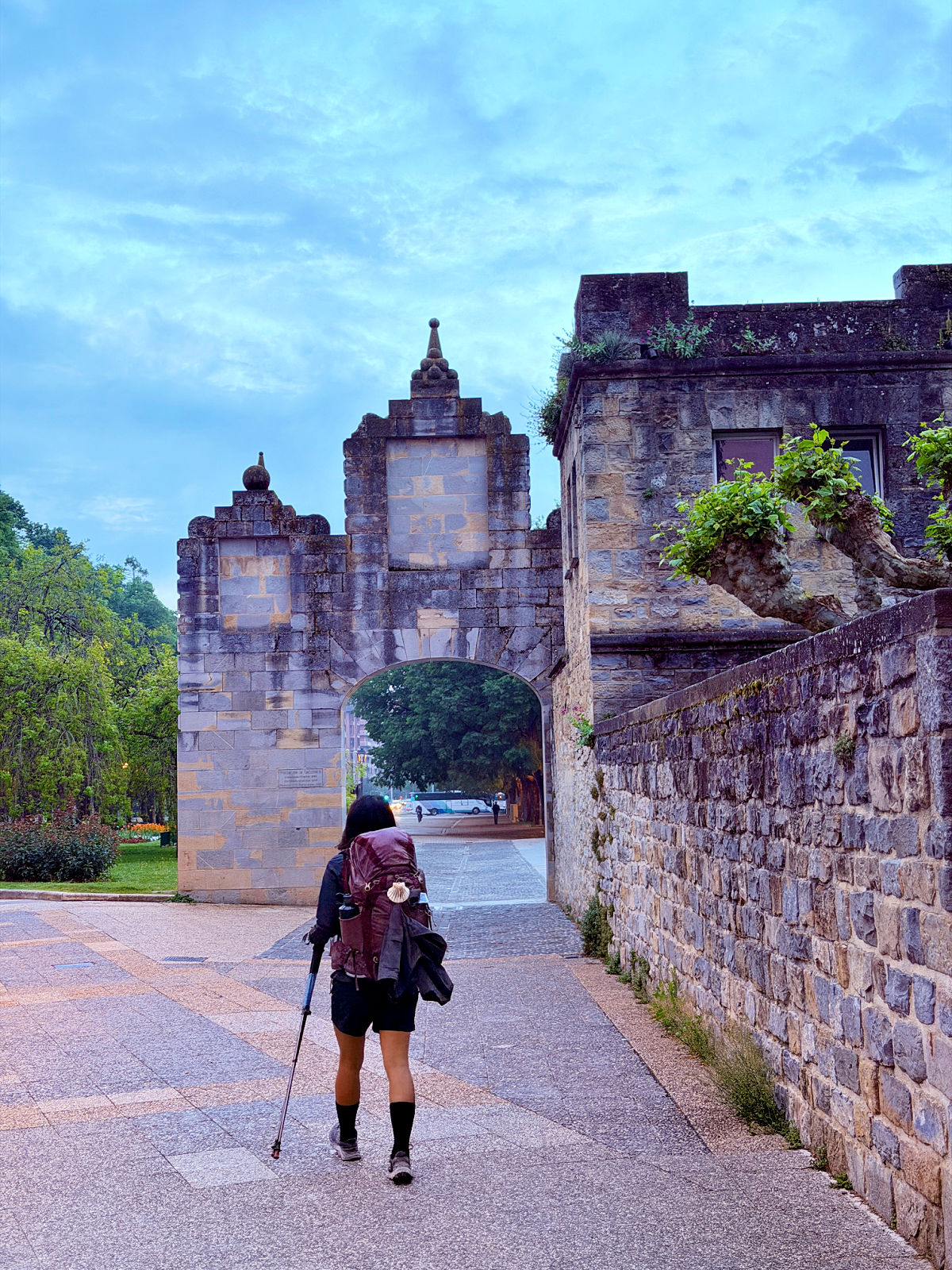
The route eventually carried us beyond the city streets and into Cizur Menor. From there, the landscape opened into fields, and we began the long climb toward the Sierra del Perdón.
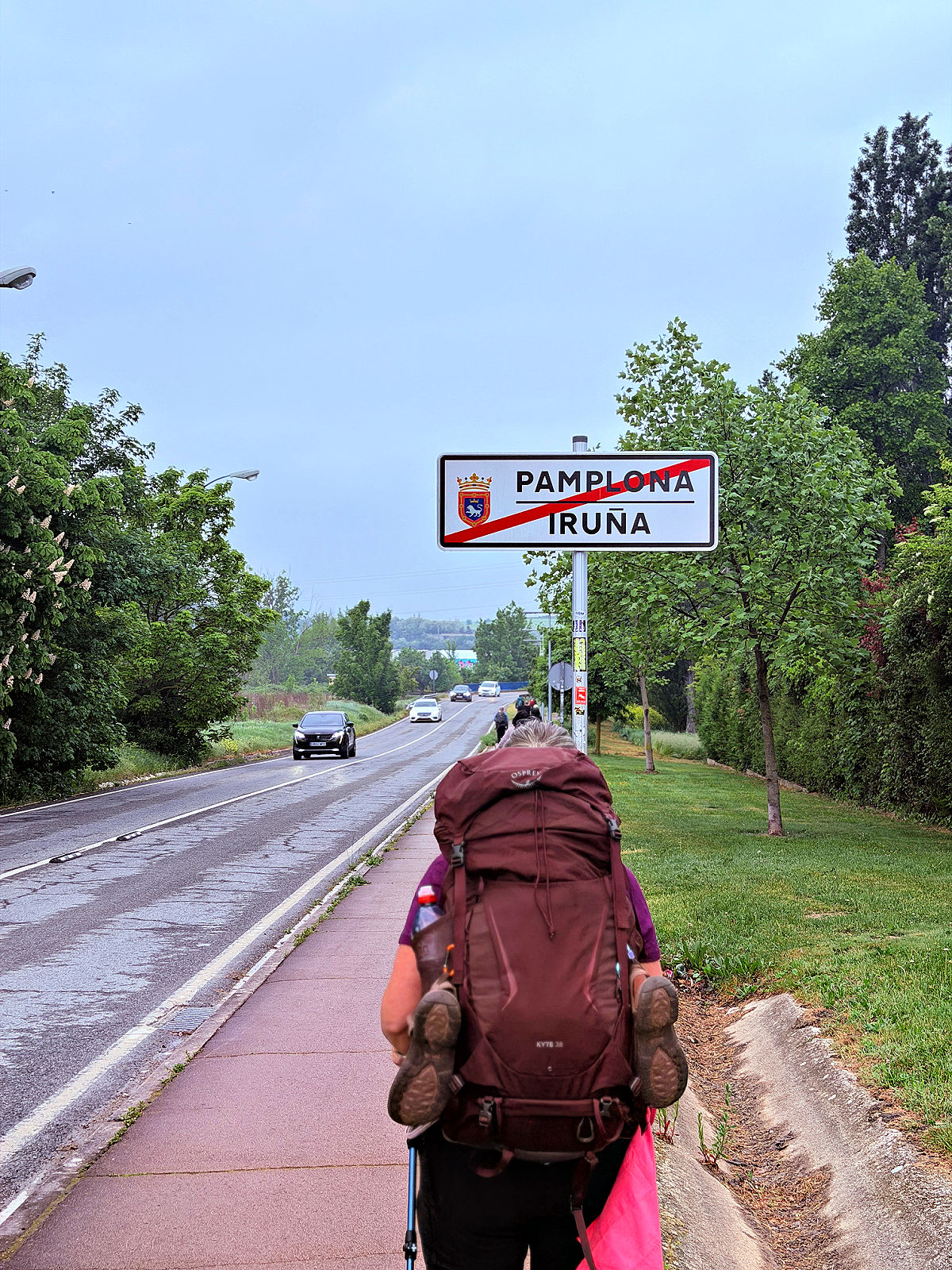
This stage looked entirely different from the wooded paths we had followed into Pamplona. The terrain kept changing, but the basic assignment remained the same: follow the yellow arrows and keep moving forward.
The Climb to Alto del Perdón
We left Pamplona on foot—naturally—and followed the Camino out of the historic center. After walking into the city the previous afternoon, we now retraced part of our path past Pamplona City Hall and continued through the city toward the University of Navarra.
The route eventually carried us beyond the city streets and into Cizur Menor. Though it’s technically been absorbed into Pamplona’s suburbs at this point, Cizur Menor still has its own identity, centered on a Romanesque church and an albergue still run by the Knights of Malta—descendants of the Hospitallers who tended pilgrims along this stretch back in the 12th century. It’s a small reminder that this “commute out of the city” section of the walk has just as much history as the parts everyone photographs.
From there, the landscape opened into fields, and we began the walk toward Zariquiegui, the last village before the real climb begins.
Before tackling the hill, we made a stop at one of the most memorable restrooms of the entire trip. The free public restroom looked like a cross between a walk-in cooler and an airport bathroom—stainless steel walls, an industrial feel, nothing charming about it whatsoever. It certainly wasn’t fancy, but after several days on the Camino, we were simply grateful to find a clean place to take care of business without ducking behind a tree.
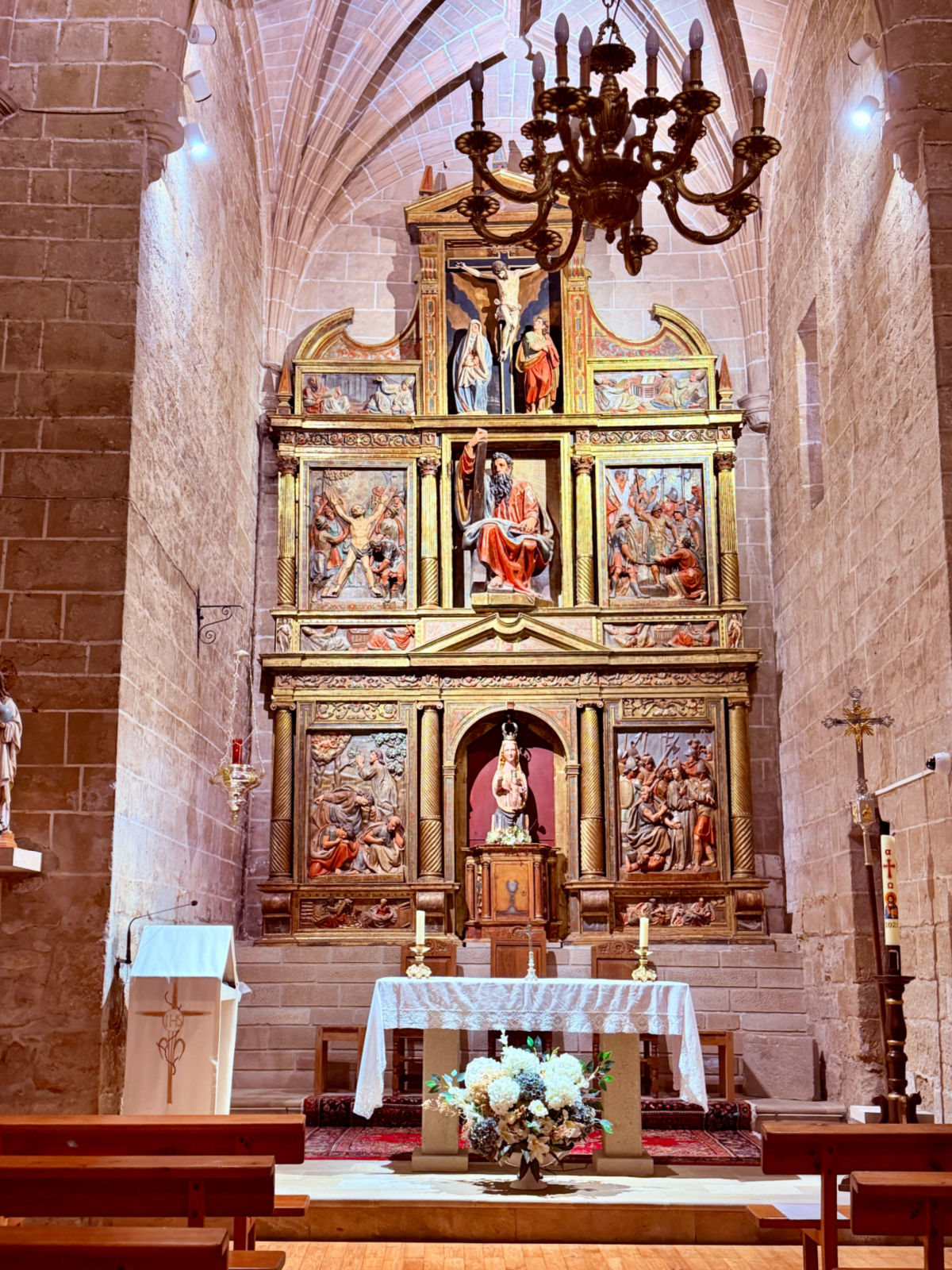
Before leaving the village, we stepped inside Iglesia de San Andrés, the small 13th-century Romanesque church that has watched over pilgrims here for generations. It’s easy to miss if you’re focused on the climb ahead, but it’s worth the two minutes—the carved doorway alone tells you people have been pausing here far longer than we have. (Movie buffs may also recognize the front of this church: it appears as a filming location in The Way, the same 2010 Martin Sheen film I mentioned back in the “What Is the Camino de Santiago?” post.)
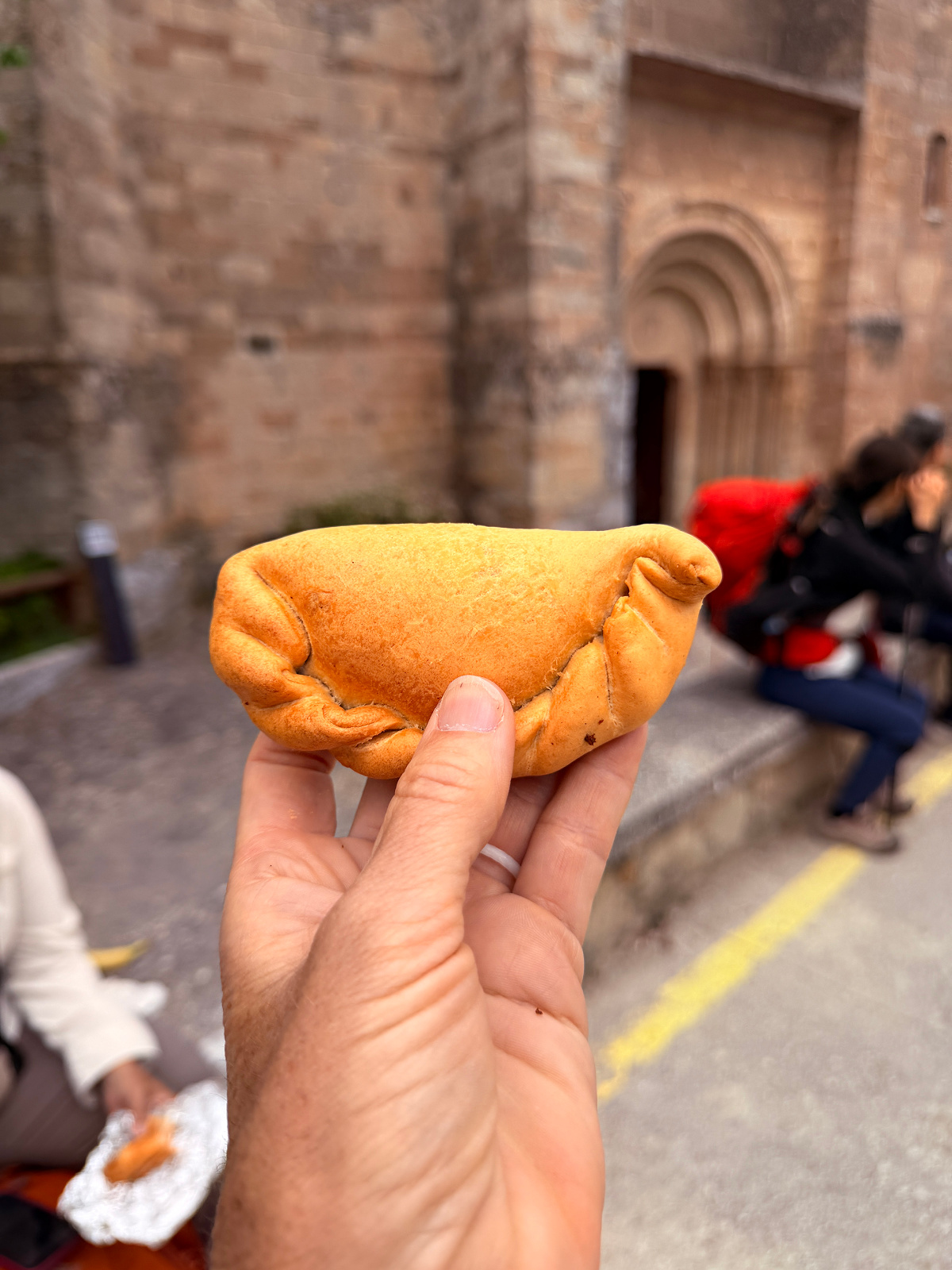
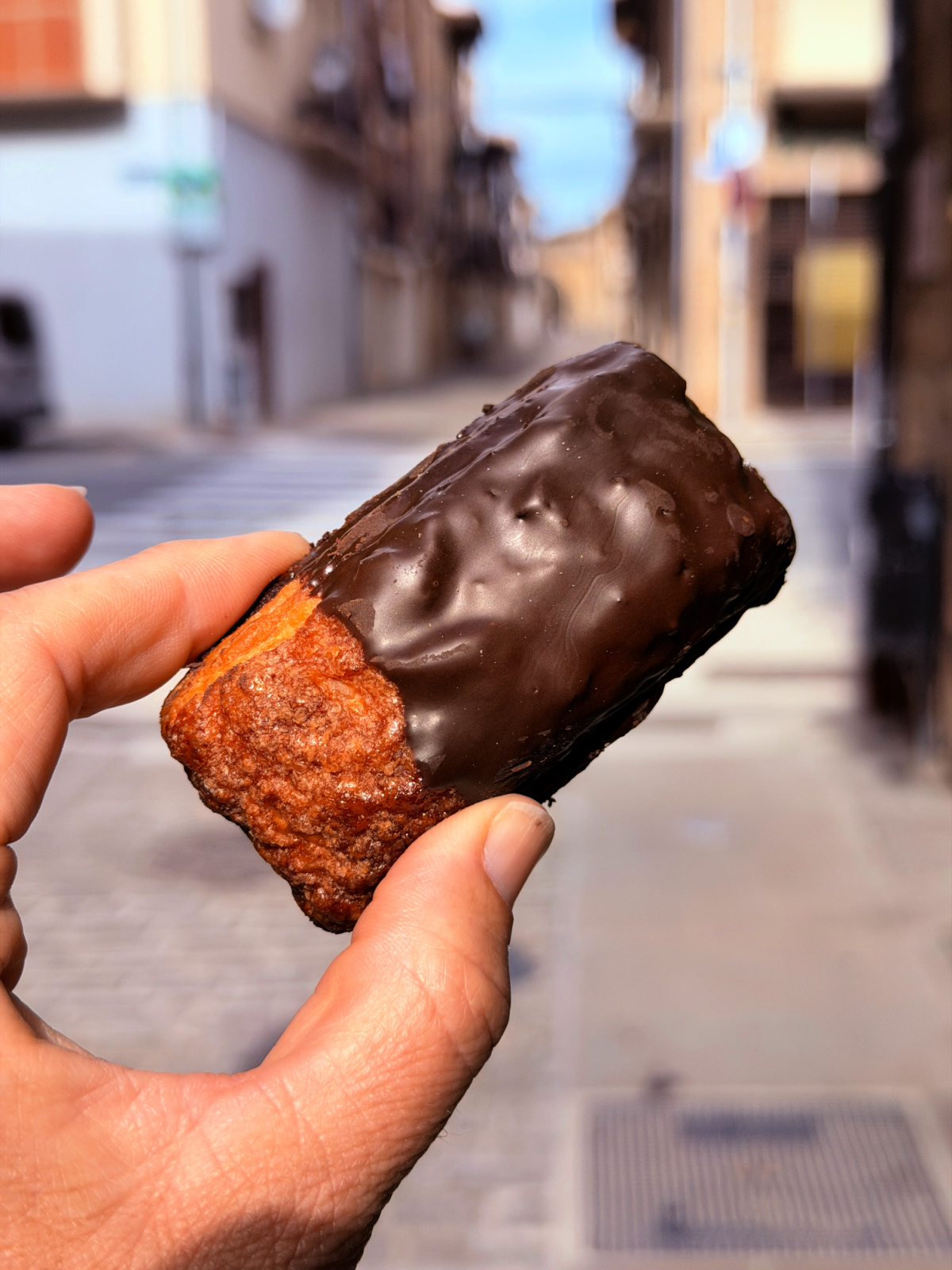
We stopped at a shop nearby for a quick snack before the climb—I picked up a small empanada-like pastry, and Diane grabbed a bite of her own. A little extra fuel felt like a reasonable investment in what was coming next.
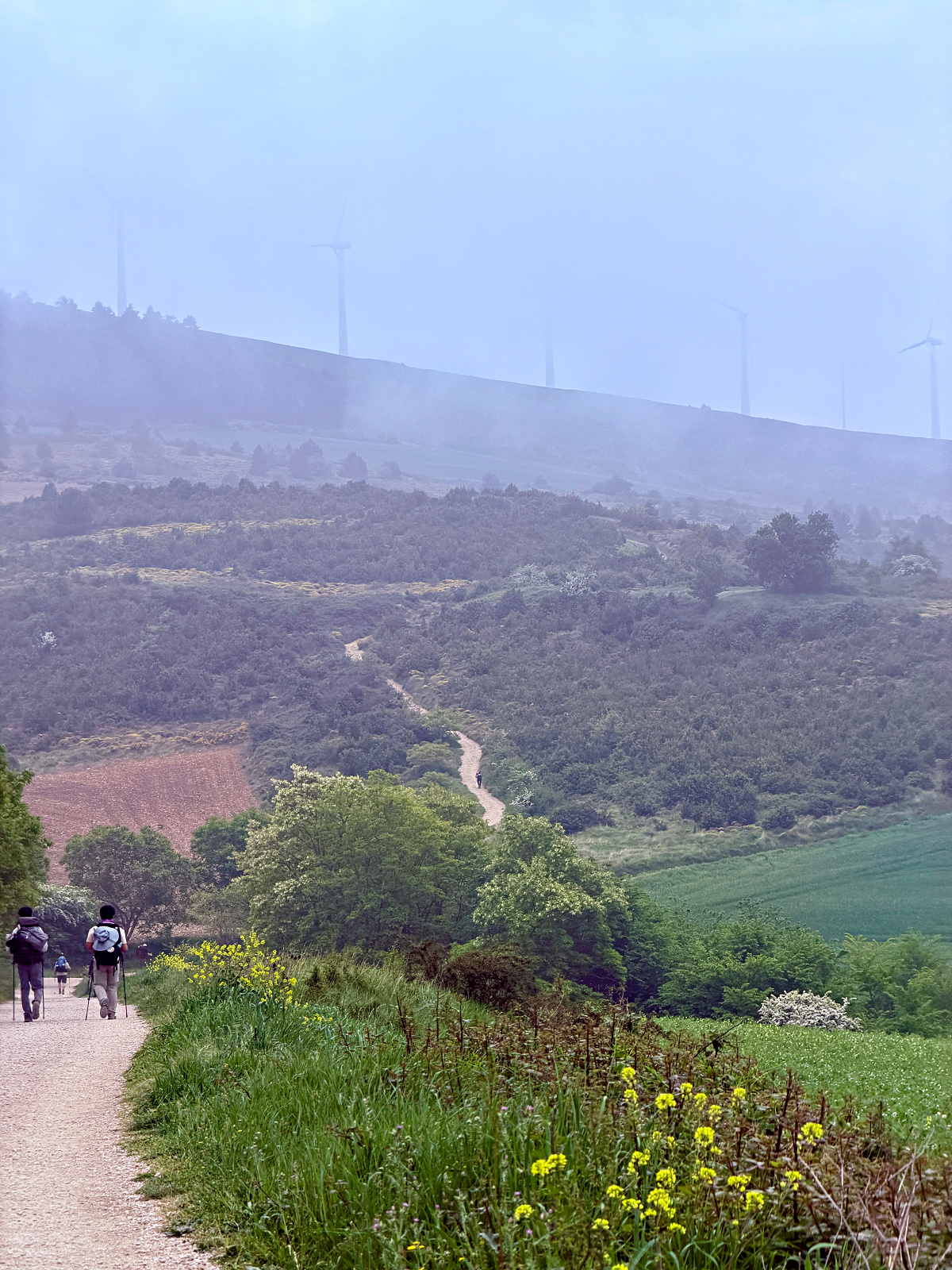
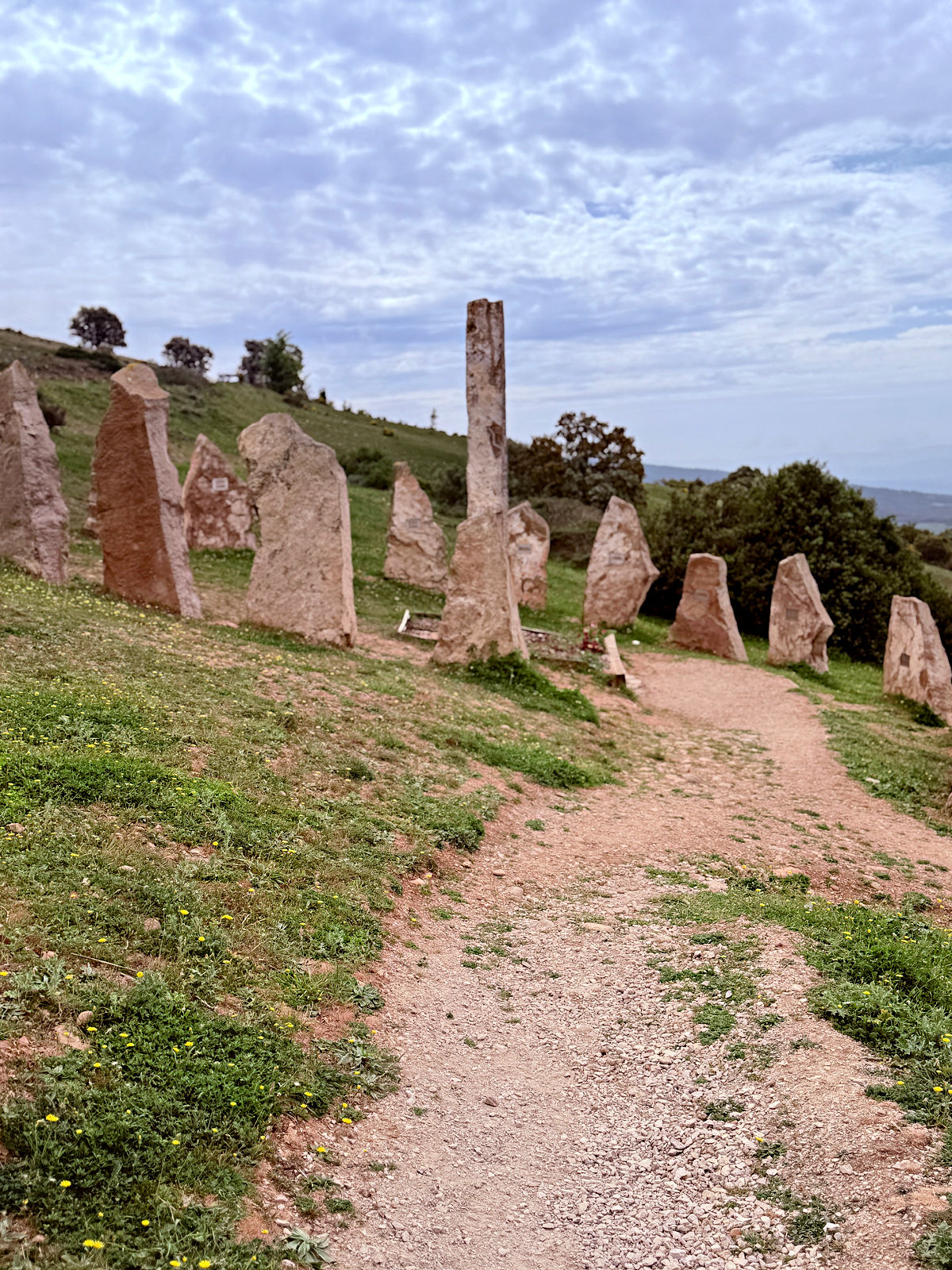
After passing through Zariquiegui, we began the final portion of the climb to Alto del Perdón, also known as the Hill of Forgiveness.
The monument includes the well-known phrase Donde se cruza el camino del viento con el de las estrellas—where the path of the wind crosses the path of the stars.
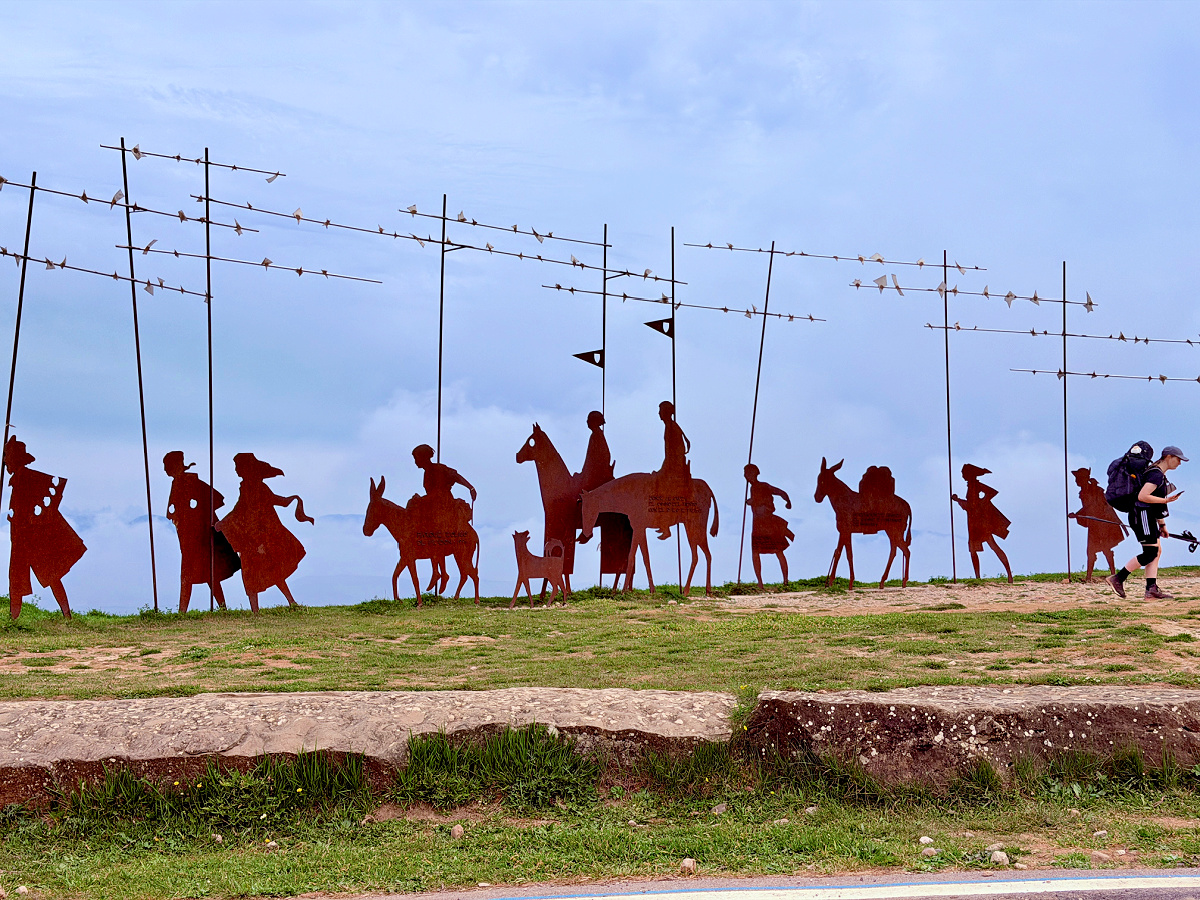
The views were worth stopping for, but reaching the top did not mean the hard part was finished. On the Camino, what goes up generally has to come down, often over the least cooperative collection of rocks available.
The Rocky Descent
The descent from Alto del Perdón was steep and covered with loose stones. It required concentration, careful footing, and a little patience. Downhill walking may sound easier than climbing, but a rocky descent can be harder on the knees and legs—especially while carrying a backpack.
By this point, lugging my approximately 17-pound pack was taking a toll on my body. I had developed a hard knot near my clavicle where the pack rested. I was not sure exactly what had happened, but it was another reminder that carrying everything on your back for days at a time affects more than your feet.
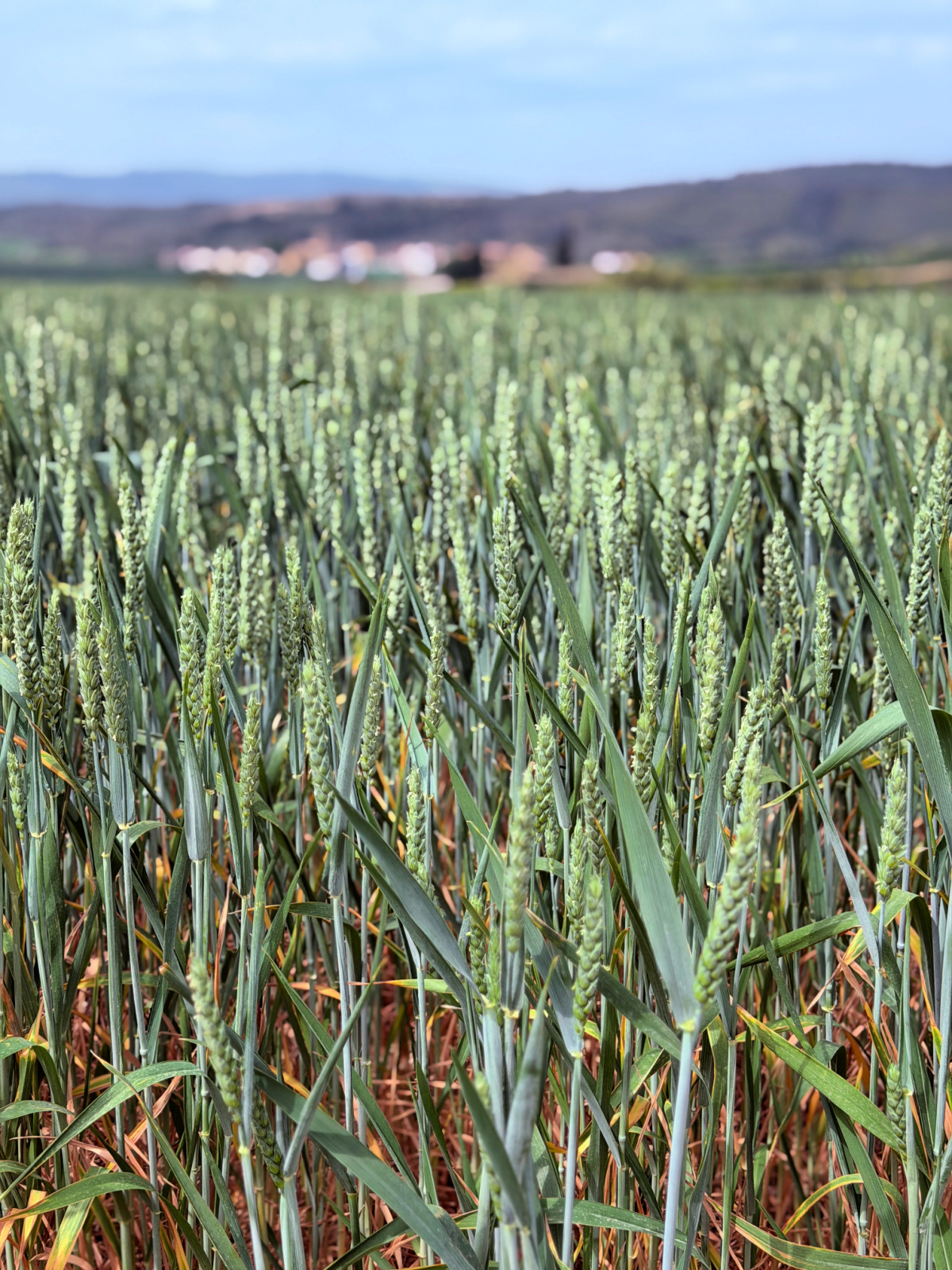
My legs were sore, my shoulder area was protesting, and Apple was happily counting every step as though it had no personal involvement in the suffering.
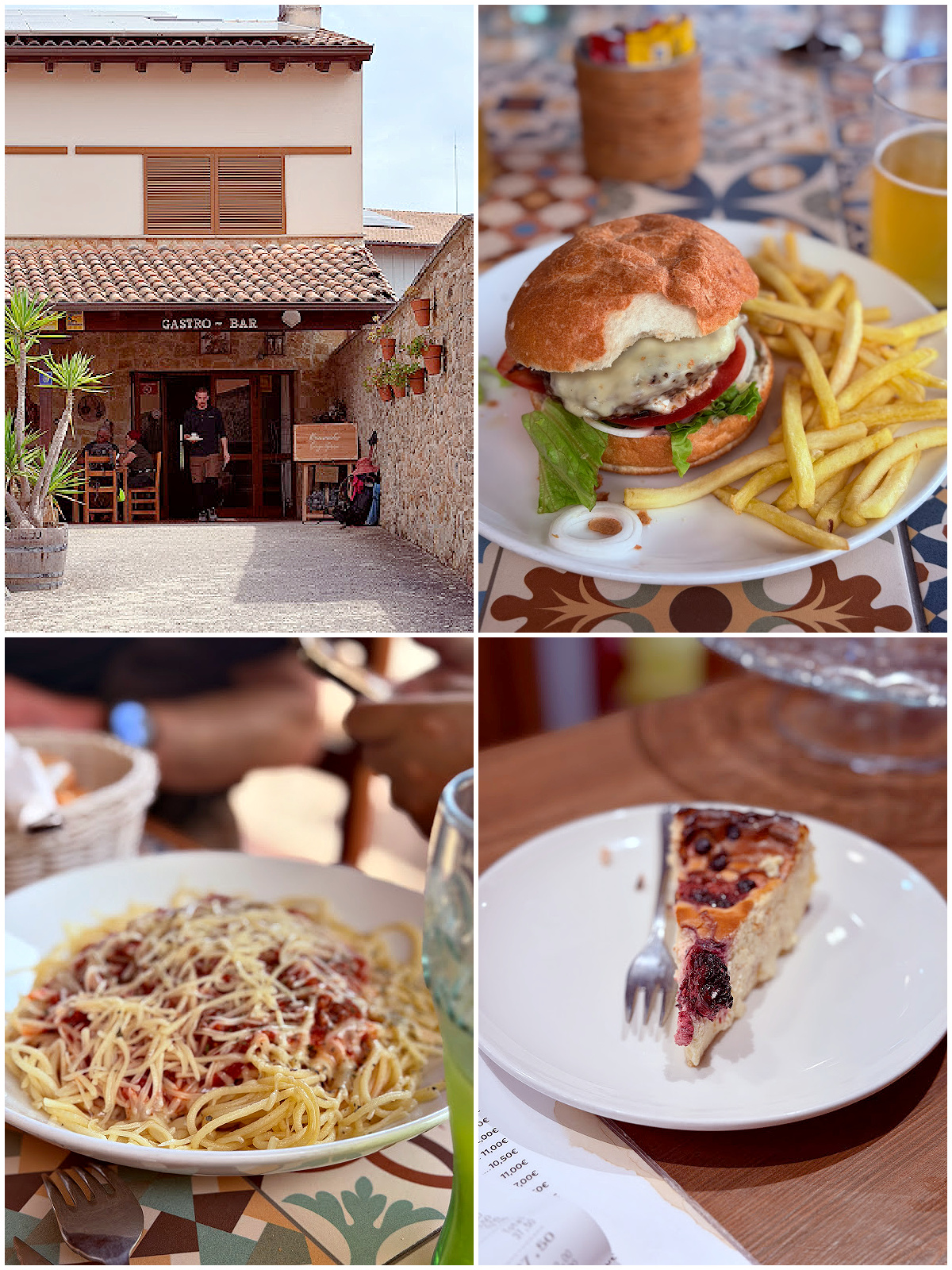
After descending Alto del Perdón, we reached the village of Uterga, where we stopped for lunch at Gastro-Bar Camino del Perdón. Diane and I both ordered burgers and Radlers—a refreshing mixture of beer and lemonade that had become one of our favorite drinks on the trip. I do not remember every detail of the meal, but I remember how good it felt to sit down after that descent, surrounded by people who had begun as strangers only a few days earlier.
We continued through Uterga and Muruzábal before reaching Obanos. Here, the route from Roncesvalles meets the Camino Aragonés coming from Somport. From Obanos, the trail led us toward Puente la Reina.
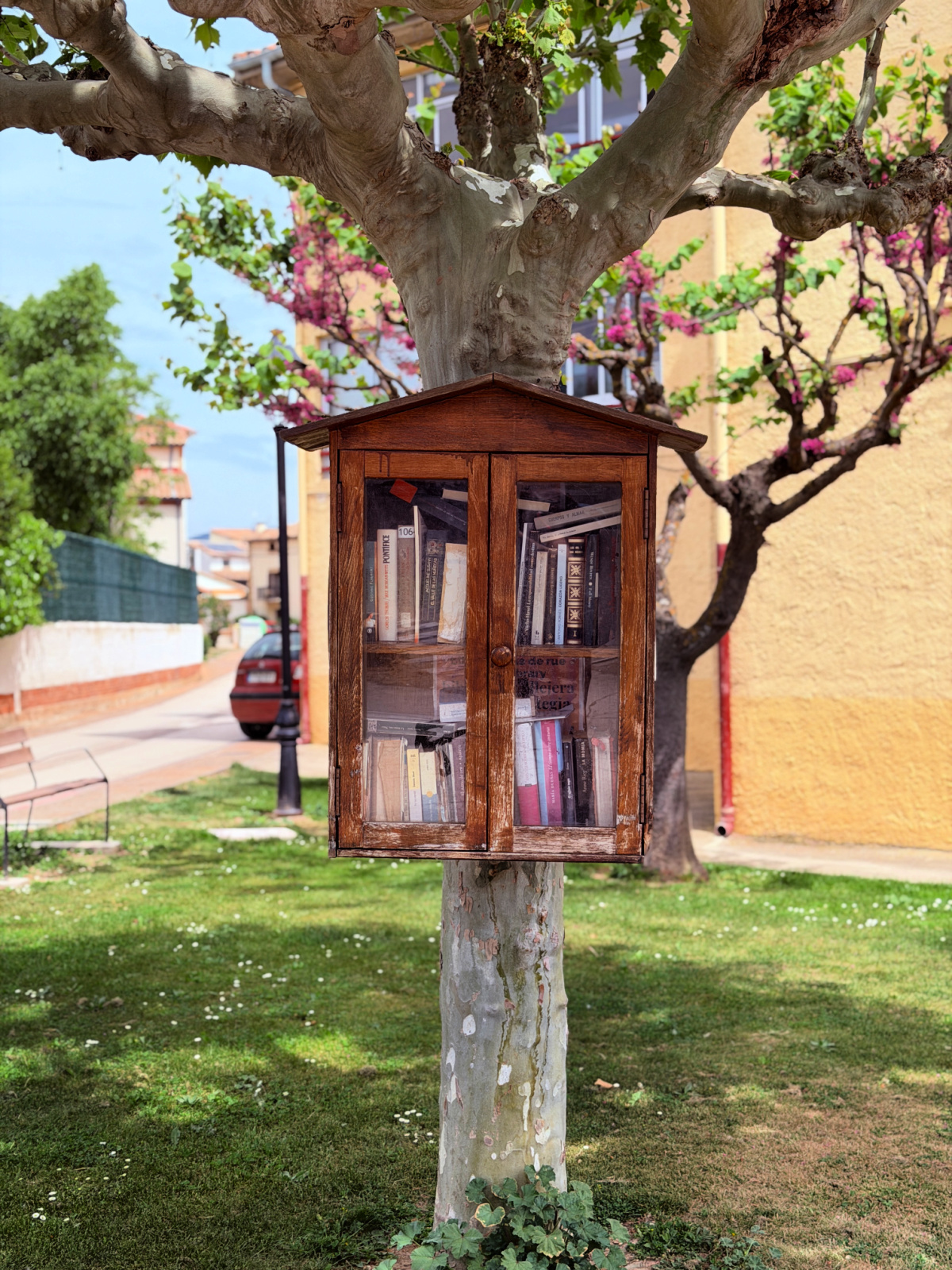
Arriving in Puente la Reina
Puente la Reina is one of the Camino’s best-known towns. Its name means “the Queen’s Bridge,” a reference to the medieval stone bridge built across the Arga River for pilgrims traveling to Santiago de Compostela.
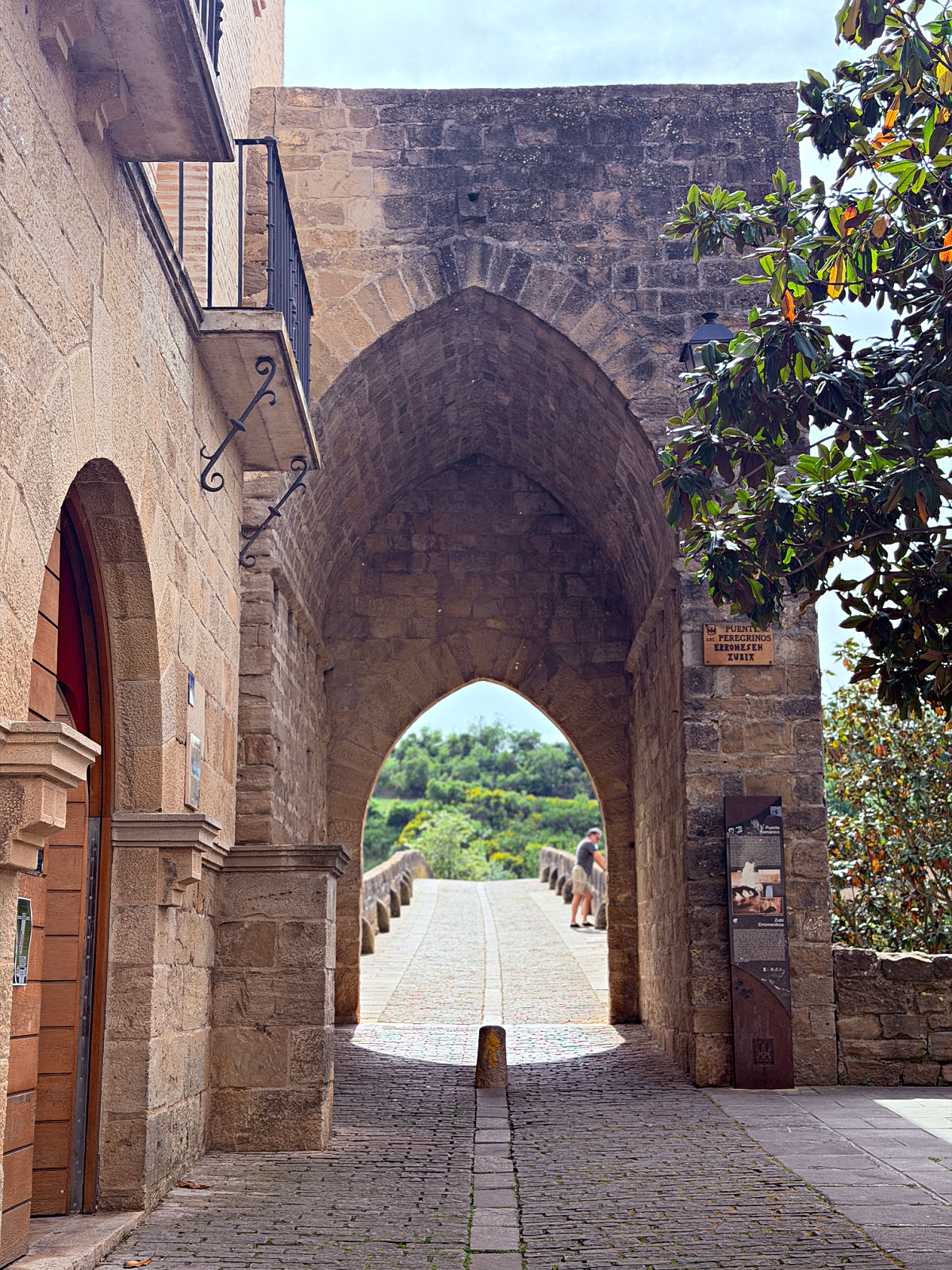
Reaching town after more than 38,000 steps was satisfying, but the day still had one unexpected experience waiting for us.
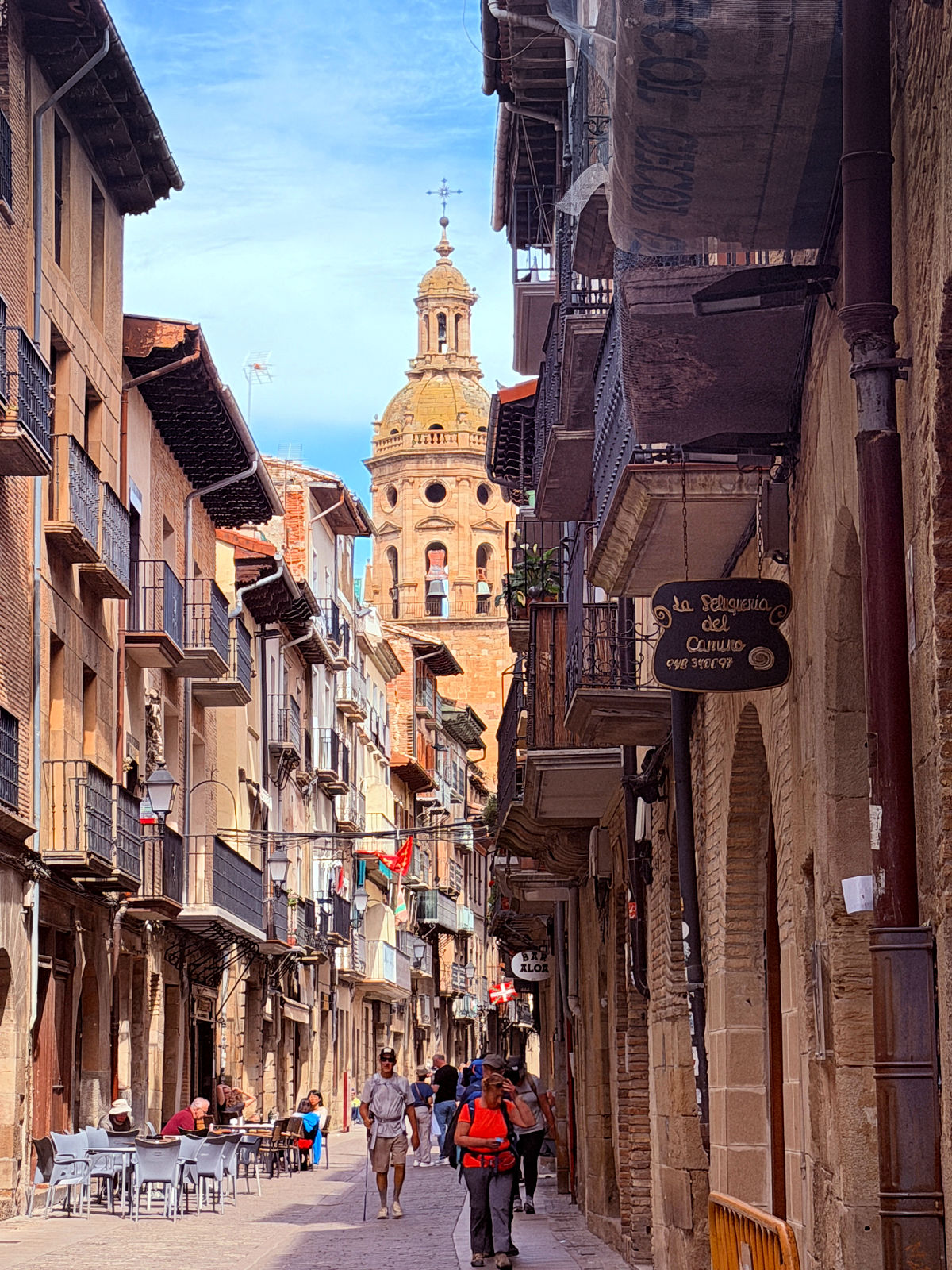
A Gathering of Bishops—and a Pilgrim Blessing
Diane and I attended a special event at a local church connected with the Dehonian community. Dehonian bishops from around the world had gathered in Puente la Reina for an international meeting held from April 26 through April 30, 2026.
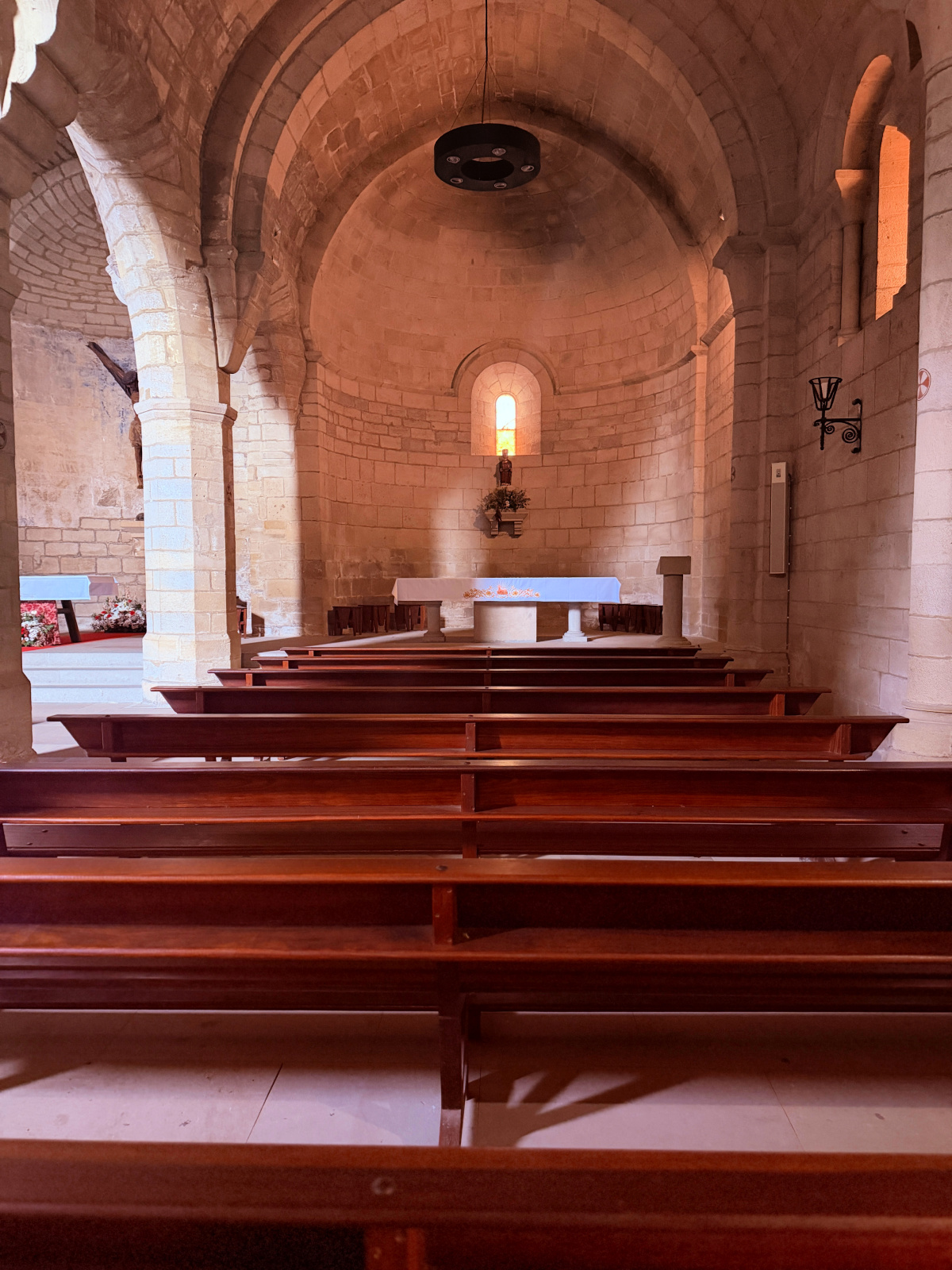
Their gathering focused in part on pilgrimage and took place in a town that has welcomed Camino travelers for centuries. Of all the days we could have arrived in Puente la Reina, we happened to be there while this unusual meeting was underway.
We received a pilgrim blessing and were each given a small cross necklace to wear. It was an unexpected and meaningful end to a physically demanding day.
The Camino is full of experiences that cannot be scheduled into an itinerary. You walk into a town expecting food, a shower, and a bed. Sometimes you also find bishops from around the world waiting to bless pilgrims. That was certainly not on my packing list.
Staying at Hotel Rural Bidean
Diane and I stayed at Hotel Rural Bidean in Puente la Reina. Our double room had a private bathroom, towels, and—most memorably—a ceiling fan.
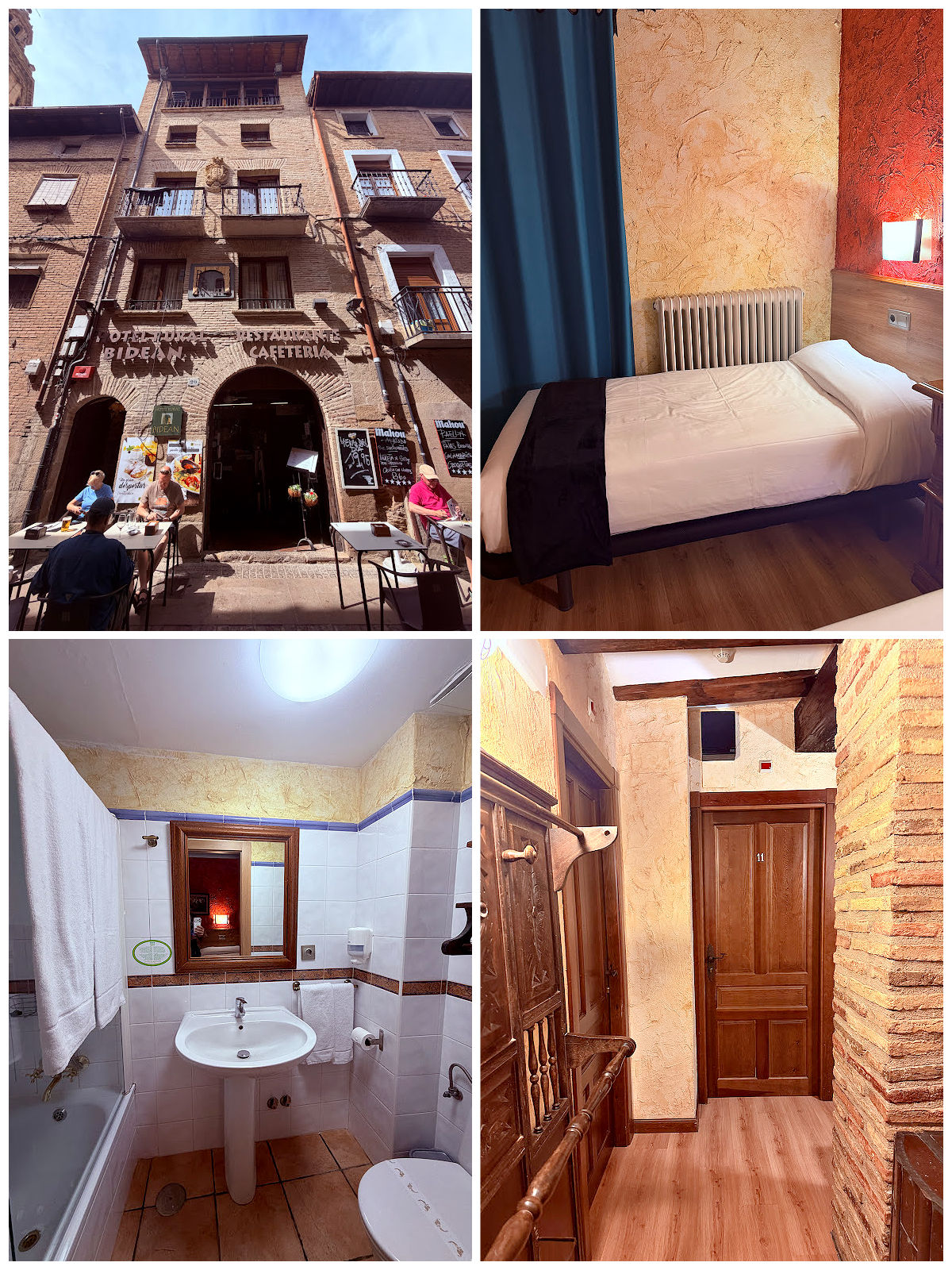
The room cost approximately €60.50 for the night. Food was not included, although breakfast could be purchased separately for the following morning. I believe the options were around €10 for an assortment or €7 for a simpler breakfast or buffet.
After several nights of adjusting to whatever accommodation awaited us, a private bathroom and a ceiling fan felt downright civilized.
Dinner at the Hotel
We had dinner with our Camino friends, continuing the pattern that had developed over the previous few days. We might spread out while walking, but meals brought us back together.
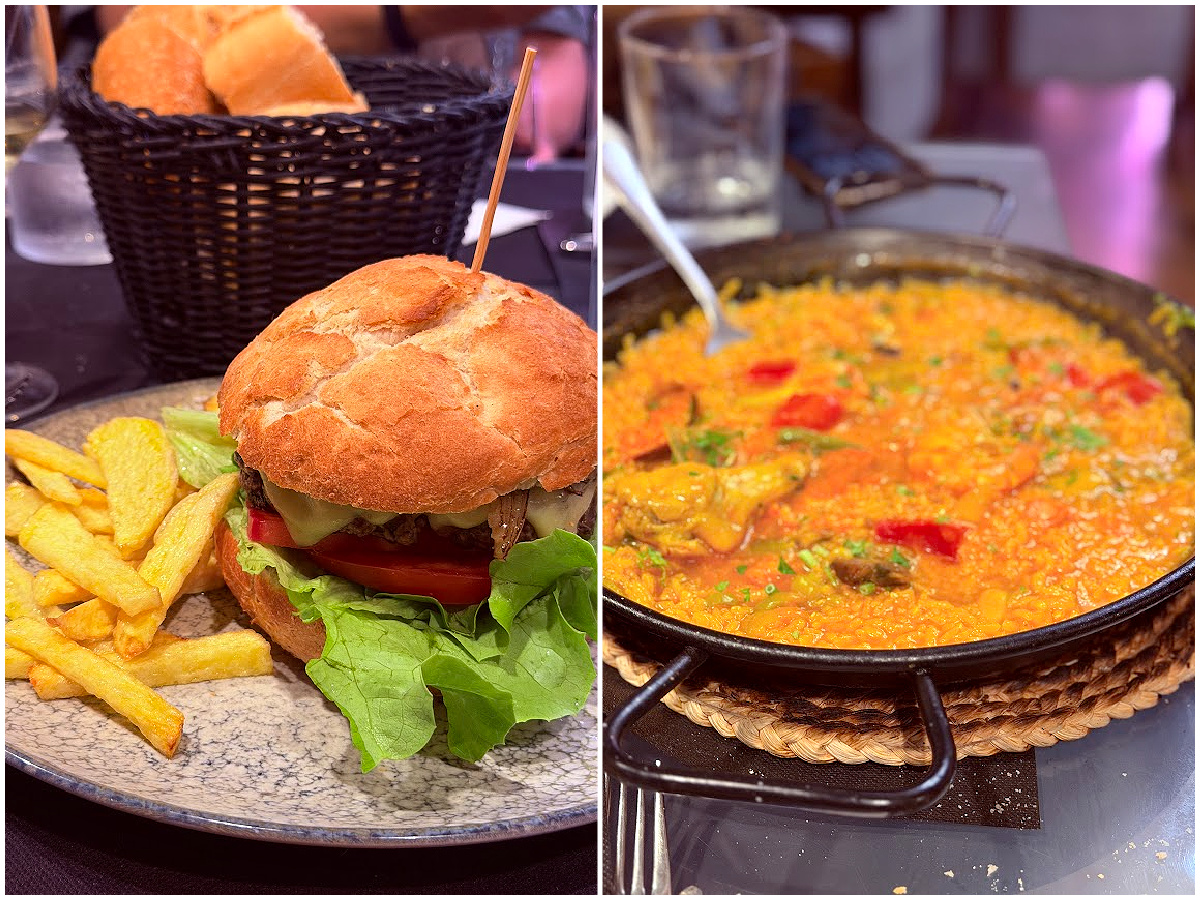
I ordered a burger at the hotel restaurant for €16. Apparently the Burger King meal in Pamplona and the burger I had for lunch had not exhausted my interest in burgers. After walking nearly 15 miles, I saw no reason to apologize for consistency.
The meal gave us time to laugh, compare the day’s aches and accomplishments, and enjoy being together without backpacks strapped to our bodies.
What Day 5 Taught Me
The walk from Pamplona to Puente la Reina combined many of the things that define the Camino: changing landscapes, difficult terrain, physical discomfort, new friendships, historic places, and moments no one could have planned.
My sore legs and the knot near my clavicle made it clear that carrying a 17-pound backpack day after day was hard on my body. At the same time, walking with our new friends made the miles feel lighter, even when our packs did not.
Reaching Alto del Perdón was memorable, but the blessing in Puente la Reina may have been the greater gift. We had arrived tired and sore, and we left the church wearing small crosses given to us by people we had never expected to meet.
Ready for the Next Leg?
The following morning, we would leave Puente la Reina and walk approximately 21 kilometers to Estella. It would be a slightly shorter day—but after five days on the Camino, “only 21 kilometers” had somehow become a reasonable sentence.
Have you ever encountered something meaningful on a trip that you never could have planned? What happened?
