
Zubiri to Pamplona: Day 4 of the Camino Francés

Walking from Zubiri to Pamplona takes Camino Francés pilgrims from the quiet villages and wooded trails of Navarra into the region’s historic capital. The route follows the Arga River through places such as Ilarratz, Larrasoaña, Zuriáin, Irotz, Zabaldika, Trinidad de Arre, Villava, and Burlada before reaching Pamplona’s old city.
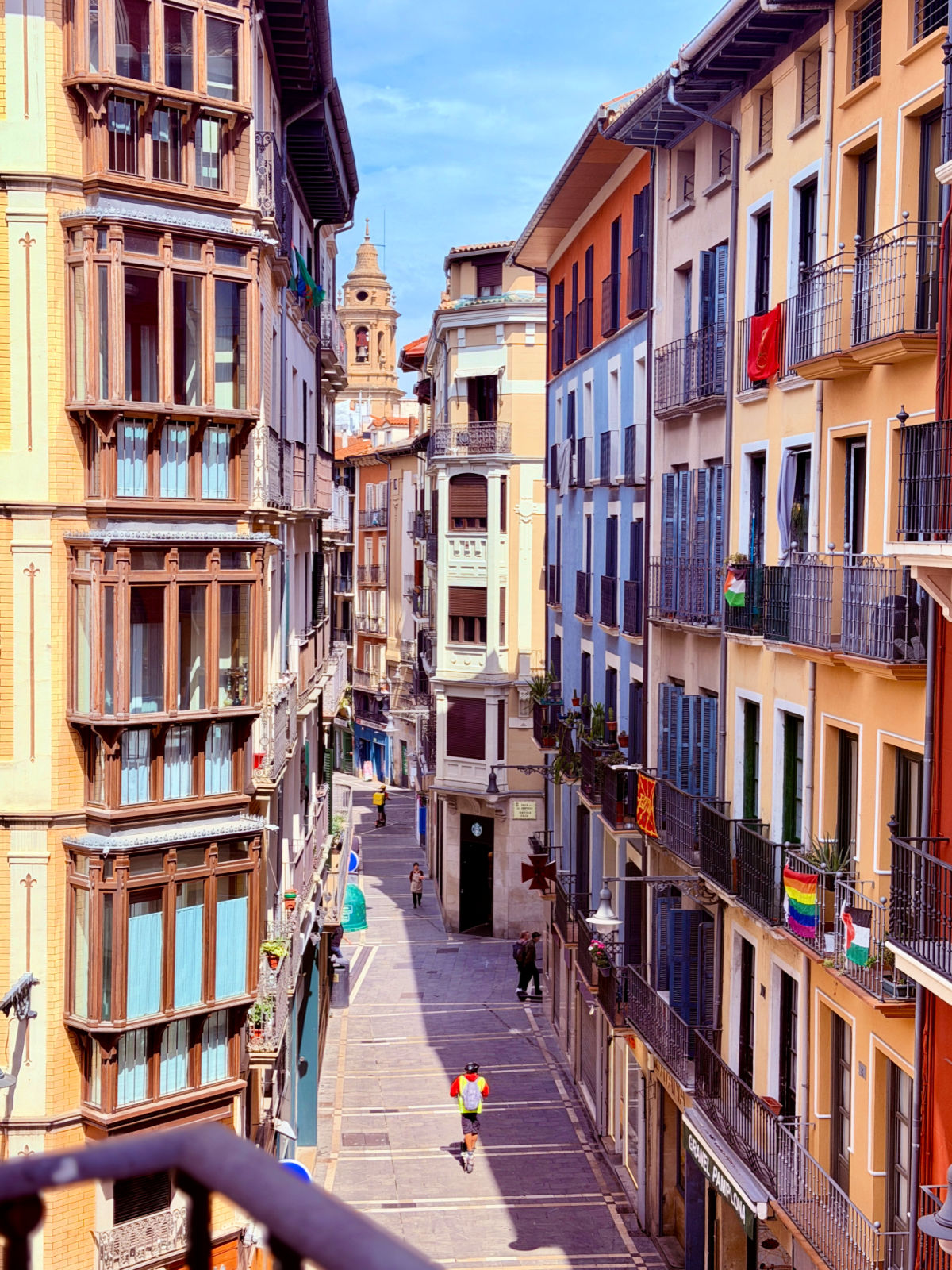
At approximately 20.4 kilometers—or 12.7 miles—this stage does not have the intimidating mountain crossing of the first two days. However, more than 12 miles is still more than 12 miles, especially once accumulated fatigue, blisters, and a loaded backpack join the party.
This was Monday, April 27, and the eighth day of our trip—but only our fourth day of walking the Camino. By this point, it was getting harder to remember what day it was or what the date was. The Camino had reduced time to a simpler system: get up, eat, walk, find a bed, and repeat.
Follow the full journey in my Camino de Santiago series.
Zubiri to Pamplona Route at a Glance
- Date: Monday, April 27
- Camino walking day: Day 4
- Starting point: Zubiri, Spain
- Ending point: Pamplona, Spain
- Official distance: Approximately 20.4 kilometers (12.7 miles)
- My recorded steps: 33,728
- Places along the route: Ilarratz, Eskirotz, Larrasoaña, Zuriáin, Irotz, Zabaldika, Huarte, Trinidad de Arre, Villava, and Burlada
- Terrain: Wooded paths, riverside stretches, village roads, some steep steps, and a long urban approach into Pamplona
- Where we stayed: Hotel Pompaelo Urban Spa
Your actual mileage may be longer than the official distance depending on where you stay, which route variations you take, and how much wandering you do once you reach Pamplona. My phone logged 33,728 steps, so it clearly believed I had done enough for one day.
Breakfast at Bar Valentín
We began with breakfast at Bar Valentín in Zubiri. I had tortilla, a chocolate croissant, and coffee. Breakfast was €7 per person, and we ordered another round of coffee for €2 each.
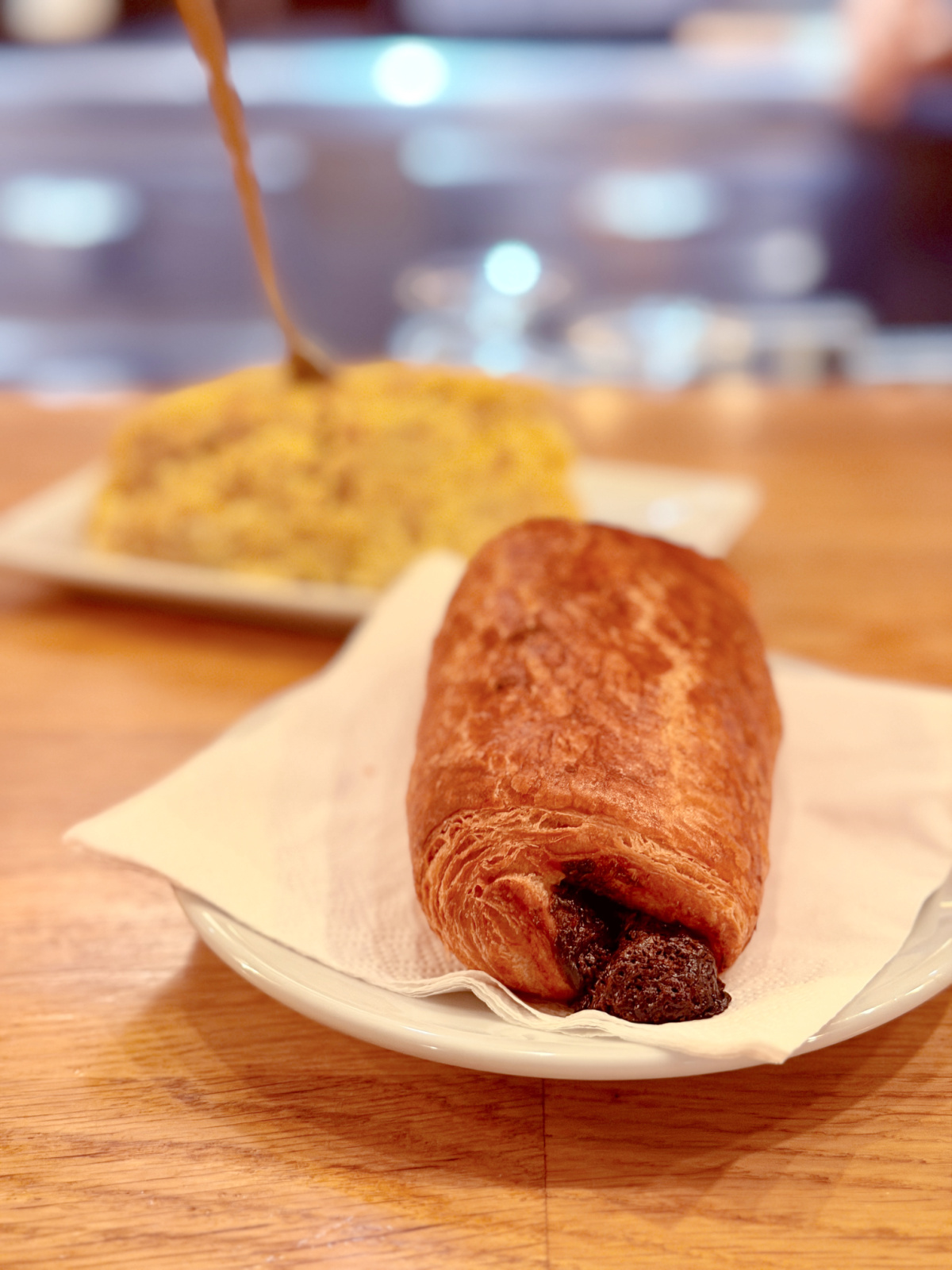
That second coffee was not an indulgence. It was trail preparation.
We met up with three of our new friends before setting out. One of the things I was beginning to appreciate about the Camino was how often familiar faces reappeared. We did not all walk at exactly the same pace or stay in the same places, but we continued finding one another along the way.
Leaving Zubiri Behind
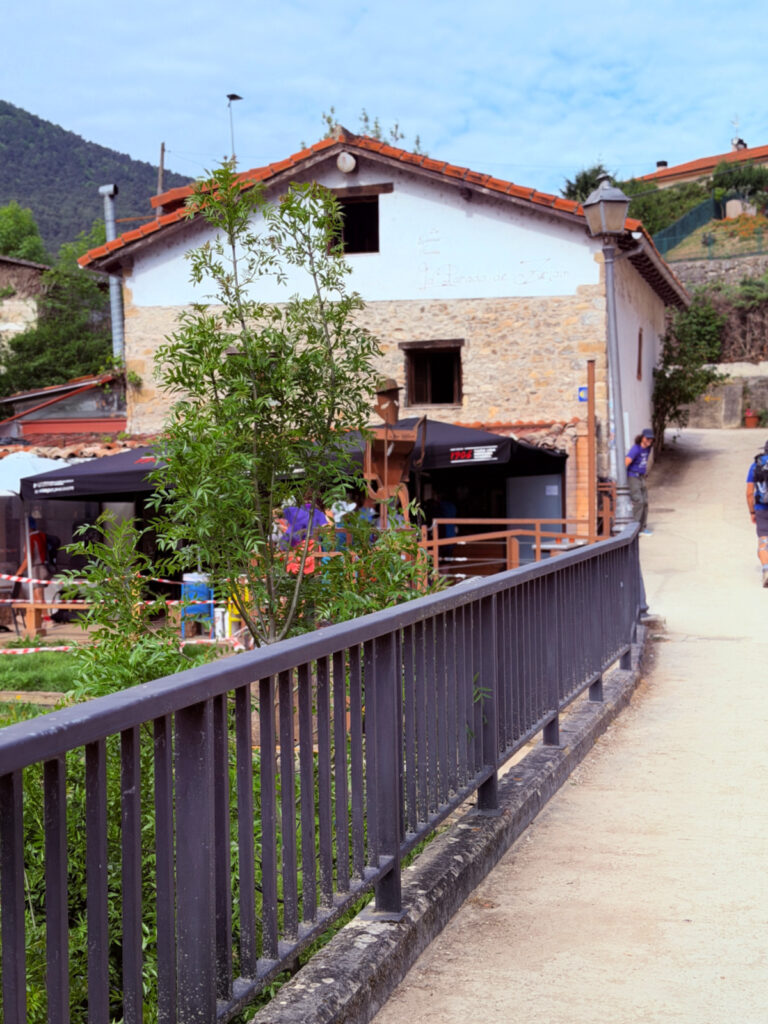
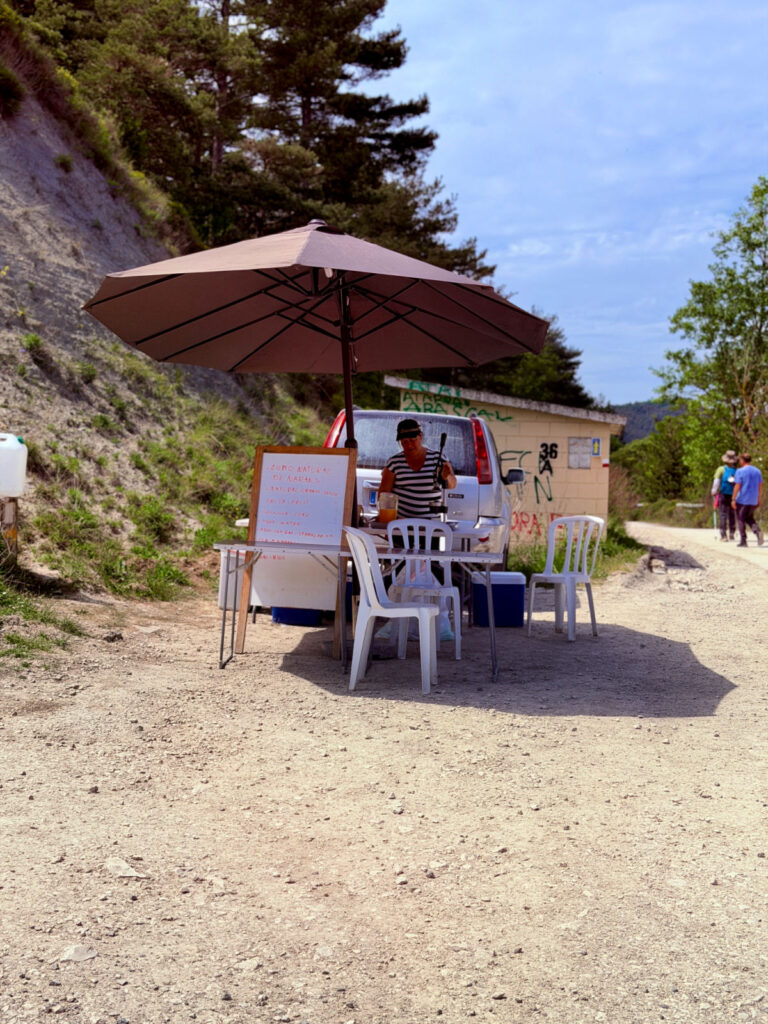
After breakfast, we left Zubiri and followed the Camino through the Esteríbar Valley. Parts of the route ran near the Arga River, alternating between wooded paths, small communities, and signs of everyday life in rural Navarra.
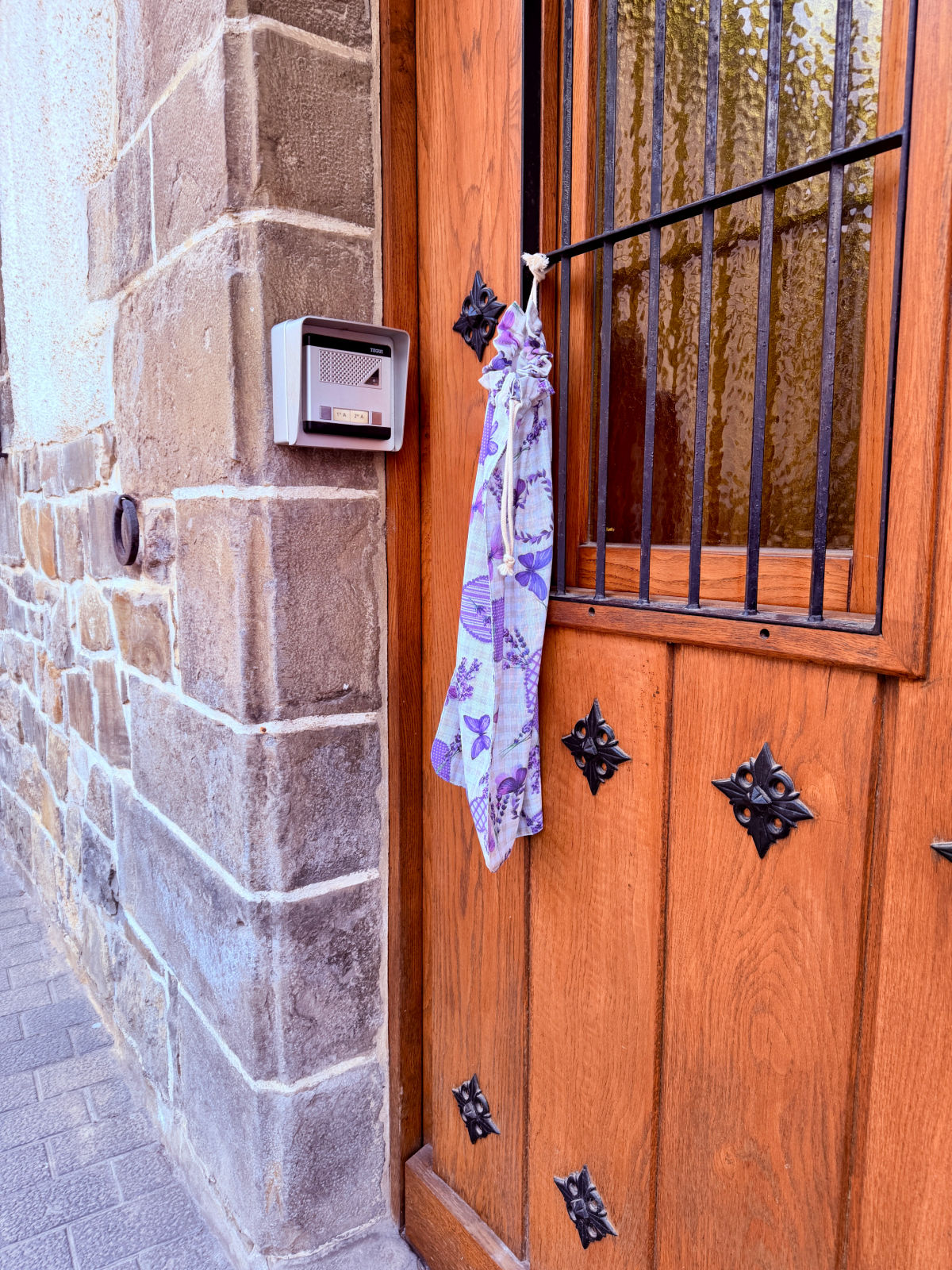
One detail that caught my attention was seeing bags of bread hanging from village doors. The deliveries were simple and wonderfully trusting: fresh bread left waiting for the people inside. It was a small glimpse into local life that I might have missed entirely if we had been speeding through in a car.
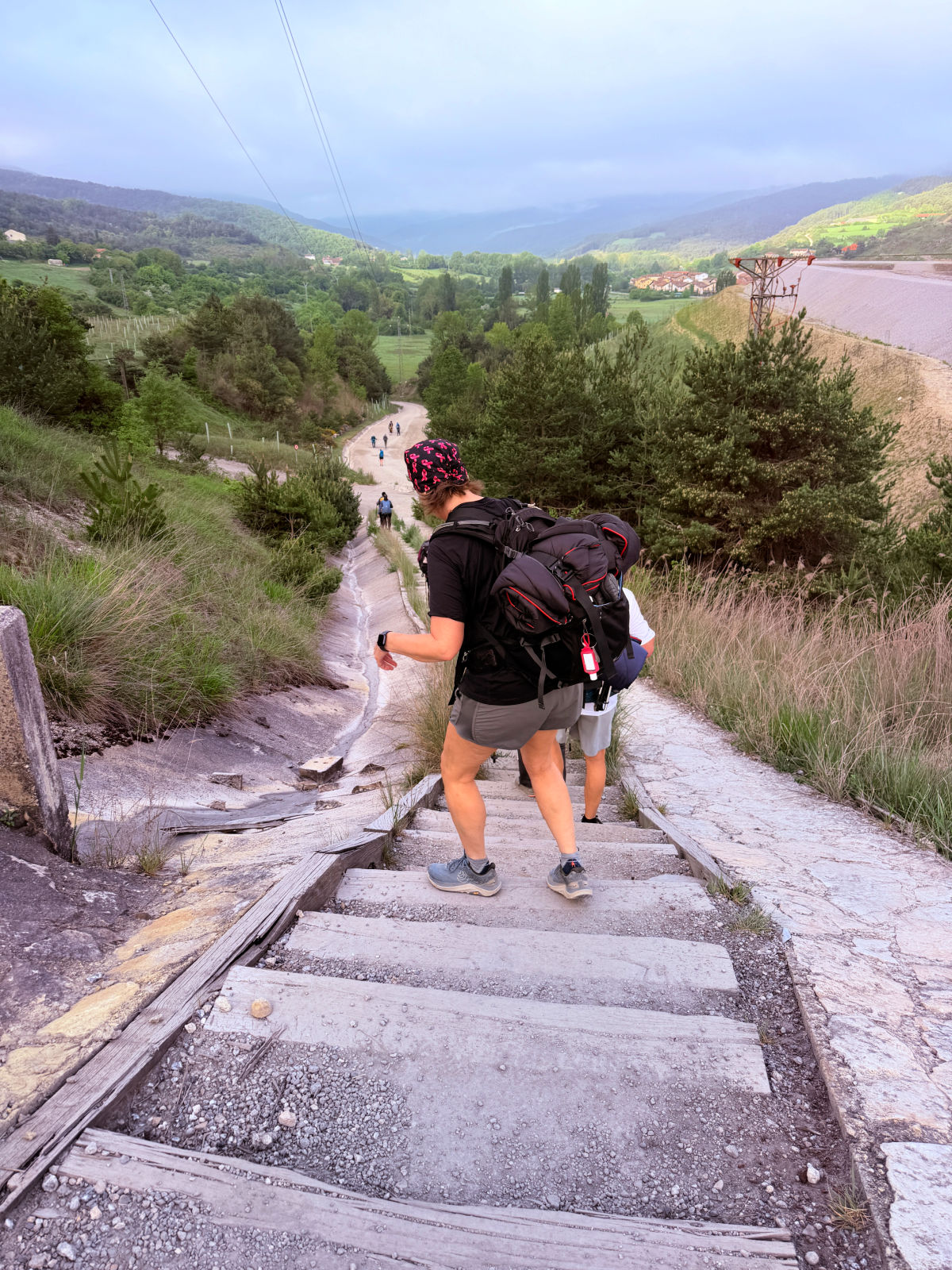
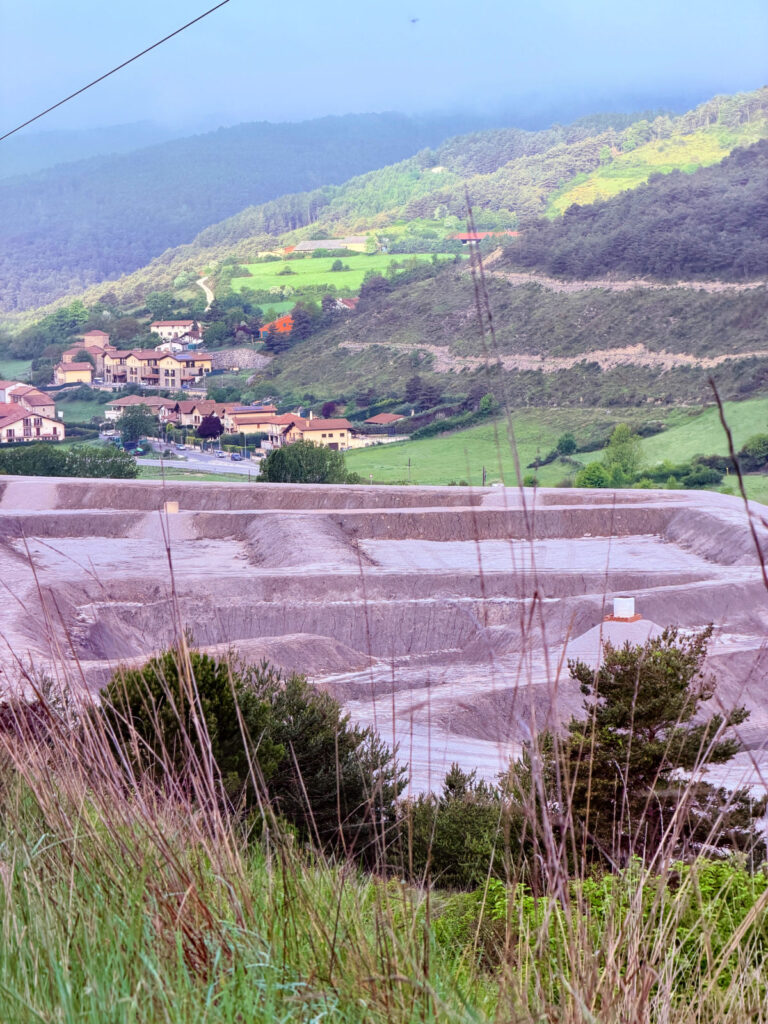
Not every view was storybook scenery. The route also passed through an area associated with magnesite mining and processing. The Camino has a way of mixing old churches, green countryside, village homes, highways, and industry—sometimes all within the same day.
Ilarratz and the Road Toward Larrasoaña
In Ilarratz, we passed the Iglesia de Santa Lucía. The church has medieval origins, although it was substantially altered during the 16th century.
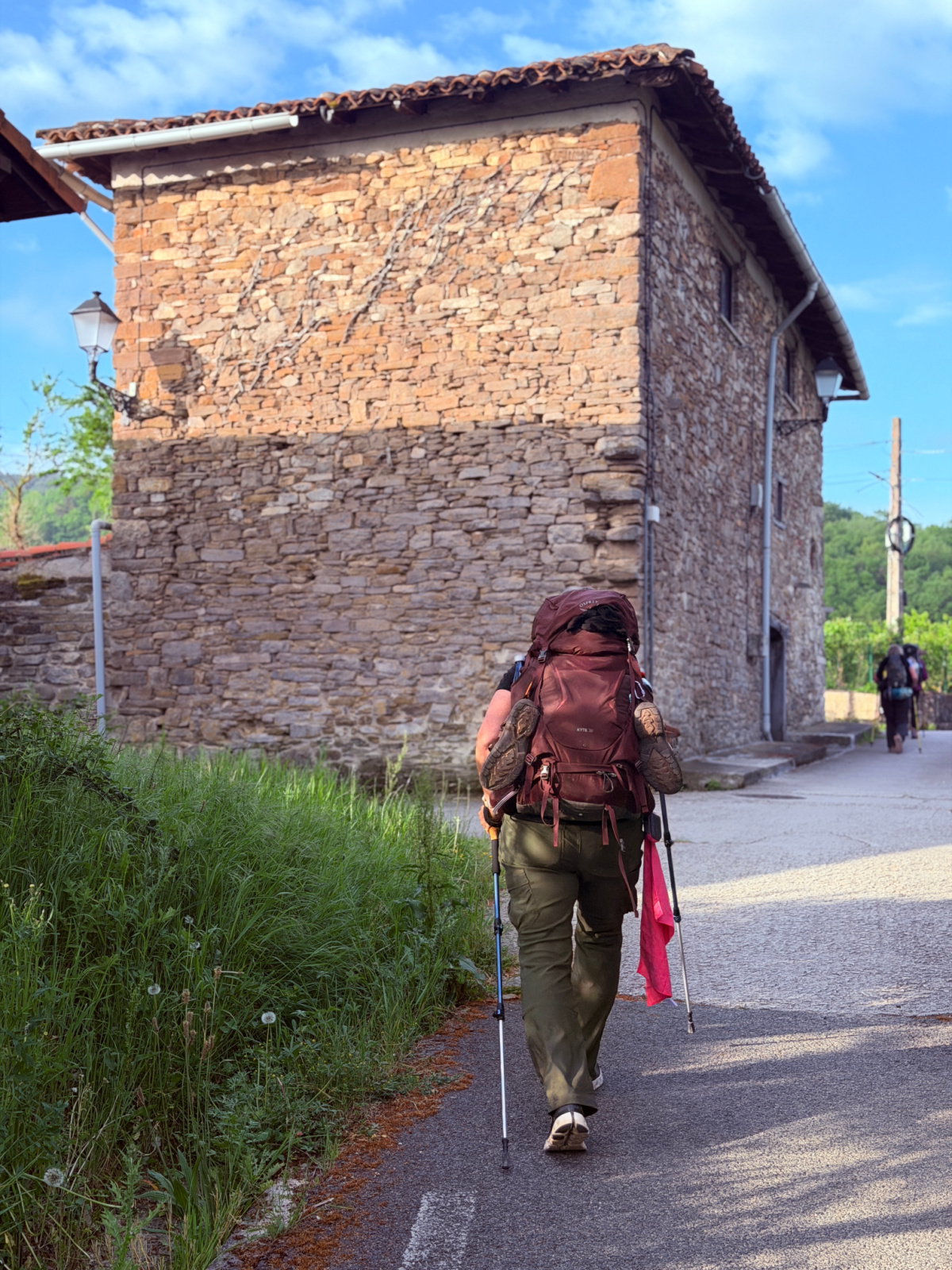
There were also steep steps along this portion of the route. They were not Pyrenees-steep, but by Day 4, our legs were keeping careful records of every incline, decline, stair, and unnecessary curb.
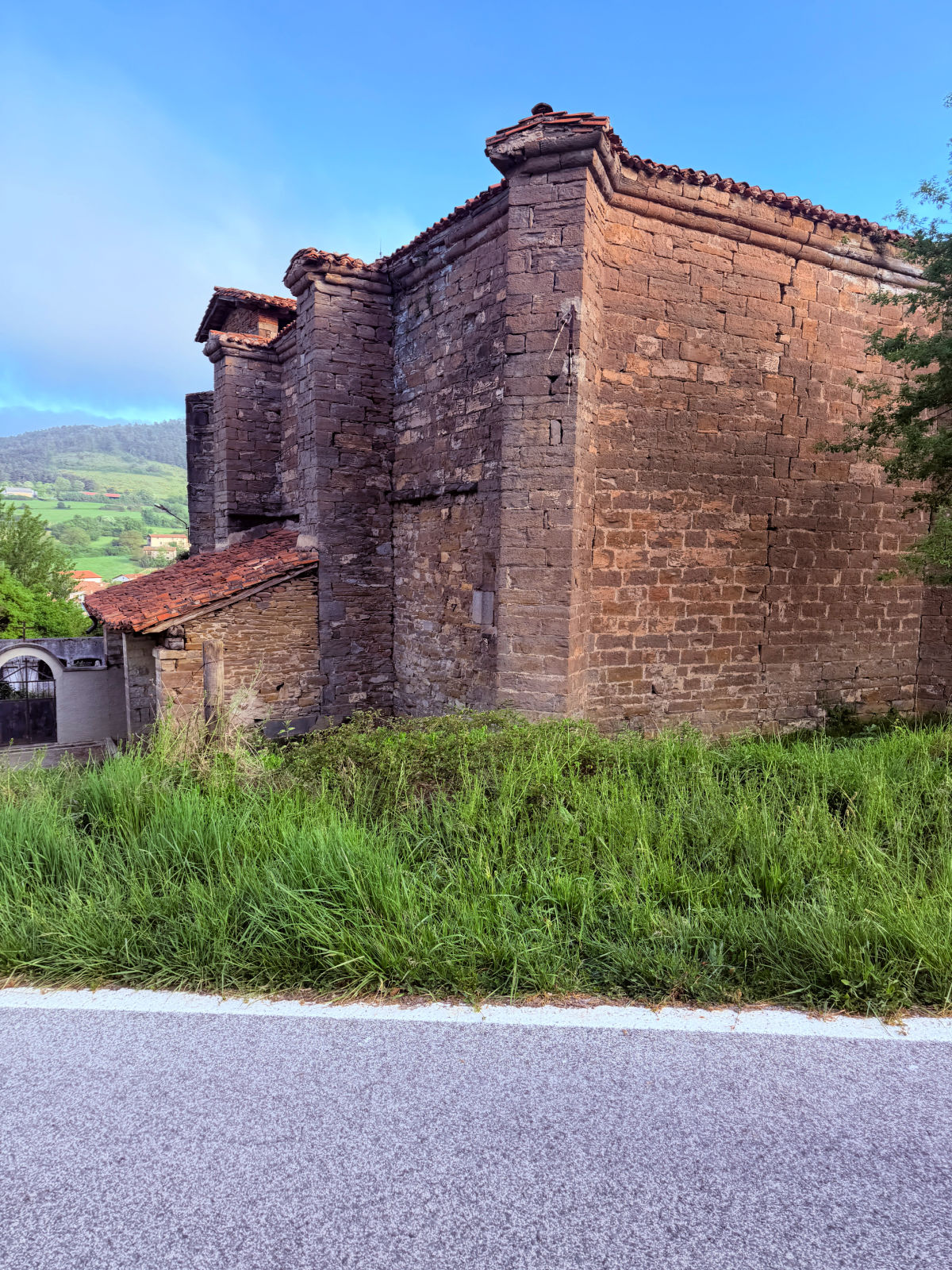
The Camino continued toward Eskirotz and Larrasoaña. The traditional route skirts Larrasoaña rather than passing directly through its center, so pilgrims who want to visit the village must cross the Arga River.
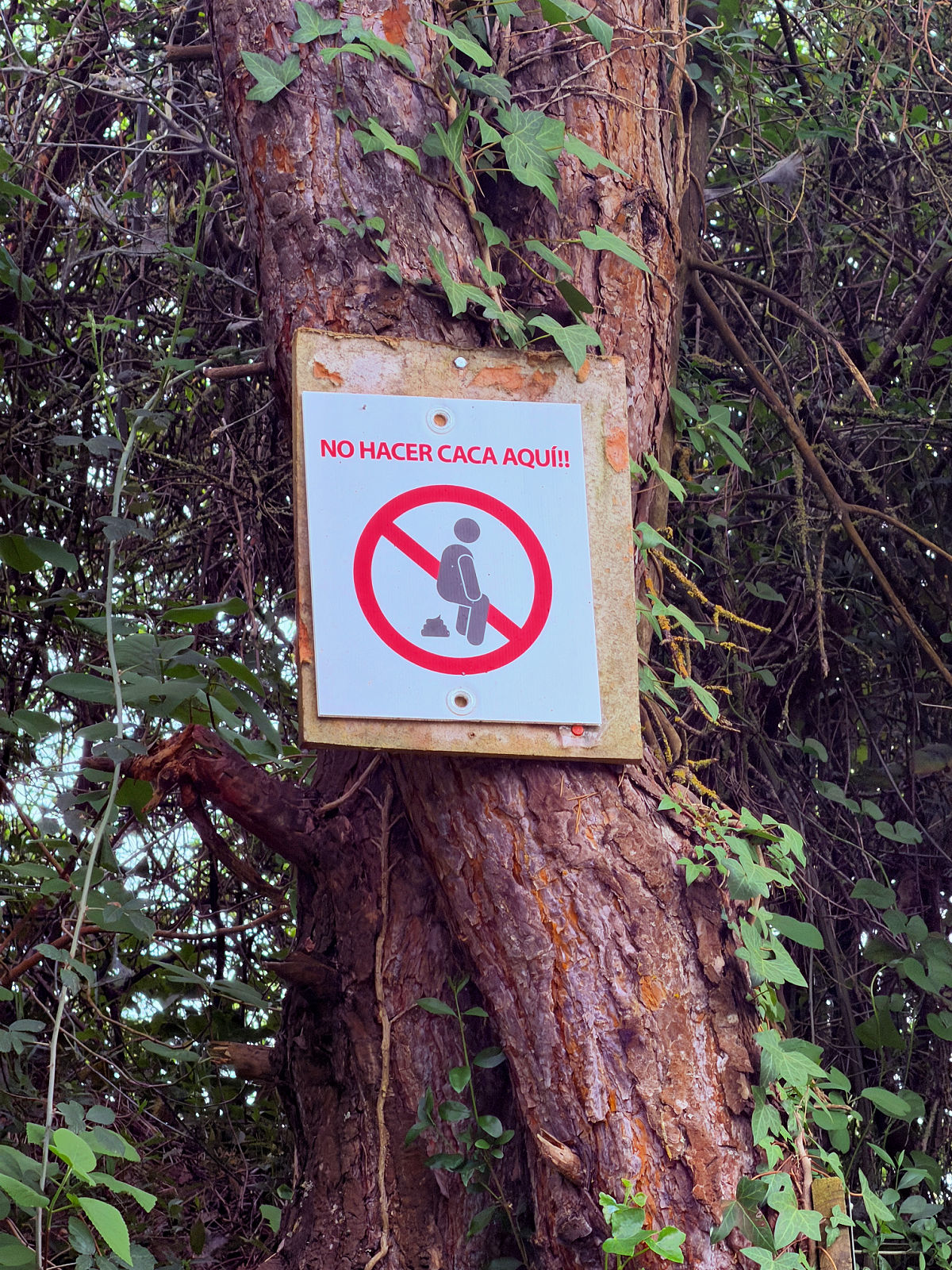
From there, we continued through the valley toward Zuriáin, where La Parada de Zuriain serves pilgrims along the route. We passed through Irotz and Zabaldika before the trail began leading us toward the more populated communities outside Pamplona.
When the Backpack Starts Fighting Back
By this point, Diane’s backpack was beginning to take a toll. She had developed blisters on her shoulders from carrying it.
I was amazed that she had carried so much for so long. Foot blisters get most of the attention on the Camino, but a heavy or poorly adjusted pack can cause its own collection of problems. Every pound feels increasingly personal after several consecutive days of walking.
Still, she kept going.
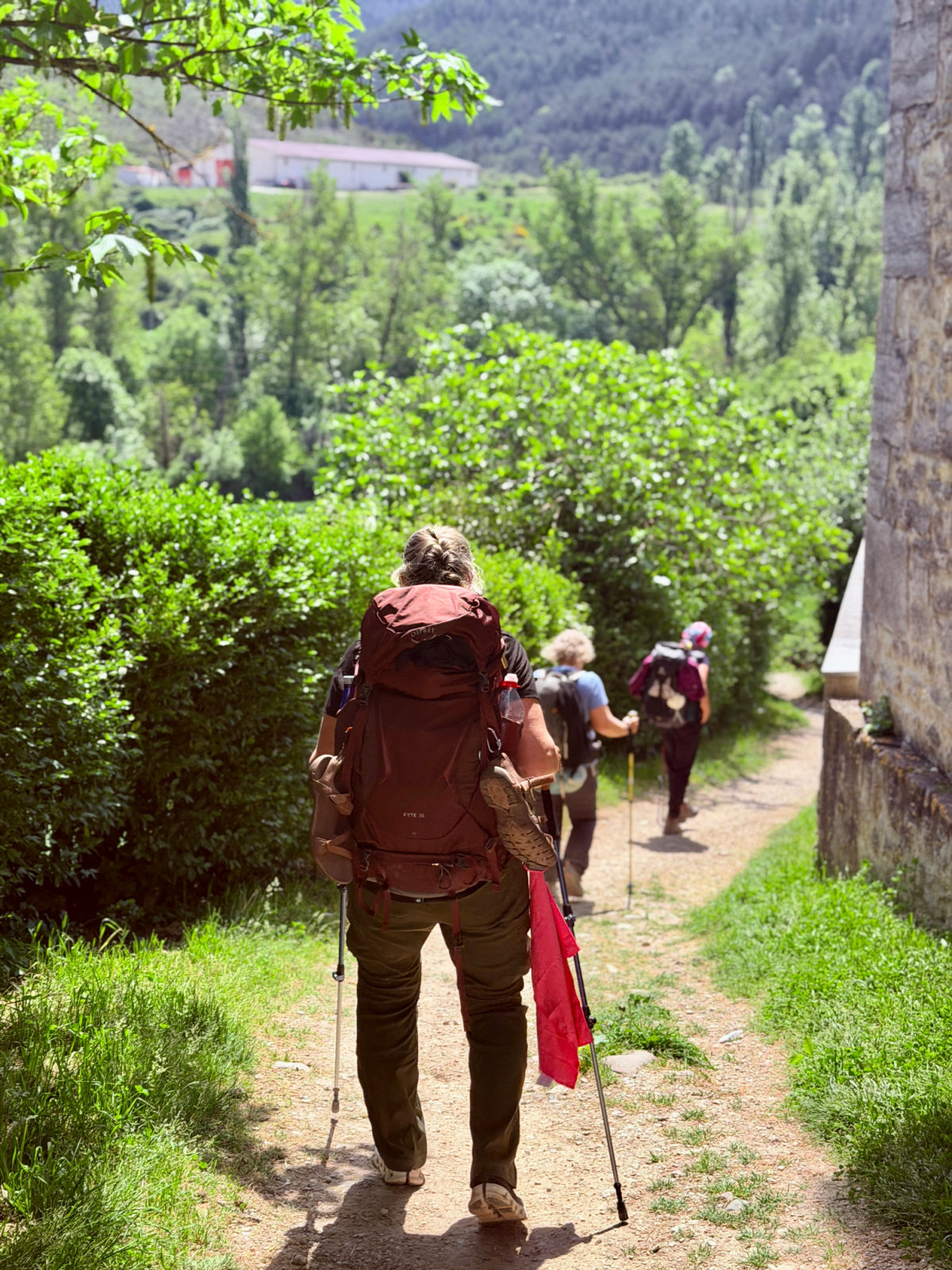
Running into members of our Camino family along the way made the day easier. There was something encouraging about spotting someone we knew farther up the trail or having company for part of the walk. We could walk together for a while, separate, and then somehow meet again later.
Through Trinidad de Arre and Into Pamplona
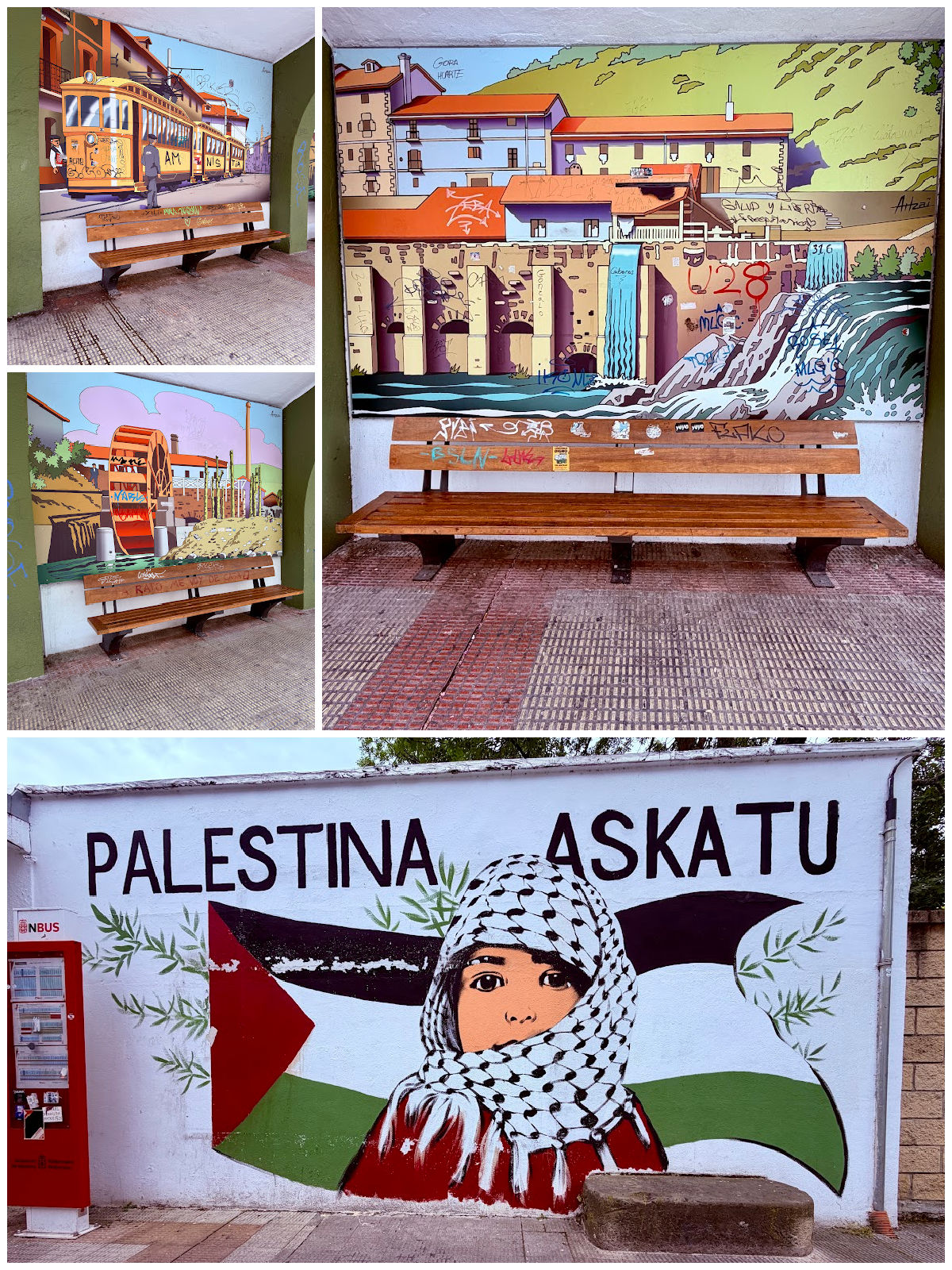
As we approached Pamplona, the quiet trail gradually gave way to Huarte, Trinidad de Arre, Villava, and Burlada.
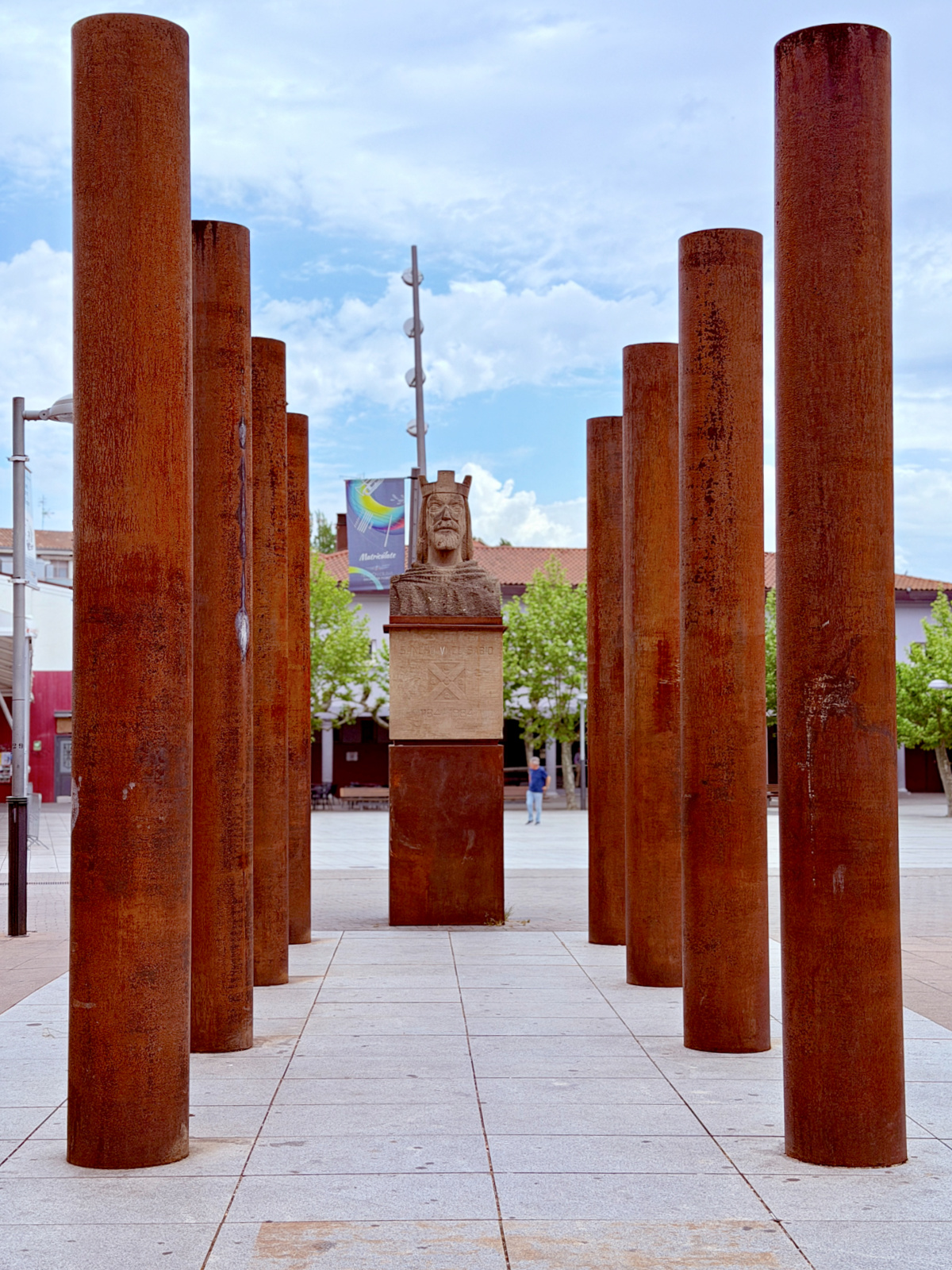
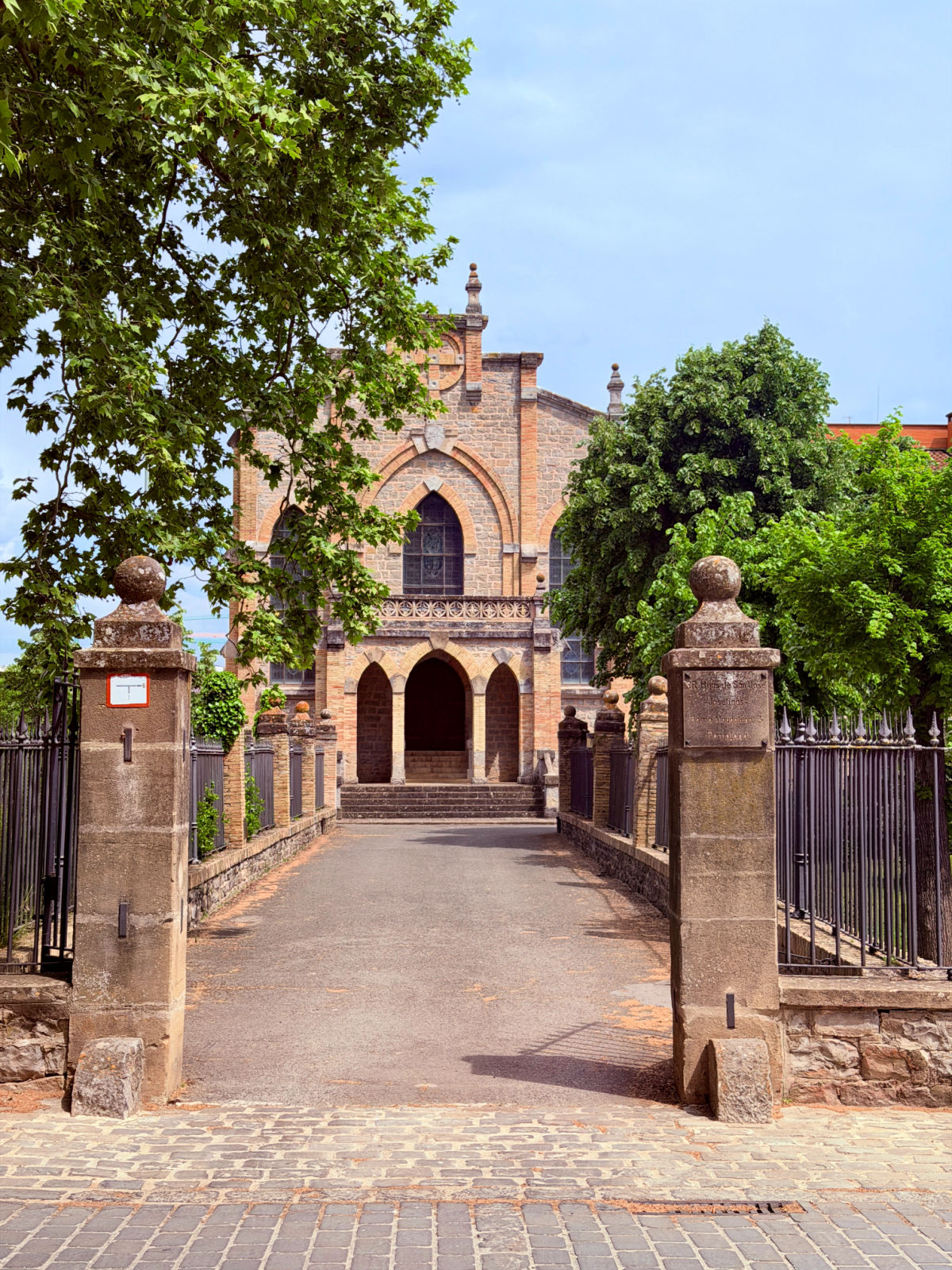
At Trinidad de Arre, the Camino crosses the medieval bridge over the Ultzama River near the Basilica of the Holy Trinity. From there, the route continues through increasingly urban surroundings toward Pamplona.
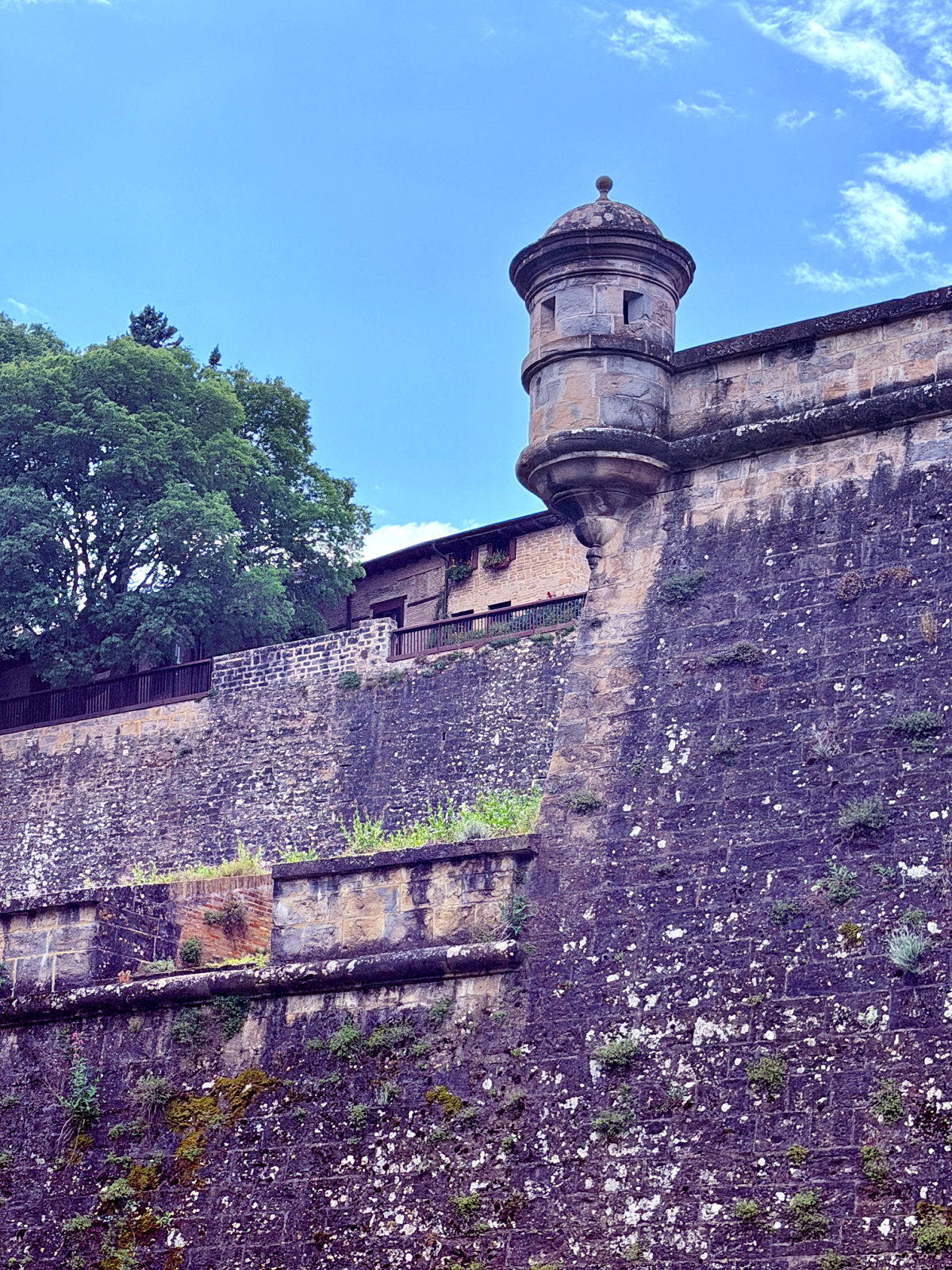
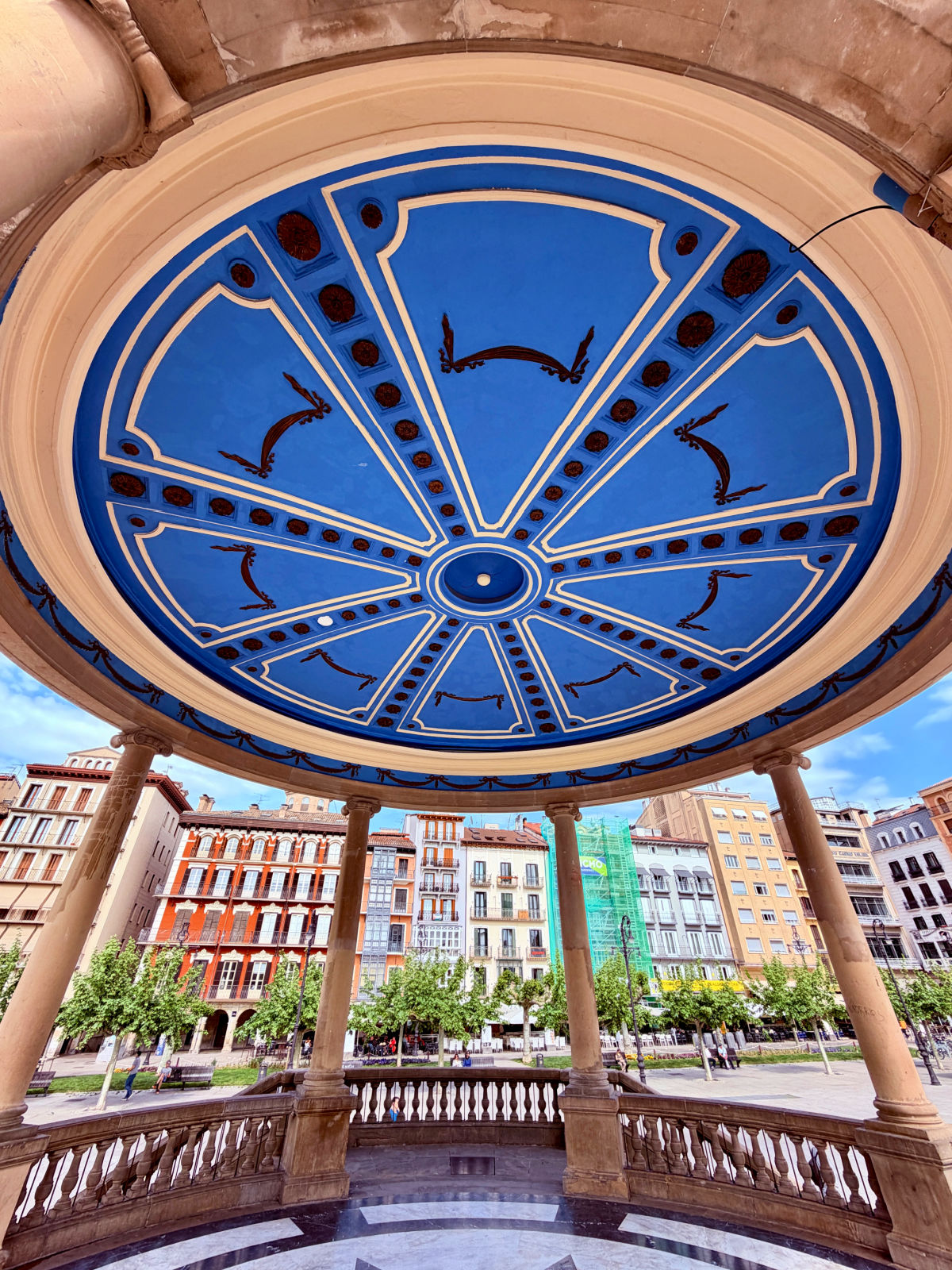
Entering a city on foot feels different from arriving by car or train. We crossed the medieval Magdalena Bridge and followed the route through the old gateway and drawbridge into Pamplona. After days of villages, forests, and stretches of open trail, suddenly finding ourselves inside a major historic city felt like crossing into another world.
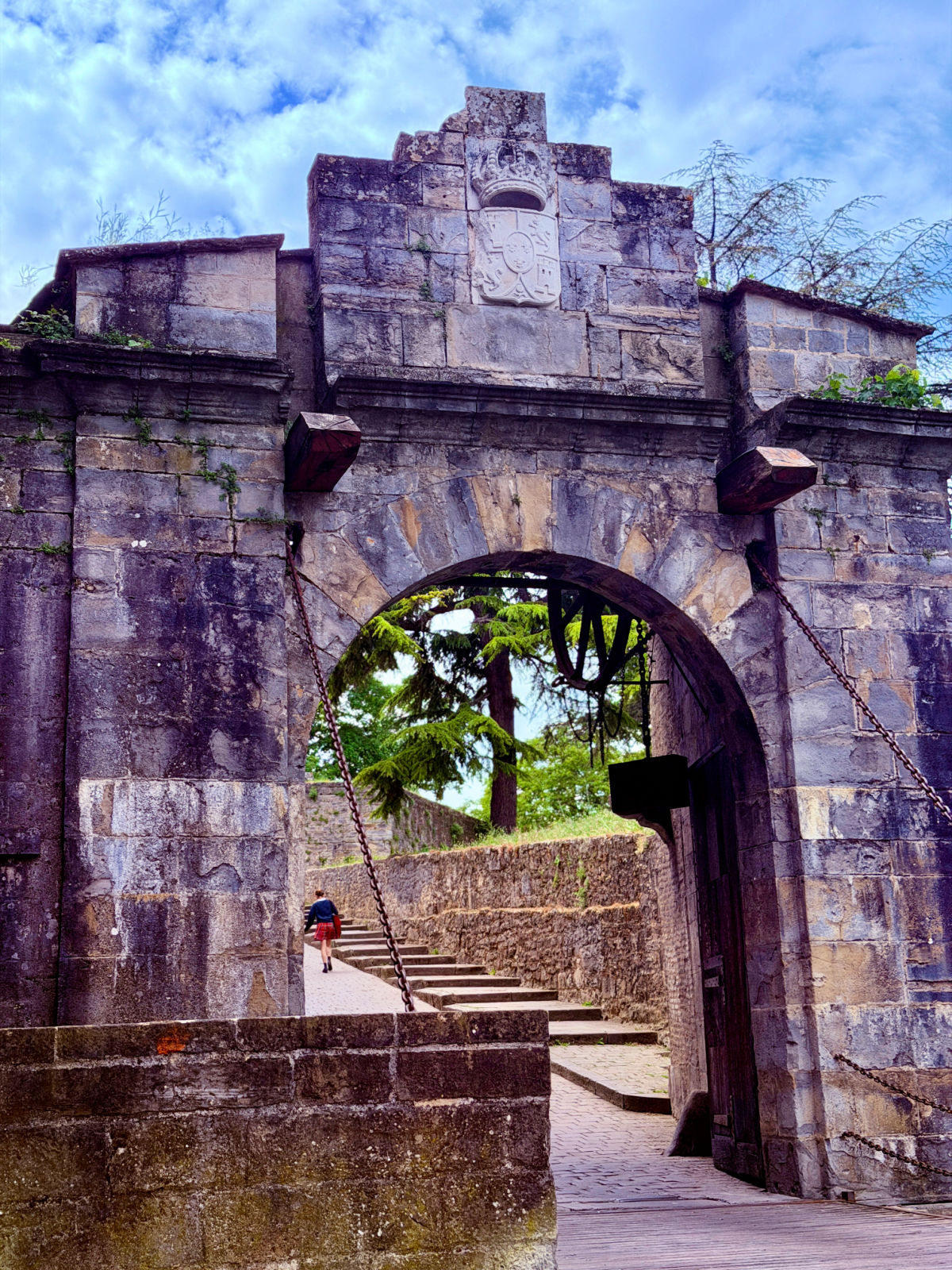
We had walked more than 12 miles. My phone said I had taken 33,728 steps. I was ready to stop taking them.
Staying at Hotel Pompaelo Urban Spa
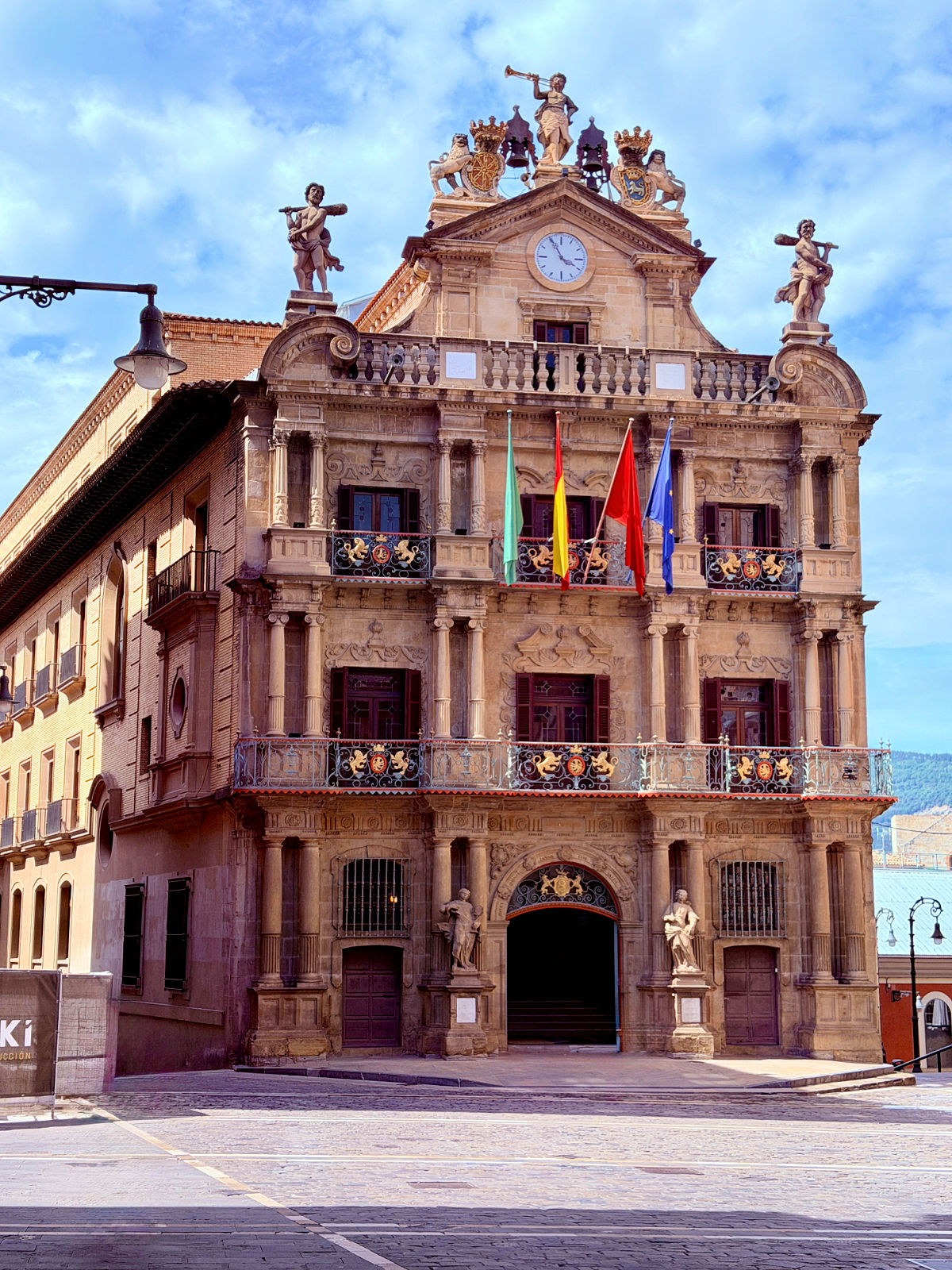
Diane chose our hotel in Pamplona, and it happened to be in the heart of the historic center. Hotel Pompaelo Urban Spa sits on Plaza Consistorial, directly across from Pamplona City Hall and only a short walk from the cathedral.
Our room cost €102, so my half was €51.
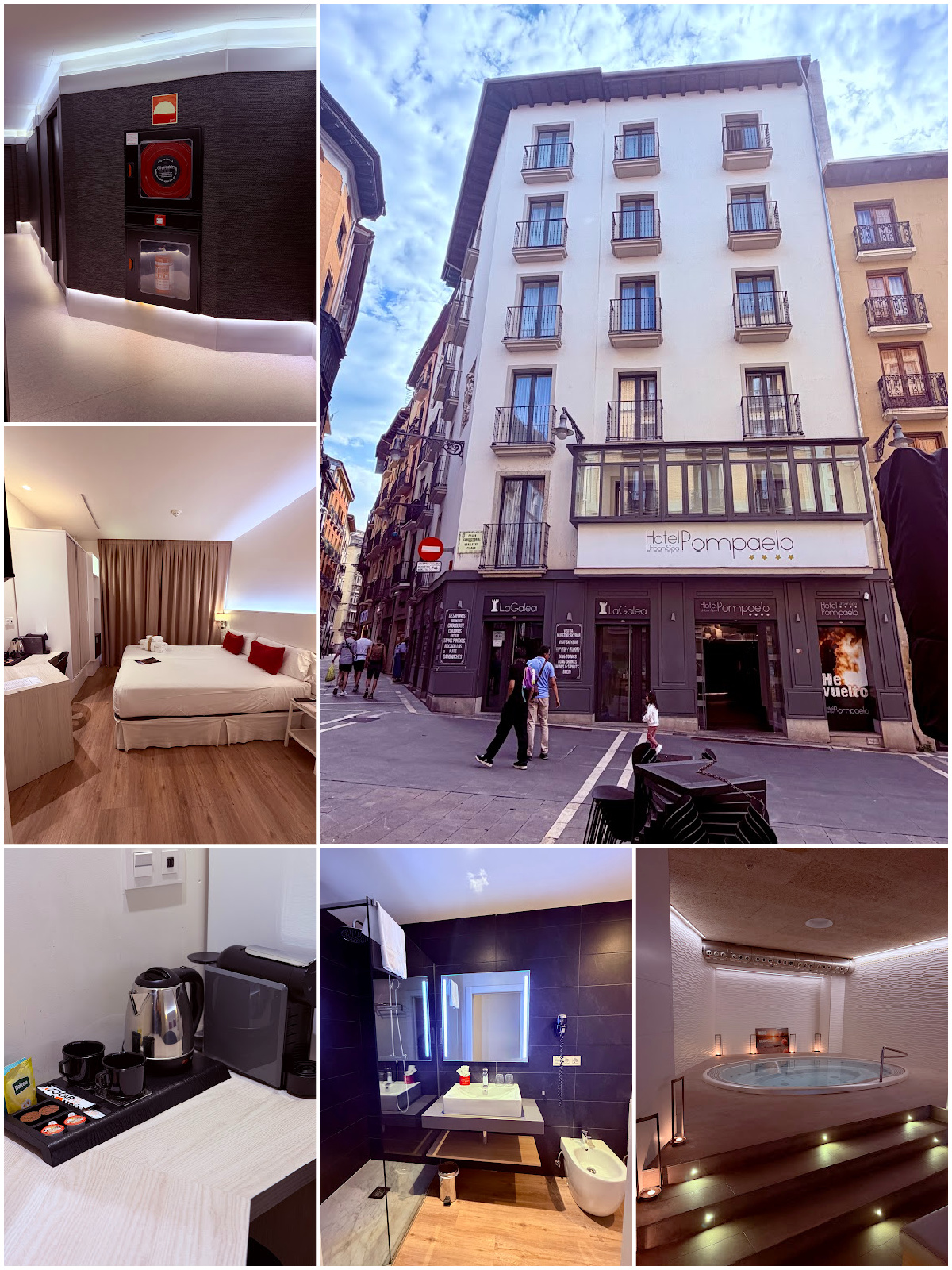
The hotel also had a spa, which felt almost absurdly luxurious after four days on the Camino. Diane and our Camino friend from Pennsylvania booked massages, while I spent time using the spa facilities. My spa visit cost €25.
One day you are sharing a bathroom in an albergue. The next, you are soaking in a spa in the middle of Pamplona. The Camino contains multitudes.
Pintxos—and Then Burger King
That evening, our little group met in Pamplona’s historic center for pintxos, the small bites commonly served in bars throughout northern Spain. They are similar to tapas, although locals may rightly have opinions about treating the two words as interchangeable.
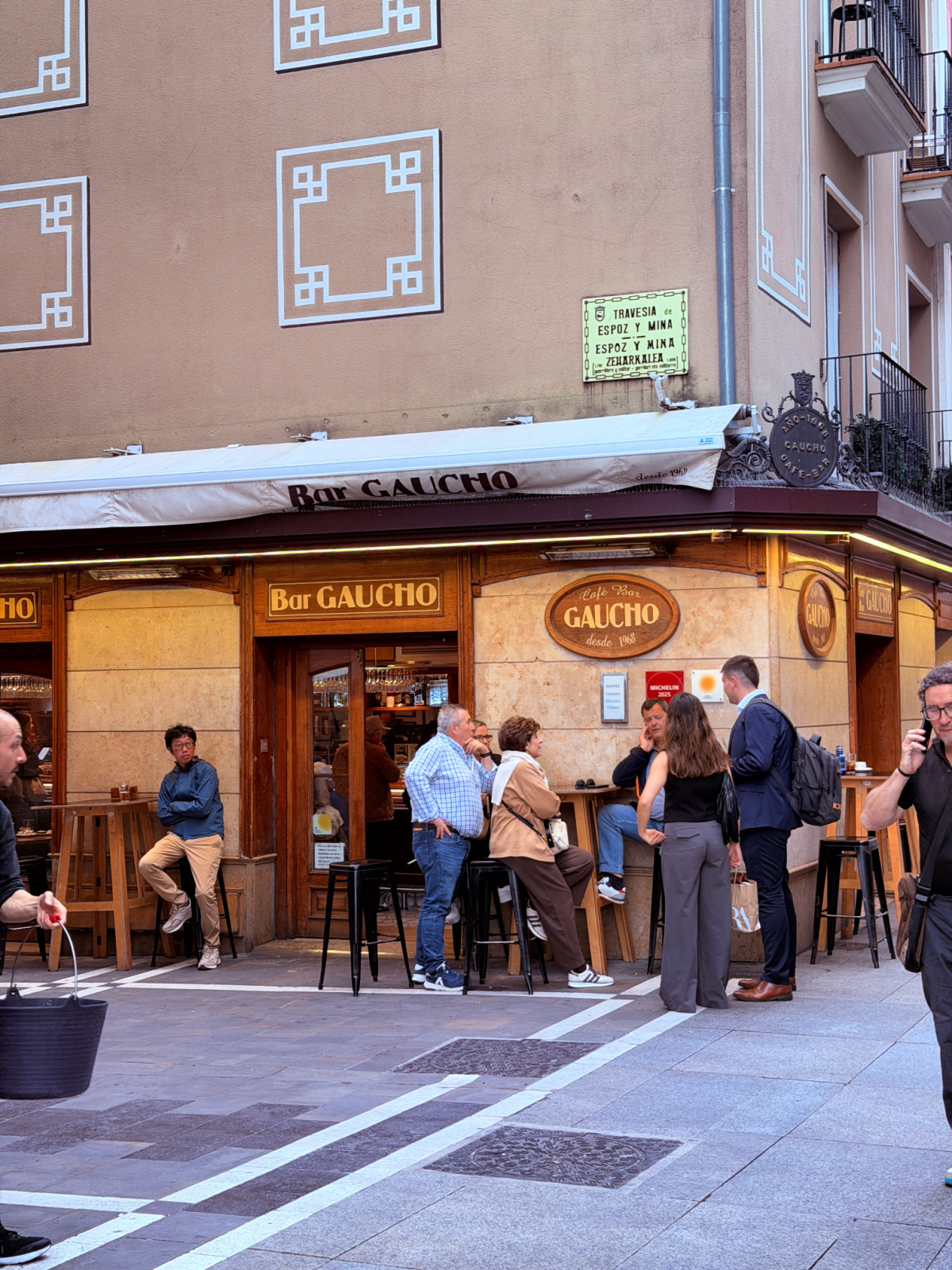
Nothing on display particularly appealed to me that evening, so I waited. After walking more than 12 miles, however, waiting indefinitely for dinner was not a serious long-term strategy.
I ended up getting Burger King.

Yes, I was in one of Spain’s great food cities. Yes, Pamplona had countless local dishes I could have tried. But sometimes a gal wants an old-fashioned burger. KWIM?
It may not have been the most culturally ambitious dinner of the trip, but it was familiar, filling, and exactly what I wanted at the time. Travel is more enjoyable when you stop treating every meal like an examination you have to pass.
What Day 4 Taught Me
The walk from Zubiri to Pamplona was not defined by one dramatic mountain or sweeping view. Instead, it unfolded through a series of small moments: bread hanging from village doors, old churches, industrial edges, steep stairs, riverside paths, and familiar pilgrims appearing when we needed encouragement.
It also showed how quickly the physical strain of the Camino can accumulate. Diane’s shoulder blisters were proof that determination can keep you moving, but they were also a warning that pack weight and fit matter. The body will eventually submit a complaint, and it is rarely subtle about it.
By the time we reached Pamplona, we had walked out of the countryside and straight into the historic center of a city. A hotel room, time in the spa, dinner with our Camino family, and one unapologetically ordinary burger made a satisfying end to Day 4.
Ready for the Next Leg?
After a night in Pamplona, we would leave the city and continue toward Puente la Reina. Day 5 would take us up to Alto del Perdón—one of the most recognizable viewpoints on the Camino Francés—and then down the other side.
Have you ever reached the end of a long travel day and chosen familiar comfort food over the local specialty? What did you order?
