
The First 100 Miles of the Camino, Day 3: Burguete to Zubiri

Walking from Burguete to Zubiri takes pilgrims through a string of small Navarrese villages, wooded paths, rolling hills, and one final descent that can make an otherwise manageable day feel considerably harder. The route passes through Espinal, Bizkarreta, and Lintzoain before reaching Zubiri, a popular stopping point on the Camino Francés.
This was our third day of walking the Camino de Santiago. After crossing the Pyrenees the day before, we were grateful that this stage was not quite as strenuous. That did not mean it was easy. The Camino apparently does not hand out participation trophies simply because you survived the previous day.
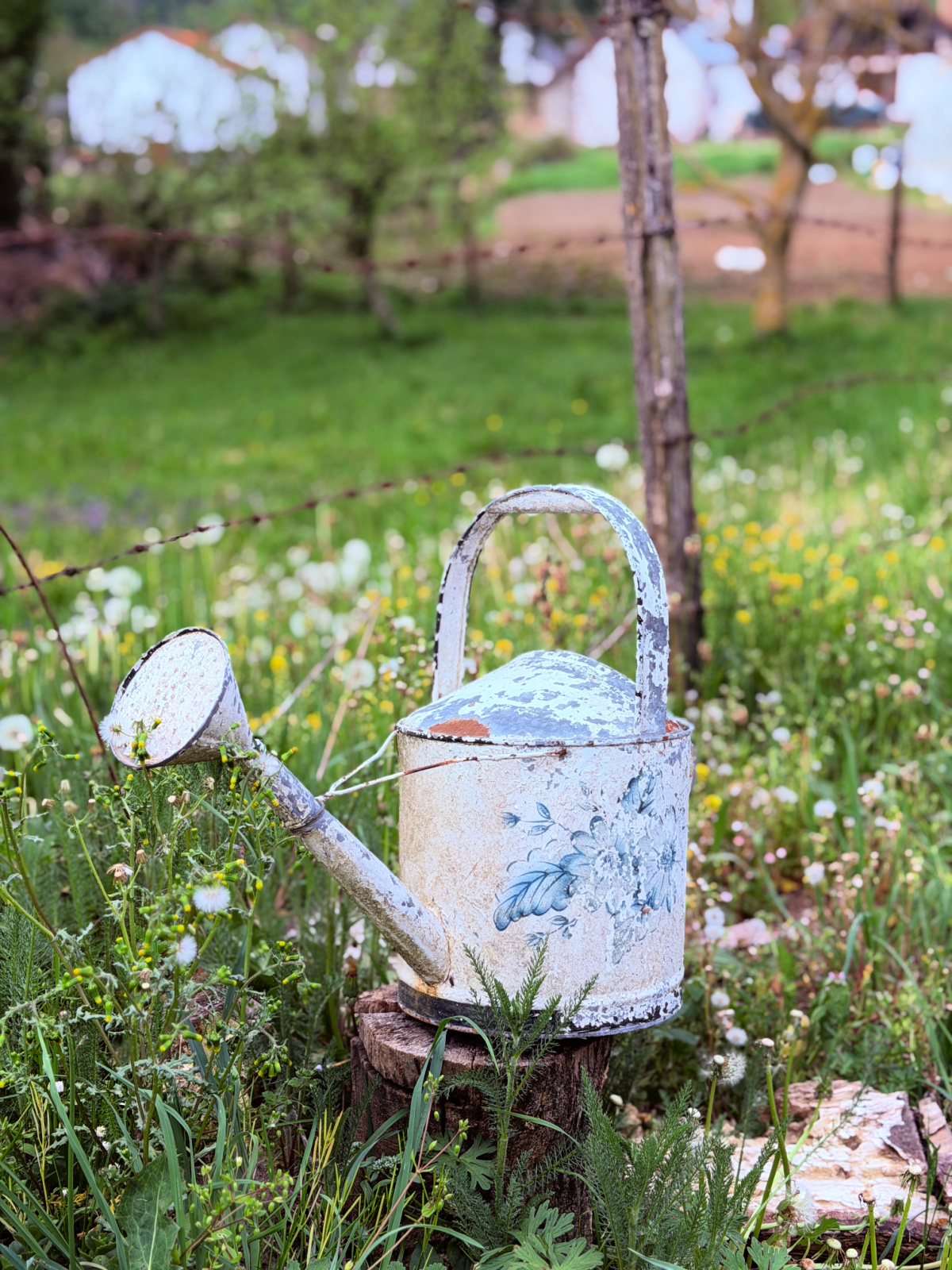
While exploring Spain and southwestern France, my sister and I walked the first 100 miles of the Camino Francés, beginning in Saint-Jean-Pied-de-Port and continuing across northern Spain. It was one of the most memorable and challenging adventures we have shared, and I will be writing more about the journey in an upcoming series.
While I continue writing about our Camino adventure, visit my Spain category to read all of the posts I have published so far about the places we visited, where we stayed, what we ate, and what we experienced along the way.
Day 1: St. Jean Pied de Port to Honto
Day 2: Honto to Burguete
Day 3: Burguete to Zubiri
Burguete to Zubiri Route at a Glance
- Starting point: Burguete, Spain
- Ending point: Zubiri, Spain
- Distance: Approximately 18–19 kilometers (11–12 miles)
- Villages along the way: Espinal, Bizkarreta, and Lintzoain
- Terrain: Paved village streets, country lanes, wooded trails, hills, and a rocky descent into Zubiri
- Where we stayed: Albergue Segunda Etapa
Distances and walking times can vary slightly depending on where you begin, where you stay, and how often you stop. We were not trying to set any land-speed records. We were simply trying to reach Zubiri with ourselves and our belongings reasonably intact.
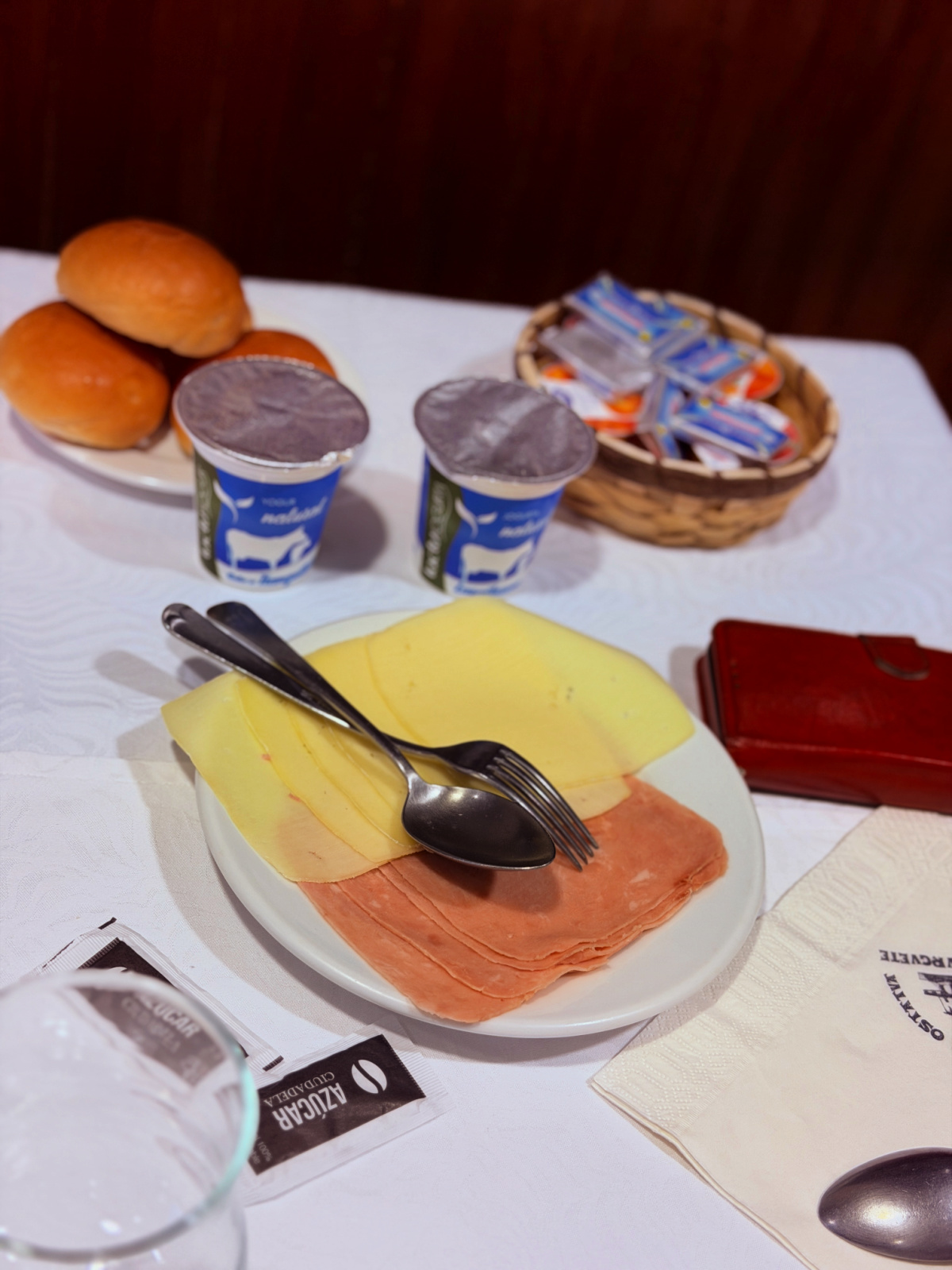
Breakfast in Burguete
We started the morning with breakfast at our hostel in Burguete. It cost €9 per person, and I handed over €20 for the two of us.
Burguete had been wonderfully quiet, but it was time to put on our backpacks and start walking again. Other pilgrims began leaving at their own pace, and the little group we had come to know stretched out along the trail. Some people walked ahead, others fell behind, and we crossed paths again at stops throughout the day.
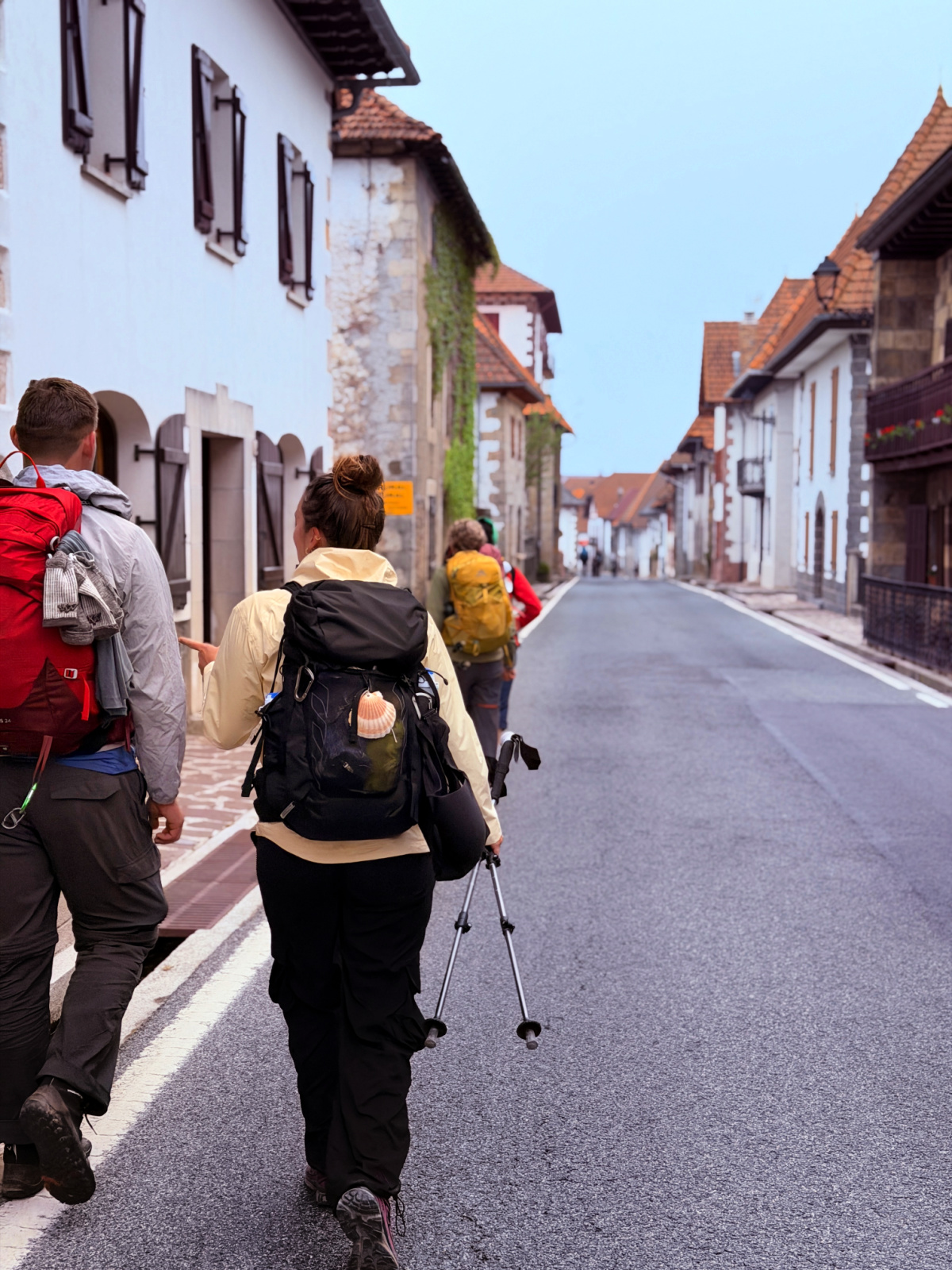
That rhythm would become one of the things I loved about the Camino. You could walk alone without necessarily being alone.
Walking Through the Villages of Navarra
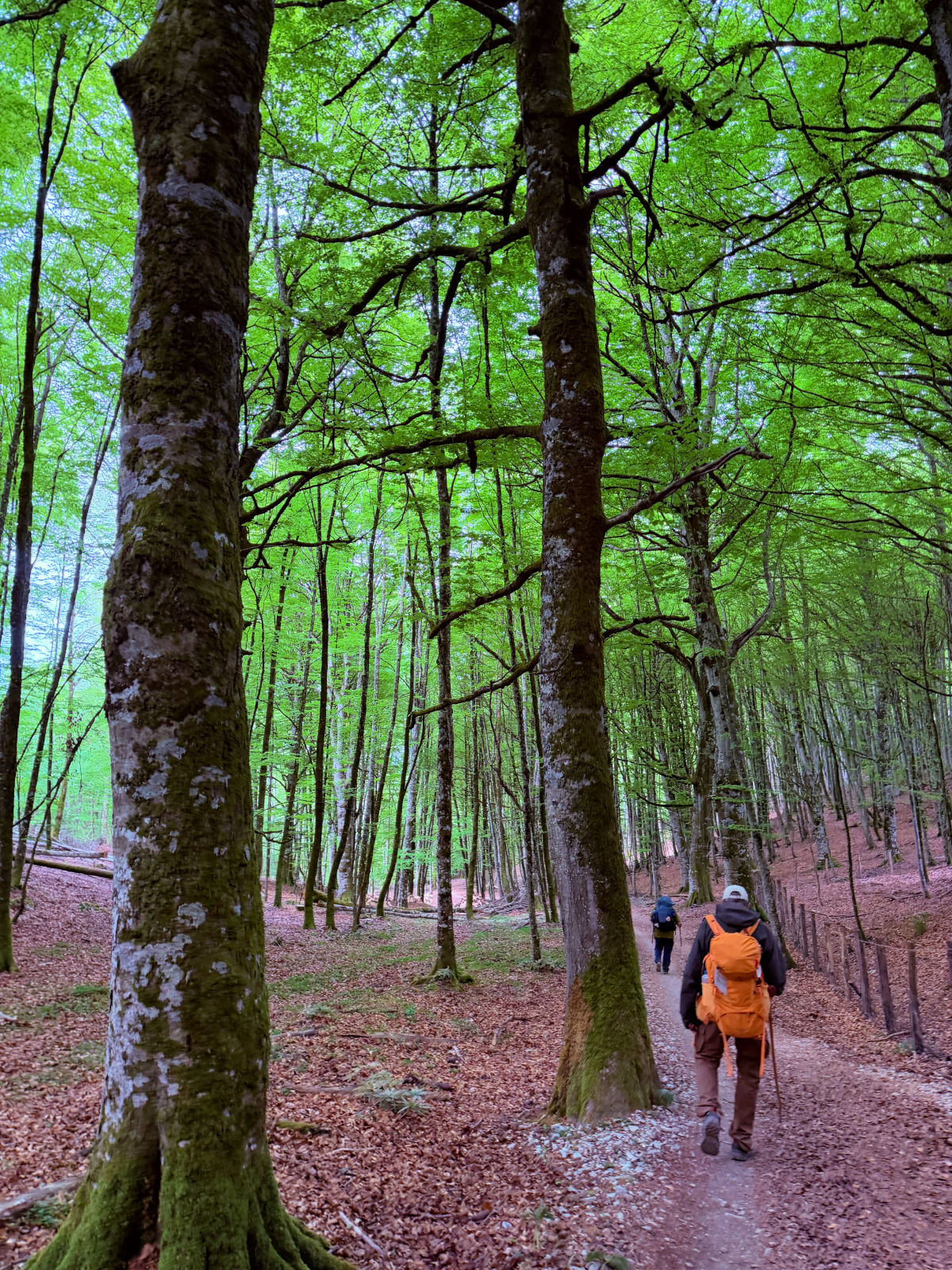
The route from Burguete led us through Espinal, Bizkarreta, and Lintzoain. These small villages gave us places to pause between the wooded stretches and rolling hills.
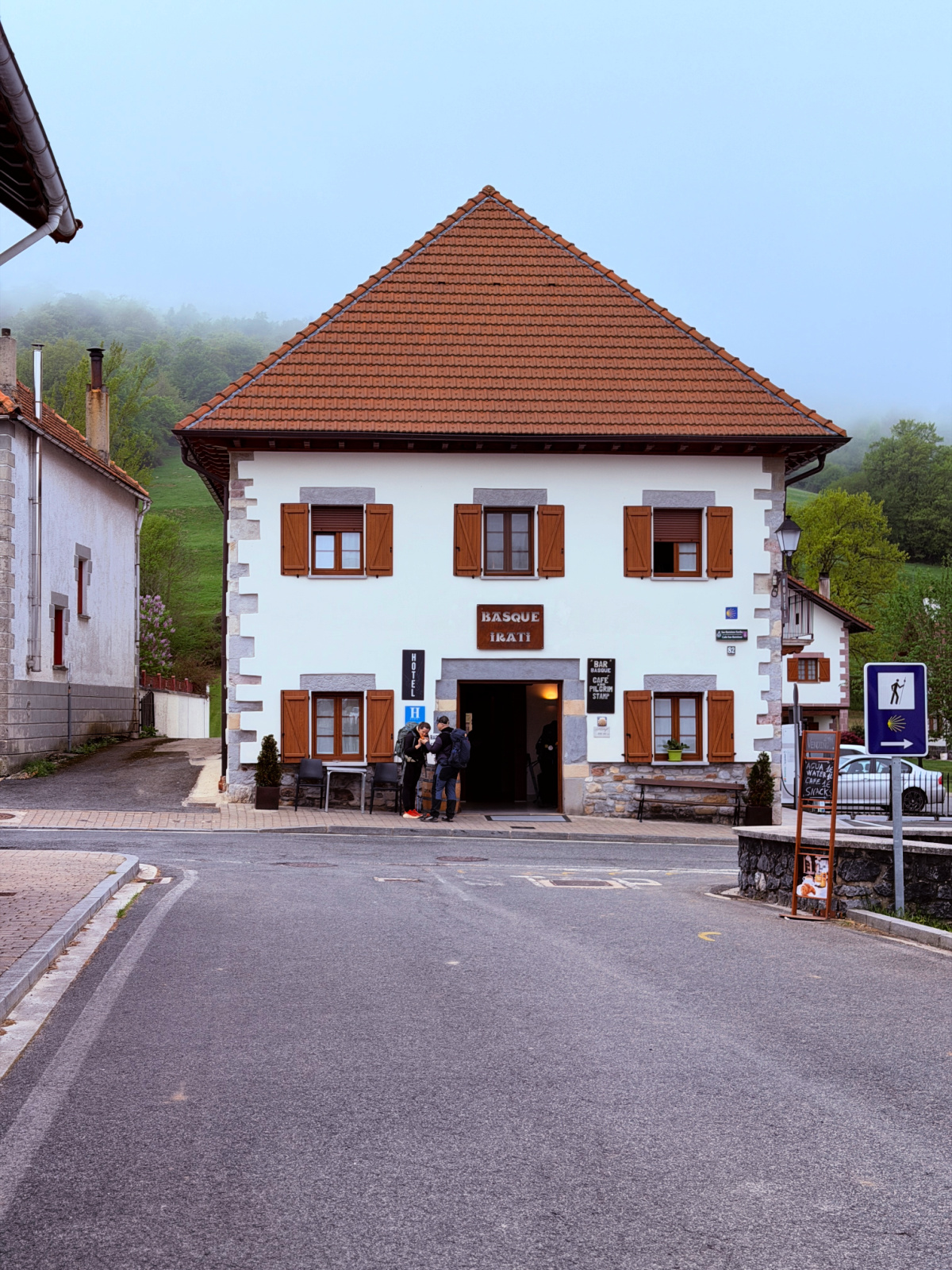
Although the walk was easier than our crossing of the Pyrenees, it was still tough. Our bodies had already put in two demanding days, and the Camino continued to roll up and down through the countryside. Easier is a relative term when you are carrying your belongings on your back and traveling everywhere on foot.
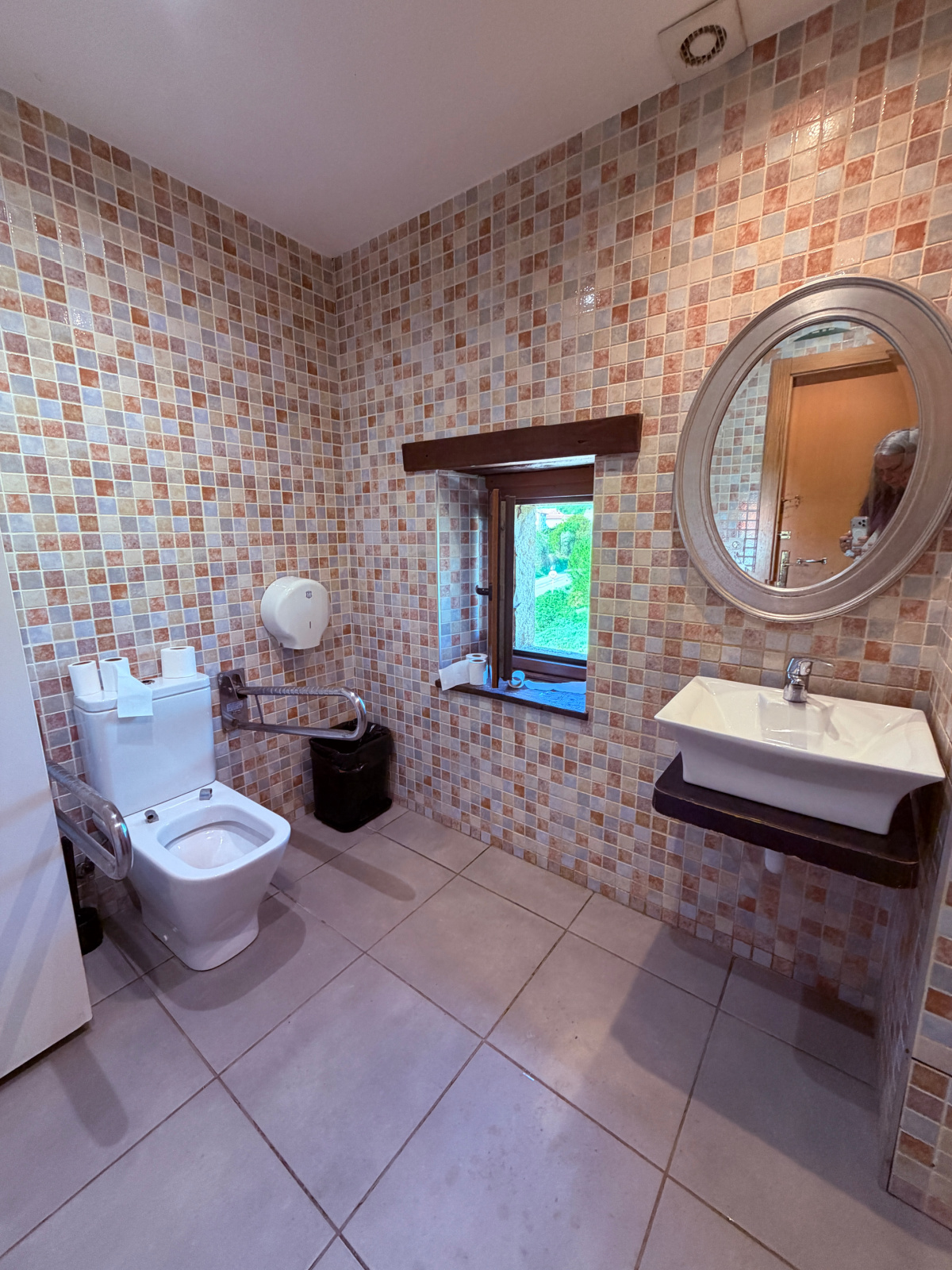
We stopped at Bar Dena Ona along the way. I no longer remember what we ordered, but I clearly remember being grateful for its decent bathroom. After some of the facilities we had encountered—or failed to encounter—on the trail, a clean, usable bathroom deserved its own scallop-shell marker.
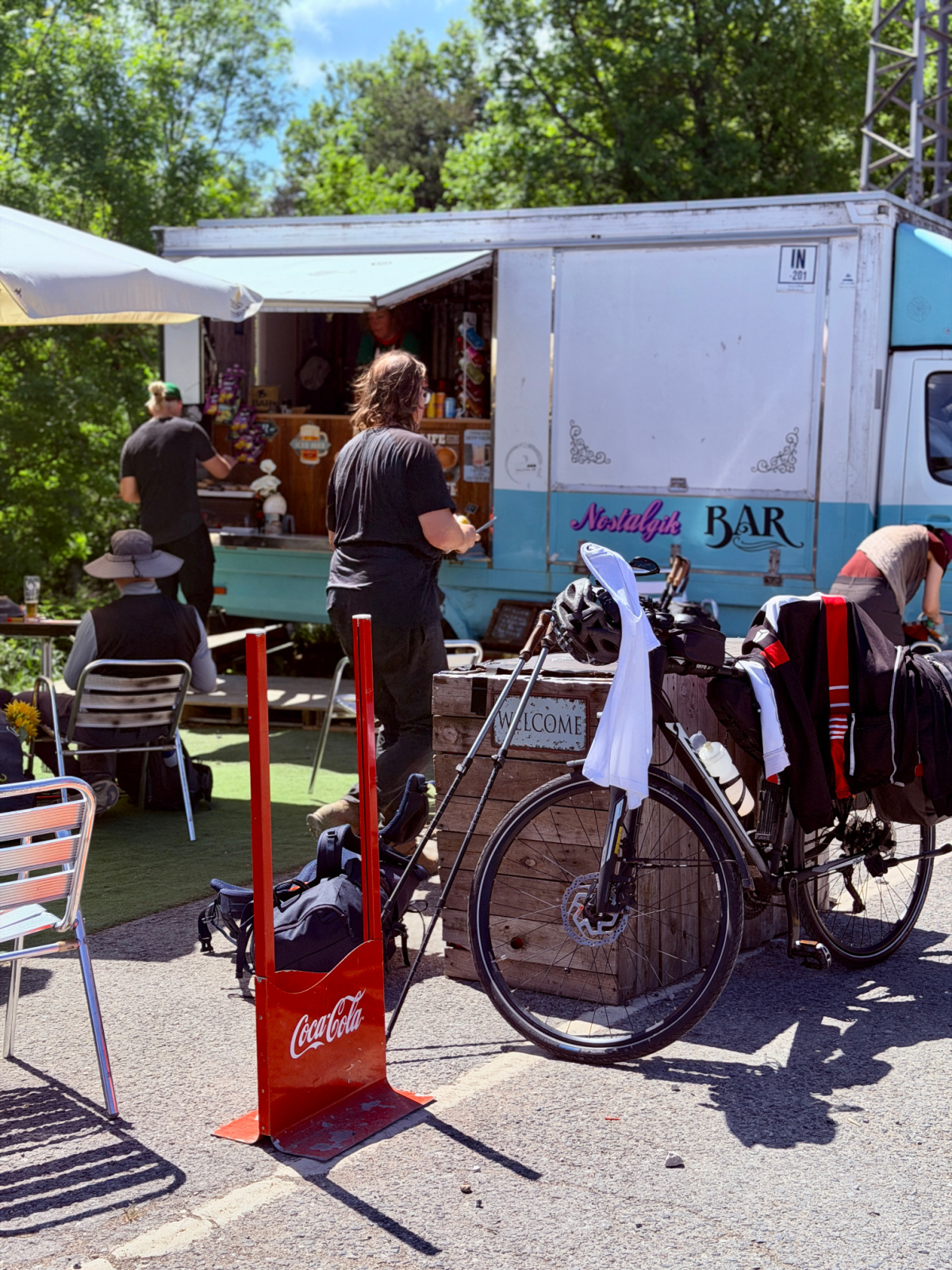
Later, as we were getting closer to Zubiri, we found the Nostalgik Food Truck sitting beside the Camino. It felt as though it had appeared in the middle of nowhere at exactly the right time. Diane ordered a meat-and-cheese sandwich and a drink, while I had a cheese sandwich and an Aquarius. Aquarius became one of our favorite drinks on the Camino. Cold, slightly sweet, and easy to find along the route, it tasted especially good after several hours of walking.
It was not a fancy meal, but food tastes different when you have walked miles to get it. A roadside sandwich can feel like a banquet when your feet are tired and you still have ground to cover.
The Descent Into Zubiri
The later part of the walk included the descent toward Zubiri. Even though we were no longer climbing over the Pyrenees, the uneven downhill terrain demanded attention and added another challenge to the day.
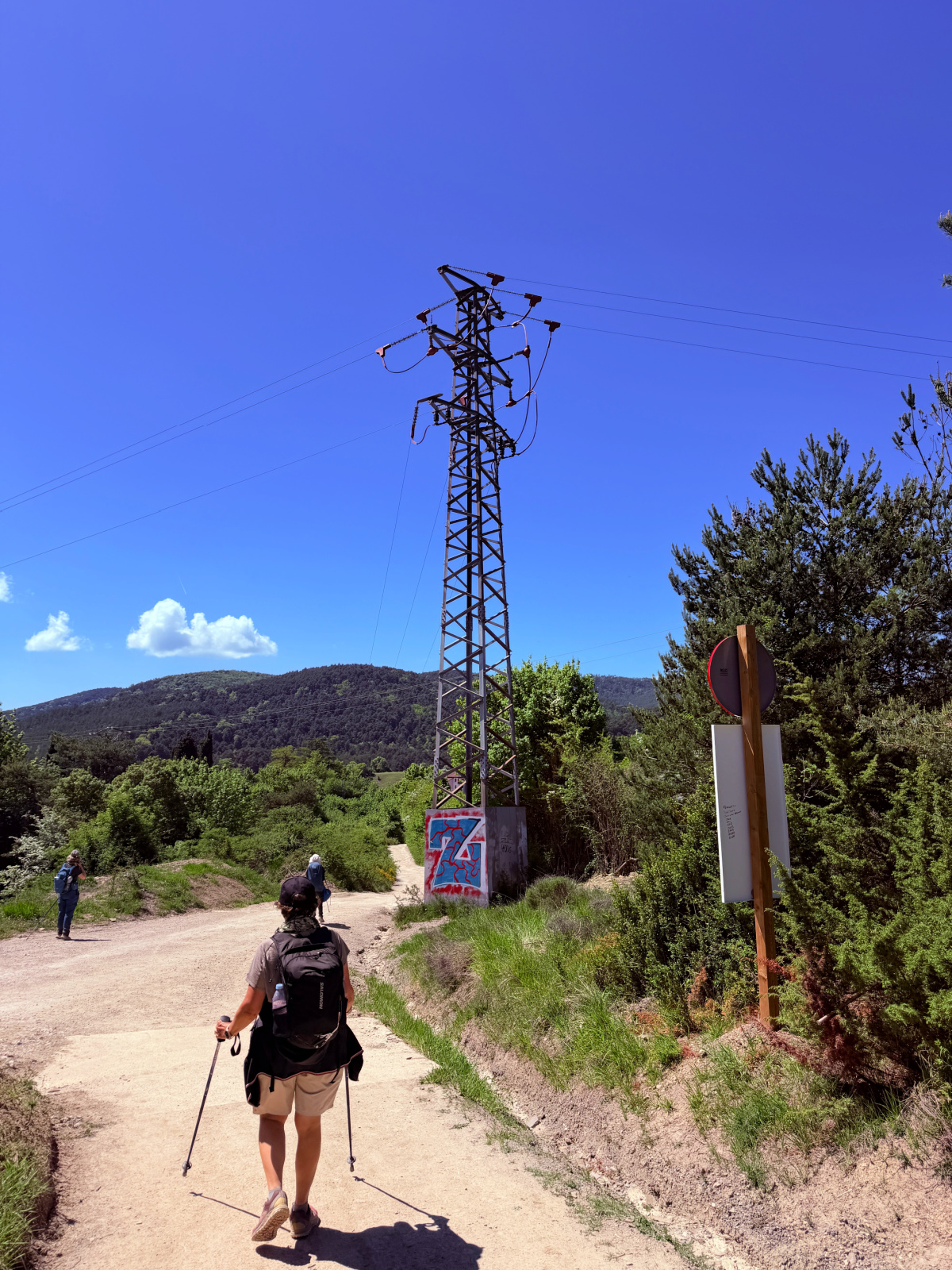
Downhill sounds easy until you are actually doing it over rocks with a backpack shifting behind you. Then it becomes a lengthy conversation between your knees, ankles, and questionable life choices.
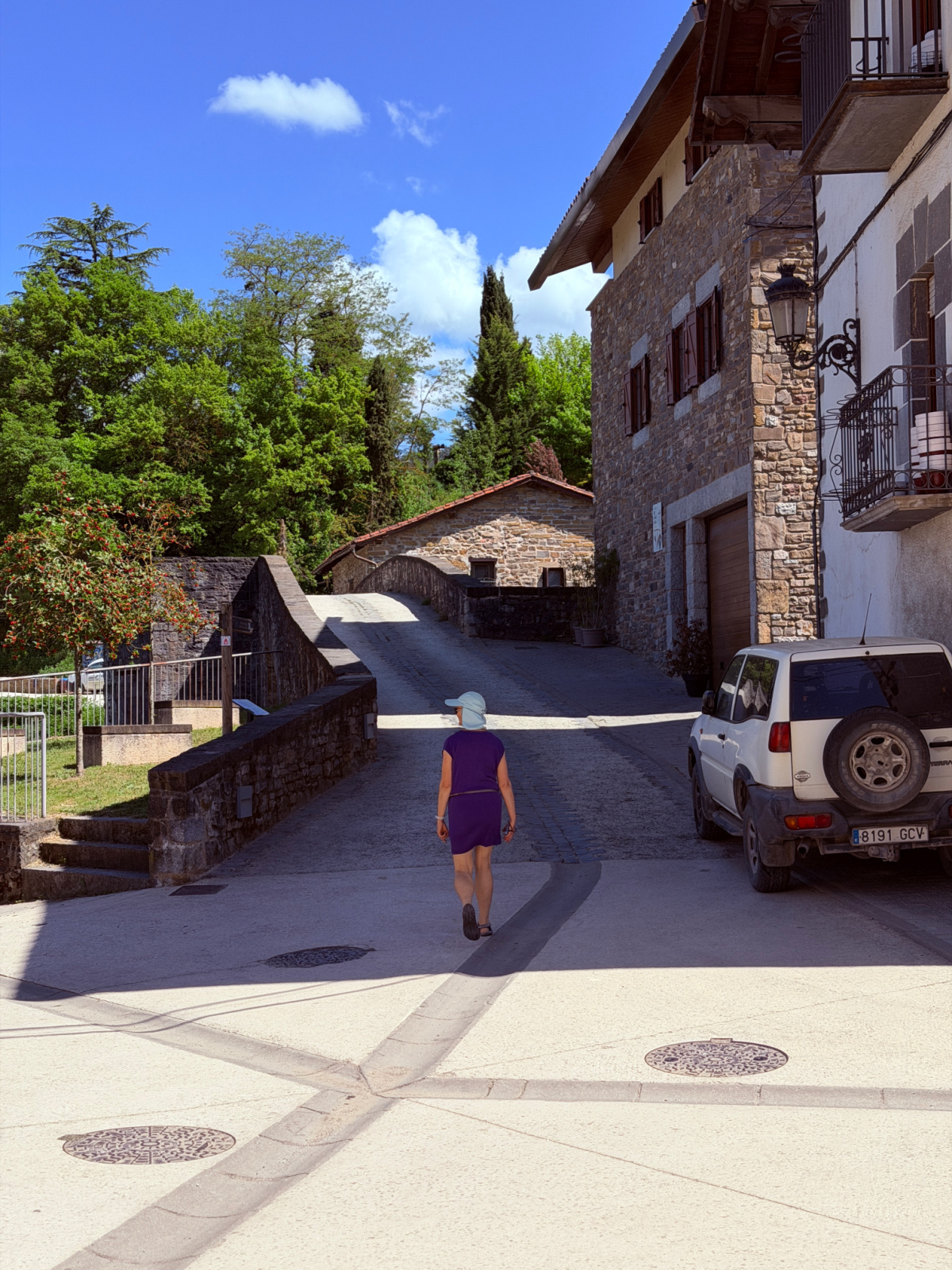
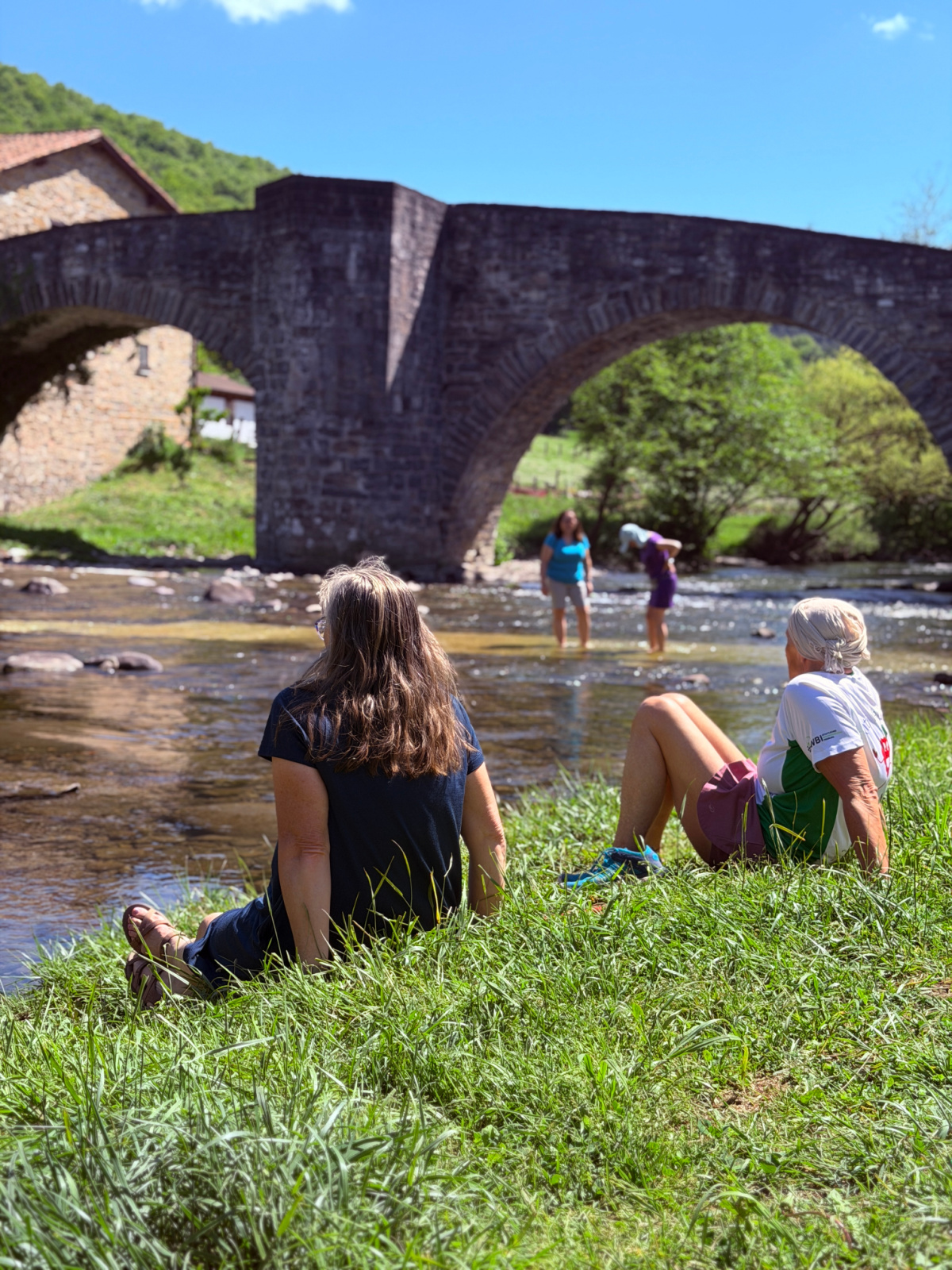
Eventually, we reached Zubiri and crossed into town. The name Zubiri means “village of the bridge” in Basque, an appropriate name for a Camino stop known for its medieval bridge over the Arga River.
Staying at Albergue Segunda Etapa
Diane and I stayed at Albergue Segunda Etapa, a small private albergue in Zubiri. It has only two dorm rooms—one for four people and another for eight.
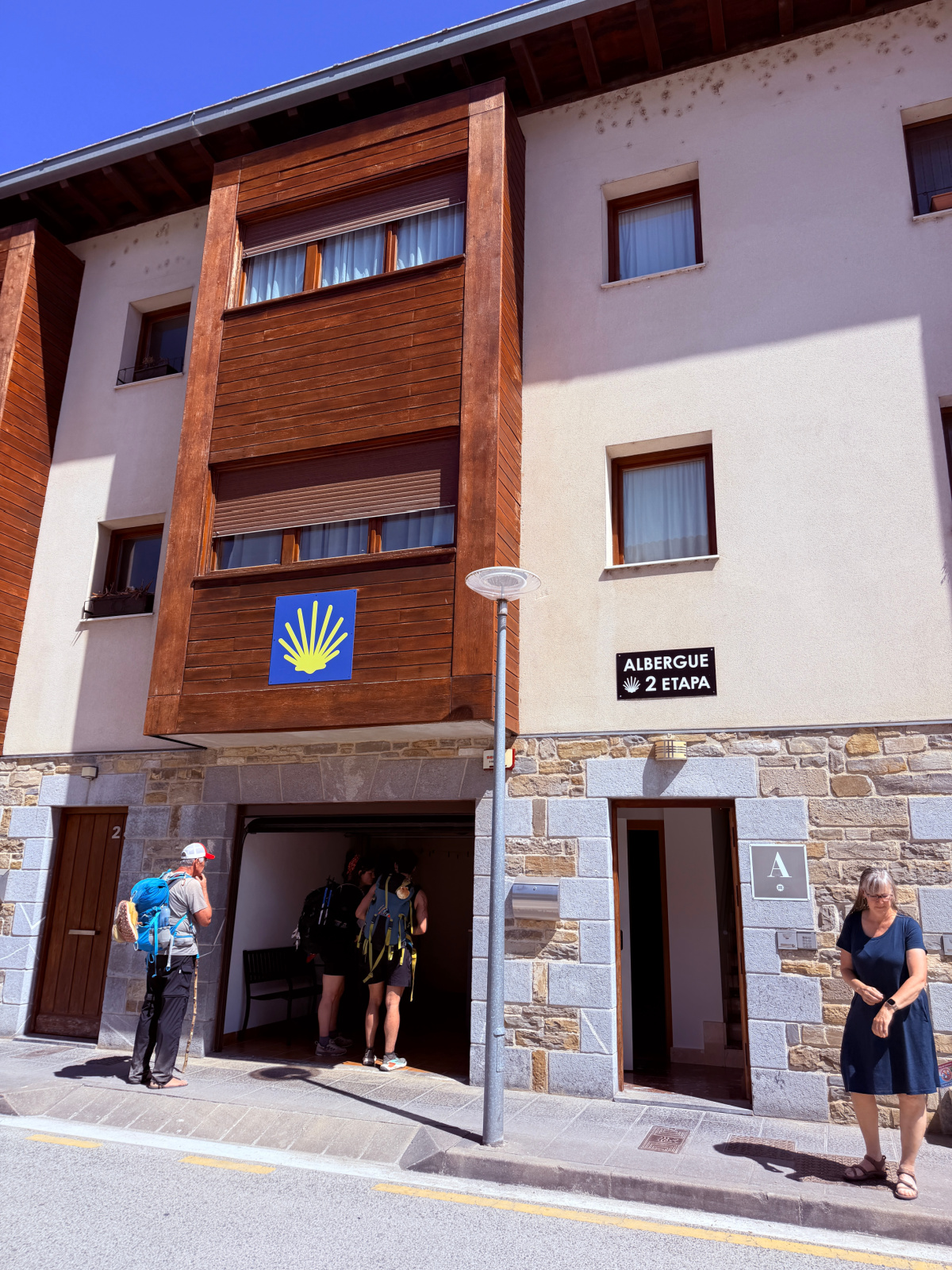
A bed cost €17 per person. We were assigned to the four-person room, which meant there was a very real possibility that I would end up sleeping on a top bunk. I had no desire to climb a bunk-bed ladder after walking nearly 12 miles, so I insisted that we pay for a third bed and keep the room to ourselves.
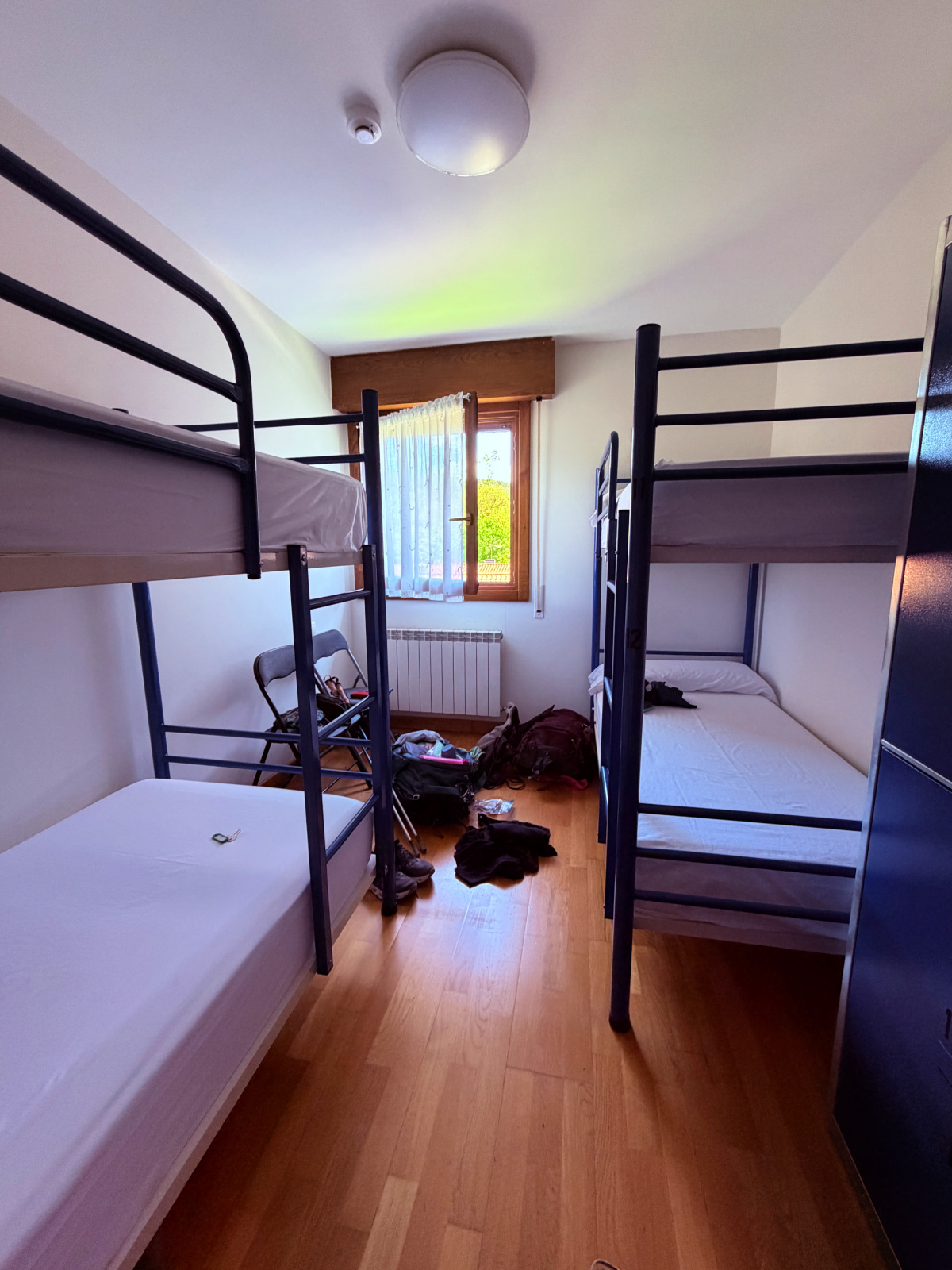
Our total came to €51. That extra €17 was money well spent.
Technically, it was more like €13 well spent because Ana, the woman running the albergue, washed our clothes for free. Laundry would otherwise have cost us about €4. We had a shared bathroom, but having the four-person bedroom to ourselves gave us a little breathing room and spared me from attempting an exhausted nighttime dismount from an upper bunk.
Sometimes Camino luxury is a hotel room. Sometimes it is paying for an imaginary third guest so you can sleep on the bottom.
Drinks at Bar Valentín
After getting settled, we met Karina at Bar Valentín. I had a beer, and Diane ordered a Radler, a refreshing mixture of beer and lemonade. The three drinks cost €13.50, and I picked up the tab.

This was also when our new German friend recommended Ich bin dann mal weg, Hape Kerkeling’s memoir about walking the Camino de Santiago. The English edition is titled I’m Off Then: Losing and Finding Myself on the Camino de Santiago.
We also spent time with Shae, a cool young guy we met along the Camino with some network work under his belt. (His twin brother is a model, so apparently their family got a double helping of good genes.)
One of the unexpected gifts of the Camino was meeting people we probably never would have encountered in our everyday lives. Age, nationality, occupation, and background mattered less than the simple fact that we were all walking the same path.
A Communal Dinner in Zubiri
That evening, my sister and I and three of our Camino friends booked dinner at El Palo de Avellano. The meal cost €18 per person, and I chose the pork.
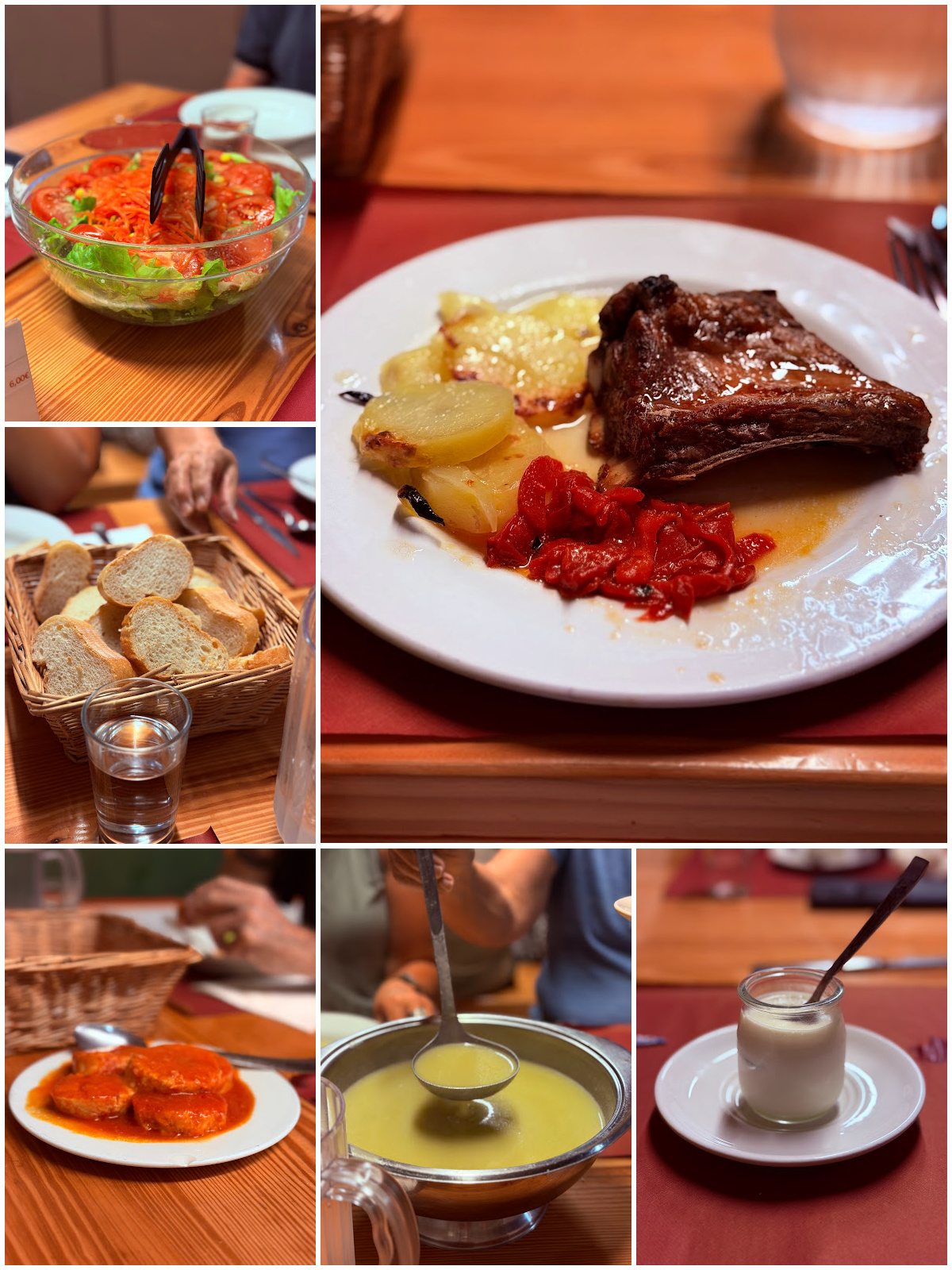
By then, our Camino family was beginning to take shape. We might walk at different speeds during the day, stop at different cafés, or stay in different rooms, but somehow we kept finding one another again.
The communal dinner was about more than food. It gave us a chance to sit down, compare the day’s experiences, laugh, and learn more about the people whose familiar faces had begun appearing along the route. We also unexpectedly added another person to our growing Camino family that evening—but that’s a story for later.
What Day 3 Taught Me
The walk from Burguete to Zubiri was not as dramatic as crossing the Pyrenees, but it showed me that a stage does not need towering mountains to be difficult. Accumulated fatigue, rolling hills, and a rough descent can turn an ordinary distance into a serious day of walking. I had also refused to answer nature’s call in nature, so by the time we reached Zubiri, finding a bathroom had become considerably more urgent than finding our hotel.
It also showed me how quickly relationships form on the Camino. People begin as strangers sharing the same trail. Then you stop for a drink, meet again at dinner, trade stories, and realize that somewhere along the way they have become part of your Camino family.
And if you can arrange a bottom bunk, clean clothes, a cold Aquarius, and a decent bathroom along the way, so much the better.
Ready for the Next Leg?
The following morning, Diane and I left Zubiri and continued toward Pamplona. Day 4 would take us through Larrasoaña, Zuriáin, and Trinidad de Arre before bringing us into our first large city on the Camino.
Have you walked the stretch from Burguete to Zubiri? What do you remember most—the wooded trails, the rocky descent, or finally seeing the bridge into town?
