
Honto to Roncesvalles and Burguete: Day 2 of the Camino Francés

Crossing the Pyrenees from France into Spain is one of the most challenging and memorable stretches of the Camino Francés. Following the Route Napoléon, pilgrims climb through the French Basque countryside, cross into Spain, and reach the route’s high point near Col de Lepoeder at approximately 1,430 meters (4,690 feet) before descending to Roncesvalles. For ambitious pilgrims who walk all the way from Saint-Jean-Pied-de-Port to Roncesvalles in one push, this may still be Day 1. My sister and I had wisely—or perhaps mercifully—split the mountain crossing into two days, making this Day 2 of our first 100 miles on the Camino de Santiago. After spending the night at Auberge Borda near Honto, it was time to finish crossing the Pyrenees and make our way into Spain.
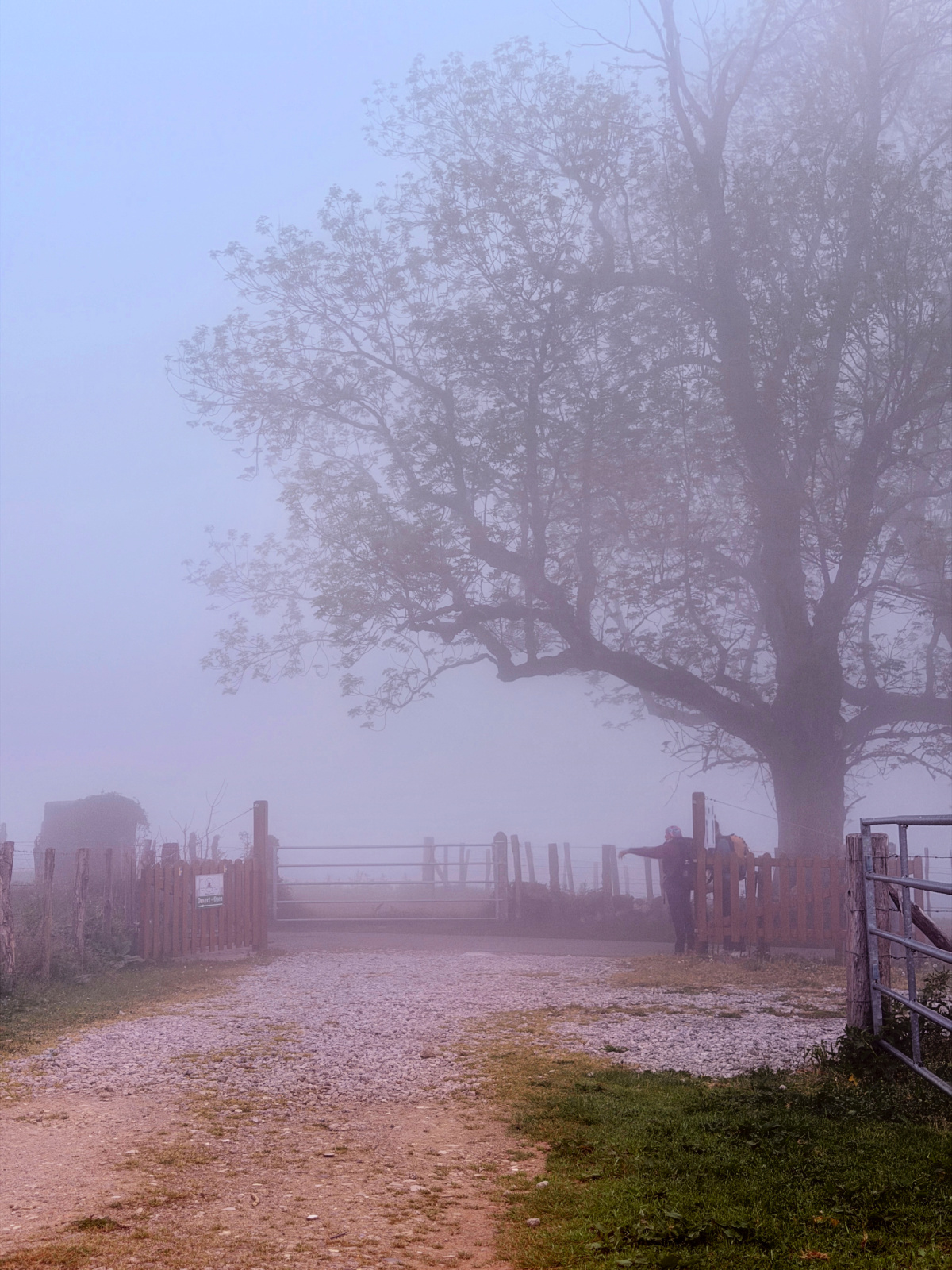
Follow the full journey in my Camino de Santiago series.
Honto to Burguete Route at a Glance
- Date: Saturday, April 25
- Camino walking day: Day 2
- Starting point: Honto, France (Auberge Borda)
- Ending point: Burguete, Spain
- Distance: Approximately 23–24 kilometers (14–15 miles), including the short extra stretch from Roncesvalles to Burguete
- My recorded steps: 31,037
- Places along the route: Orisson, Col de Lepoeder, Ibañeta, Roncesvalles, and Burguete
- Terrain: Steep switchback climbs on the Route Napoléon, exposed mountain trail with no guardrails in places, a long forested descent, and paved roads through the village into Burguete
- Where we stayed: Hostal Burguete
Breakfast at Auberge Borda
We started the morning with breakfast at Auberge Borda before gathering our things and heading back out on the Camino. The albergue offered a picnic lunch for an additional charge, and we were glad we ordered one. By this point, we had left the grocery stores and other easy food options behind in France, so having lunch already packed for the trail was well worth the extra cost.
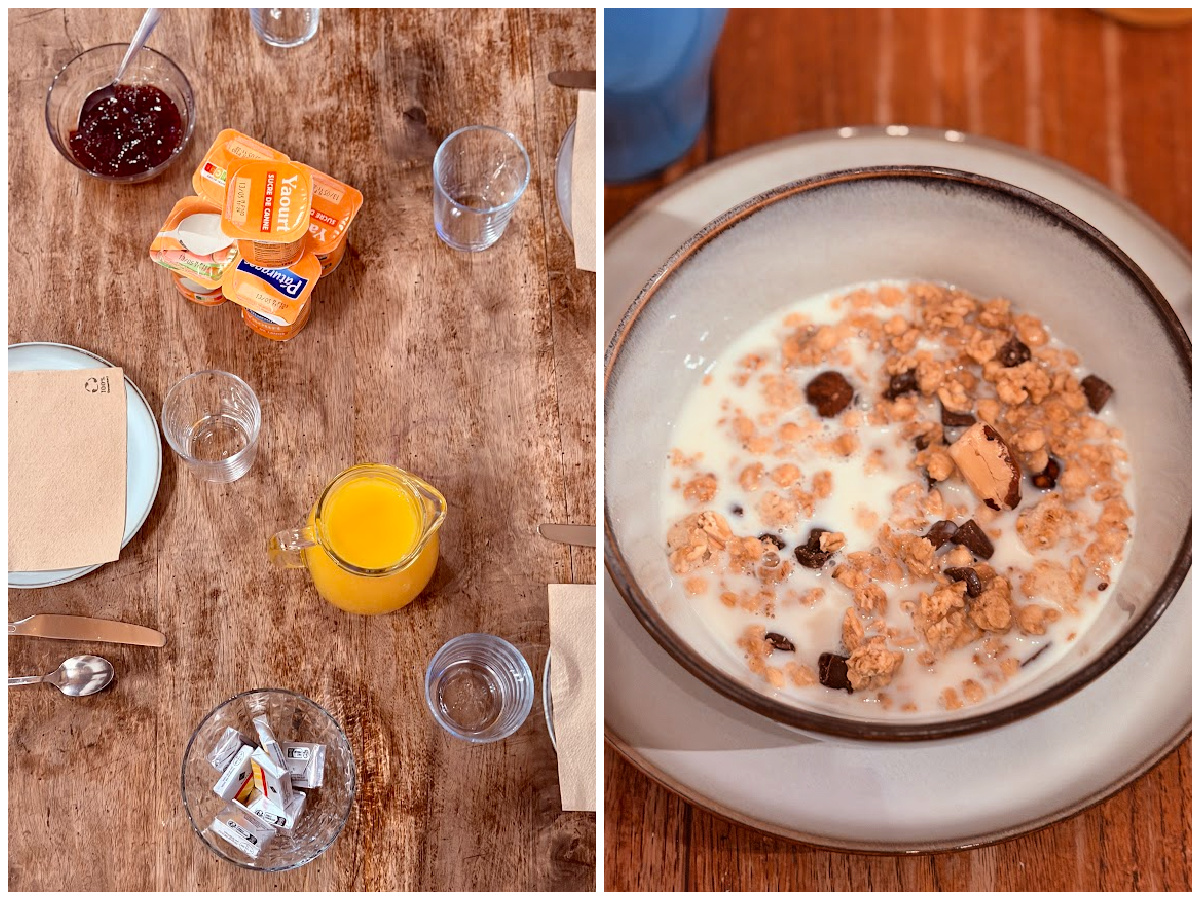
Our picnic included a baguette sandwich, an apple, and sparkling water — simple, portable, and exactly what we needed for a day of walking through the Pyrenees.
Back on the Camino
With breakfast behind us and our picnic lunches tucked into our backpacks, we headed back onto the Camino.
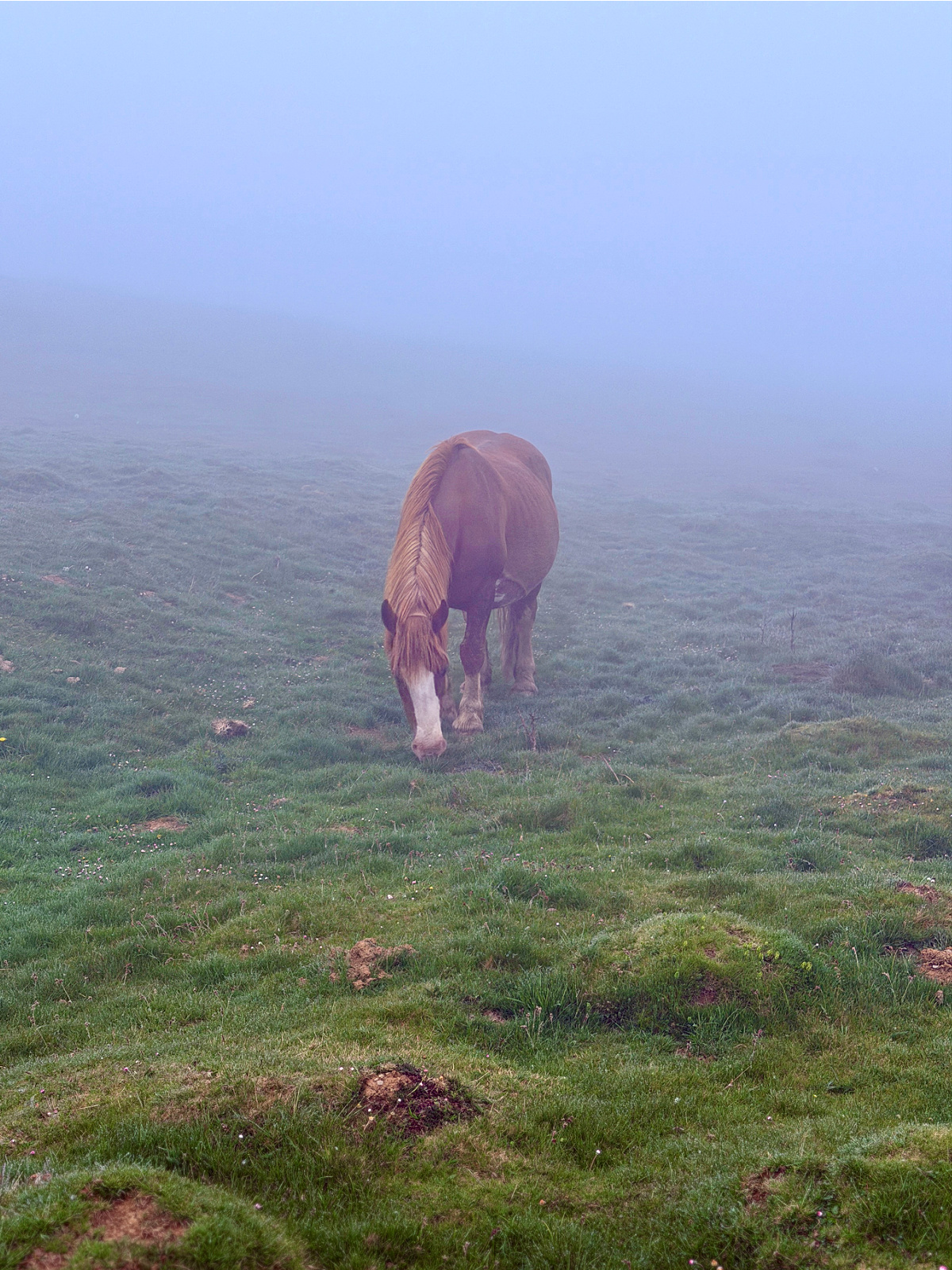
The temperature in late April was wonderful for hiking. Unfortunately, the views weren’t quite as cooperative. Fog covered much of the Pyrenees, hiding the sweeping mountain scenery we’d hoped to see.
On a clear day, this stretch of the Camino offers incredible views across the mountains and valleys. We mostly got varying shades of white and gray.
Still, there was something pretty incredible about walking through the clouds knowing that somewhere ahead of us was Spain.
A Food Truck in the Pyrenees
One of the more unexpected sights along the route was a food truck.
Of course we stopped.
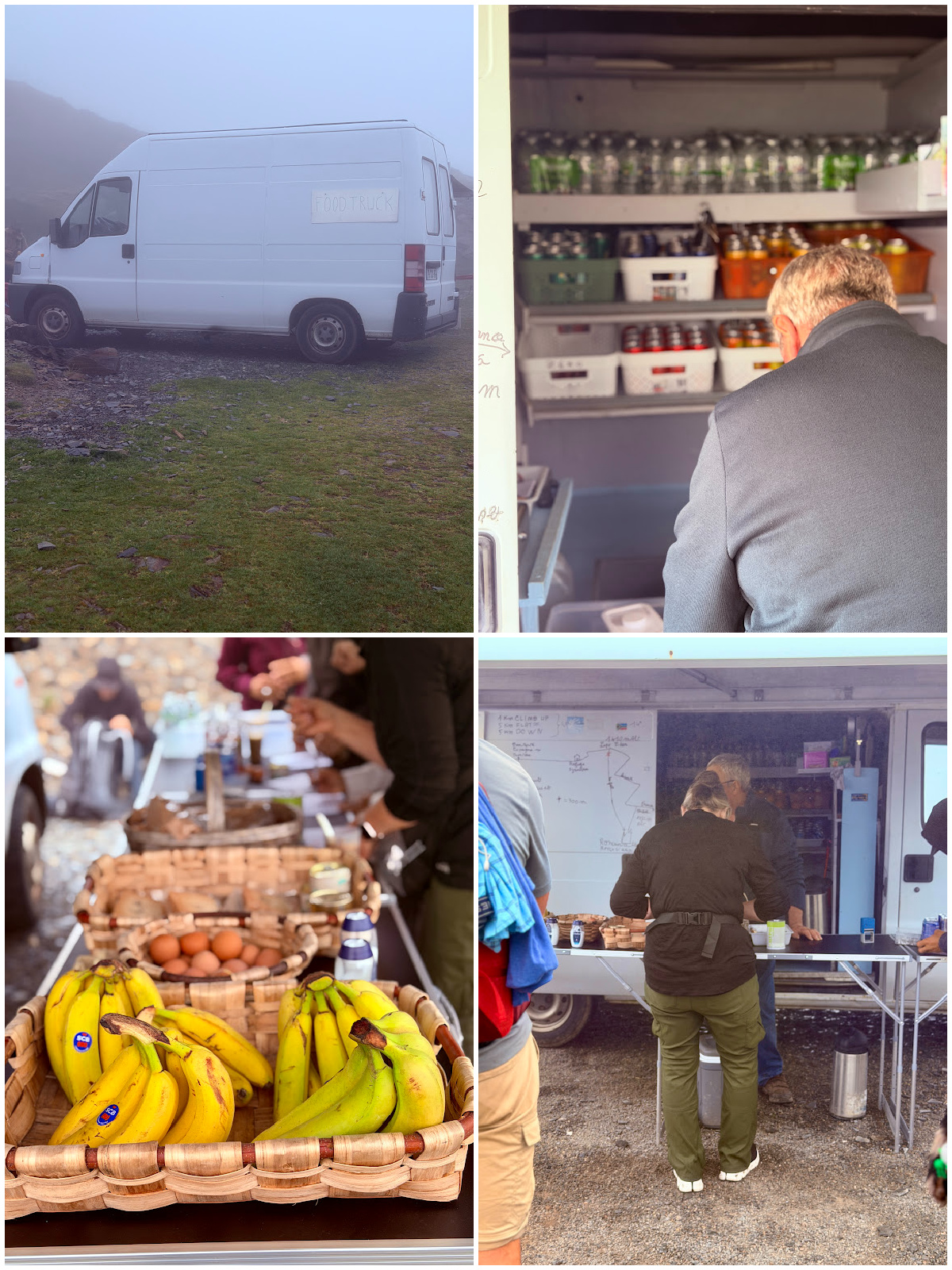
It was a welcome opportunity to pick up something to eat or drink along a stretch of the Camino where there aren’t many options. Diane bought some Parmesan cheese, which apparently seemed like a perfectly reasonable thing to carry across the Pyrenees.
There was also a WC.
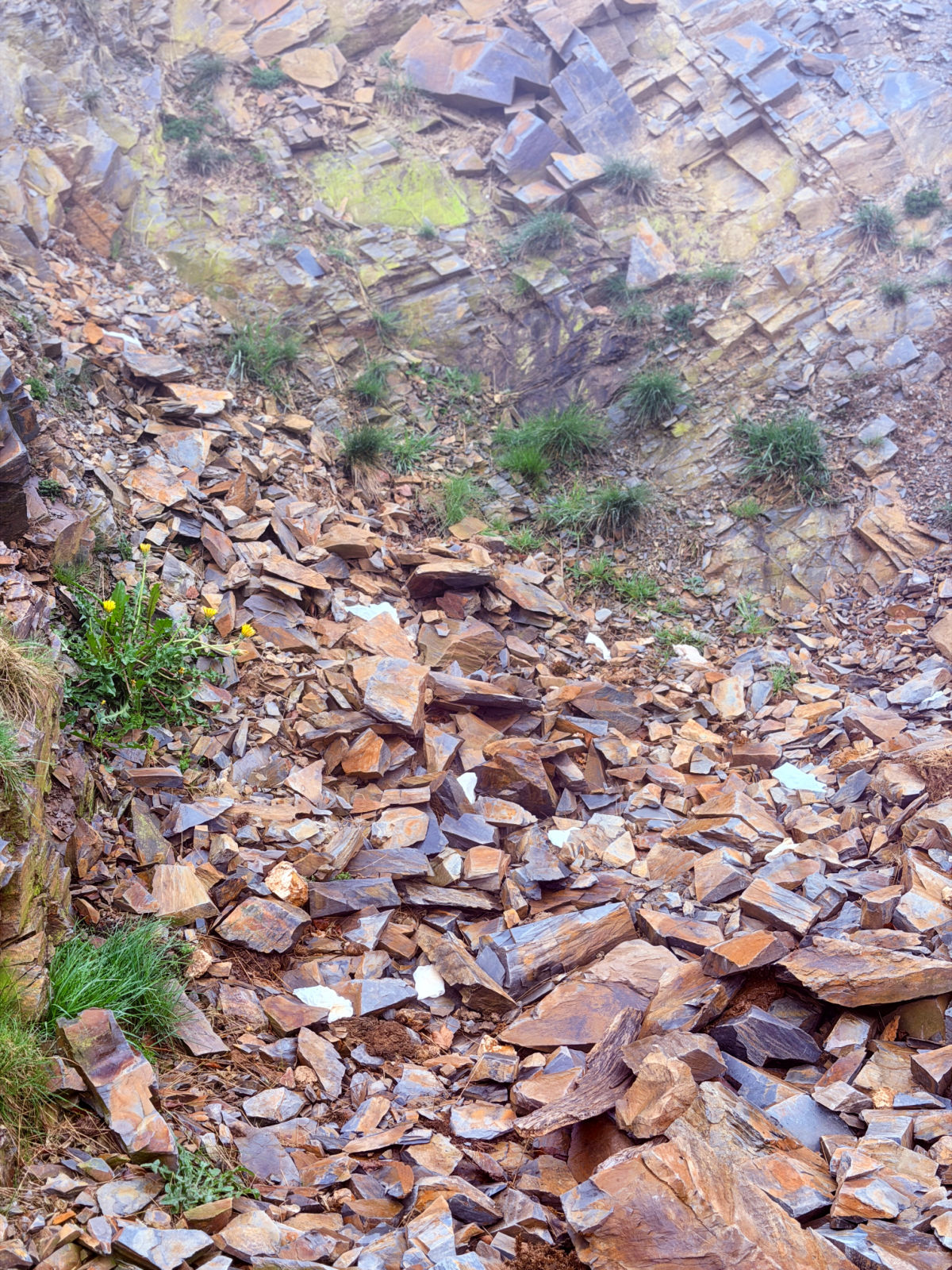
Let’s just say I peed on the WC rather than in it and leave it at that.
The Camino isn’t all ancient churches and meaningful moments.
Lunch Near the Summit
We continued climbing until we stopped near the summit to eat the picnic lunches we’d carried from Auberge Borda. We ate with some of the friends we’d made along the way, enjoying our baguette sandwiches, apples, and sparkling water high in the Pyrenees.
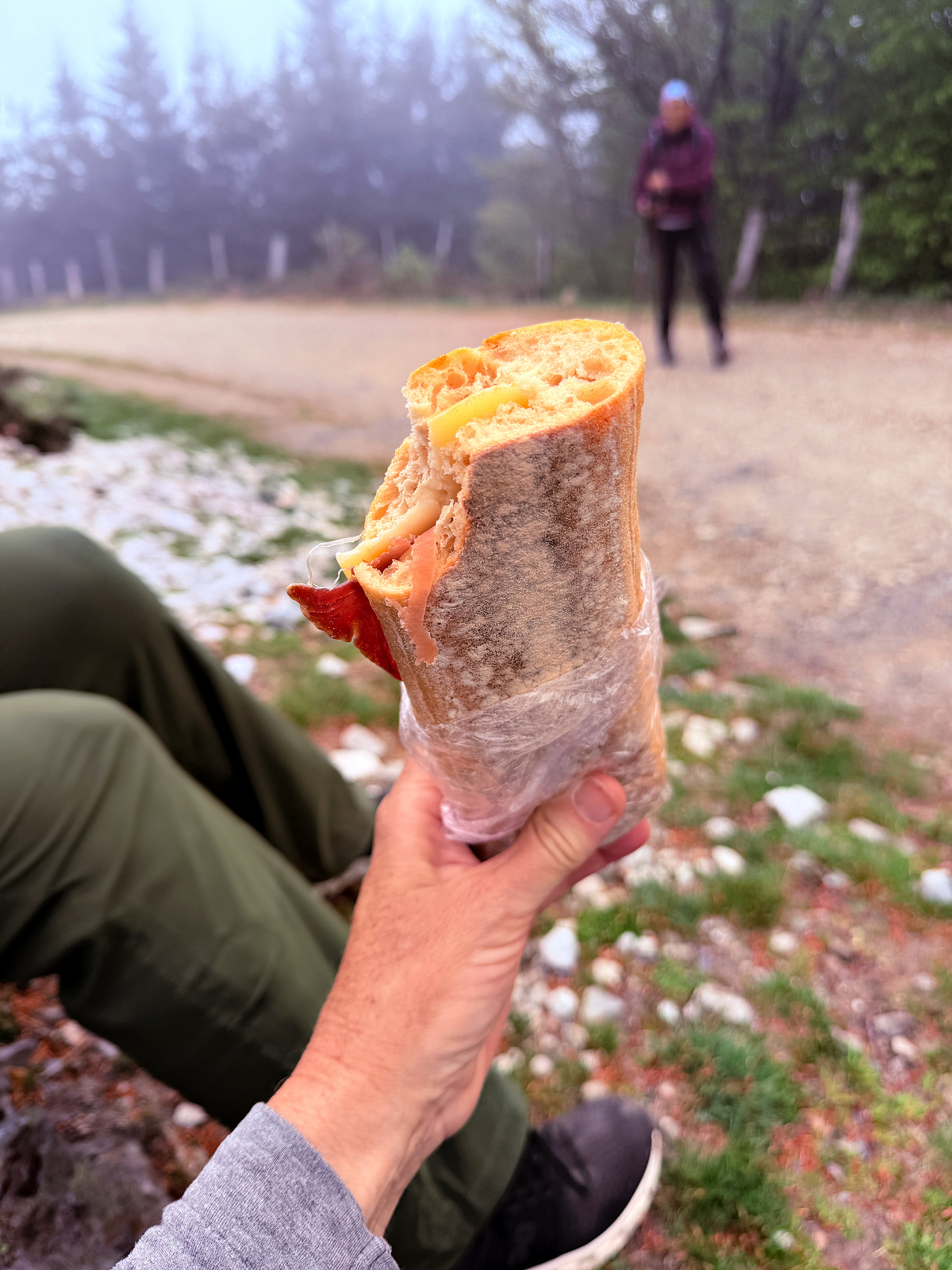
One of the things I was already beginning to appreciate about the Camino was how quickly friendships formed. We’d known these people for only a short time, yet there we were sitting together on a mountain, sharing a lunch break before picking up our backpacks and continuing toward Spain.
The Route Napoléon reaches its highest point near Col de Lepoeder at approximately 1,430 meters (4,690 feet) above sea level. After all that climbing, reaching the highest part of the trail felt like an accomplishment.
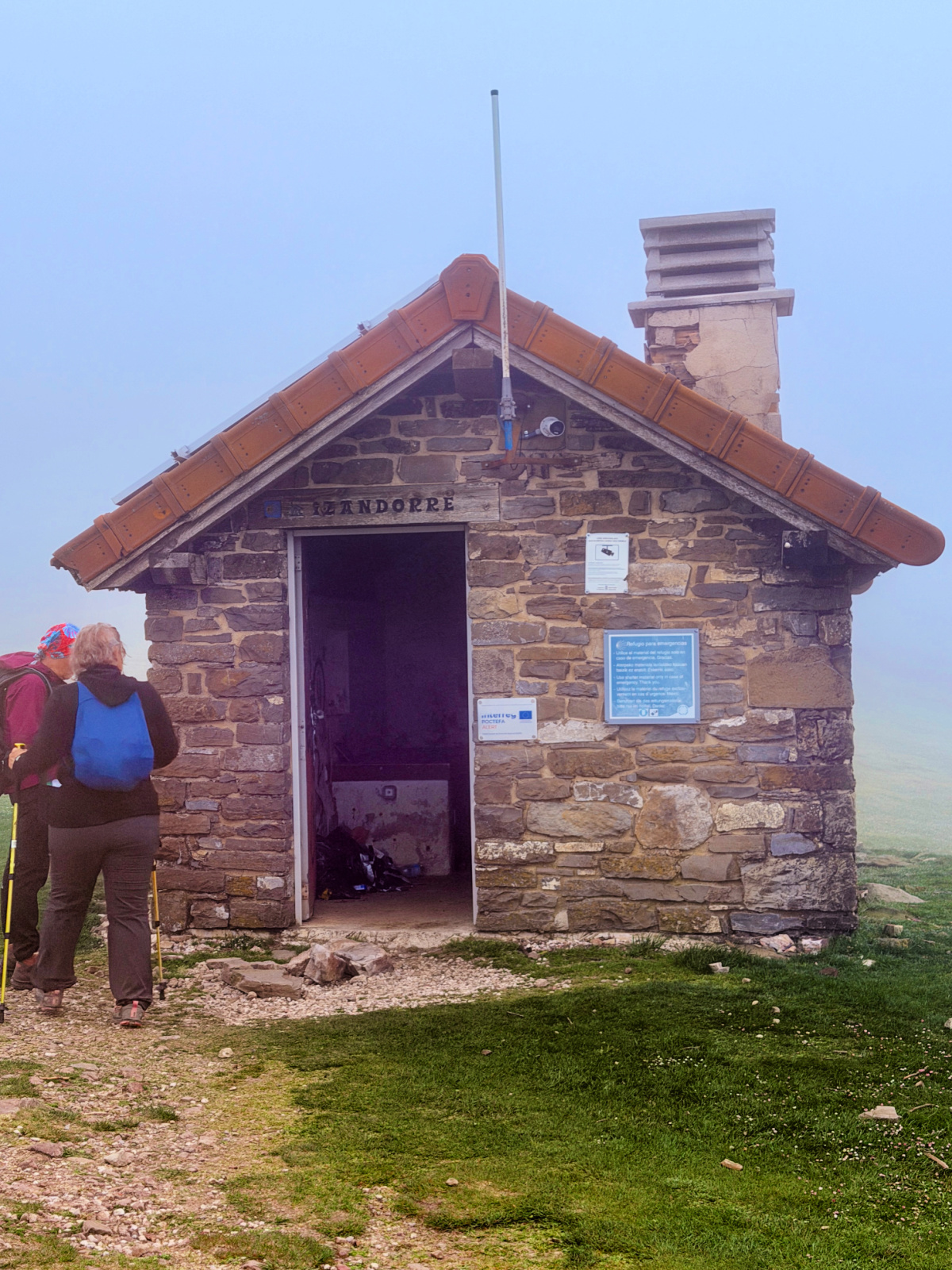
And there was another encouraging thought: eventually, what goes up has to come down.
Alto de Lepoeder: Choosing Our Route Down
Eventually, we reached Alto de Lepoeder, at about 1,430 meters (roughly 4,690 feet).
At this point, you’re getting close to Roncesvalles—but there’s one more decision to make.
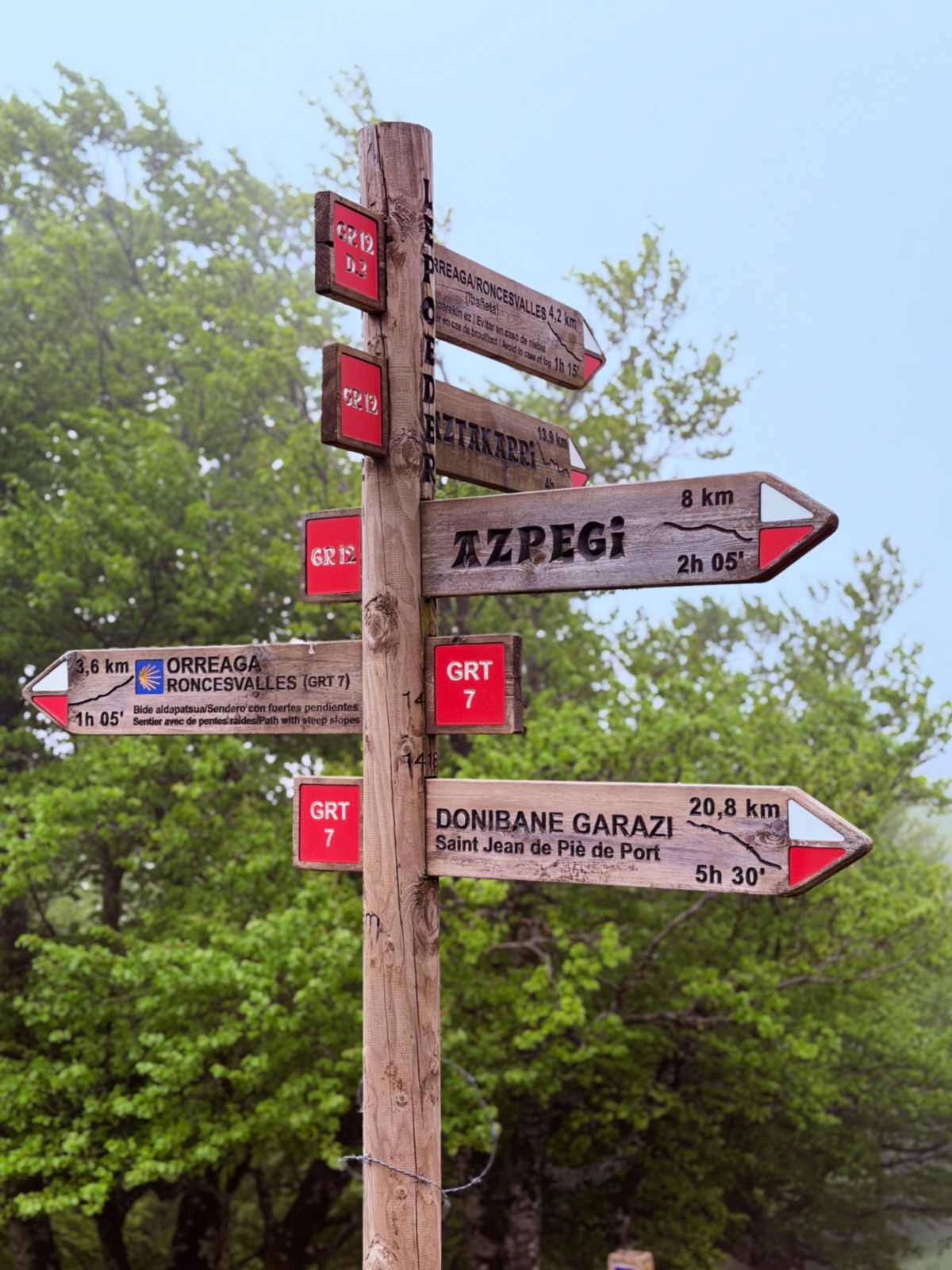
And it’s an important one.
There are two ways to descend from the Lepoeder area toward Roncesvalles.
One option takes you down a steep trail through the forest. It’s shorter and, from everything I’ve heard and seen, beautiful. But the initial descent is quite steep and can be especially difficult on tired knees or when the trail is wet.
The other option continues toward Ibañeta and takes a longer, more gradual route toward Roncesvalles.
We chose the second option.
Better safe than sorry.
We’d already crossed the Pyrenees. I didn’t feel the need to prove anything by choosing the steepest possible way down them.
For anyone planning this stage, this is a decision worth knowing about before you get there. Hiking poles can be especially helpful on Camino descents, and weather conditions should absolutely factor into which route you choose.
Weather and Safety on the Napoleon Route
We were incredibly grateful that there was no snow when we crossed the Pyrenees. There are places along the route where the trail runs beside steep slopes with no guardrails or barriers. Looking at those exposed edges, I kept thinking about how different this walk would have been with snow on the ground. In some places, we might not have been able to tell where the trail ended—and where you absolutely did not want to step.
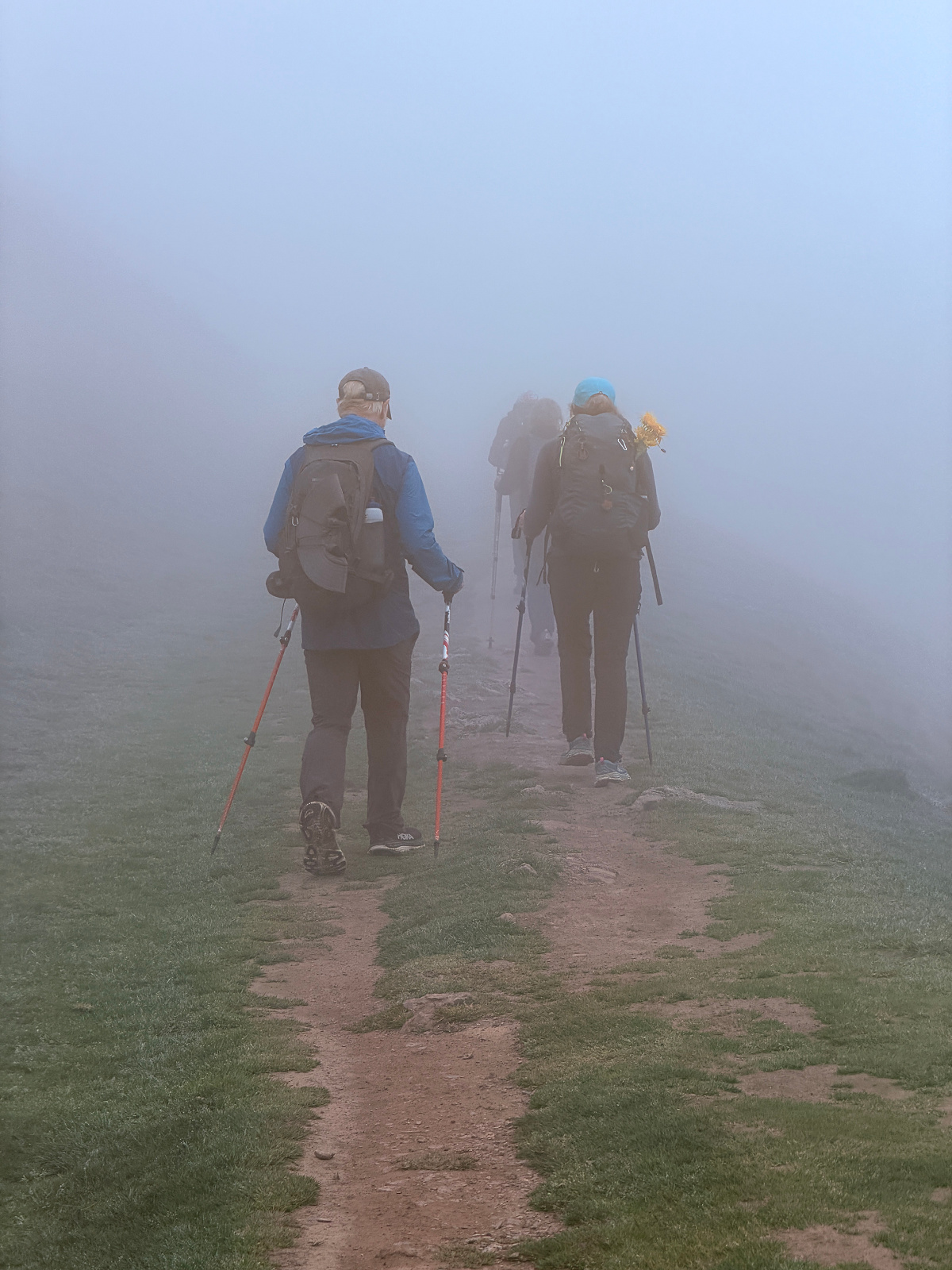
It’s easy to romanticize the Camino, especially this beautiful stretch through the Pyrenees, but it is still a mountain crossing. People have died while crossing the Pyrenees on the Camino, and the weather can change the difficulty of this stage dramatically. If conditions are bad, this is not the place to prove how tough you are. Pay attention to the Pilgrim Office, weather warnings, and any route closures.
Franco’s Bunkers Near Ibañeta
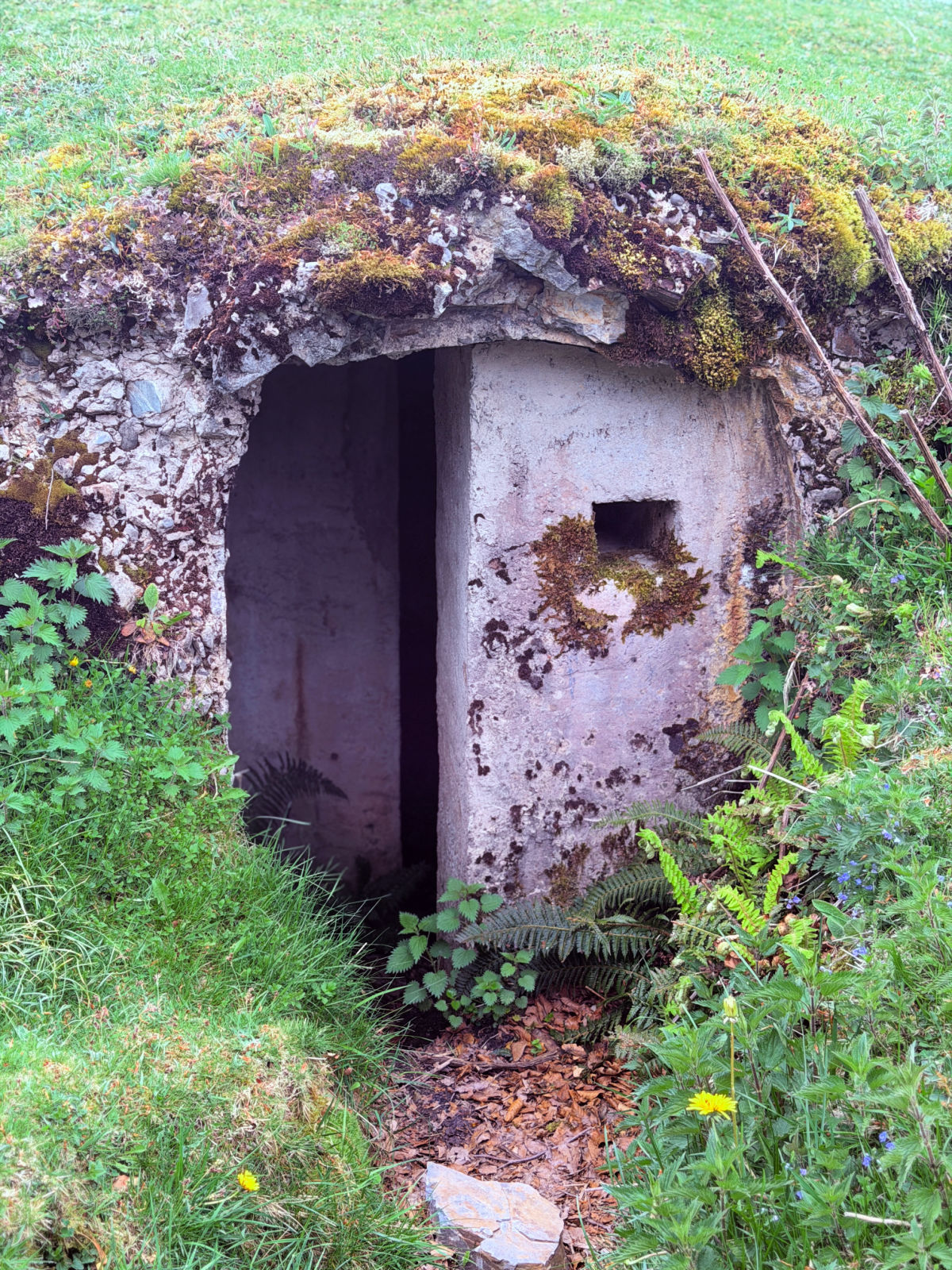
One thing I had been looking forward to seeing on this part of the Camino was the old military bunkers near Ibañeta. Built during Francisco Franco’s dictatorship as part of a defensive network along Spain’s Pyrenees border, the concrete bunkers are remnants of a very different chapter in Spanish history. Because we chose the route toward Ibañeta, we passed some of them on our way down toward Roncesvalles. There was something surreal about seeing these old defensive structures tucked into such beautiful mountain scenery—especially after I had read about them before our trip and knew to watch for them.
Descending to Roncesvalles
After passing the bunkers near Ibañeta, we continued our descent toward Roncesvalles.
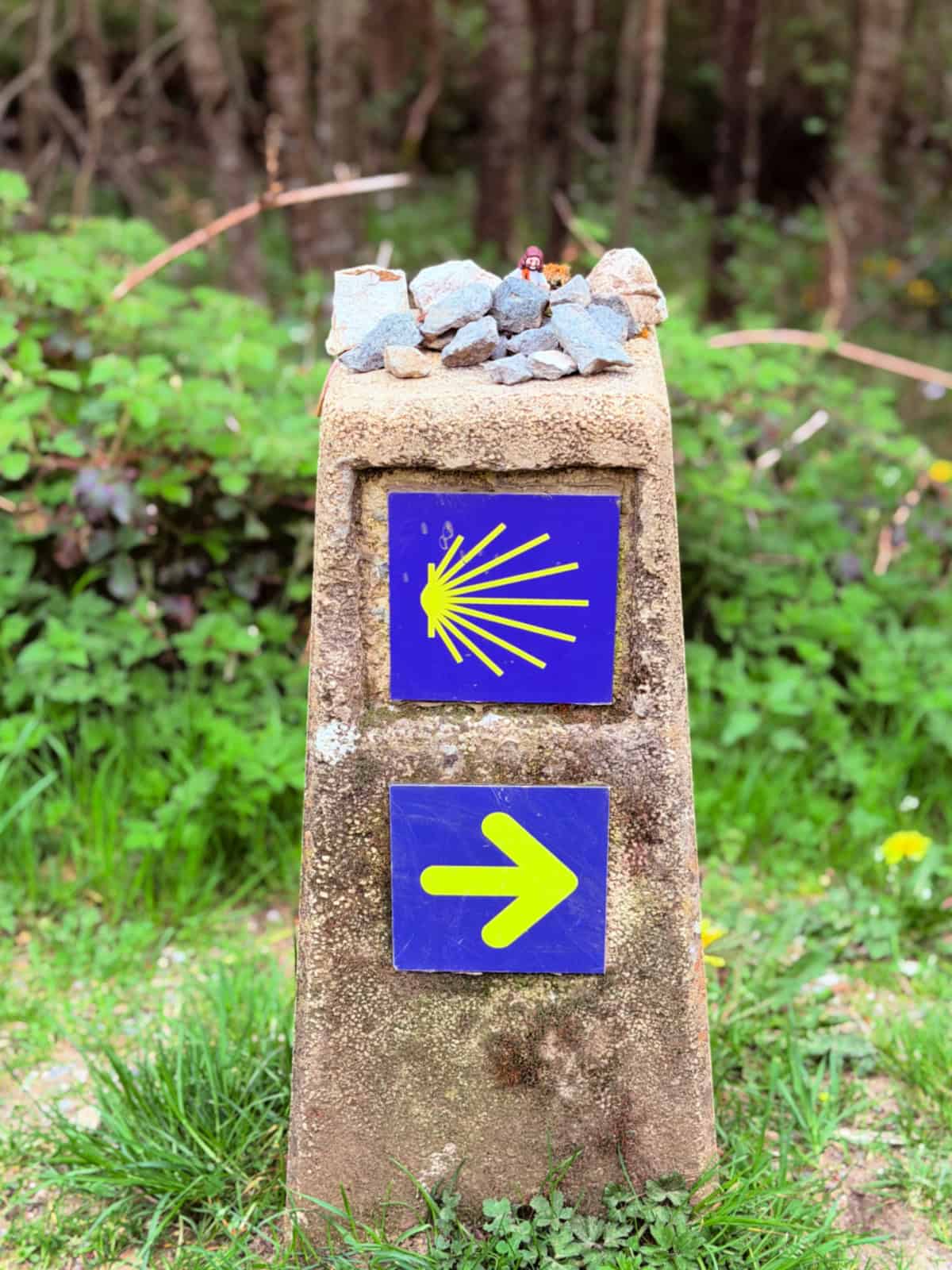
Eventually, we reached Roncesvalles, one of the most famous stops on the Camino Francés and a place that has been associated with pilgrims for centuries.
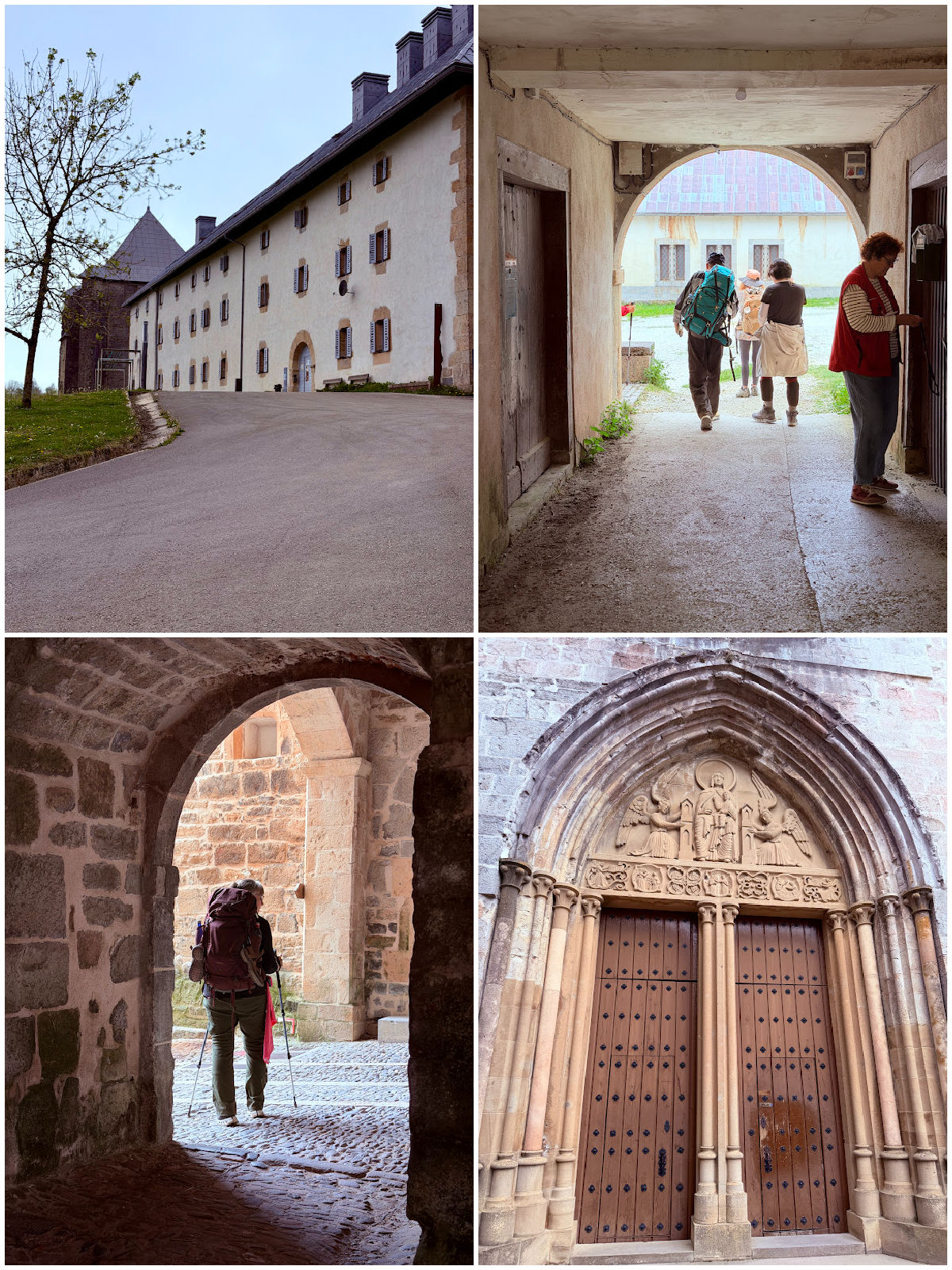
This was also where we parted ways with the friends we’d been walking with.
That’s something you learn quickly on the Camino. People enter and leave your little Camino world constantly. You may walk together for a few hours or a few days before someone stops for the night while someone else keeps going. Sometimes you run into each other again farther down the trail.
Sometimes you don’t.
Basque Cheesecake in Roncesvalles
Before leaving Roncesvalles, we stopped for something to eat.
French fries. Aquarius. And Basque cheesecake.
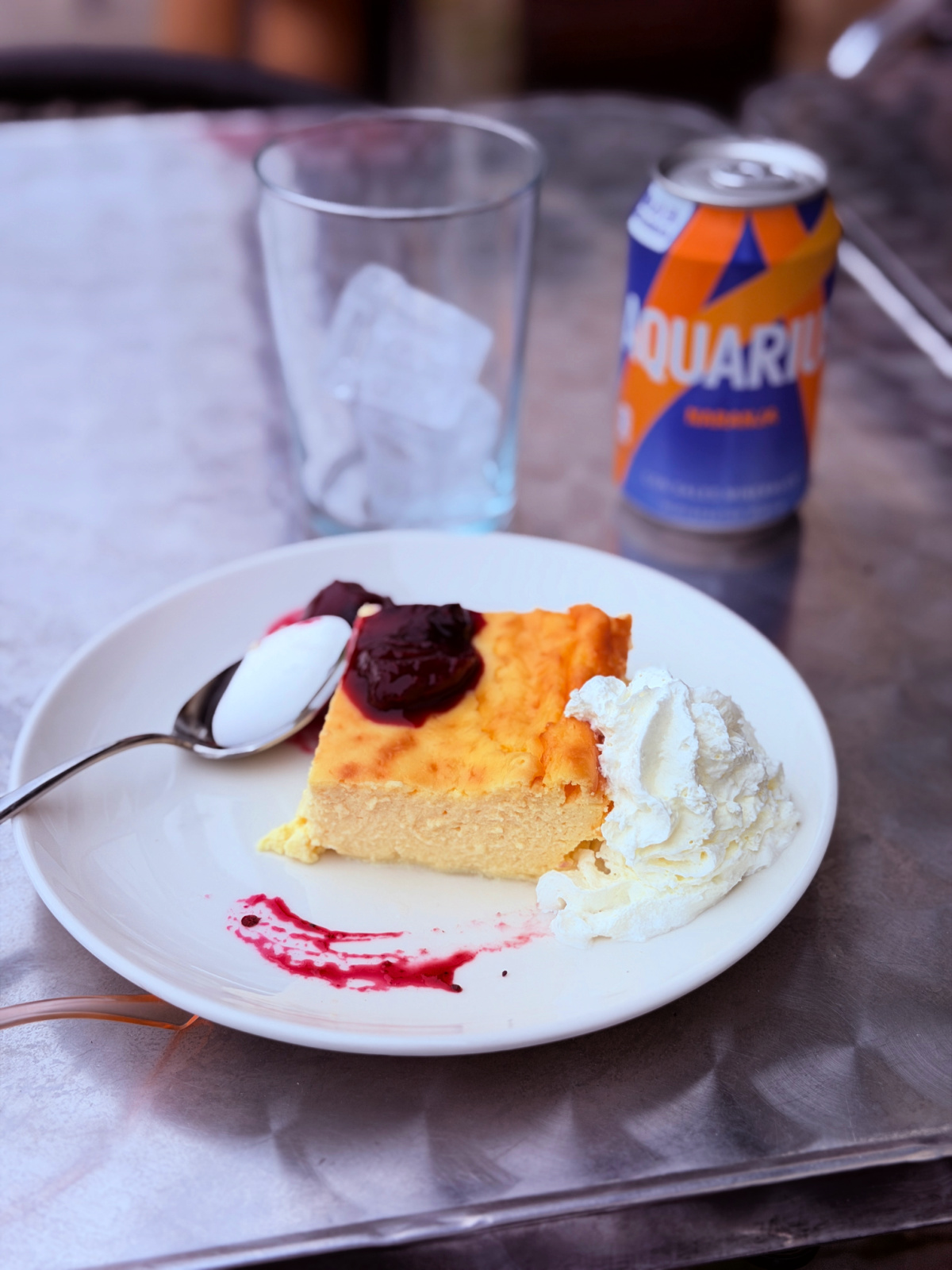
We were in Basque Country, after all, so trying the cheesecake seemed less like an indulgence and more like a cultural obligation. That’s my story, anyway.
Looking back, however, there is one thing I would change about this day: I would stay overnight in Roncesvalles.
We had heard that pilgrims staying there are awakened in the morning by Gregorian chants. There’s something about waking to Gregorian chants in a centuries-old pilgrimage stop in the Pyrenees that sounds like one of those experiences that belongs on the Camino.
Instead, we put our backpacks on and kept walking.
I suppose missing it gives me a good excuse to go back and walk the Camino from the beginning again.
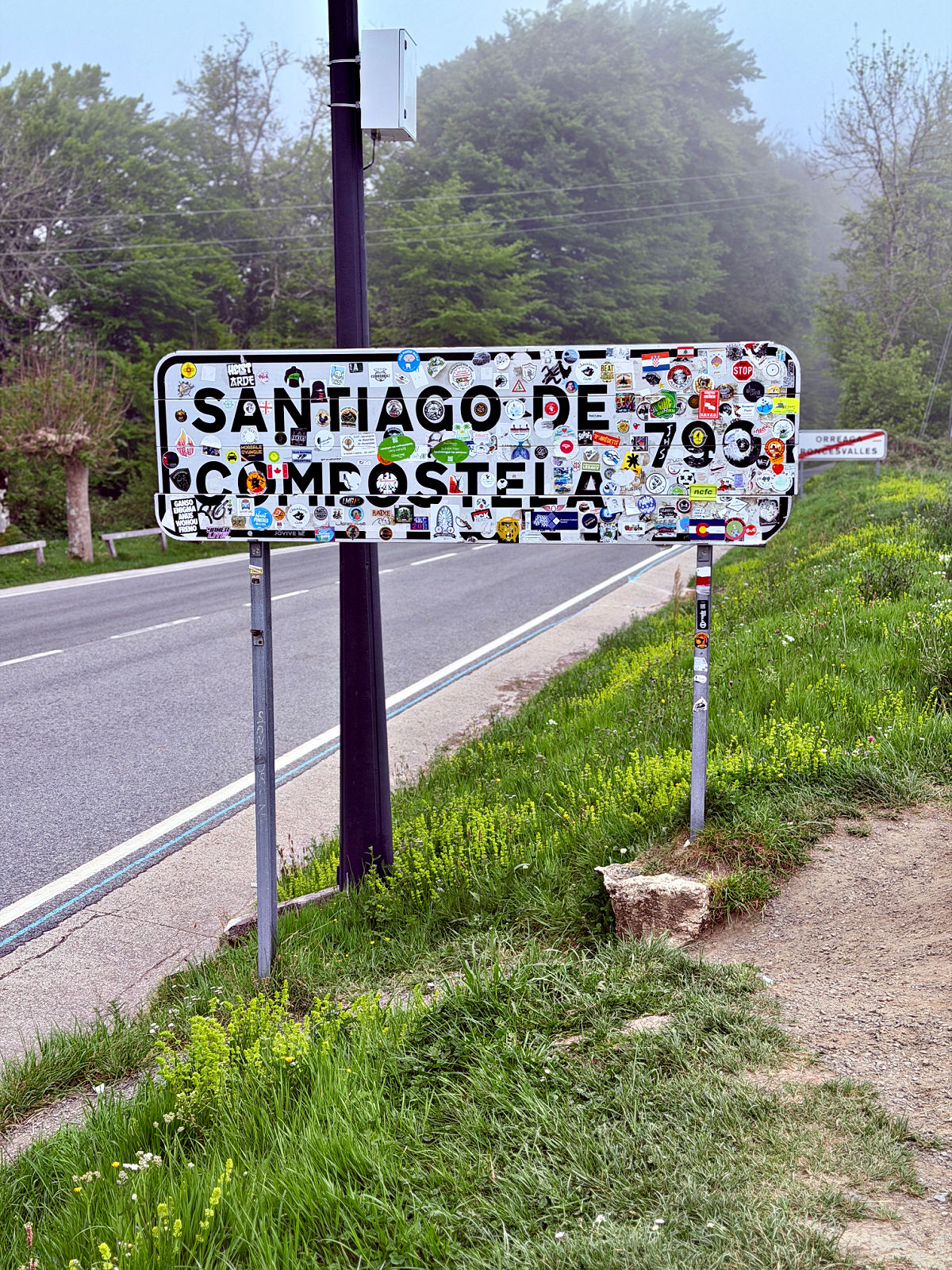
Walking On to Burguete
We hadn’t originally planned to spend the night in Burguete. Somewhere along the way, though, we met other pilgrims who told us they were continuing past Roncesvalles to Burguete. They mentioned Hostal Burguete — and the fact that Ernest Hemingway had stayed there.
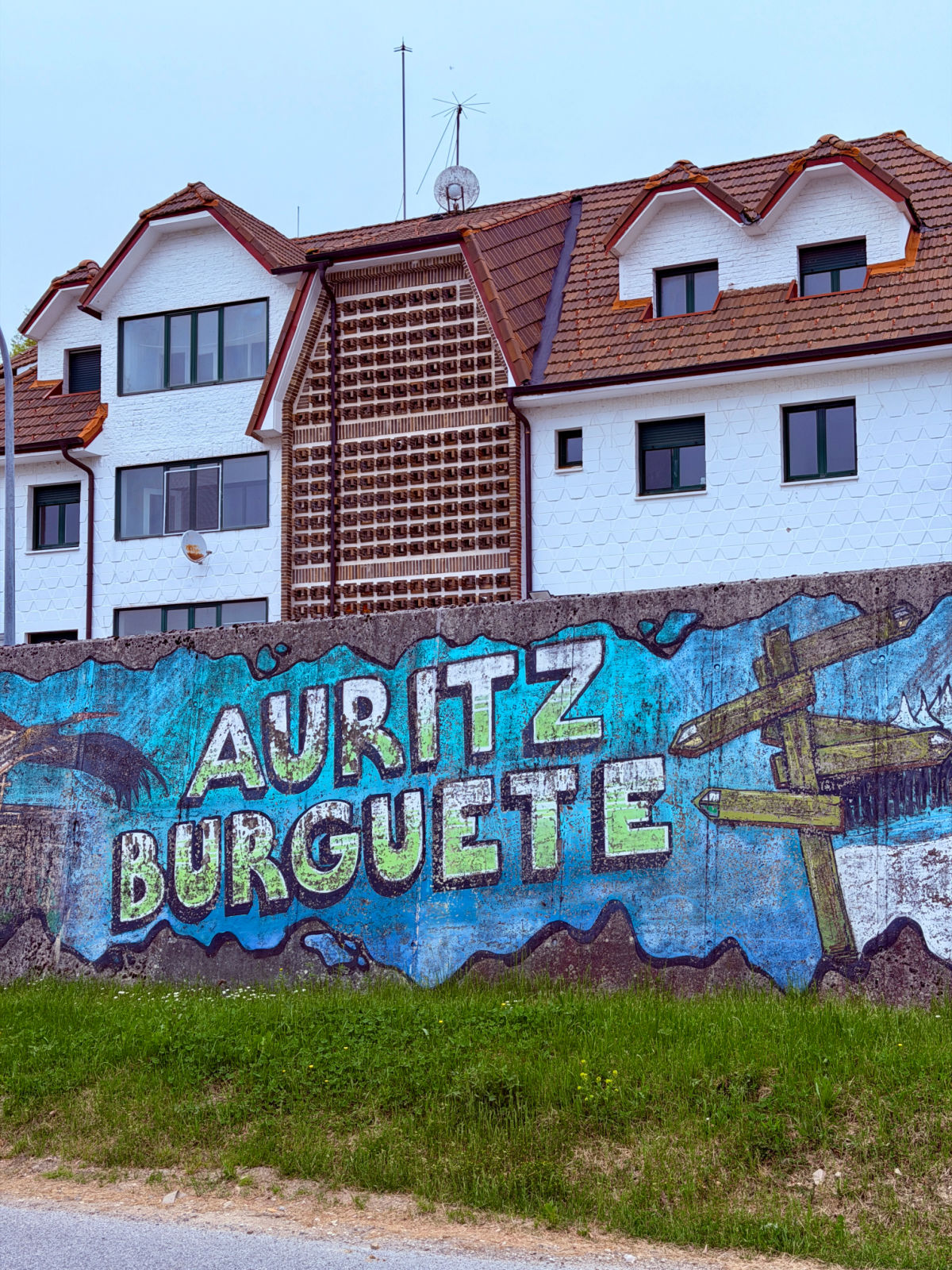
Well, that got our attention.
Hemingway spent time in Burguete during his visits to Spain in the 1920s, staying at Hostal Burguete while making fishing trips into the nearby Irati River valley. The hotel still proudly claims its connection to the writer, and Burguete and its surroundings later became part of the setting for his 1926 novel, The Sun Also Rises.
So instead of stopping for the night in Roncesvalles, we put our backpacks back on and continued a few more kilometers to Burguete.
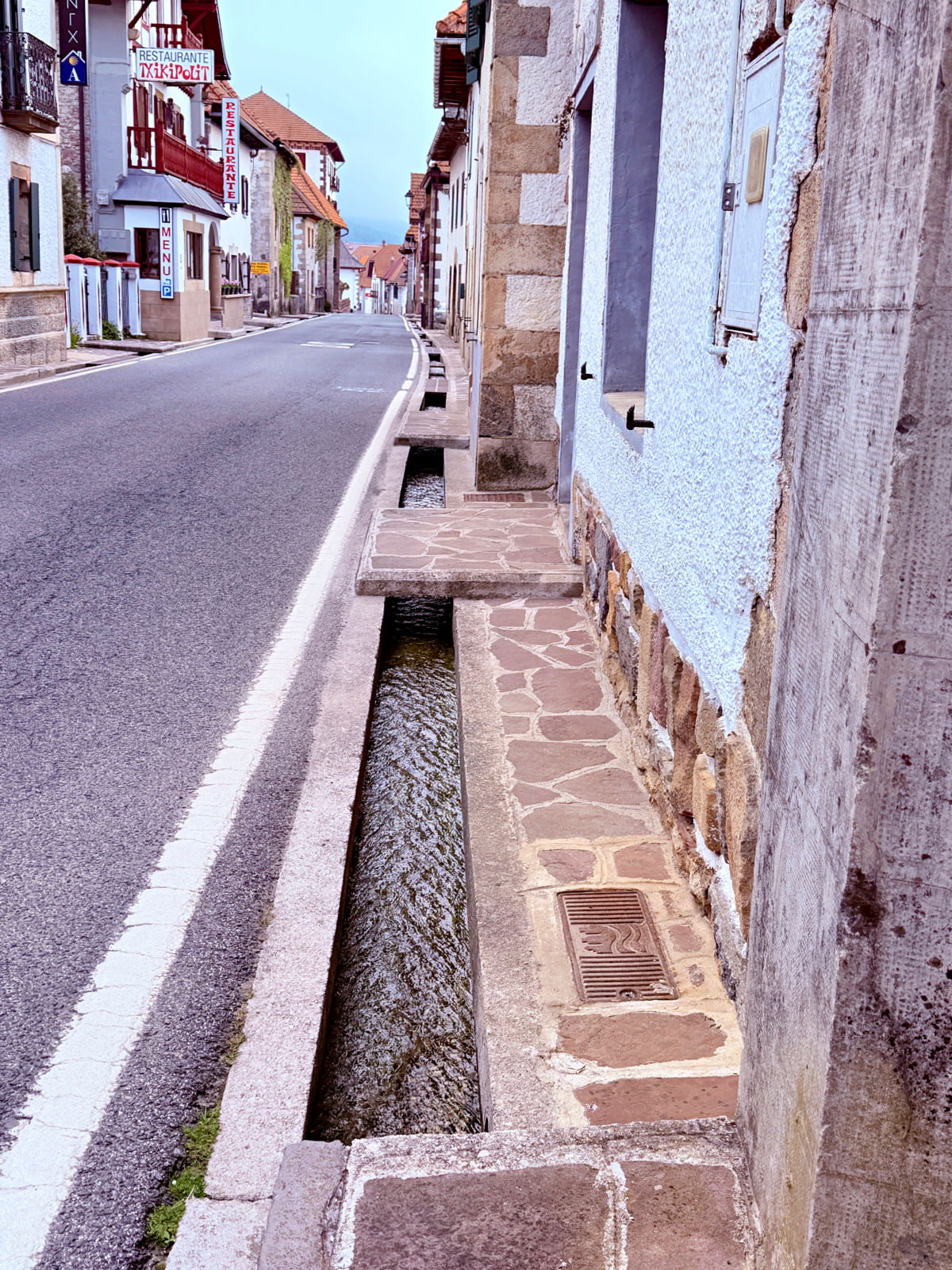
In hindsight, I would probably stay in Roncesvalles if I were doing this stage again. But getting to spend the night in a place with such a strong connection to Hemingway was a pretty good consolation prize.
And this wouldn’t be the last time our Camino crossed paths with him.
A few days later, we would walk into Pamplona, another city closely associated with Hemingway and The Sun Also Rises. There we visited Café Iruña on Plaza del Castillo, one of Hemingway’s favorite haunts and a place that appears repeatedly in the novel. More than a century after Hemingway first arrived in Pamplona in 1923, pilgrims and travelers can still sit in the same café and find his presence throughout the place.
Apparently, we weren’t just walking the Camino. Every now and then, we were also walking in Hemingway’s footsteps.
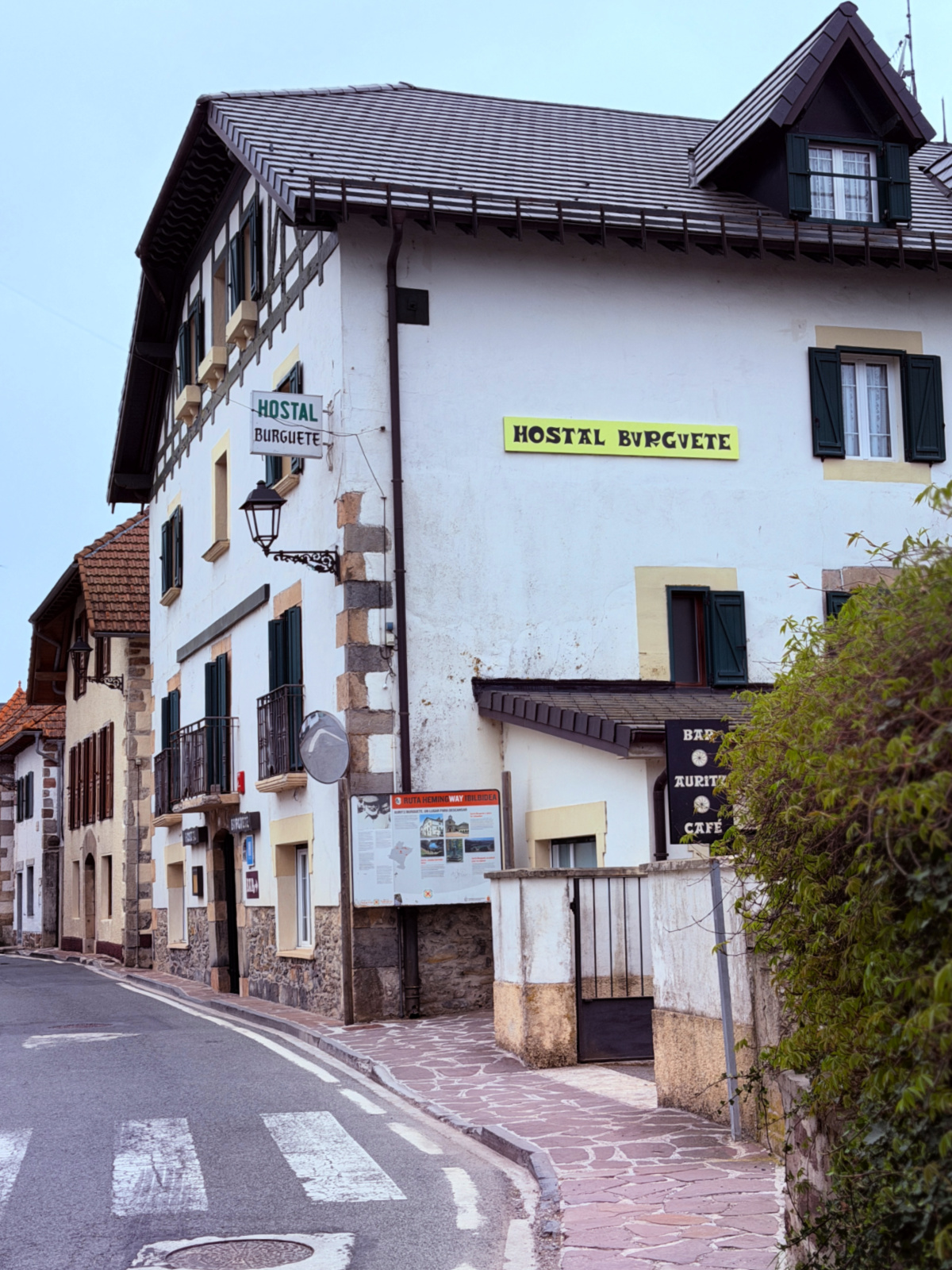
Eventually, we arrived at Hostal Burguete and attempted to check in.
The man we tried to communicate with spoke Basque — and pretty much only Basque.
We spoke exactly zero Basque.
Somehow, we managed.
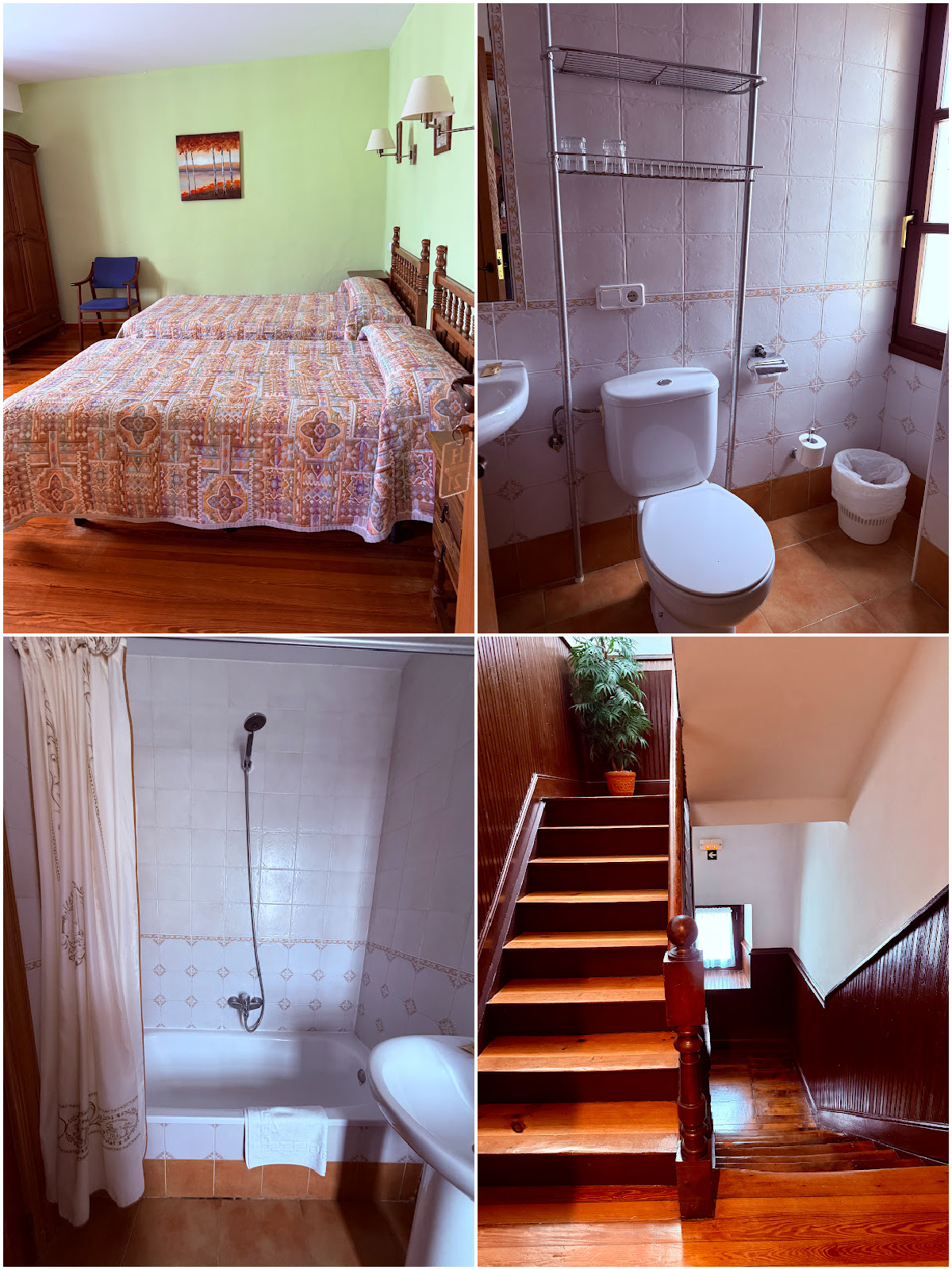
We settled into our room, rested for a little while, took quick showers, and then walked down the street in search of dinner.
A Quick Note About the Basque Language
The Basque Country stretches across parts of northern Spain and southwestern France, and it has its own language, Basque (Euskara). Unlike Spanish and French, Basque isn’t a Romance language — in fact, it isn’t known to be related to any other living language. You’ll see Basque alongside Spanish or French on signs throughout the region, and in some places, you may encounter people who primarily speak Euskara.
Dinner in Burguete
After a day of walking, steak and fries sounded pretty good. For €15, that’s what I ordered. The steak turned out to be a very thin slice of beef — not quite what I had pictured when I ordered it.
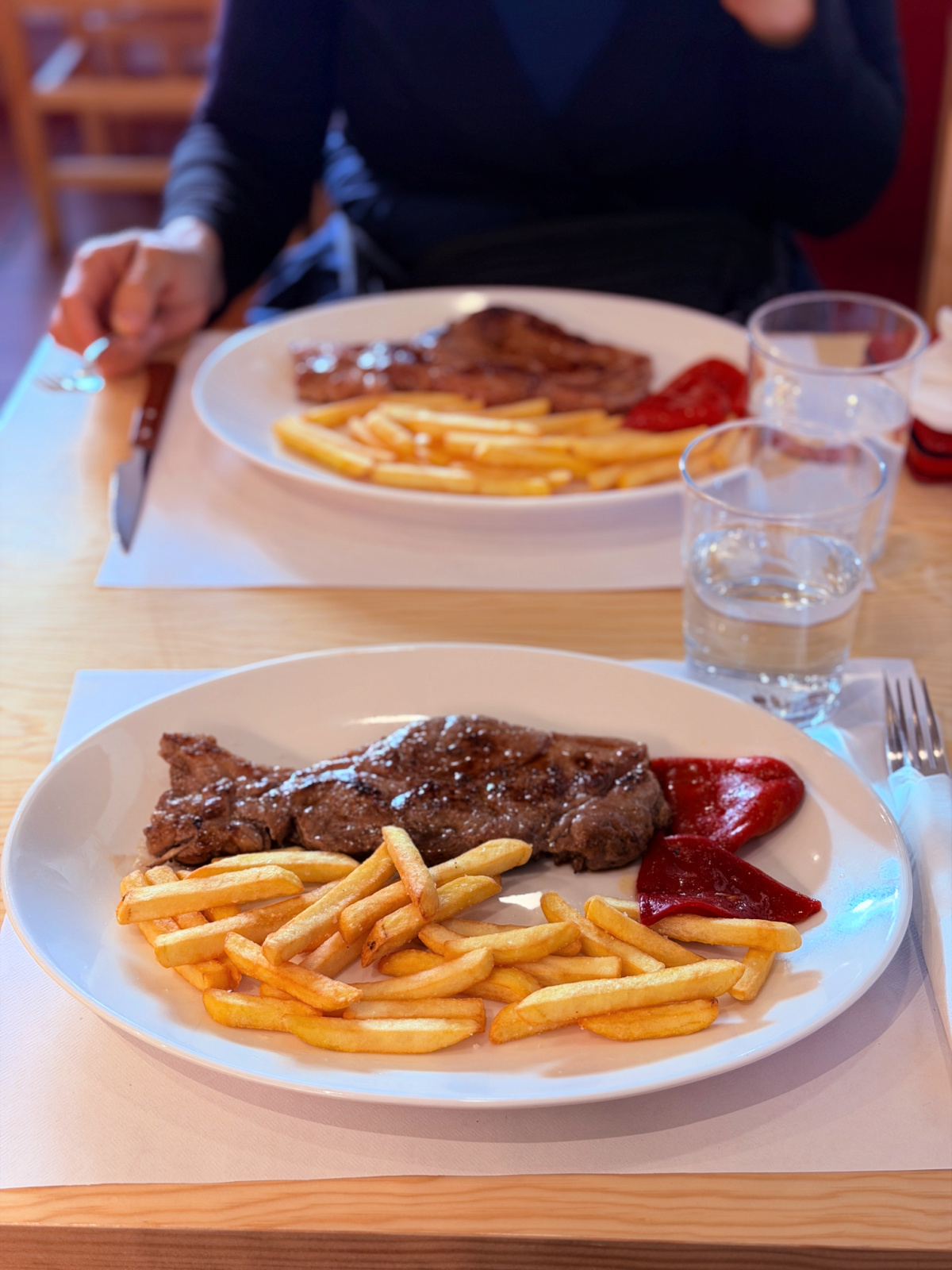
Perhaps Spanish cows are skinny? It was okay. We accepted it for what it was, ate our dinner, and headed back to Hostal Burguete for the night.
We’d started the morning high in the French Pyrenees and ended it in a small village in Spain.
My step count for the day: 31,037.
Day 2 was done.
And so was the biggest climb of our first 100 miles on the Camino.
What I Would Do Differently
If I were walking this section again, I would make one significant change: I would spend the night in Roncesvalles rather than continuing to Burguete.
There’s nothing wrong with continuing to Burguete, and staying there shortened the distance we would have to walk the following day. But Roncesvalles is such an important part of the Camino’s history that I wish we’d given ourselves more time to experience it.
And yes, I still want to know what it’s like to wake up to those Gregorian chants.
Fortunately, the Camino will still be there.
A Few Things to Know Before Crossing the Pyrenees
- Consider splitting the first stage. The walk from Saint-Jean-Pied-de-Port to Roncesvalles is famously challenging. Staying overnight in the mountains allowed us to break the climb into two days rather than tackling the entire distance at once.
- Arrange food before heading into the mountains. Once you’ve left the towns and grocery stores behind, places to buy food are limited. Auberge Borda offered a picnic lunch for an additional charge, and we were very glad we’d ordered one. Ours included a baguette sandwich, apple, and sparkling water.
- Don’t count on finding a real bathroom between Honto and Roncesvalles. We did encounter one spot marked as a “WC,” but calling it a bathroom would be generous—it was essentially a pile of rocks offering a little privacy. If nature calls along the way, be prepared to handle it responsibly, and do not leave toilet paper behind. Carry a small zip-top bag or other sealable waste bag so you can pack used toilet paper out with you. The Pyrenees are beautiful enough without anyone’s Charmin fluttering in the breeze.
- Don’t count on clear mountain views. The Pyrenees can be foggy even when the temperature is comfortable for hiking. We walked this section in late April and had great hiking temperatures, but fog obscured many of the views.
- Carry water and take advantage of opportunities to refill or buy drinks. Services along the mountain route are limited compared with walking through the villages farther along the Camino.
- Remember that reaching the top isn’t the end. After climbing to roughly 1,430 meters (4,690 feet), there is still a substantial descent into Roncesvalles. Downhill miles can be surprisingly tiring, especially after a long day of climbing.
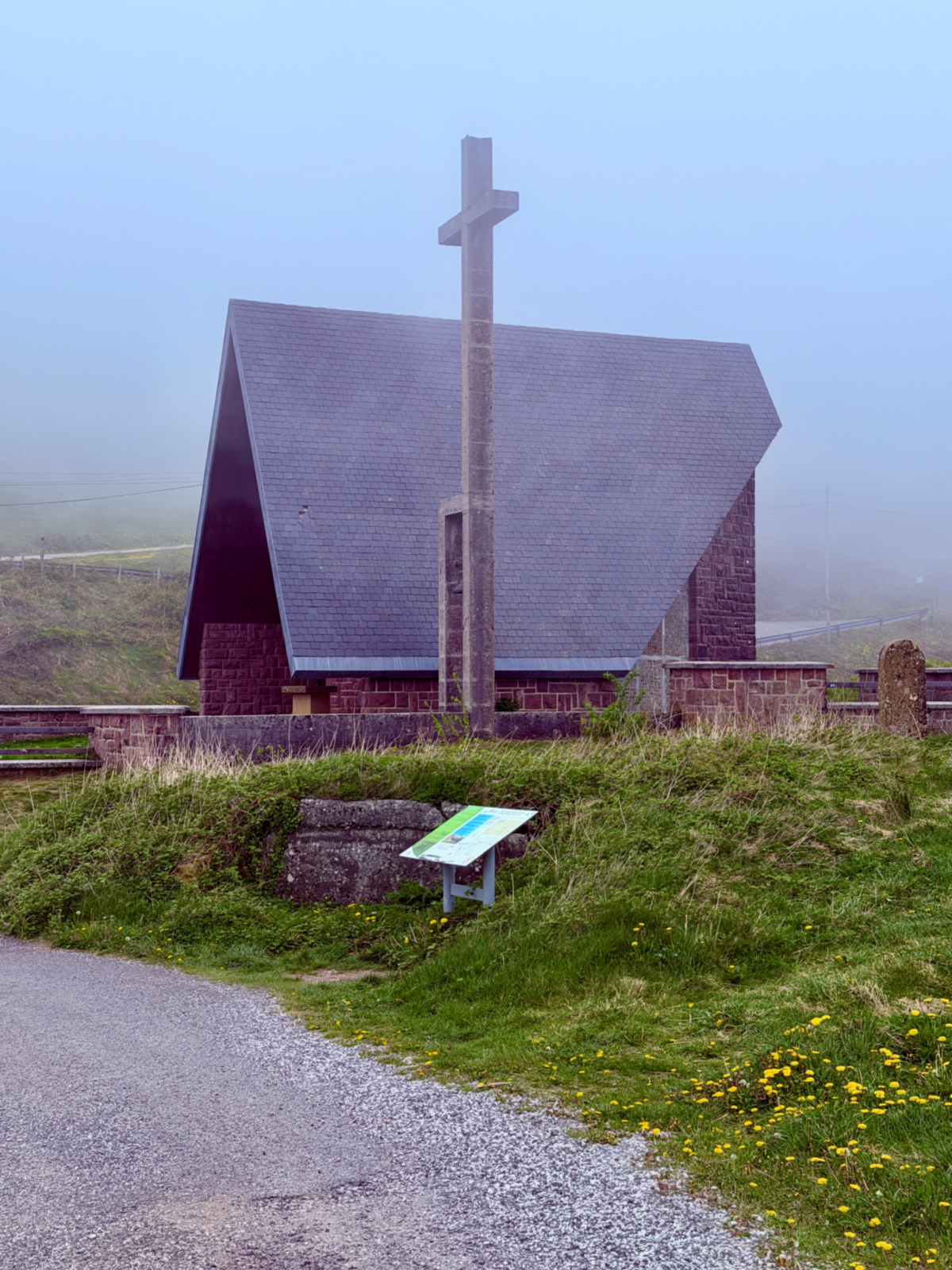
Most importantly, don’t rush through the experience simply because there’s another destination on the itinerary. If there’s one lesson I’d take from this day, it’s that sometimes the place everyone else is stopping is worth stopping for, too.
Ready for the Next Leg?
Crossing the Pyrenees and walking from Honto to Burguete brought us out of France and into Spain, with foggy mountain trails, new Camino friends, a stop in Roncesvalles, and a little Hemingway history along the way. In the next post, Burguete to Zubiri, we’ll leave Burguete behind and continue through the villages of Espinal, Bizkarreta, and Lintzoain before reaching Zubiri.
Would you tackle the entire walk from St. Jean Pied de Port to Roncesvalles in one day, or would you split the Pyrenees crossing into two days like we did? Let me know in the comments below!
