
Estella to Los Arcos: Day 7 of the Camino Francés

The walk from Estella to Los Arcos begins with one of the Camino Francés’ most unusual landmarks: the Bodegas Irache wine fountain. From there, the route climbs through Azqueta and Villamayor de Monjardín before crossing a long stretch of open farmland on the way to Los Arcos.
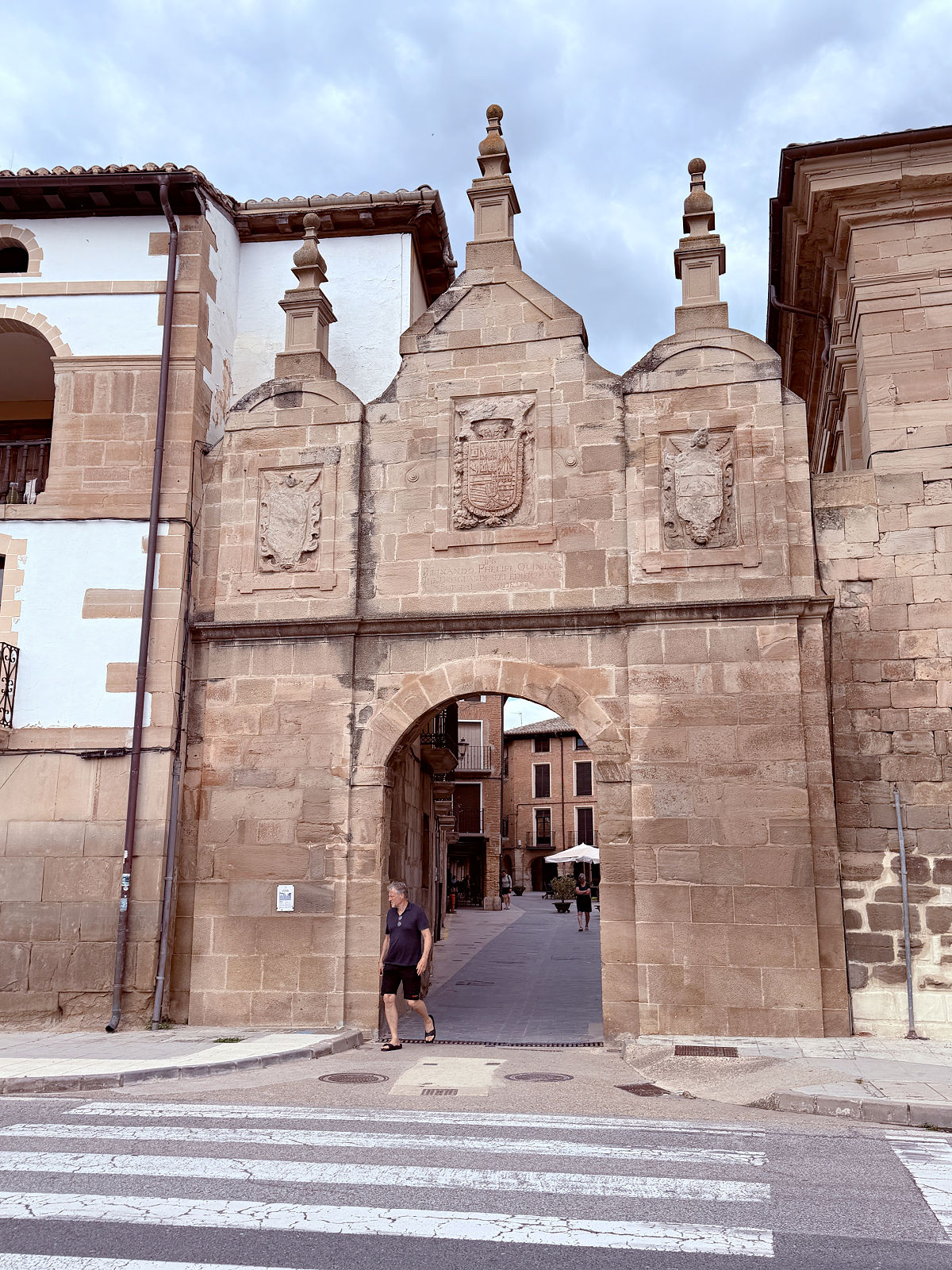
The approximately 21-kilometer—or 13-mile—stage passes vineyards, small villages, medieval landmarks, and miles of countryside with few services. It is not the longest day on this portion of the Camino, but the exposed trail can feel much longer when the weather decides to put on a show.
This was Thursday, April 30—the eleventh day of our trip and our seventh day of walking. The rain in Spain was falling squarely on the Camino that morning. By afternoon, the clouds had cleared, and the day ended bright and sunny. Spain had apparently scheduled multiple seasons for us before lunch.
Follow the full journey in my Camino de Santiago series.
Estella to Los Arcos Route at a Glance
- Date: Thursday, April 30
- Camino walking day: Day 7
- Starting point: Estella, Spain
- Ending point: Los Arcos, Spain
- Distance: Approximately 21 kilometers (13 miles)
- Places along the route: Irache, Azqueta, and Villamayor de Monjardín
- Terrain: Town streets, vineyards, rolling hills, village paths, and a long exposed stretch through farmland
- Where we stayed: Albergue La Fuente–Casa de Austria
The Rain in Spain
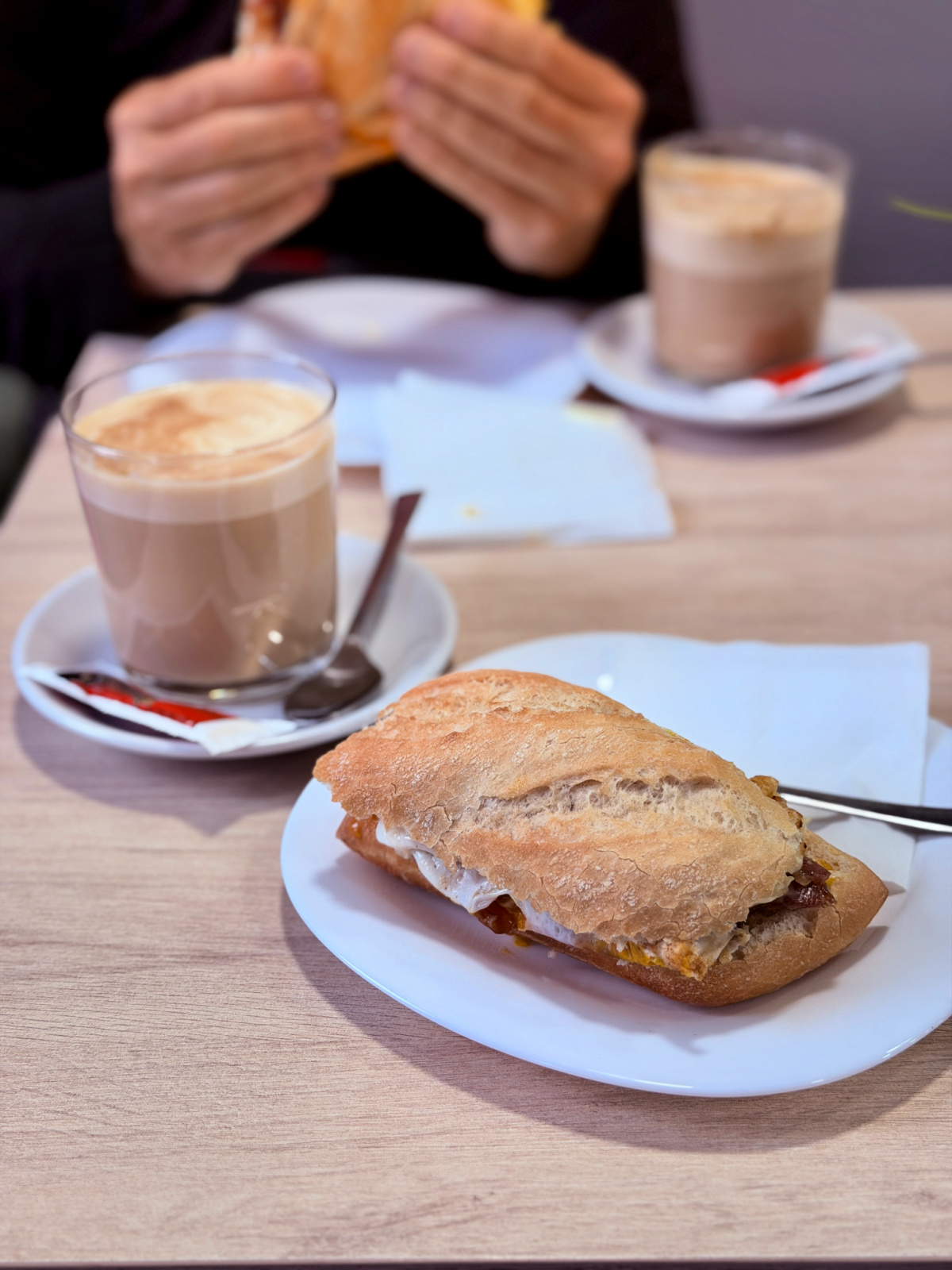
We began the day with breakfast at López Panadería in Estella before leaving town with one of our Camino friends.
A thunderstorm accompanied the start of our walk. Rain gear may keep some water out, but eventually everything begins to feel damp—your clothes, your backpack, your mood, and probably your soul.
The weather did not stay gloomy all day. The storm moved through, the sky cleared, and the landscape changed with it. What began as a wet and gray morning ended under bright sunshine.
The Camino was teaching us to keep walking through whatever weather showed up. Sometimes conditions improved. Sometimes we simply became too busy watching our footing to complain about them.
The Wine Fountain at Bodegas Irache
Shortly after leaving Estella, we reached Bodegas Irache and its famous Fuente del Vino. The fountain has two taps: one dispenses water, and the other dispenses wine for passing pilgrims.
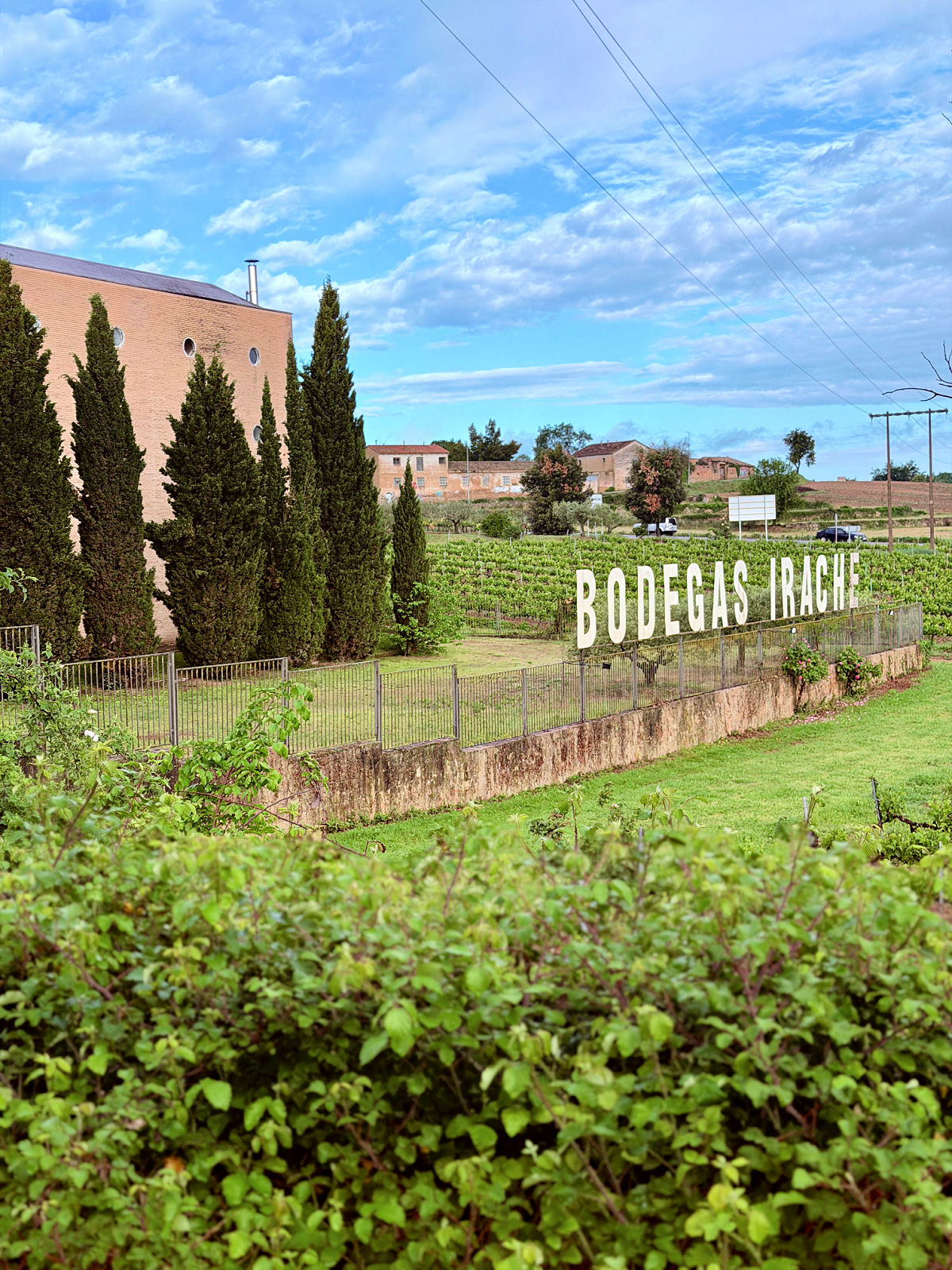
A free wine fountain beside a centuries-old pilgrimage route sounds suspiciously like something created for social media, but the tradition behind it predates social media by about nine centuries. The winery sits beside the Monastery of Irache, which began offering wine and hospitality to pilgrims as early as the 11th century—Saint Veremundo, the monastery’s abbot at the time, is credited with starting the custom. The fountain itself, according to the plaque mounted beside it, has been dispensing wine directly onto the trail since 1991—a modern touch on a tradition nearly a millennium old.
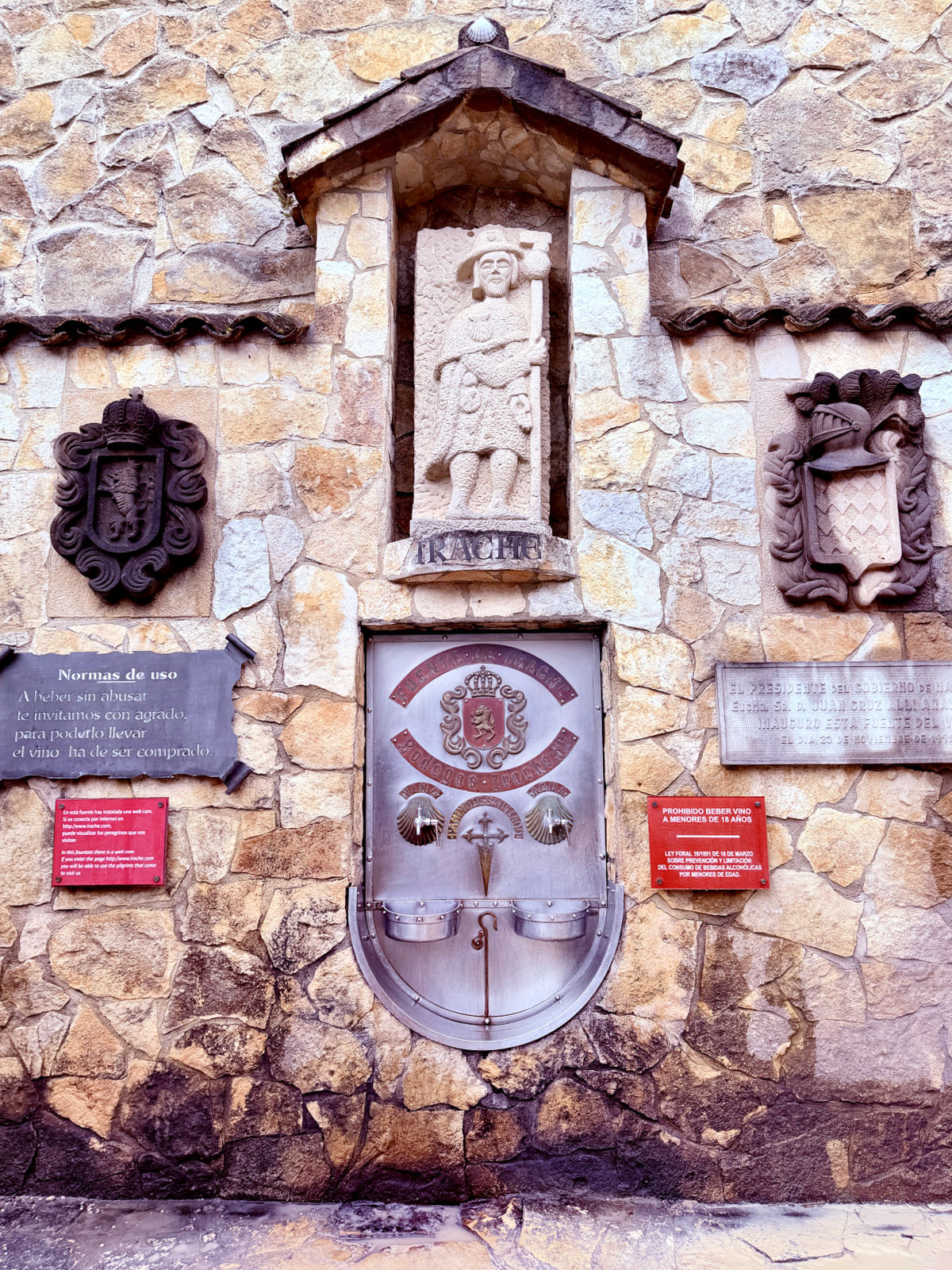
Naturally, we stopped.
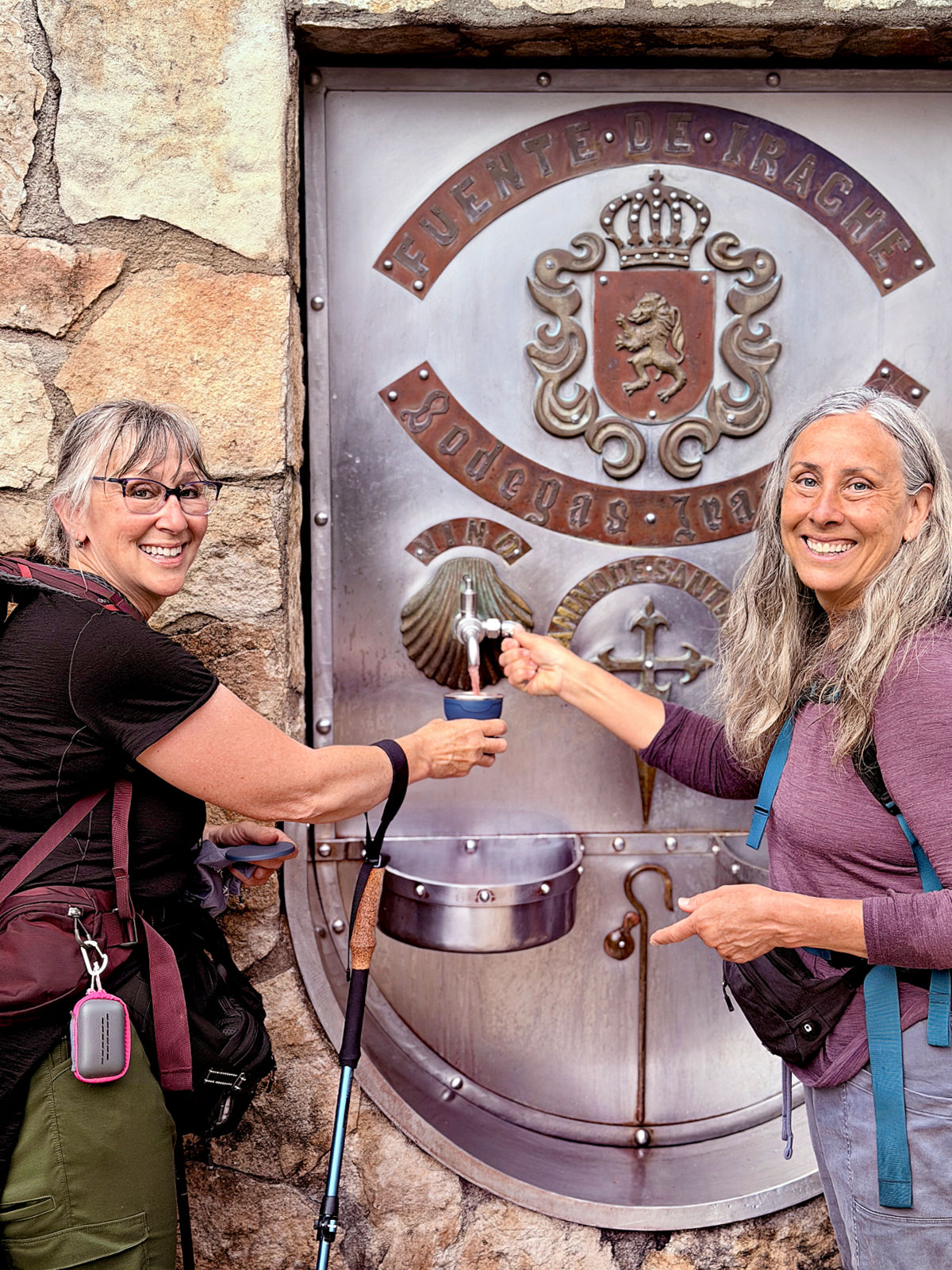
The fountain is near the Monastery of Irache, a site associated with caring for Camino pilgrims for centuries. After walking through a thunderstorm, sampling wine directly from a fountain seemed like a reasonable cultural experience. Hydration comes in many forms, though water remains the wiser choice for filling the bottle.
[On a personal note, “sometimes you get what you paid for” is true, and the wine in this case is no exception.]
Azqueta and Fuente de los Moros
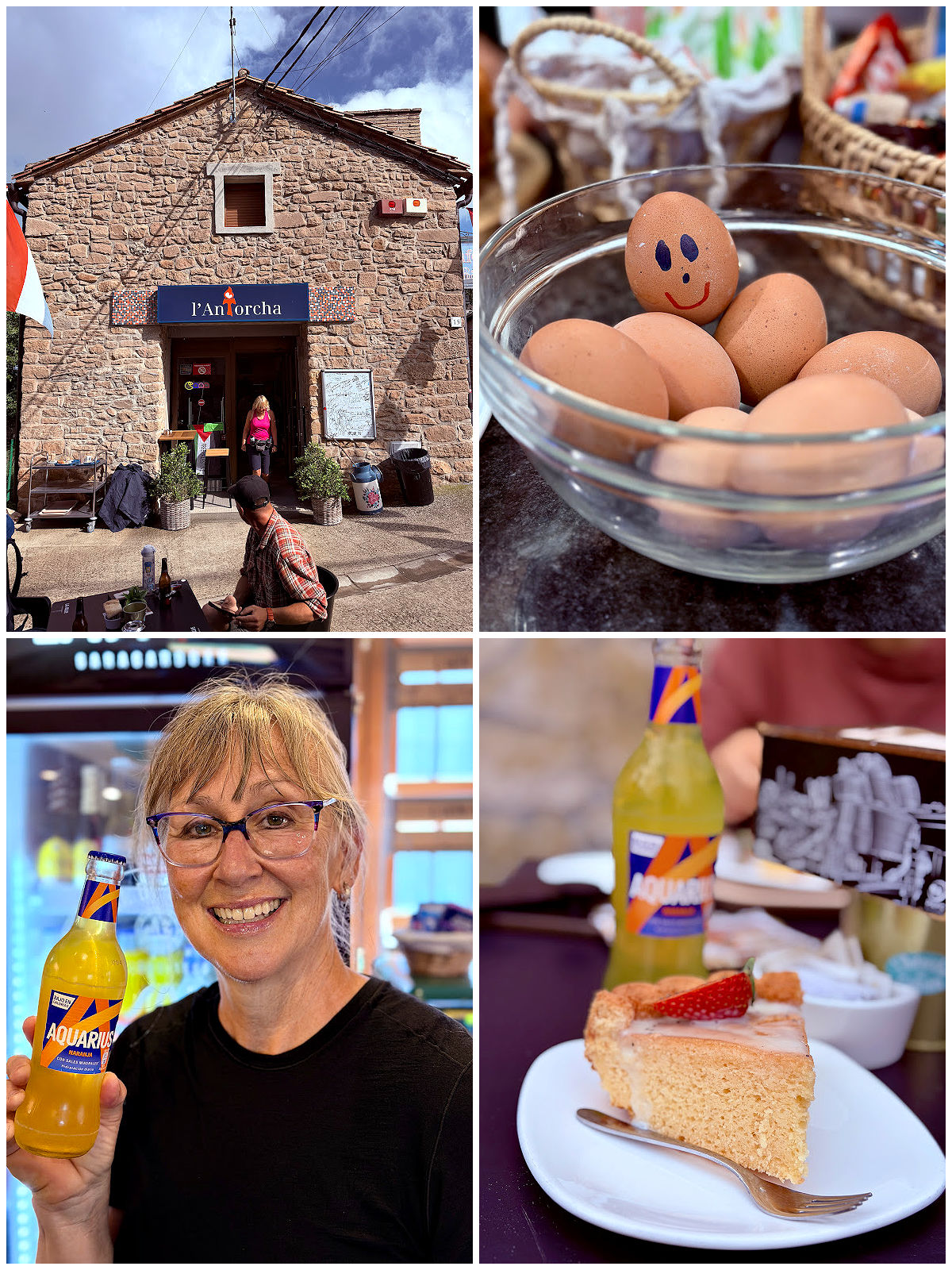
We continued toward Azqueta and stopped at L’Antorcha, a small Camino stop associated with René, a familiar figure to many pilgrims passing through the village.
Near Azqueta, we also saw the Fuente de los Moros, or Fountain of the Moors. The medieval stone cistern sits just off the Camino and is reached by steps descending beneath a double arch. It dates to around the year 1200 and is hard to miss.
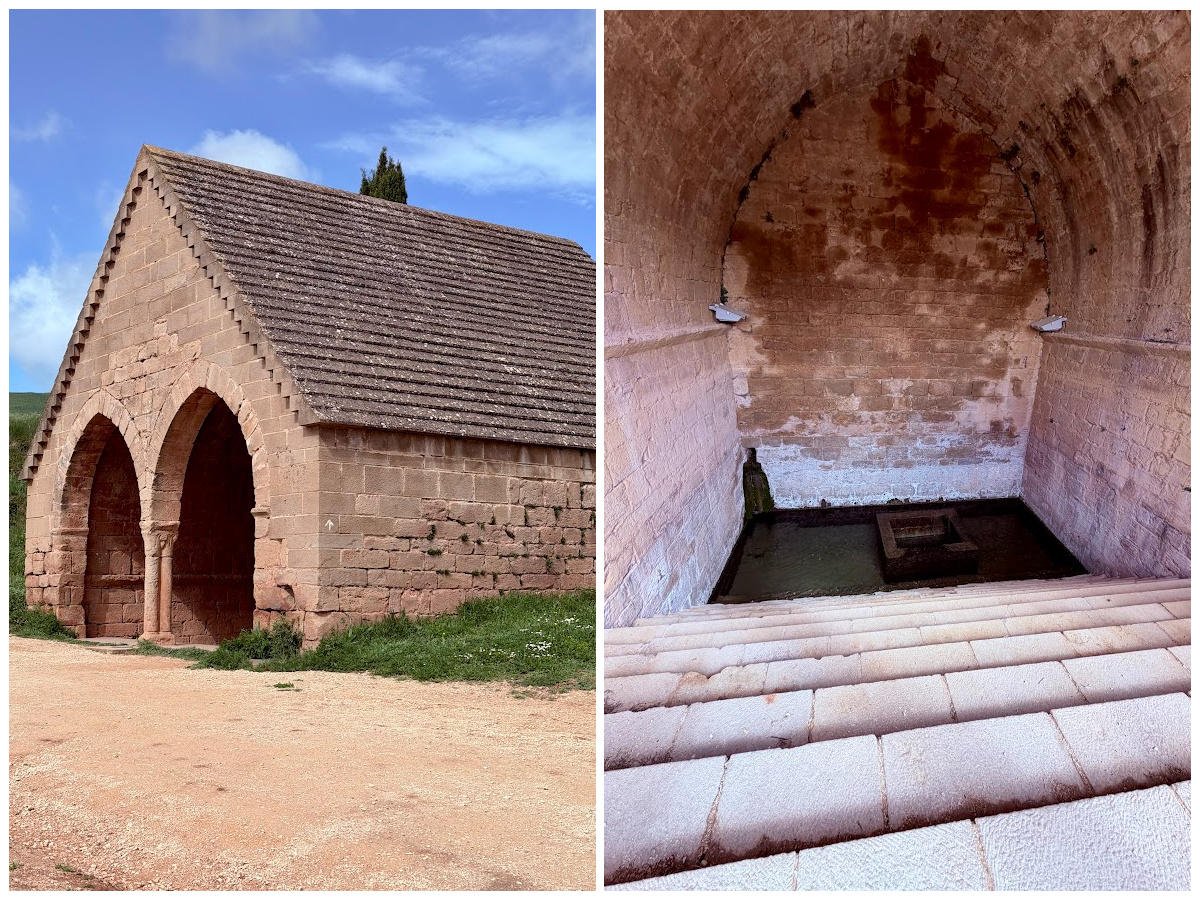
One of the risks of focusing too intensely on reaching the next town: some of the most interesting places sit slightly to the side of the path.
Villamayor de Monjardín
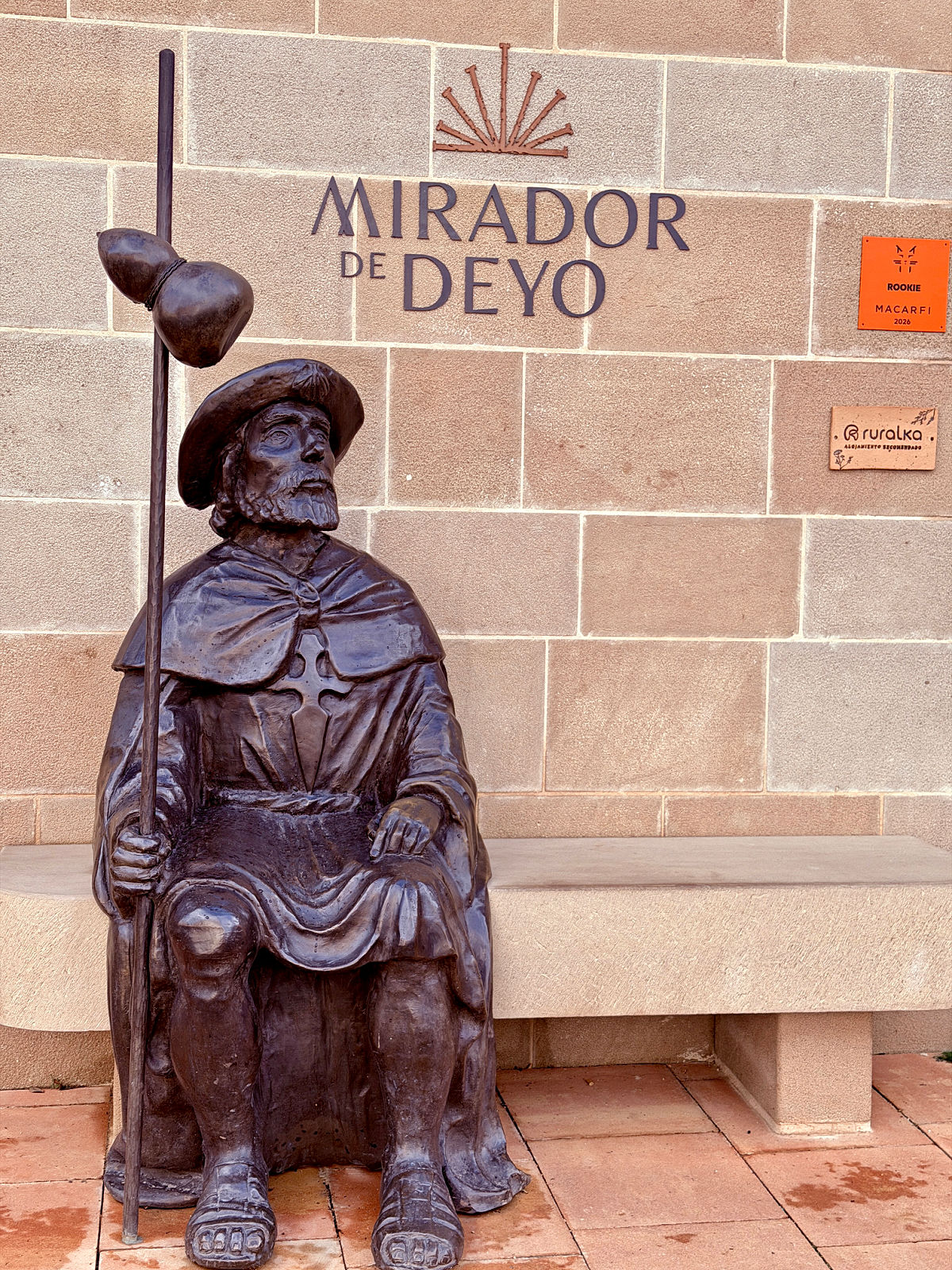
From Azqueta, the trail continued toward Villamayor de Monjardín. The village sits beneath the ruins of Castillo de San Esteban de Deyo, high on the hill above it. The castle dates to the 10th century and once marked the frontier between Christian and Muslim Navarre—it was one of the last strongholds held by the Banu Qasi before the Navarrese king Sancho Garcés I captured it in the early 900s. Local legend holds that he’s buried somewhere within its walls.
We hoped to see the church in Villamayor, the Iglesia de San Andrés Apóstol, but it was closed when we arrived. Closed churches became one of the Camino’s small recurring disappointments. You could walk miles to reach a historic building only to find that its schedule had no interest in your itinerary.
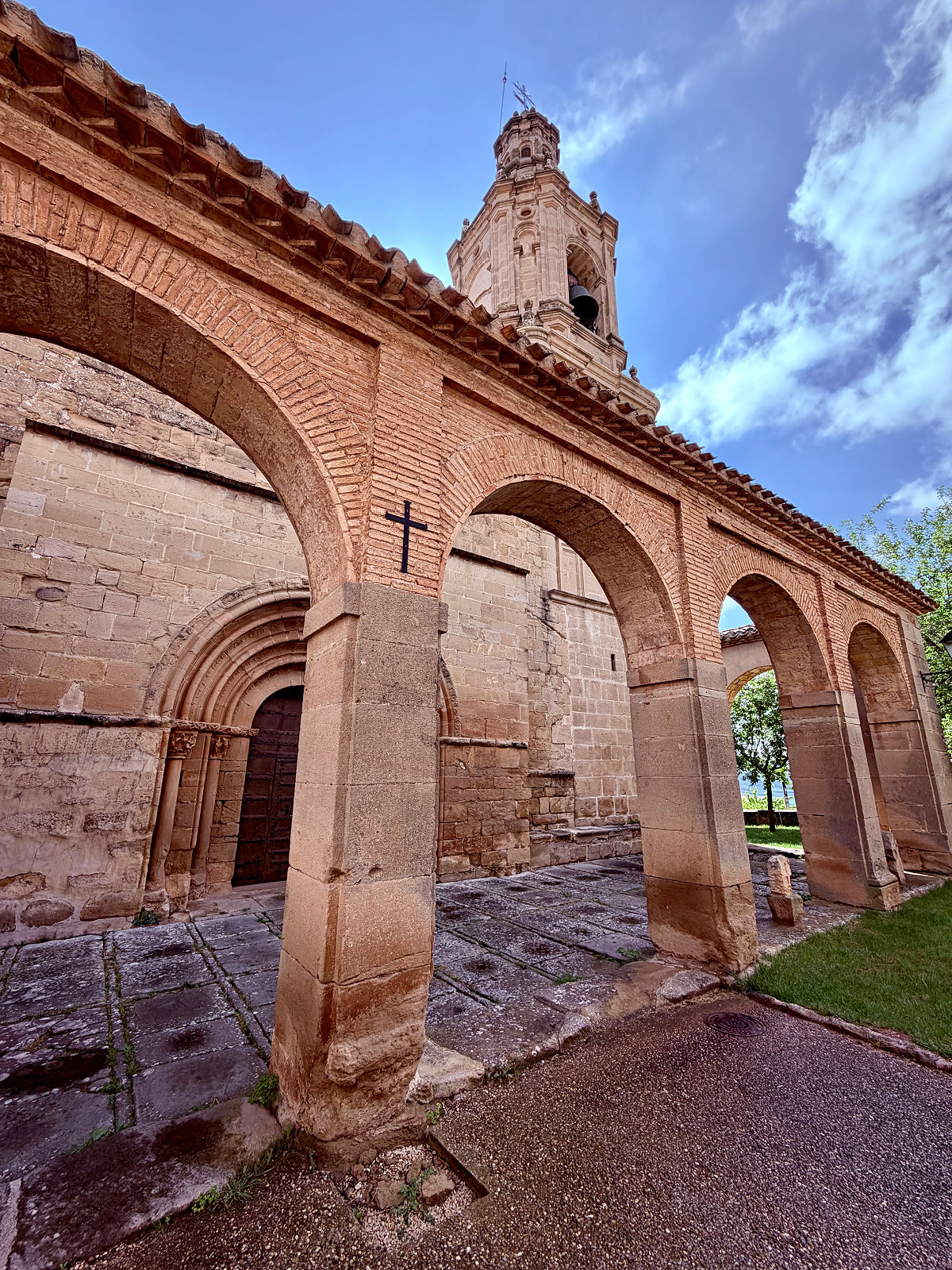
Ironically, the carved doorway we couldn’t get past shows a battle between Charlemagne and a Navarrese prince—a small echo of the Roland legend from our first days crossing the Pyrenees. Apparently Charlemagne’s reputation follows pilgrims across half of northern Spain, whether or not the church doors are open.
Still, the village gave us a chance to pause before beginning the long stretch toward Los Arcos.
An Egg Sandwich in the Middle of Nowhere
Outside the villages, services become scarce. Much of the remaining route crosses open farmland, so pilgrims need to carry enough water and something to eat.
Fortunately, we encountered a food truck along the trail run by North Americans. It appeared like an oasis in the middle of nowhere, and I ordered an egg sandwich.
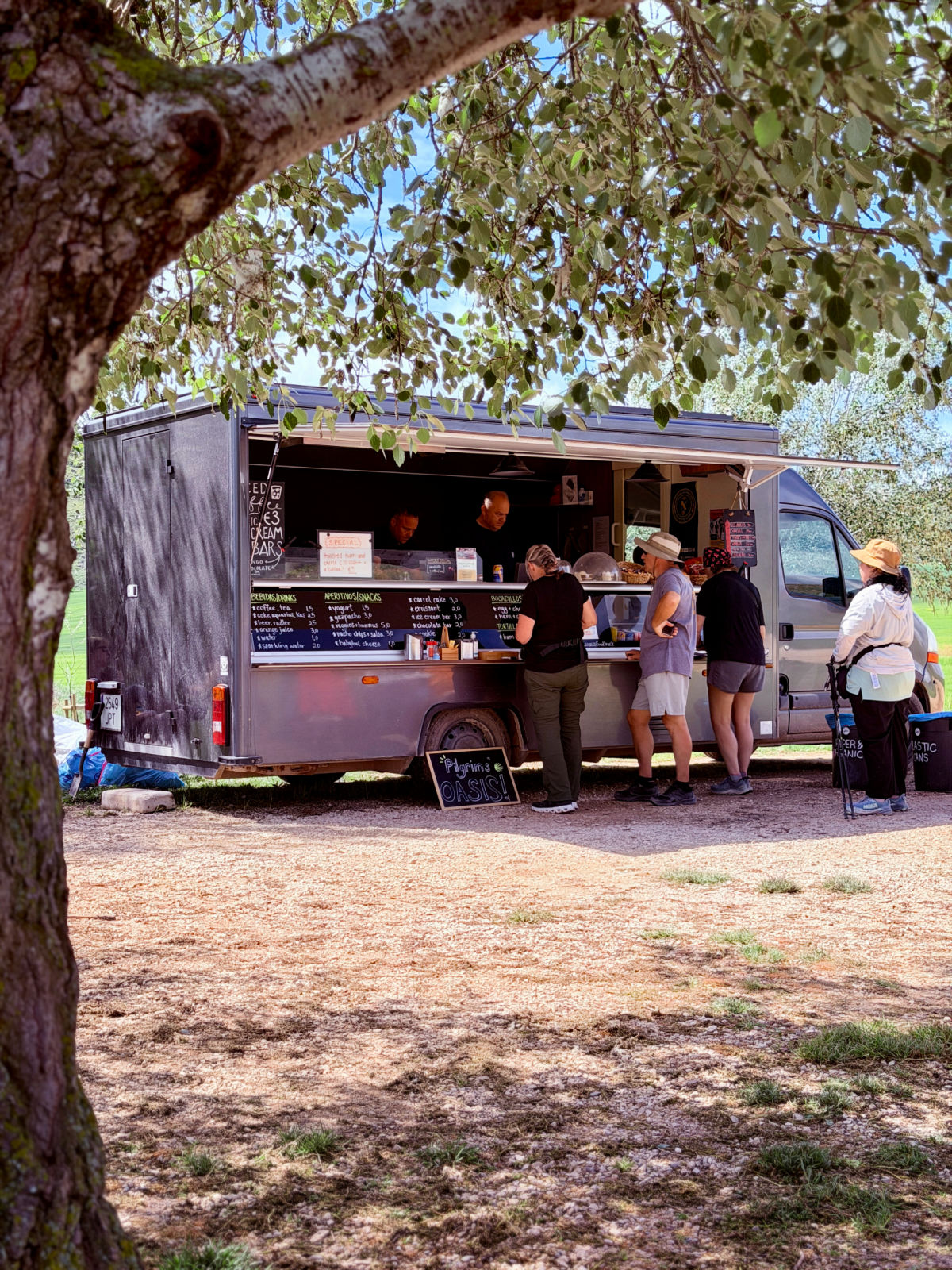
By Day 7, I had developed great respect for anyone who positioned food beside a walking trail. A hot sandwich served miles from the nearest town does not need a white tablecloth or a lengthy description. It needs only to exist.
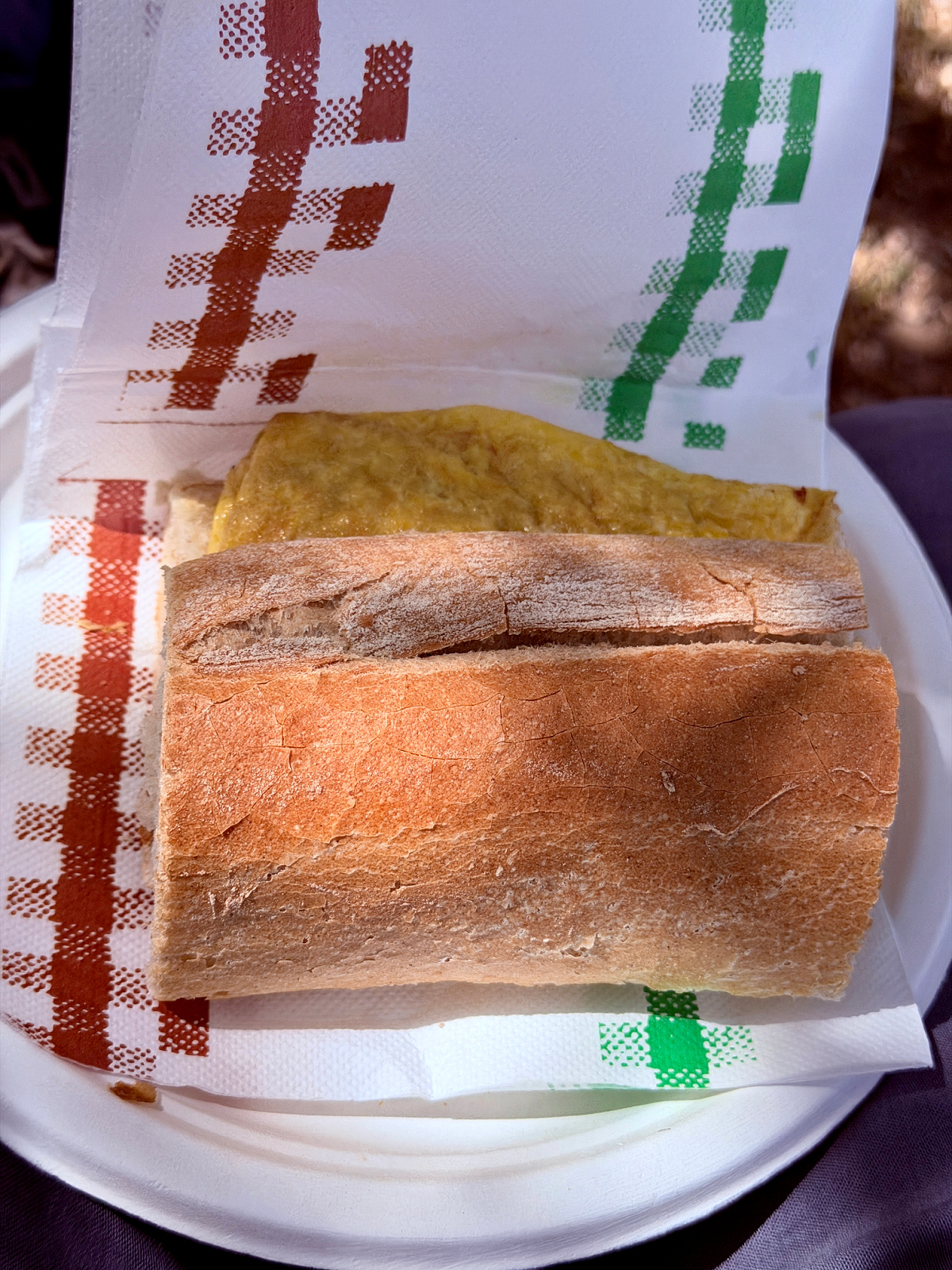
After eating, we continued across the open countryside toward Los Arcos. With the thunderstorm gone and the sun shining, the ending looked entirely different from the beginning.
Finding a Bed in Los Arcos
When we reached Los Arcos, we stayed at Albergue La Fuente–Casa de Austria. Diane, a Camino friend, and I shared a room intended for four people, and the room cost €50 total.
The albergue was somewhat rundown, but it was adequate. At the end of a long walking day, our standards were becoming wonderfully practical: a bed, a shower, and a secure place for the backpack could cover a multitude of decorative shortcomings.
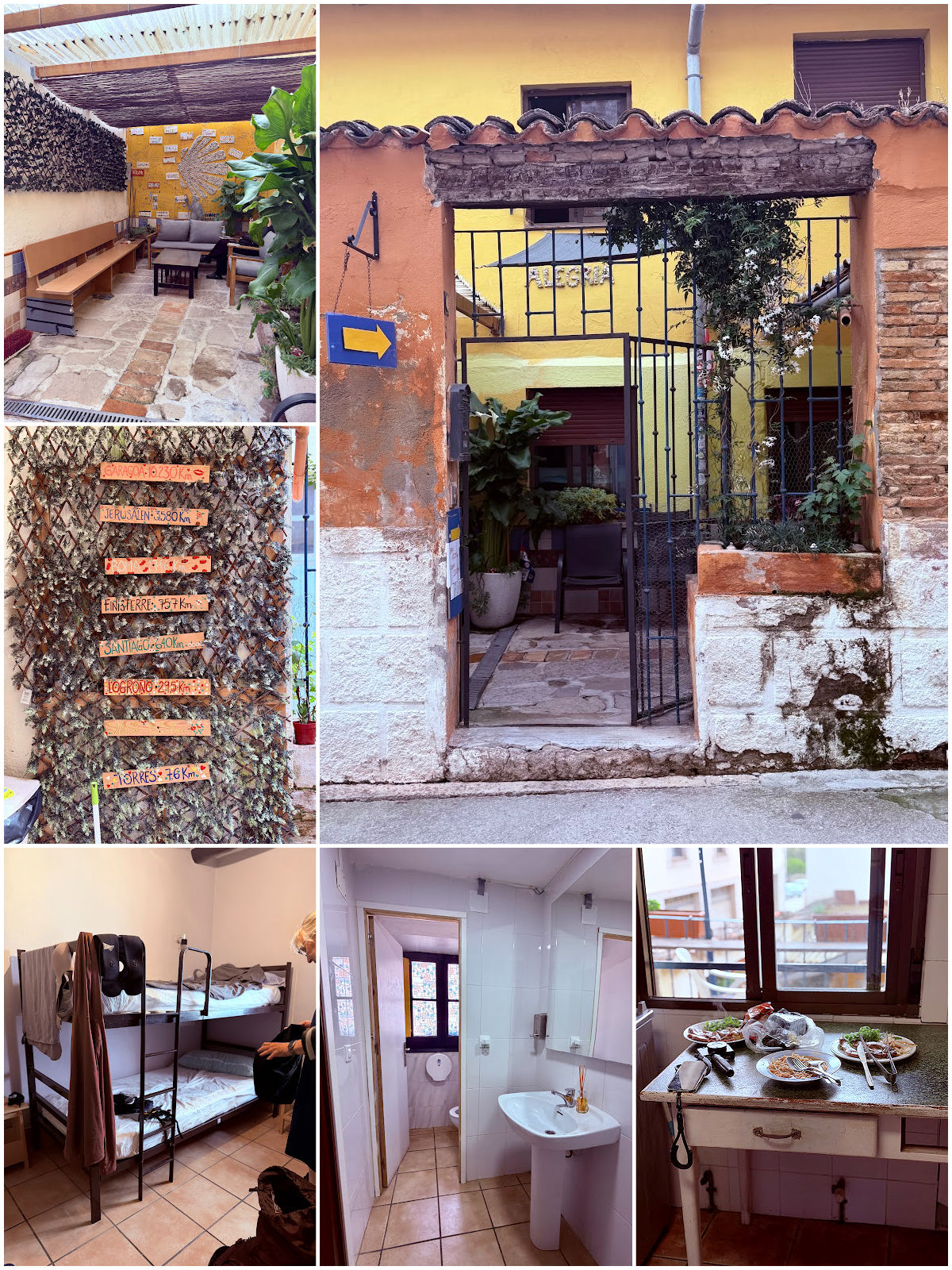
Finding lodging is part of the daily Camino rhythm. Even when you have a reservation, there is relief in reaching the correct building, checking in, removing your shoes, and realizing that you do not have to walk anywhere else while carrying your pack.
Dinner in Los Arcos
That evening, we had pasta for dinner. My dinner came to approximately €17 after. We also spent €12.77 on food or supplies in Los Arcos at a local tienda.
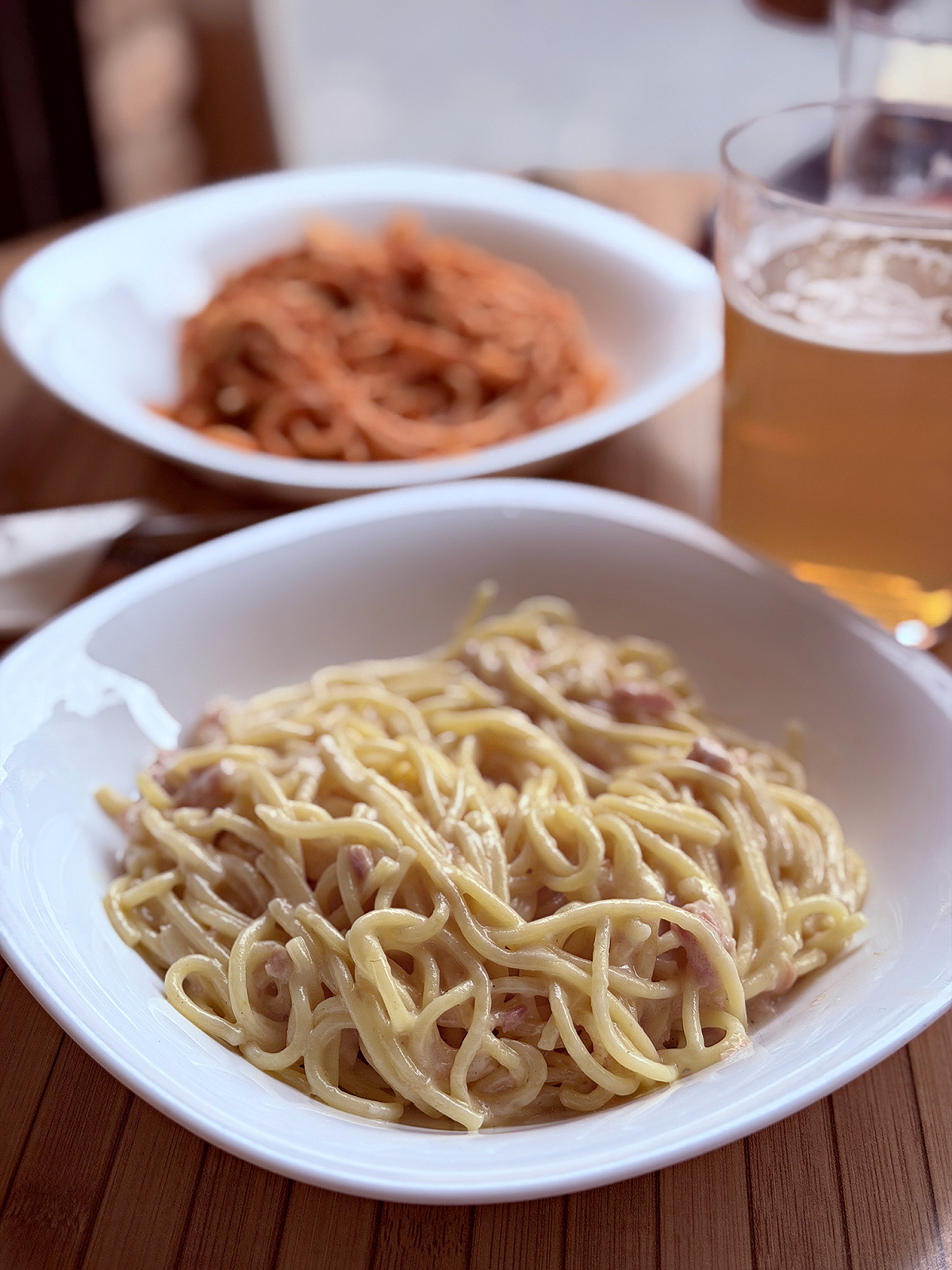
The meal was simple, filling, and exactly what we needed after the long stretch into town.
What Day 7 Taught Me
The walk from Estella to Los Arcos began with thunder and ended in sunshine. Between the two came free wine, a medieval cistern, a frontier castle, a locked church with Charlemagne carved into its door, an egg sandwich from a food truck, and miles of open trail.
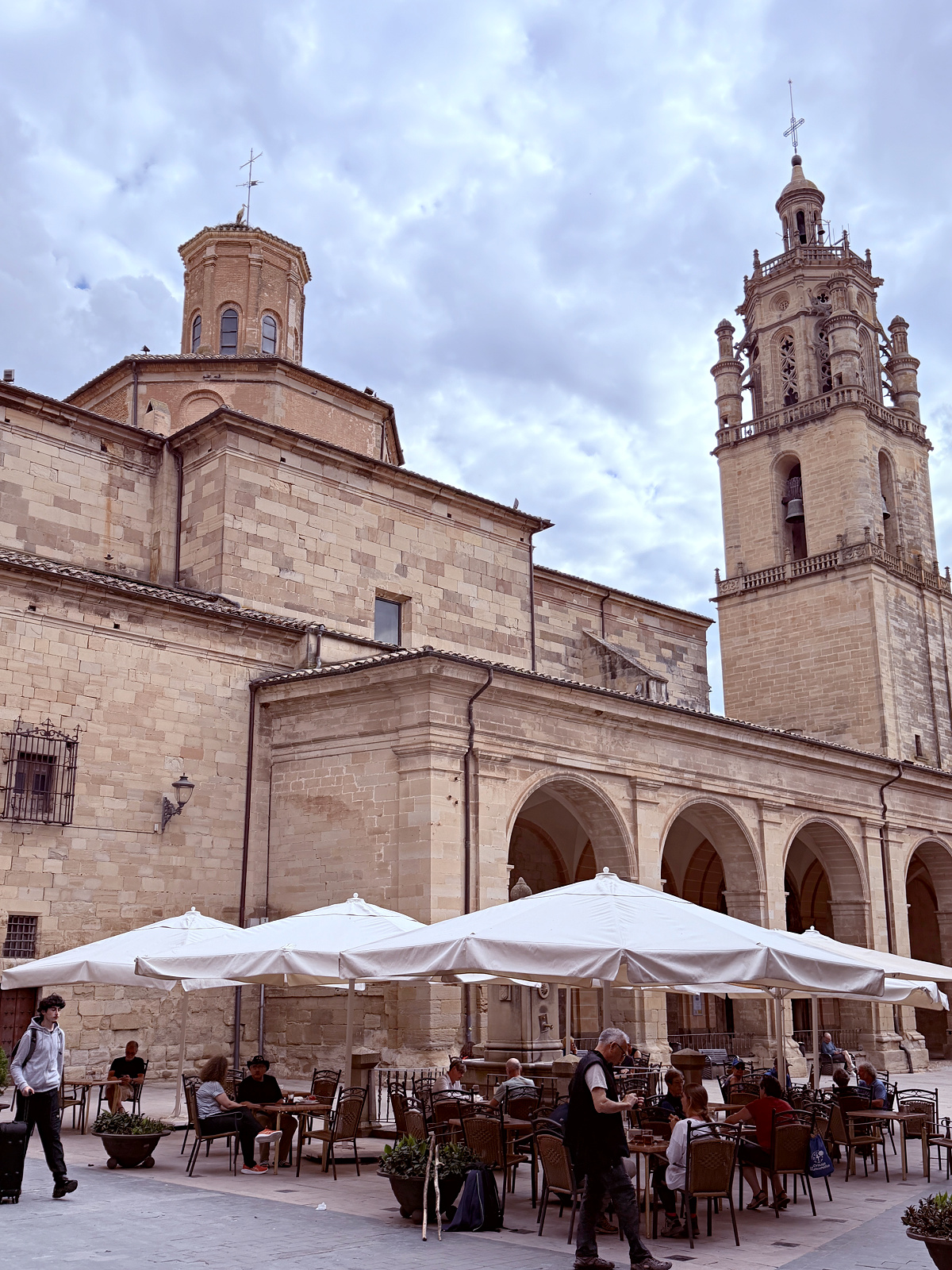
That combination captures the Camino rather well. The day rarely unfolds exactly as expected. Weather changes, doors are locked, useful stops appear in unlikely places, and friends move ahead or fall behind. The only reliable plan is to keep following the arrows.
By Day 7, we were no longer merely trying to survive each stage. We had settled into the strange routine of Camino life—walking through bad weather, accepting whatever bed awaited us, and discovering that an ordinary meal could be one of the best parts of the day.
Ready for the Next Leg?
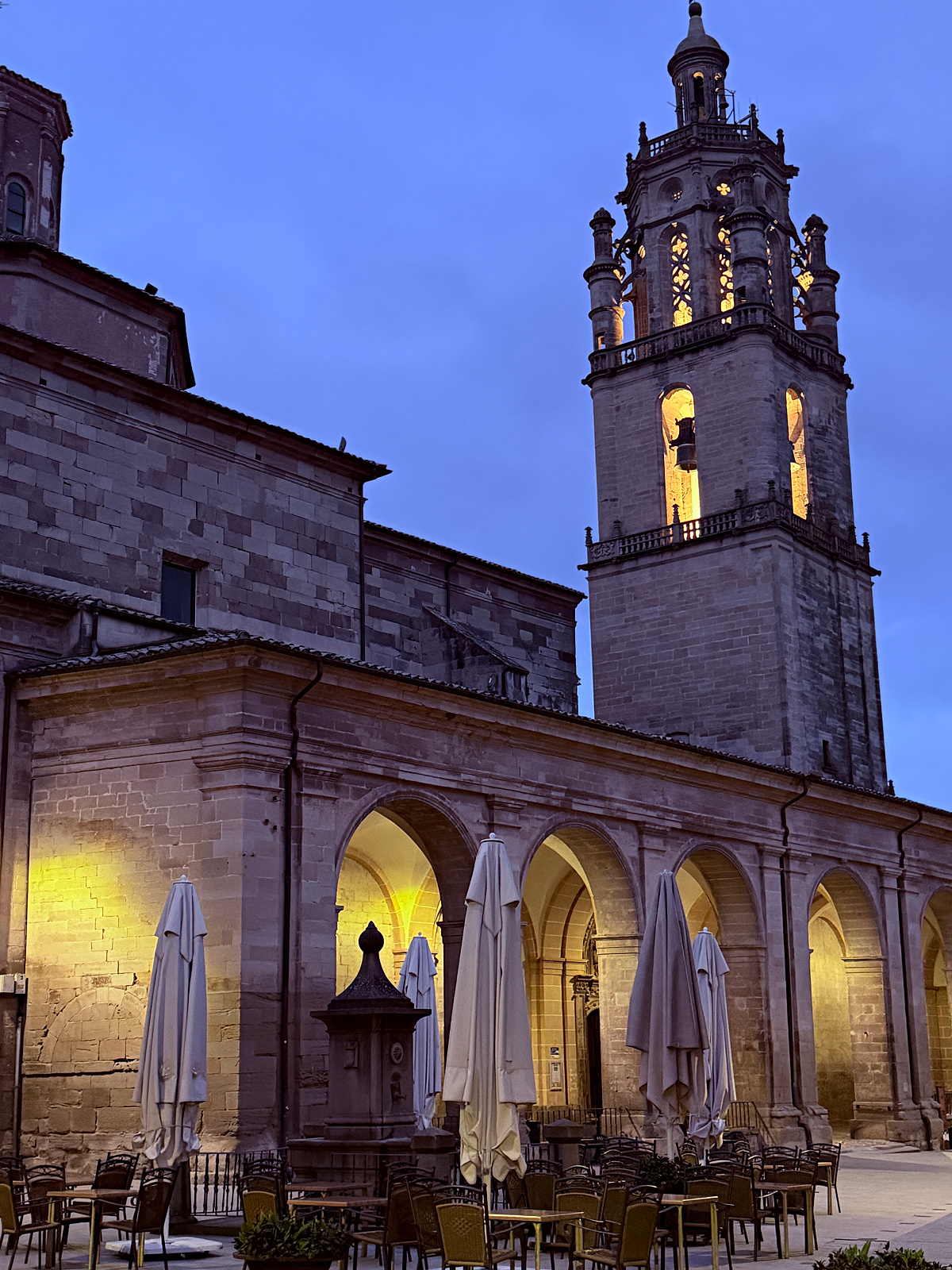
The following morning, we would leave Los Arcos and continue toward Viana. The route would carry us through Torres del Río and past another memorable Camino church before we reached our next bed.
Have you ever started a travel day in miserable weather only to have it turn into something beautiful? Where were you?
