
The Parador de Santiago de Compostela

There are hotels, and then there are places that feel like they have absorbed centuries of stories into their stone walls. The Parador de Santiago de Compostela is one of those places.
Located directly on the famous Obradoiro Square beside the Cathedral of Santiago de Compostela, this legendary property is more than just a luxury hotel. It is a former royal hospital, a pilgrimage landmark, a living museum, and quite possibly the most unforgettable place to stay after completing the Camino de Santiago.
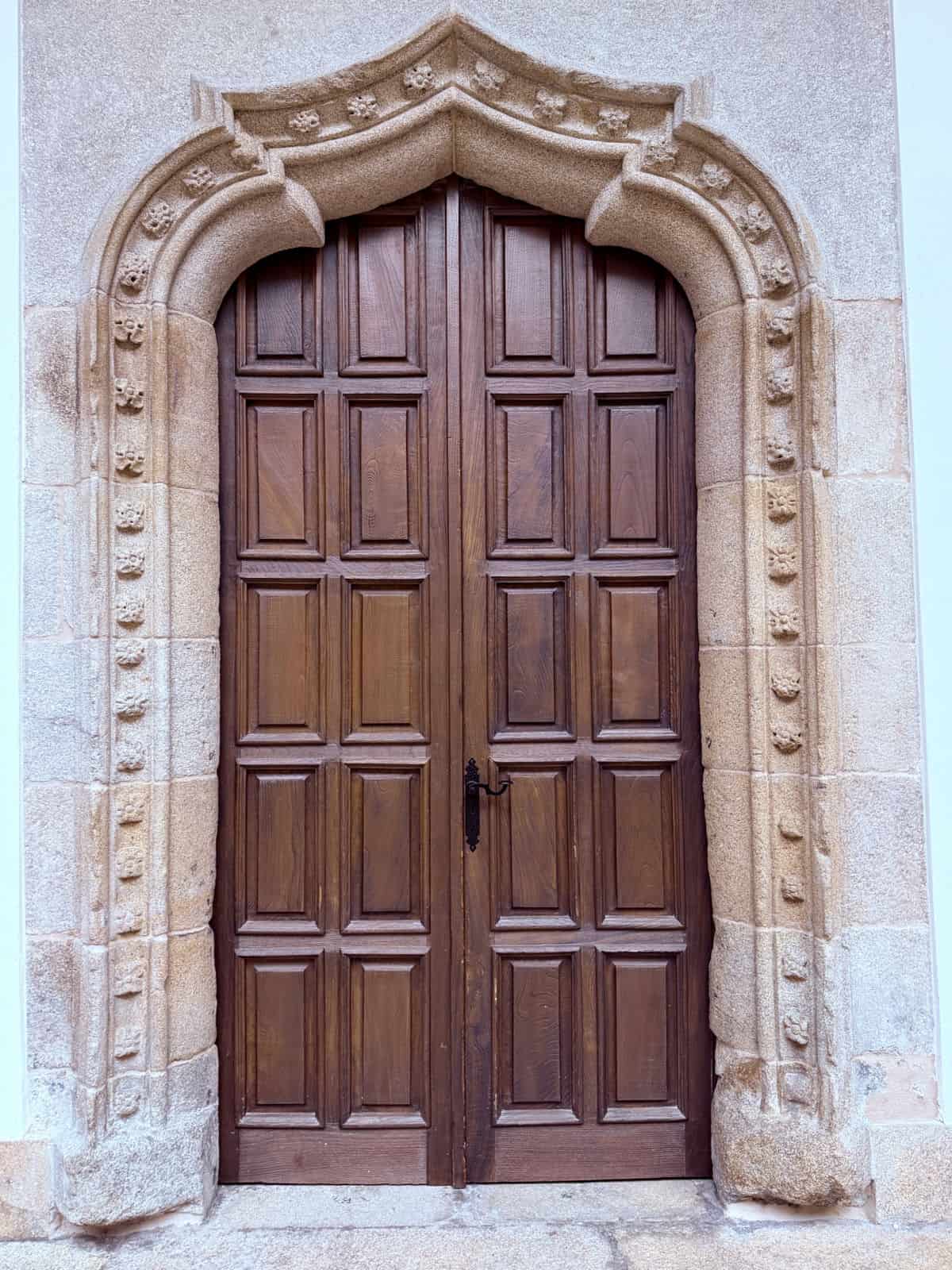
If these walls could talk, they would tell stories of weary pilgrims, royal decrees, medieval medicine, miracles, faith, suffering, celebration, and survival stretching back more than 500 years. And somehow, despite all that history, it still manages to offer one heck of a breakfast.
While exploring Spain and southwestern France, my sister and I walked the first 100 miles of the Camino Francés, beginning in Saint-Jean-Pied-de-Port and continuing across northern Spain. It was one of the most memorable and challenging adventures we have shared, and I will be writing more about the journey in an upcoming series.
While I continue writing about our Camino adventure, visit my Spain category to read all of the posts I have published so far about the places we visited, where we stayed, what we ate, and what we experienced along the way.
Day 1: St. Jean Pied de Port to Honto
Day 2: Honto to Burguete
A Legendary Location In the Heart of Santiago
After days or even weeks walking across Spain, arriving at the Parador feels surreal. The hotel sits on Obradoiro Square, directly beside the cathedral that marks the finish line for countless pilgrims. From the front entrance, it is only a short stroll to the Pilgrim s Office, making it incredibly convenient for anyone collecting their Compostela certificate after completing the Camino.
Even travelers who have never walked a single mile of the Camino would appreciate the setting. Obradoiro Square is breathtaking, surrounded by grand historic buildings that make you stop in your tracks and stare upward like a tourist who forgot to pretend they’re sophisticated. And honestly? That is part of the magic.
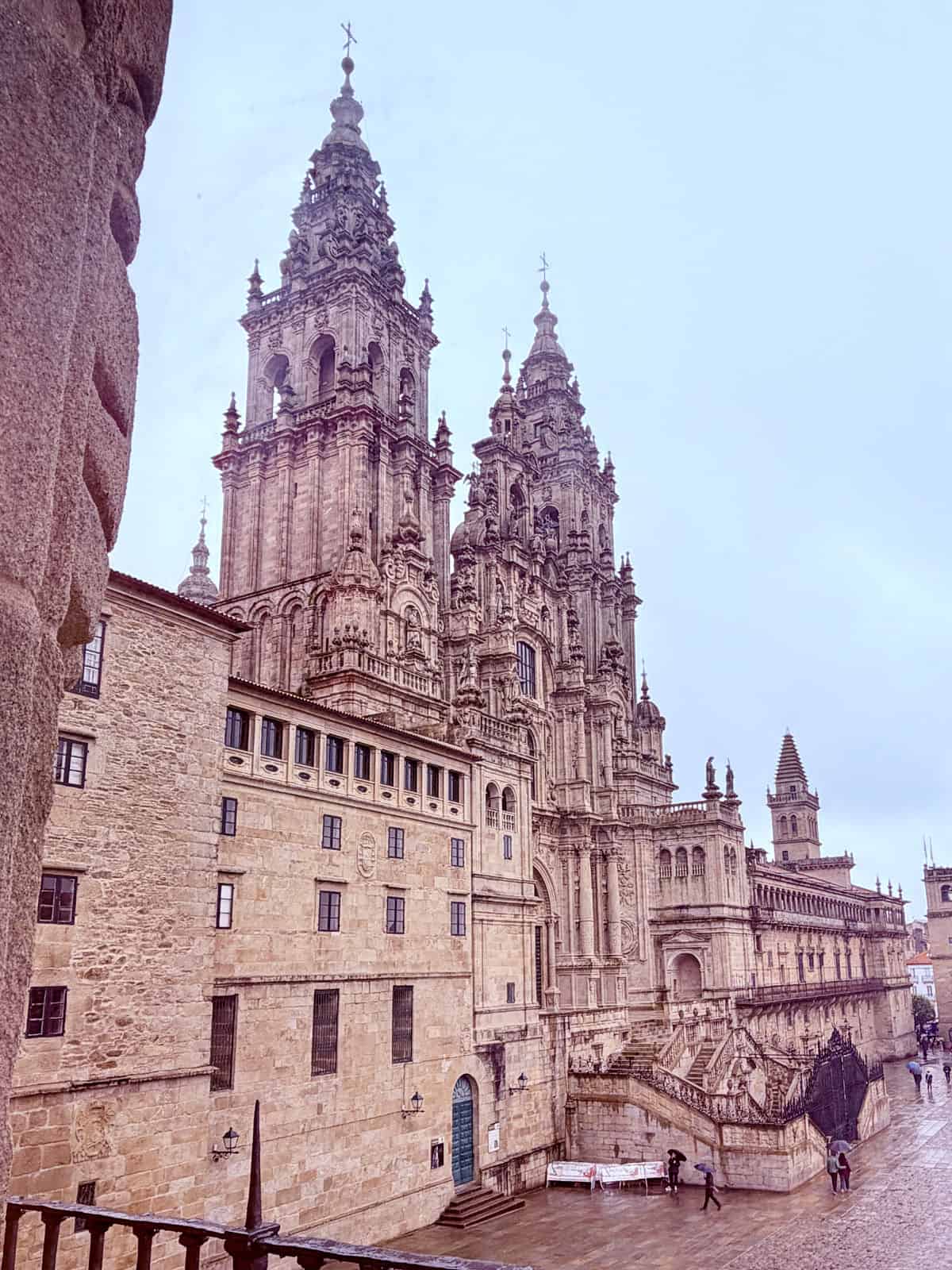
The cathedral towers over the square, its extraordinary façade bearing centuries of spiritual significance. Nearby are historic government buildings, university structures, and the Parador itself standing proudly as one of the most iconic buildings in Santiago.
More Than a Hotel: a Former Royal Hospital
Long before it welcomed travelers with plush accommodations and elegant breakfasts, the building served as the Royal Hospital of Santiago.
Founded by King Ferdinand and Queen Isabella in the early 1500s, the hospital originally cared for pilgrims arriving exhausted, injured, or ill after completing the Camino. In those days, pilgrimage was not the carefully curated Instagram adventure it can sometimes appear to be now. Travelers faced dangerous terrain, illness, bandits, harsh weather, and uncertain roads. The hospital became a place of refuge.
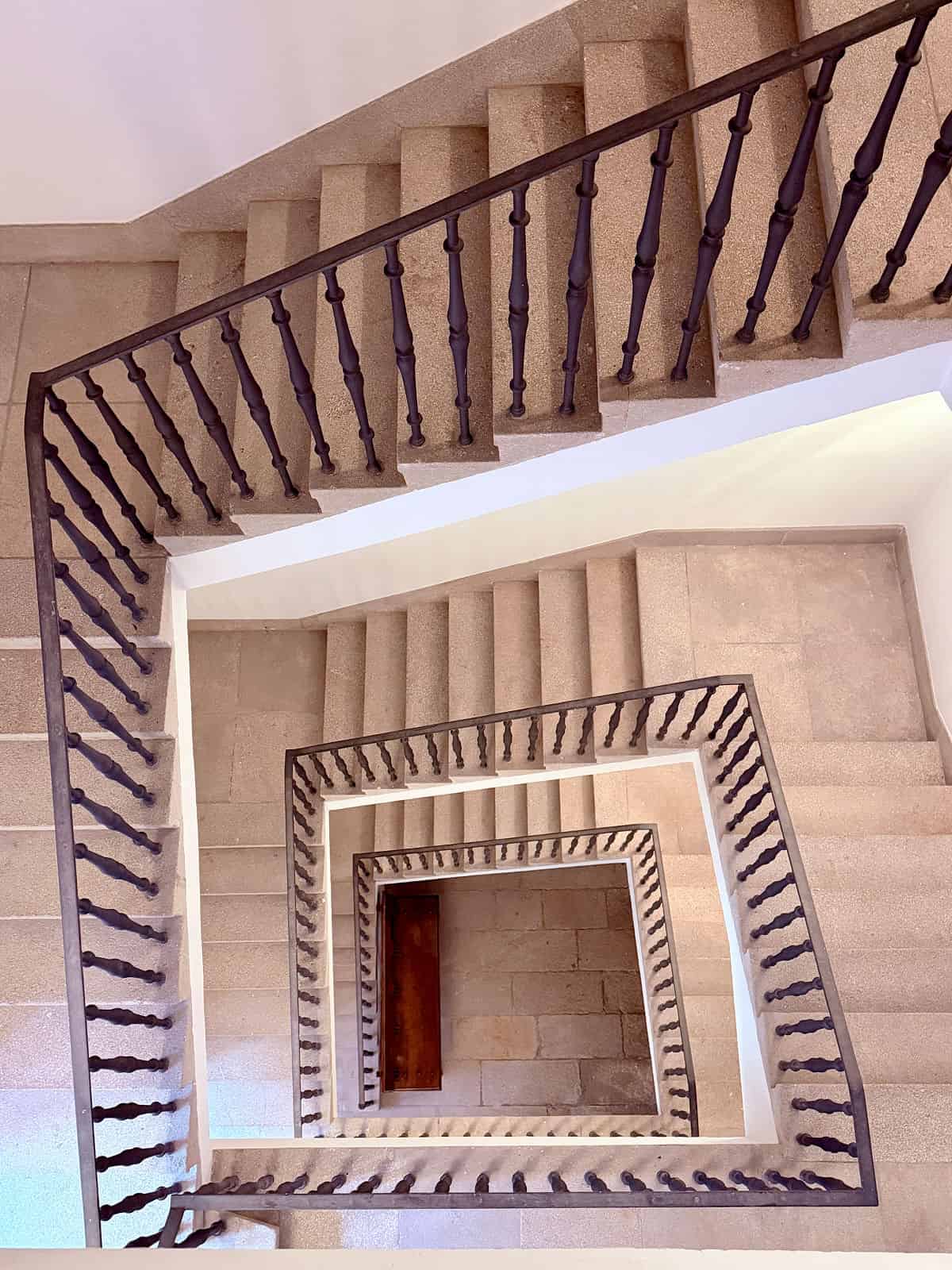
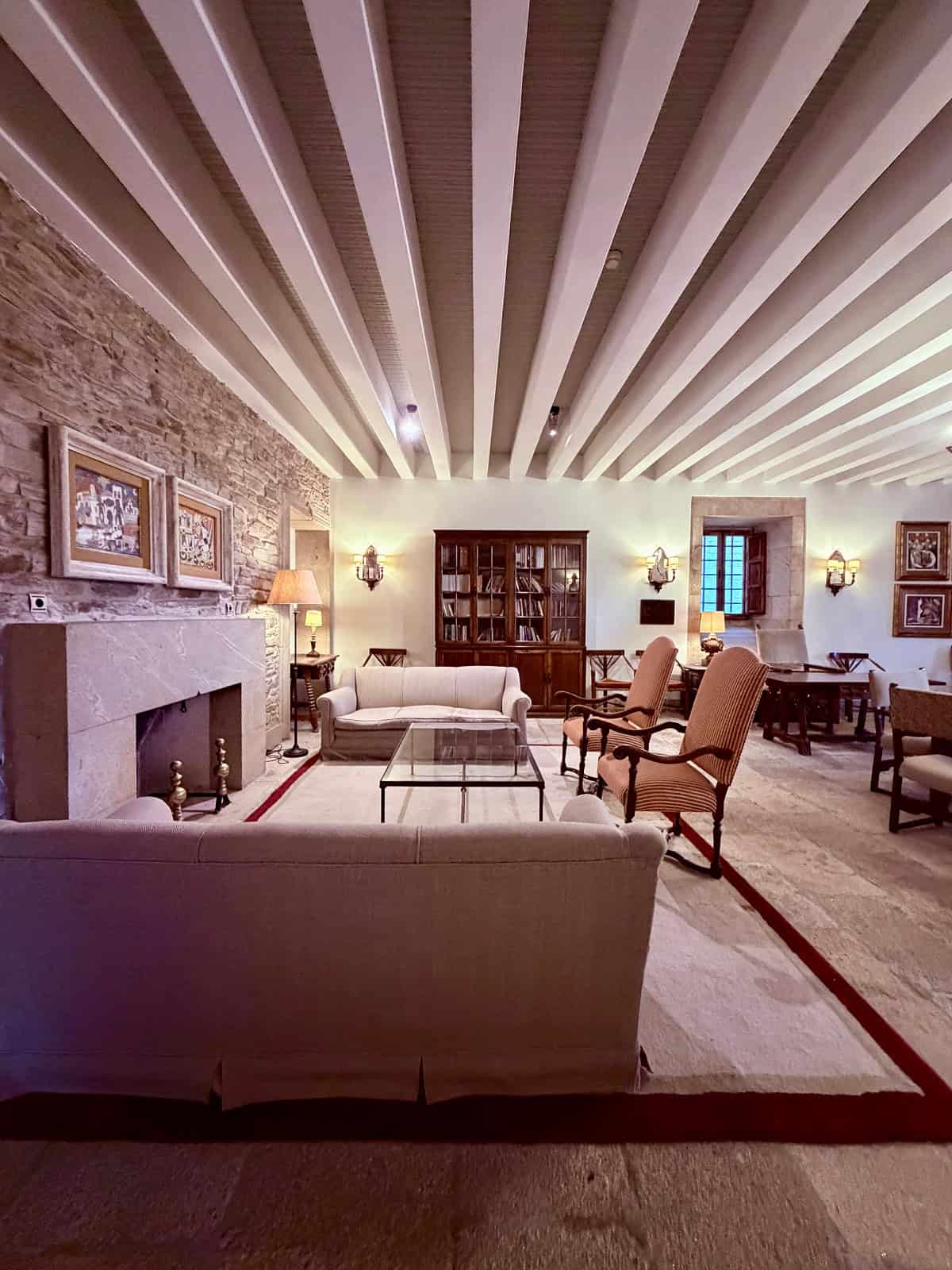
Today, many parts of the original structure remain beautifully preserved. Walking through the property feels like stepping through layers of history. Grand cloisters, long stone corridors, carved details, hidden courtyards, and massive wooden doors create an atmosphere unlike any modern hotel could ever imitate.
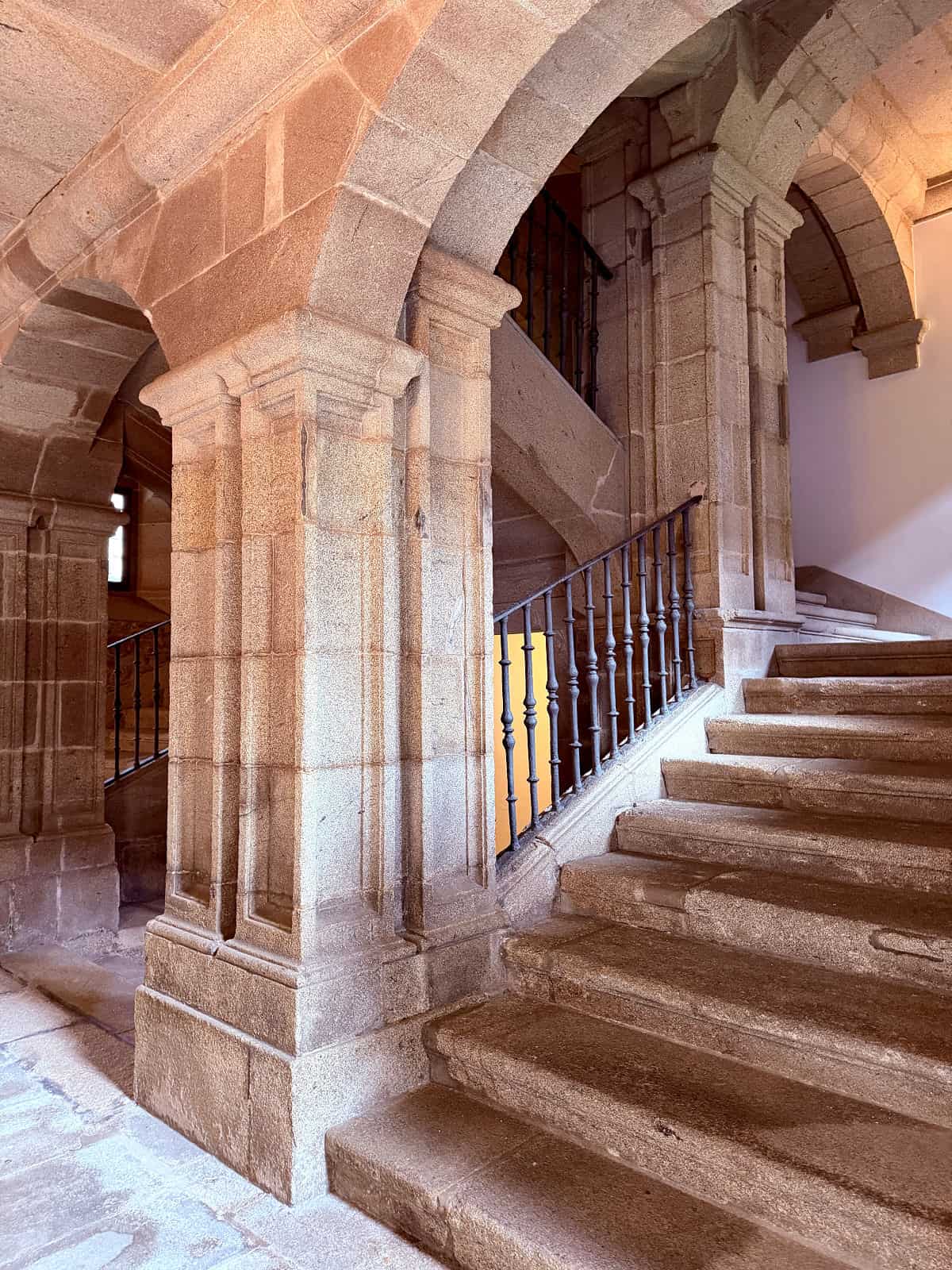
The property even contains remnants of its medical past, including spaces once used for treating the sick, old wards, and areas connected to the hospital s apothecary and orphanage. One particularly unusual historical detail involves an old leech tank once used in medical bloodletting treatments. Medieval healthcare was certainly creative.
Gargoyles, Symbols, and Hidden Details Everywhere
One of the most fascinating aspects of the Parador is the sheer amount of symbolism carved into the building. The exterior and courtyards feature an incredible collection of gargoyles, many shaped like animals, mythical creatures, monks, and strange human figures. Some appear humorous, others unsettling. Several seem designed to make visitors pause and wonder what exactly the stonemasons were thinking.
Apparently, medieval craftsmen enjoyed slipping little jokes and oddities into their work. Human nature really has not changed all that much over the centuries.
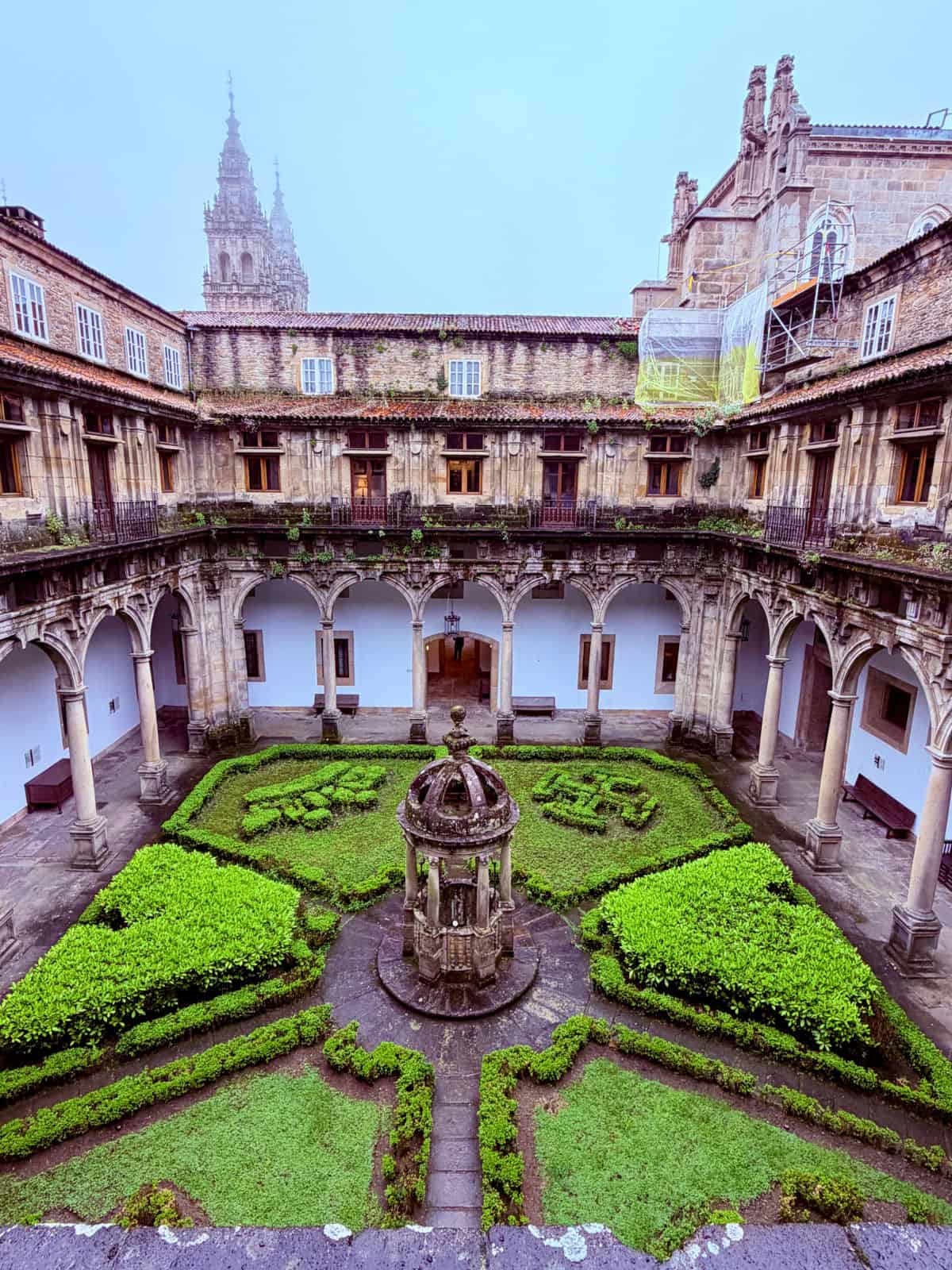
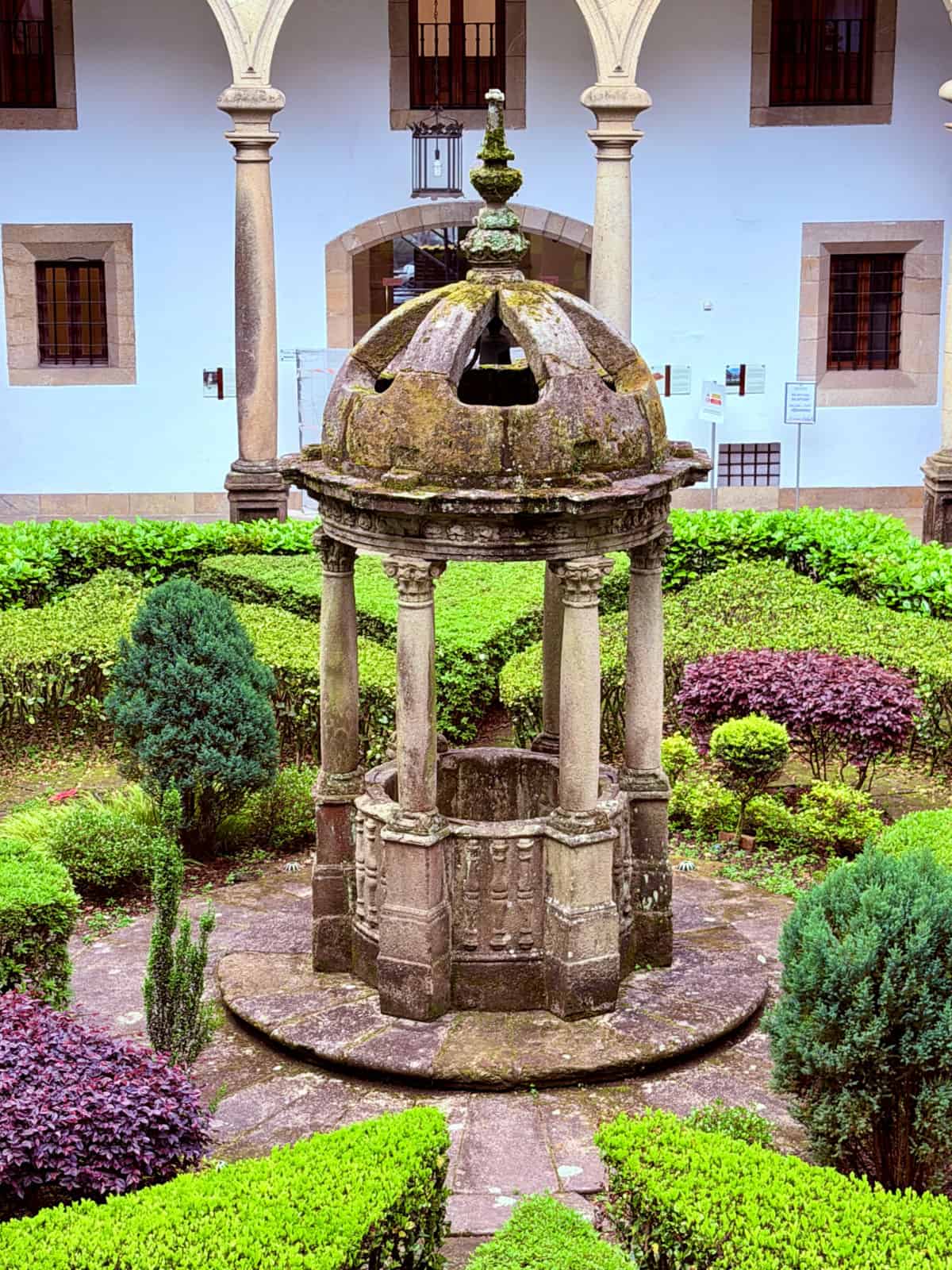
The Jerusalem Cross appears repeatedly throughout the property as a symbol tied to the hospital’s origins. Courtyards feature ancient wells, fountains, gardens, and intricate architectural details that reward anyone willing to slow down and look closely. History lovers could spend hours simply wandering the property.
Our Stay at the Parador
Diane booked our nonrefundable room through Booking.com, and honestly, she absolutely nailed it.
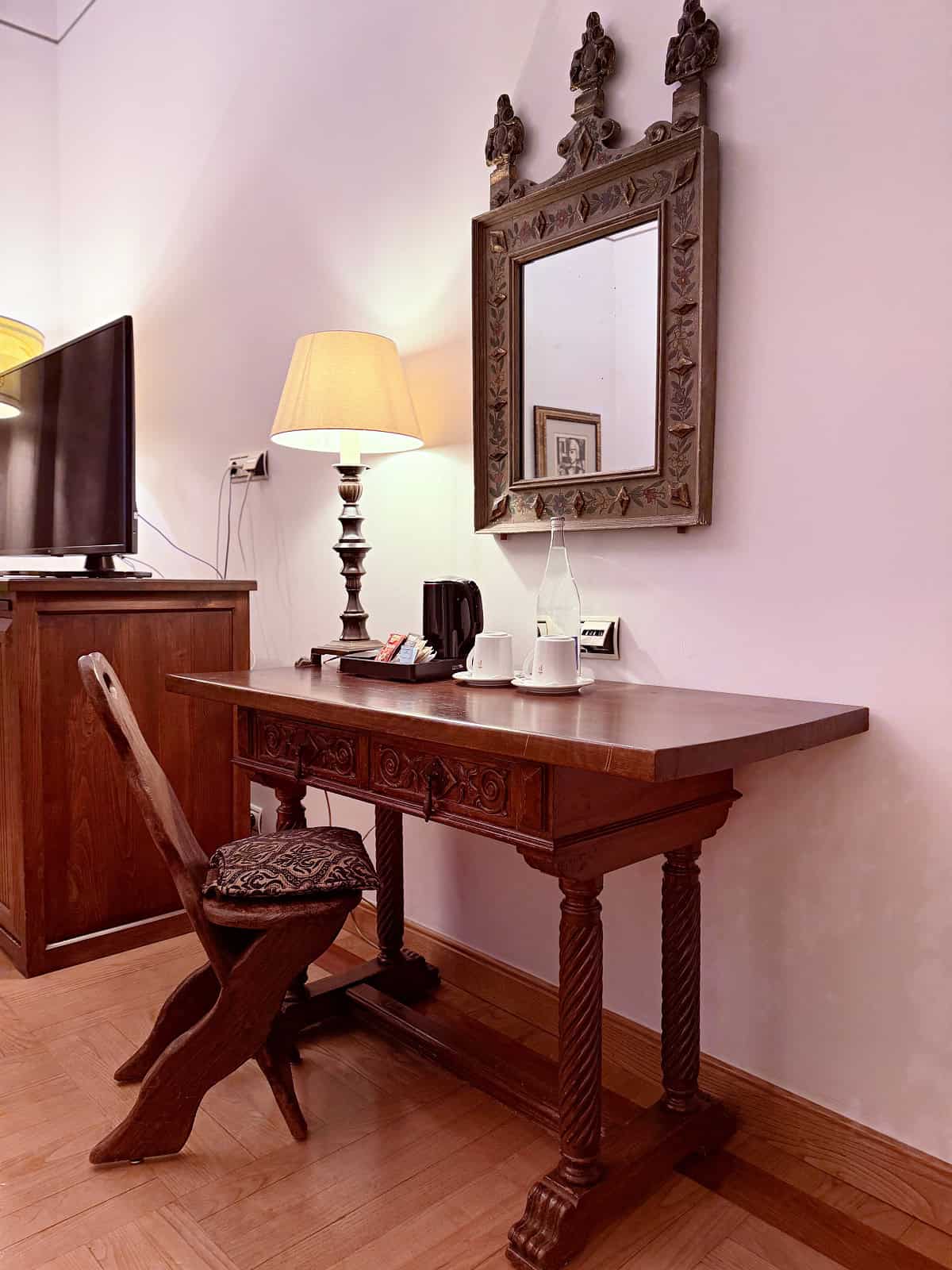
We stayed in Room 102 on the ground floor. Our room featured two twin beds, a desk and chair, a television, and a small seating area with two chairs and a table. A large window overlooked the street, though we were slightly below ground level.
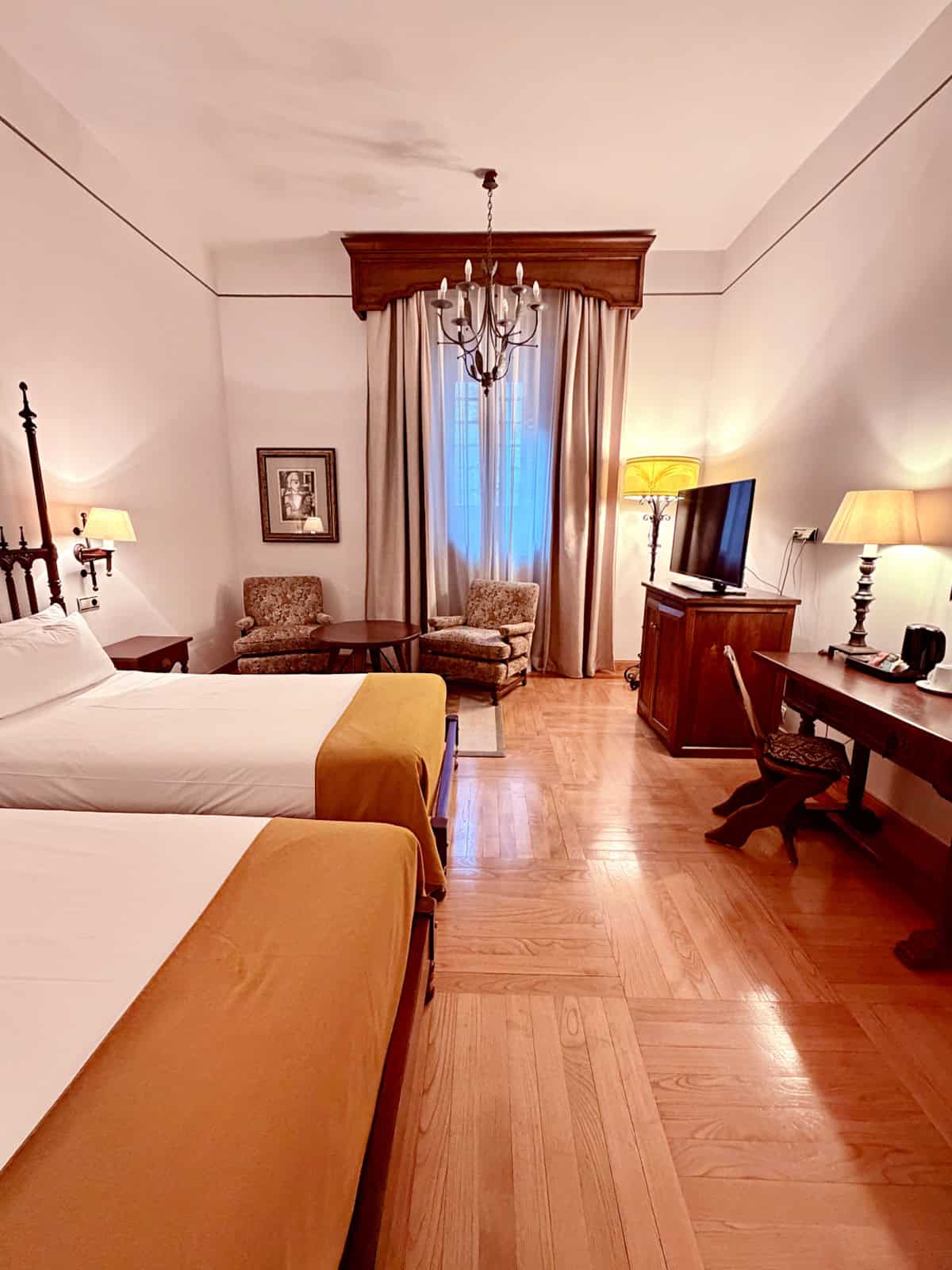
The room itself felt spacious, elegant, and incredibly comfortable after traveling across Spain. The bathroom especially stood out. It included a claw-foot bathtub, glass-enclosed shower, toilet, sink, and bidet all the touches you would expect from a true five-star experience.
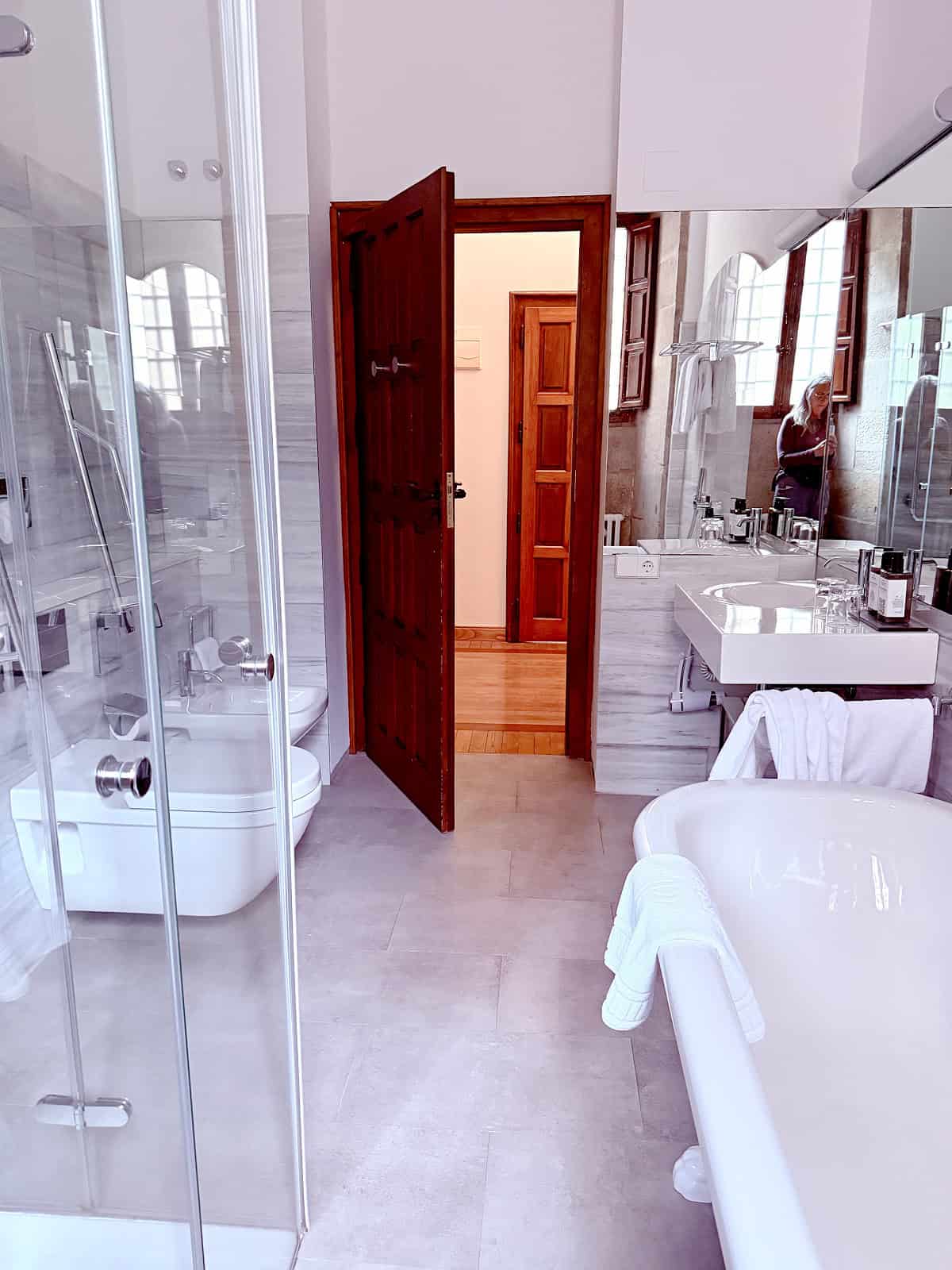
After days of walking, the combination of luxury and history felt especially rewarding. There is something deeply satisfying about soaking tired feet in a historic hotel after carrying a backpack across northern Spain.
The Breakfast Is Worth the Upgrade
While the Parador is certainly not a budget stay, it absolutely felt worth the splurge. Diane chose to pay extra for breakfast, and thankfully she did.
The breakfast spread was generous, beautifully presented, and exactly the kind of experience you hope for in a luxury Spanish hotel. Fresh pastries, breads, fruit, meats, cheeses, hot dishes, coffee, and regional specialties created the perfect start to the day.

Honestly, after weeks of Camino meals ranging from wonderful to, “Well at least it s calories,” sitting down to a refined breakfast inside one of Spain s oldest hotels felt downright glorious.
Why the Parador Is Perfect After the Camino
Completing the Camino de Santiago is emotional for many pilgrims. Some arrive exhausted. Others arrive reflective. Some cry. Some celebrate. Some immediately begin searching for ibuprofen and wine. The Parador somehow fits all of those moods.
Its location beside the cathedral allows pilgrims to remain immersed in the atmosphere of Santiago while finally enjoying comfort, quiet, and rest. The building itself carries centuries of Camino history, making the experience feel even more meaningful. It’s more than just a place to sleep. It is part of the pilgrimage story.
Final Call
Whether you are completing the Camino de Santiago or simply planning a dream trip to Spain, the Parador de Santiago de Compostela delivers an experience that goes far beyond luxury accommodations.
It combines history, architecture, comfort, and location in a way few hotels in the world can match. Every hallway, courtyard, and carved stone detail seems to whisper stories from centuries past. And after spending time there, it becomes very easy to understand why pilgrims and travelers continue returning generation after generation.
Leave a comment below and let me know: would you splurge on a historic hotel like this after walking the Camino? And if you have stayed at the Parador, I would love to hear about your experience!
