The Devour Food Tour in Madrid

When most people think of Spanish food, they picture sizzling paella, paper-thin slices of jamón, and churros dunked into thick cups of hot chocolate. While paella wasn’t on the menu during my recent food tour in Madrid, nearly everything else was delicious. From crispy churros and Iberian ham to olives, vermouth, and fresh organic bread, this tour through Madrid’s Literary Quarter offered far more than just food — it served up Spanish history, culture, and traditions one bite at a time.
In May of 2026, I joined a food tour with Devour Tours and spent over 3 hours wandering through markets, historic taverns, and family-owned shops while learning why Spaniards structure their entire day around meals. Frankly, I’m beginning to think they may have life figured out better than the rest of us.
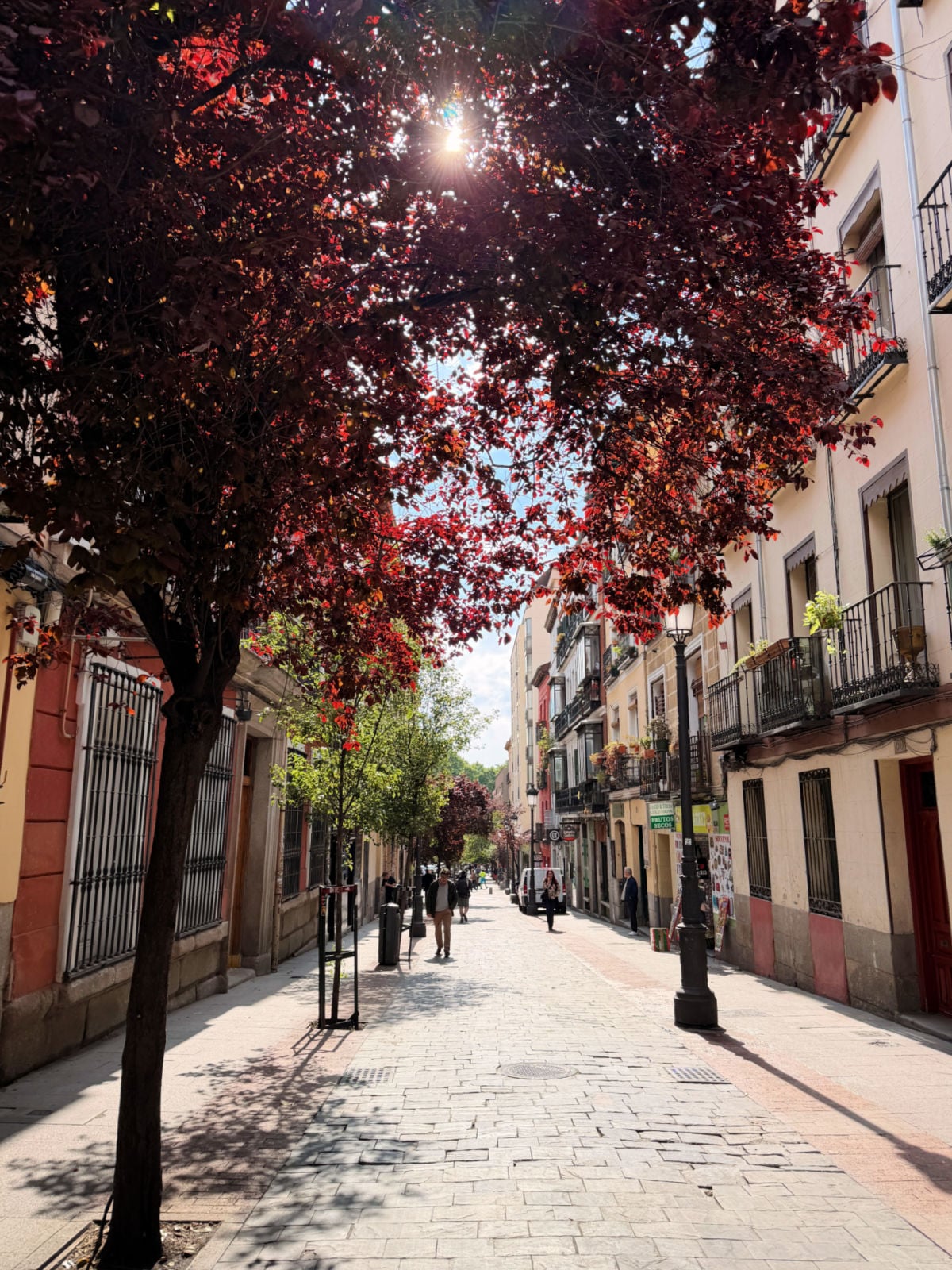
Madrid surprised me.
I expected beautiful architecture, incredible museums, and enough ham hanging in shop windows to make a vegetarian faint dramatically onto the nearest cobblestone street. What I didn’t expect was how much history, culture, and tradition would be woven into every bite.
By the end of the tour, I wasn’t just full. I understood Madrid a little better.
Madrid’s Food Culture Runs on Five Meals a Day
One of the first things we learned was that Spaniards traditionally eat five meals a day.
And honestly? Spain may be onto something.
Here’s the typical rhythm:
- First breakfast: Something very light shortly after waking — coffee, toast, or a pastry.
- Second breakfast: Around 10:30–11:30 a.m., often something heartier like chocolate and churros.
- Lunch: Usually the biggest meal of the day, often between 2:00 and 4:30 p.m.
- Merienda: An afternoon snack between roughly 5:30 and 7:00 p.m.
- Dinner: Typically late by American standards, often beginning around 9:00 p.m.
If you’ve ever wondered why Spaniards seem to linger over meals instead of inhaling food in a parking lot while clutching a steering wheel and questioning their life choices, this may explain it.
Exploring Madrid’s Literary Quarter
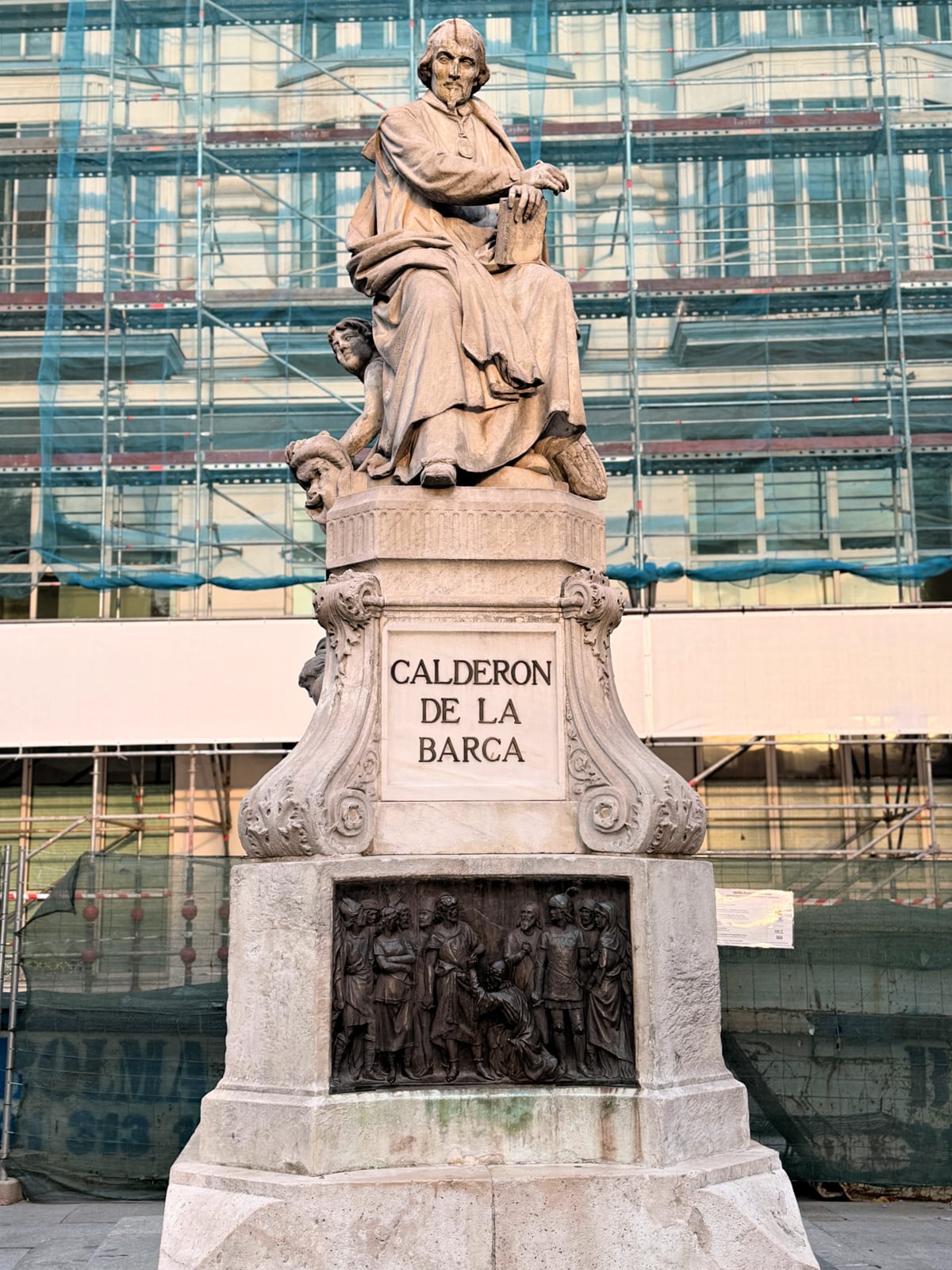
The tour took place in Barrio de las Letras, Madrid’s historic Literary Quarter.
This neighborhood once housed some of Spain’s greatest writers, including Miguel de Cervantes, the Spanish writer and author of Don Quixote. Walking these streets felt a bit like strolling through a living history book — except with significantly better snacks.
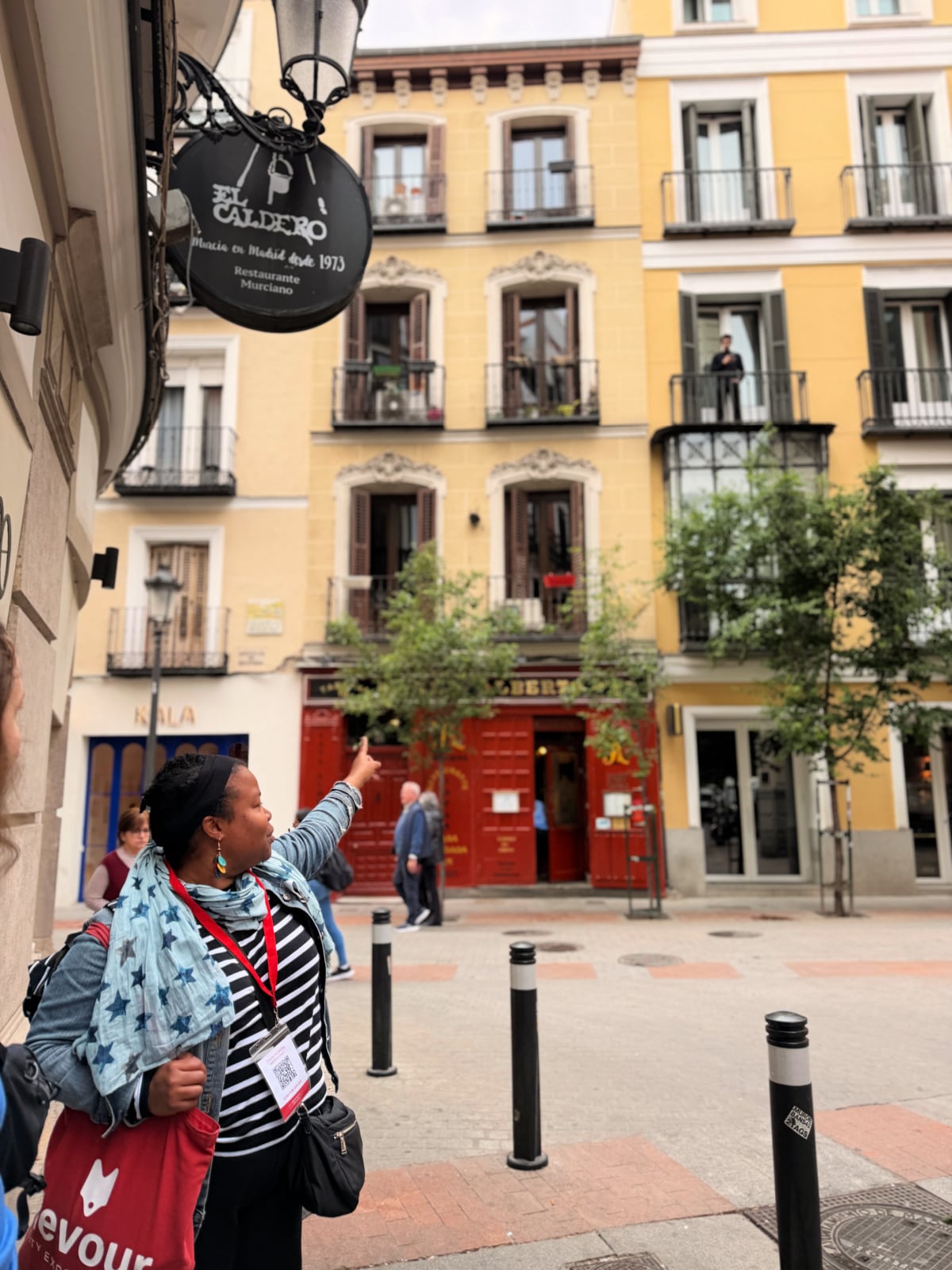
Our tour guide, Mitzi, explained that Spanish culture reflects influences from many groups over centuries, including the Moors, Jewish communities, and regions connected through trade and migration.
She also gave us a very practical modern Madrid travel tip: keep an eye out for pickpockets. Apparently, distracted tourists admiring architecture while balancing tapas and snapping photos make especially tempting targets. And the pros at it? Smooth as a glass of vermouth—so quick and practiced that most people don’t even realize anything’s gone until much later.
Chocolate and Churros: A Madrid Essential
Our first major stop focused on one of Madrid’s most beloved traditions: chocolate and churros.
And no — these are not the sugar-coated carnival churros many Americans are used to.
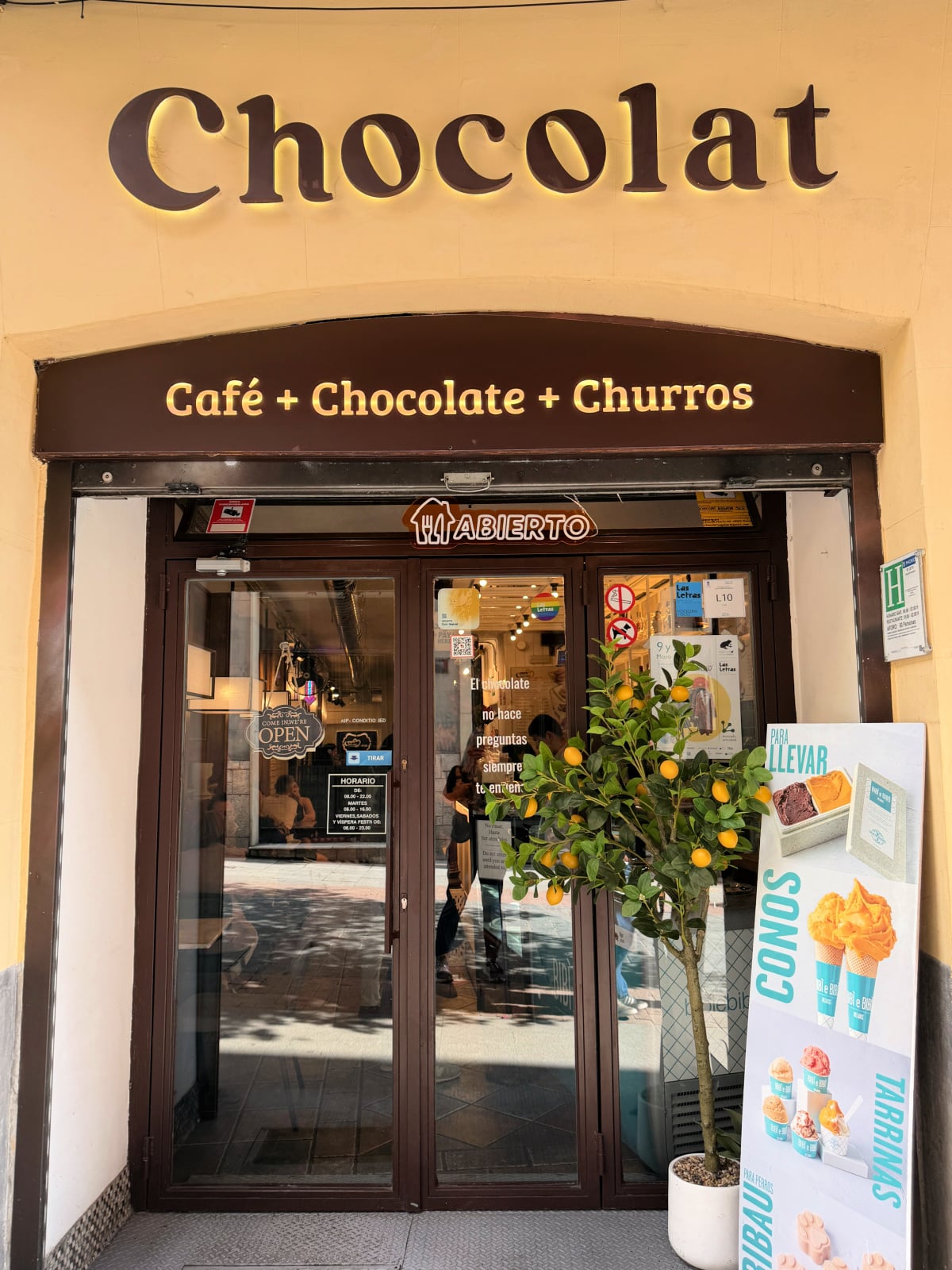
Unlike the sugar-coated versions many of us know, traditional Spanish churros start with a very basic dough of flour, water, and salt, then are piped and fried until perfectly crisp. They are designed for dipping into thick Spanish hot chocolate. The chocolate served for dipping is nothing like Swiss Miss—it’s thick, rich, and almost pudding-like, made for serious churro commitment.
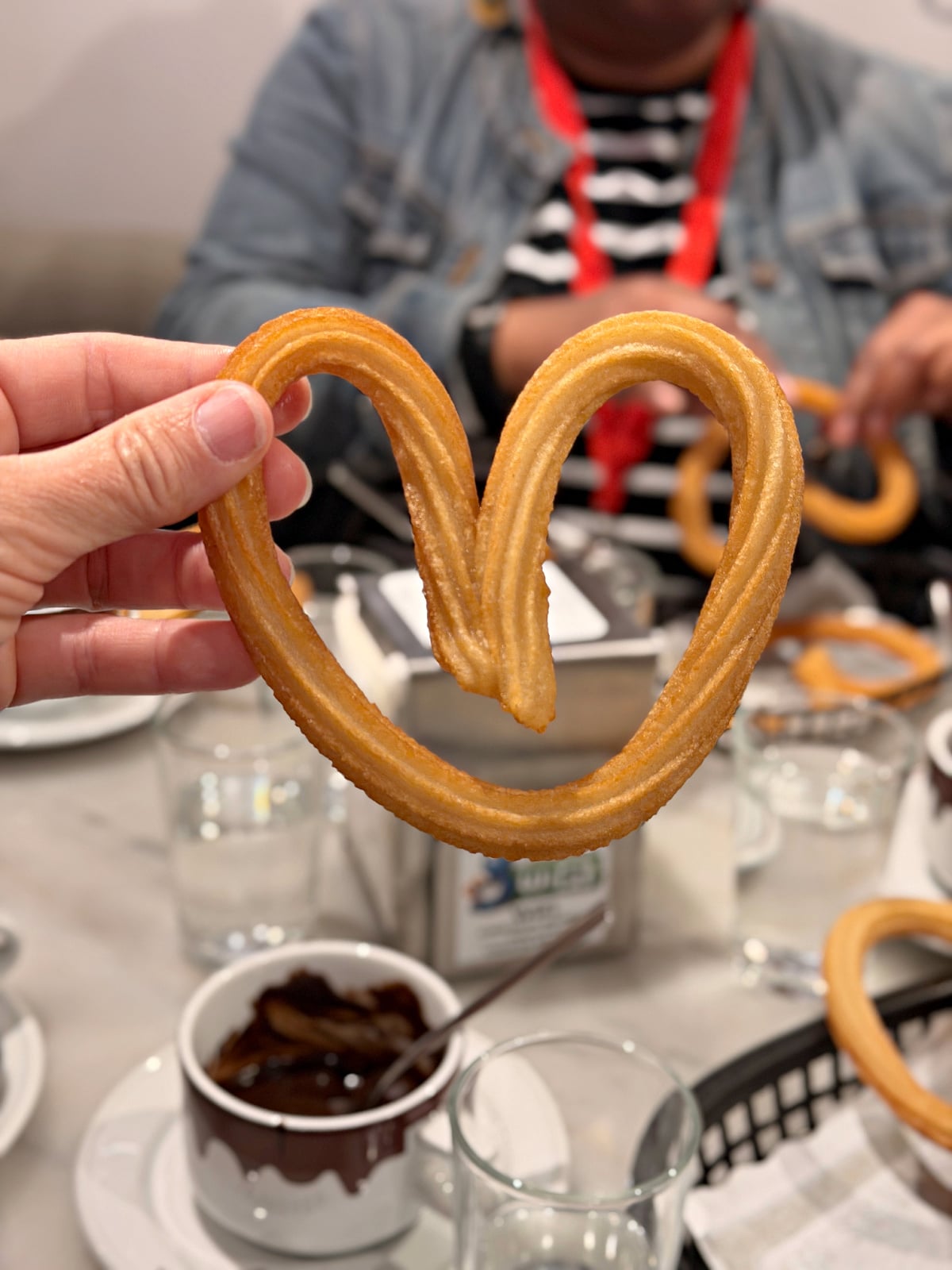
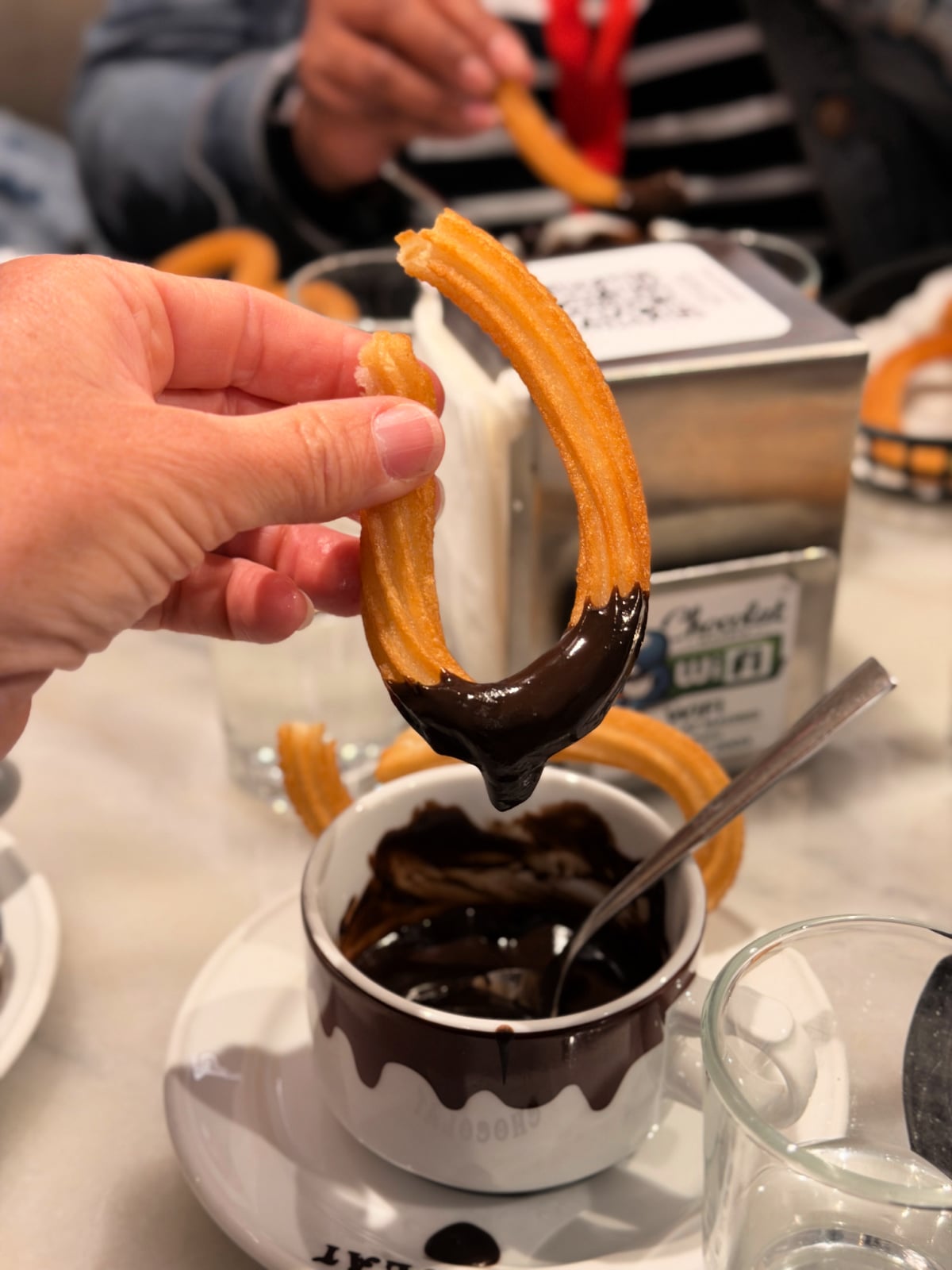
We also learned about churros’ chunky cousin called a porra, which is thicker and fluffier thanks to baking soda.
Spain’s relationship with chocolate goes back centuries. Cocoa arrived from the Americas during the Spanish colonial era, and Spaniards were among the first Europeans to popularize drinking chocolate. Later innovations transformed chocolate even further:
- The Swiss added milk chocolate.
- Joseph Fry helped pioneer solid chocolate bars in the 1800s.
- Chocolate was once considered medicinal.
Honestly, if someone handed me hot chocolate and churros as medicine, I would become dramatically more compliant as a patient.
Bread Is Basically a Utensil in Spain
At one stop, we visited a bakery known for traditional sourdough bread made with organic ingredients and a starter that was reportedly around 15 years old.
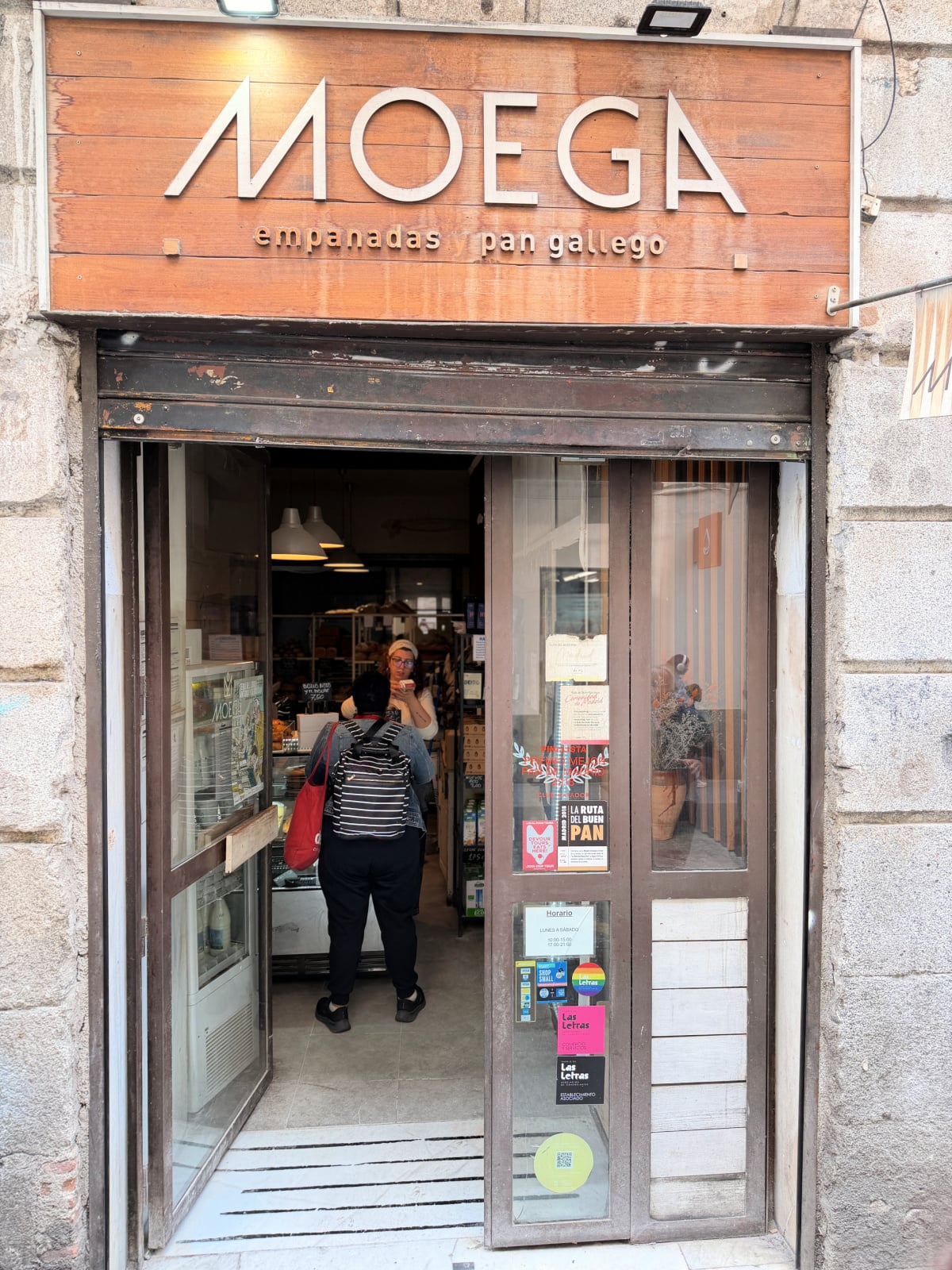
In Spain, bread isn’t just a side item.
It’s part of the meal itself.
Mitzi described bread as the “third utensil” at the table, used to help clean sauces and accompany nearly every course. Spaniards historically consumed enormous amounts of bread compared to modern diets.
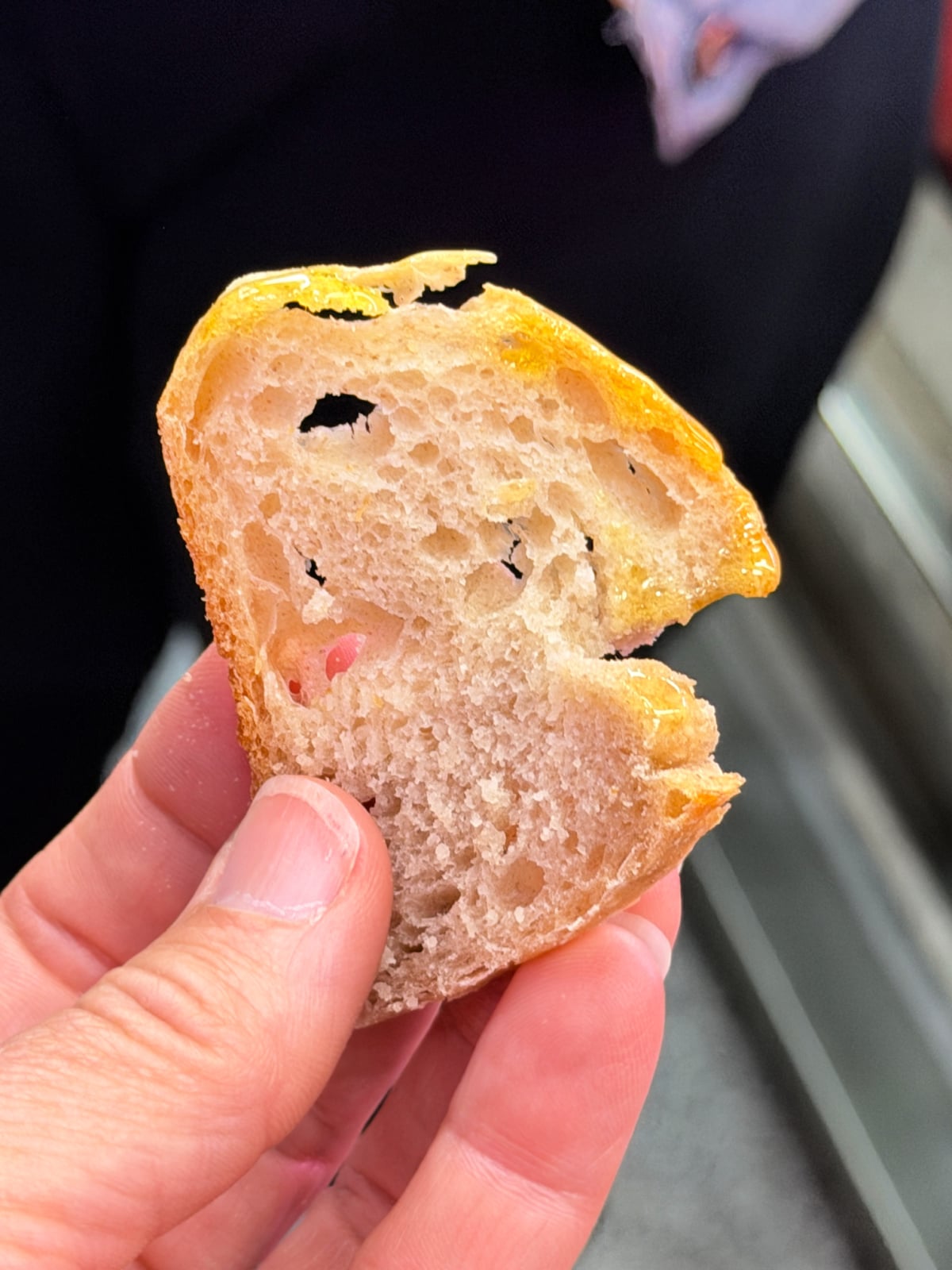
The bakery also highlighted the importance many Spaniards place on preserving traditional methods rather than rushing production.
Mercado Antón Martín: Old Meets New
One cool stop was Mercado Antón Martín.
Originally an outdoor market, it now blends old-school family-run stalls with modern eateries. Some vendors are fourth-generation business owners.
Inside the market, you’ll find:
- Traditional tapas counters
- Produce vendors
- Cheese shops
- International cuisine
- A flamenco school
That mix of old and new felt very Madrid.
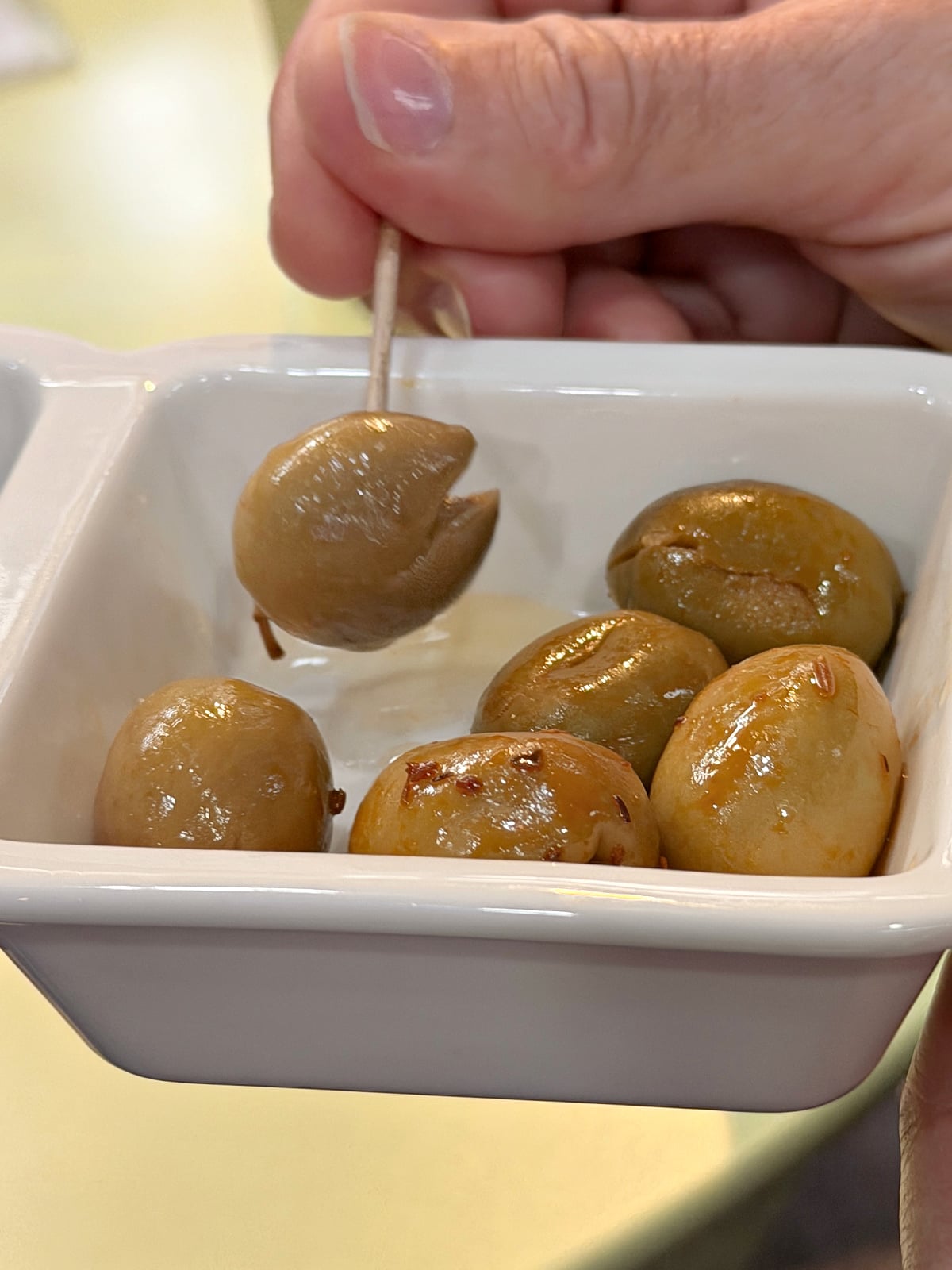
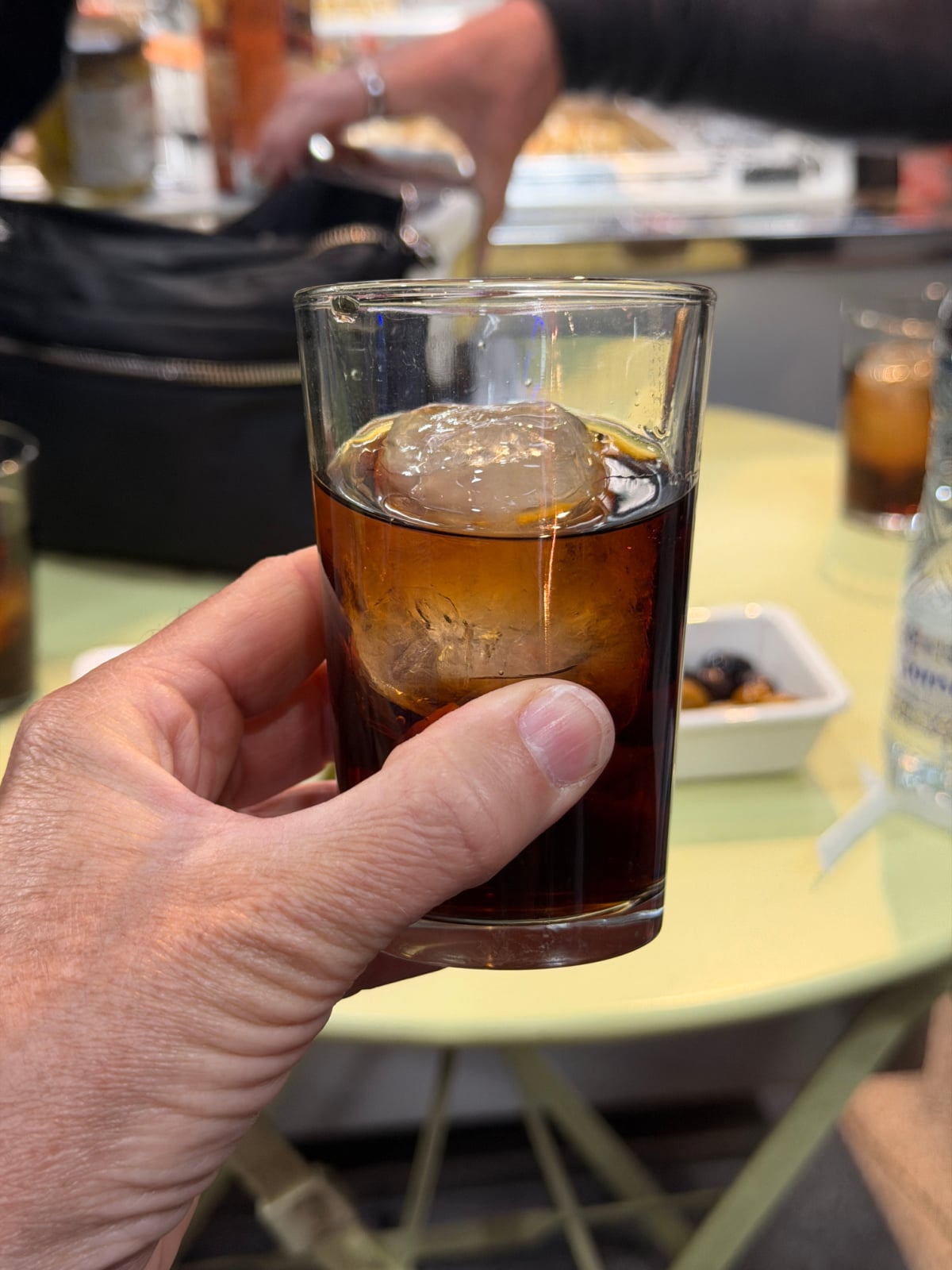
One stall specialized in olives and served vermouth, with a secret olive marinade recipe that has reportedly been around for decades. We sampled several varieties of olives while learning about vermouth, a fortified wine that has become deeply connected to Spanish aperitivo culture. The vermouth was unbelievably smooth.
Spain Loves Herbs More Than Spices
One fascinating point from the tour was the distinction between herbs and spices in Spanish cuisine.
According to Mitzi, Spanish cooking leans heavily on herbs rather than intensely spiced dishes. The classic flavor trio she mentioned was:
- Paprika
- Oregano
- Garlic
Paprika itself arrived in Spain from the Americas after Columbus’ voyages and eventually became one of the defining ingredients in Spanish cuisine.
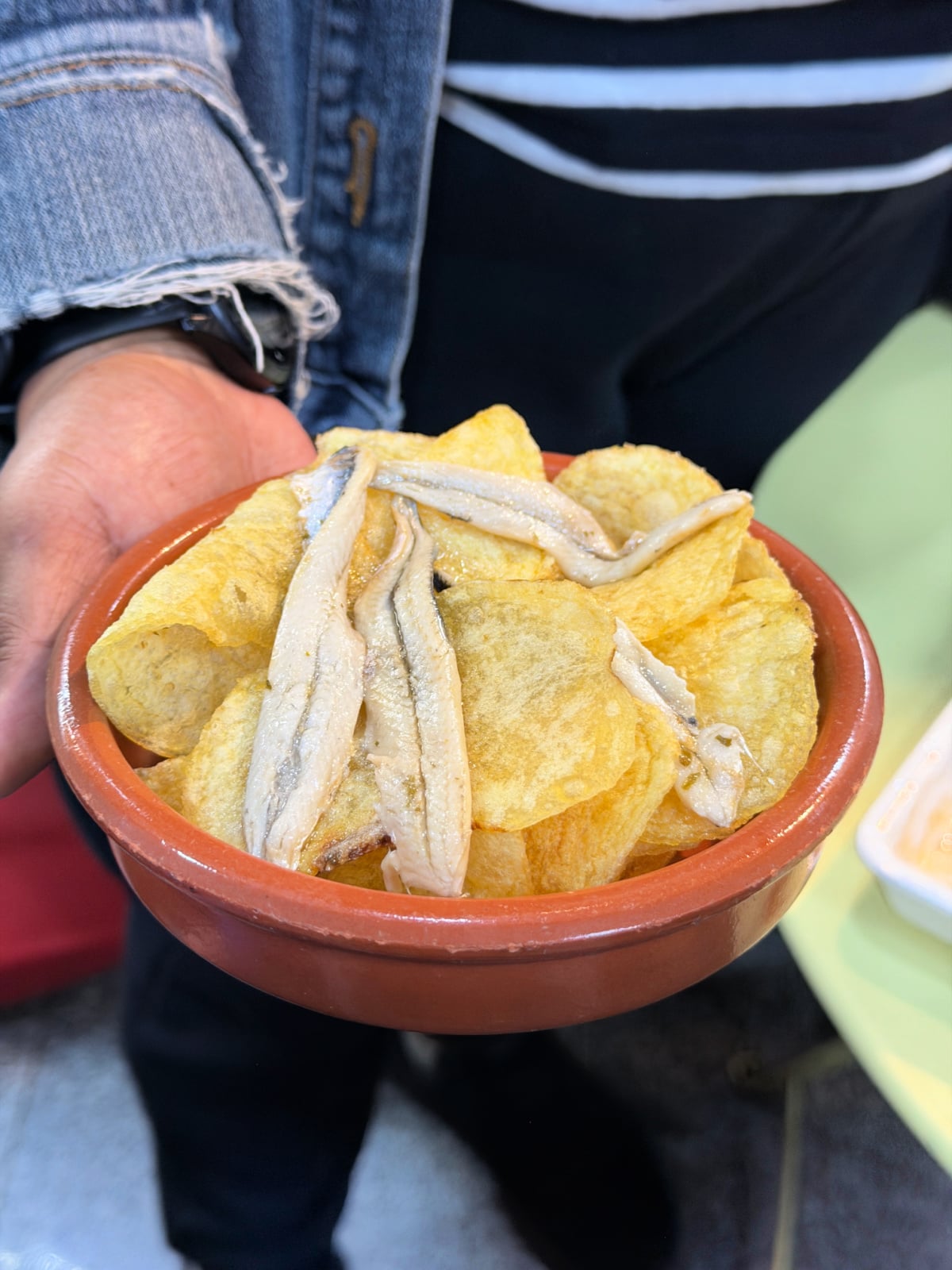
We also sampled anchovies paired with potato chips — a salty combination that somehow worked incredibly well.
The Jamón Experience
No Madrid food tour would be complete without jamón.
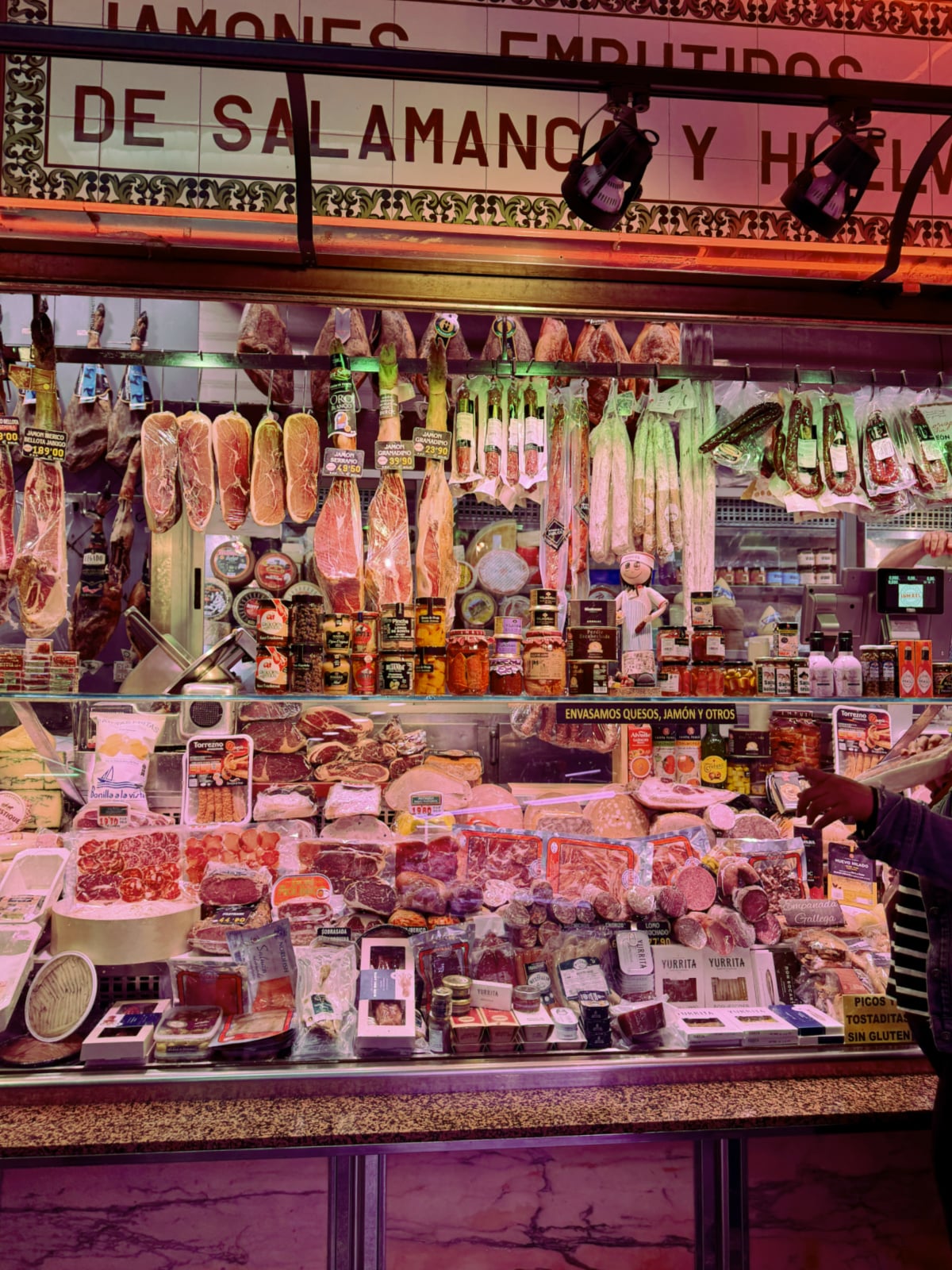
We visited a ham shop where we learned about Iberian pigs, which are often raised free-range under strict regulations. Some consume large quantities of acorns during the finishing period, contributing to the rich flavor of Iberian ham.
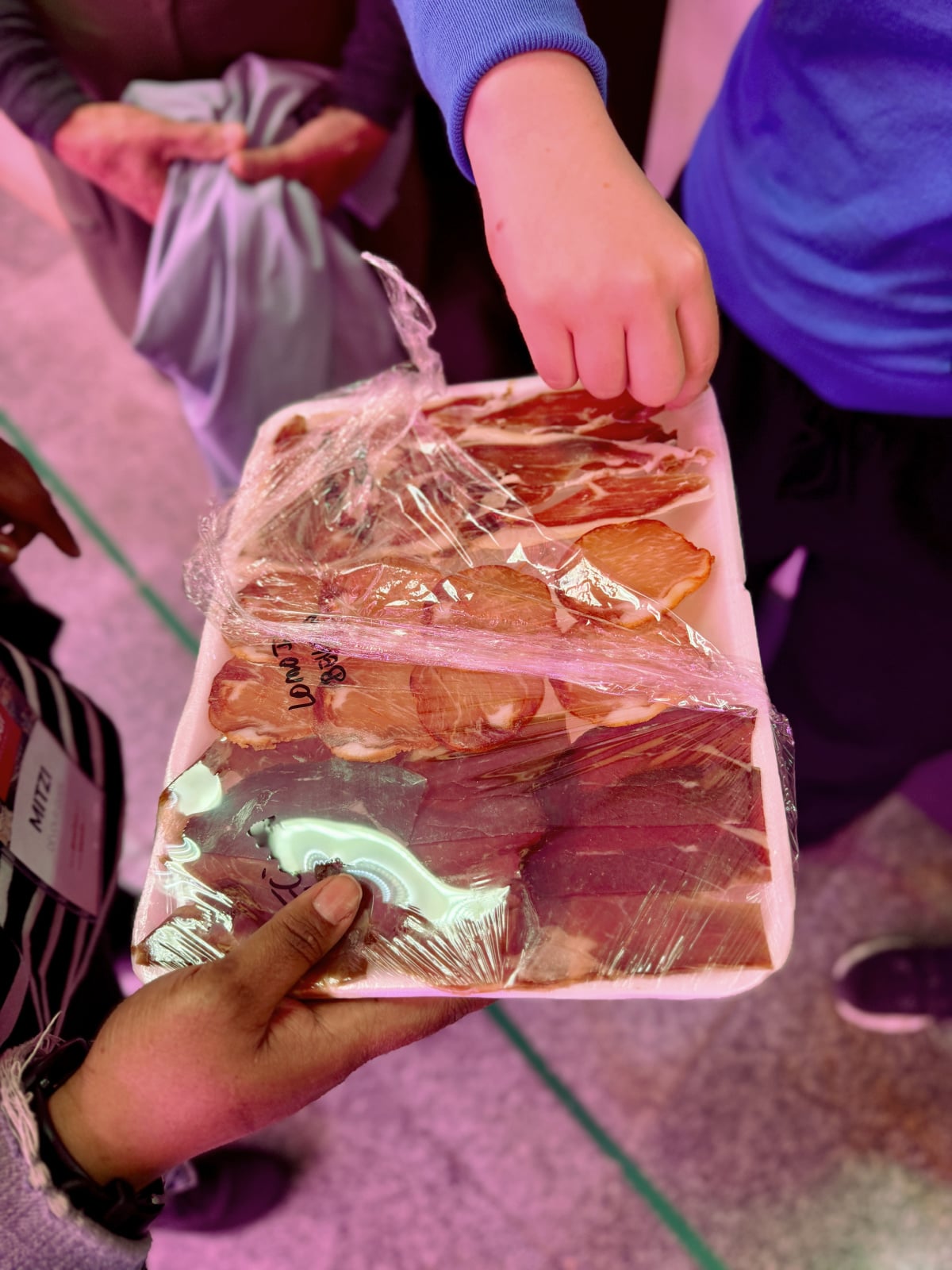
We sampled several cured meats while learning how seriously Spain takes its ham culture.
And yes, Spaniards absolutely deserve to be smug about this.
Empanadas, Cheese, and Wine
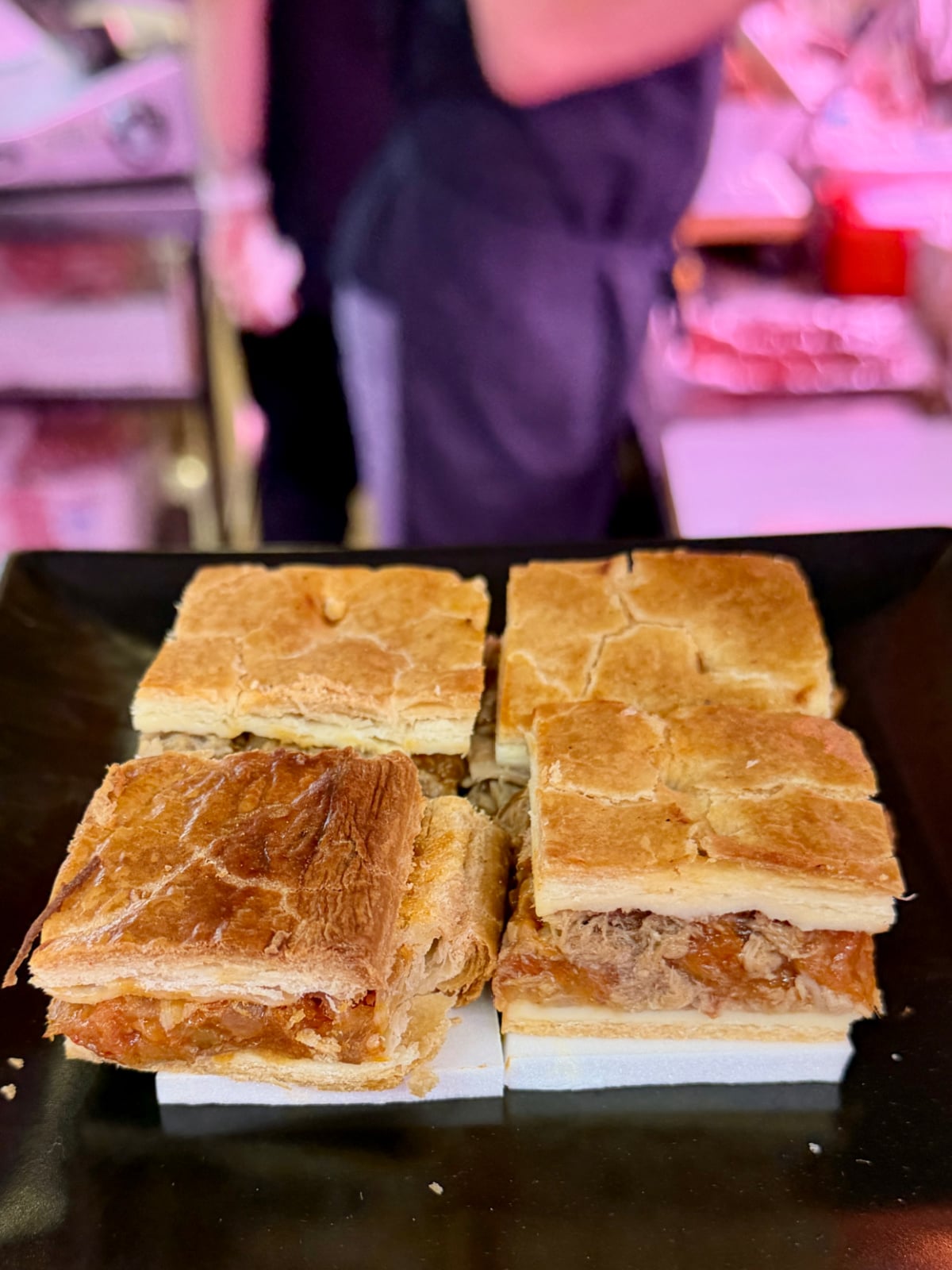
At another stop, we tried tuna empanada from Galicia.
Mitzi explained that flat empanadas are considered more traditionally Spanish, while crescent-shaped versions are more common in Latin America.
We also sampled sheep’s milk cheese from Zamora paired with quince paste — a sweet fruit preserve traditionally served with cheese in Spain.
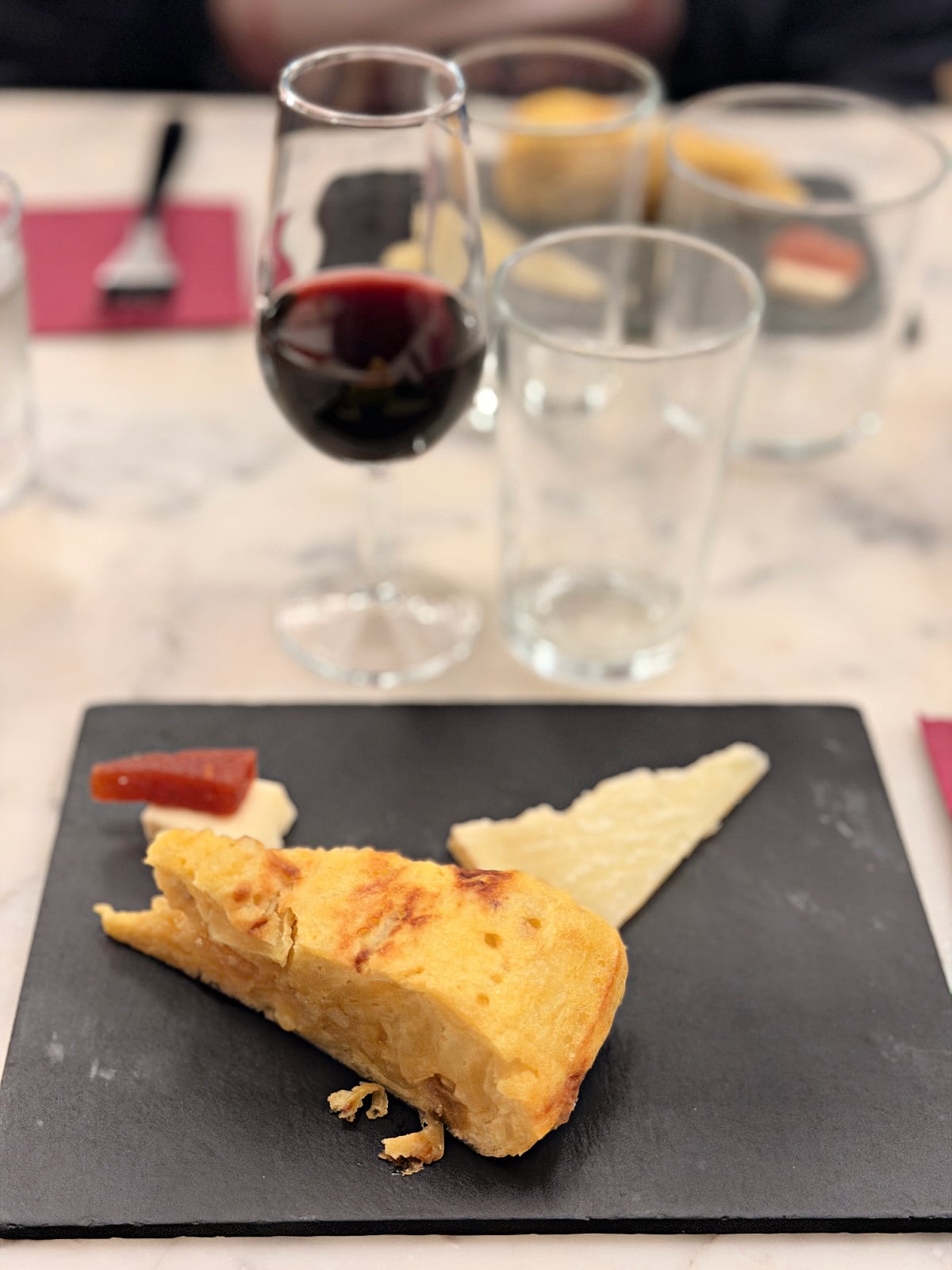
Pro tip: quince is traditionally eaten cooked, not raw. Raw quince is extremely hard, bitter, and unpleasant — somewhere between “apple impersonator” and “tree branch with attitude.” While it’s not truly poisonous, eating it raw in large amounts can cause digestive issues. In other words, unless you’re hoping to add “unexpected visit to a Madrid hospital” to your travel itinerary, stick with the cooked version served alongside cheese.
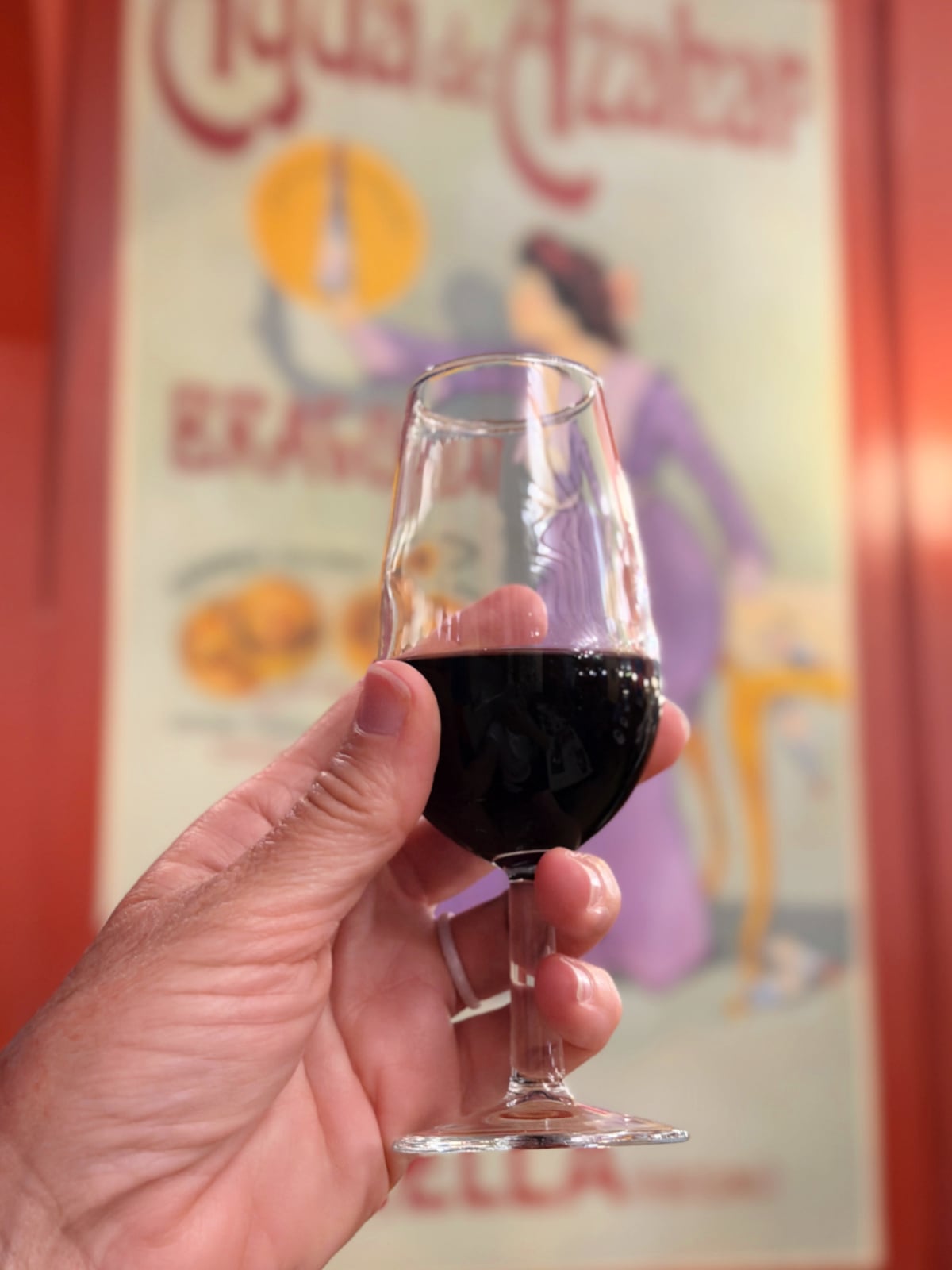
One thing that became very clear throughout the tour is that Spain takes regional food traditions seriously. From saffron grown on the Iberian Peninsula to wines from dozens of wine regions, food here is deeply tied to place and history.
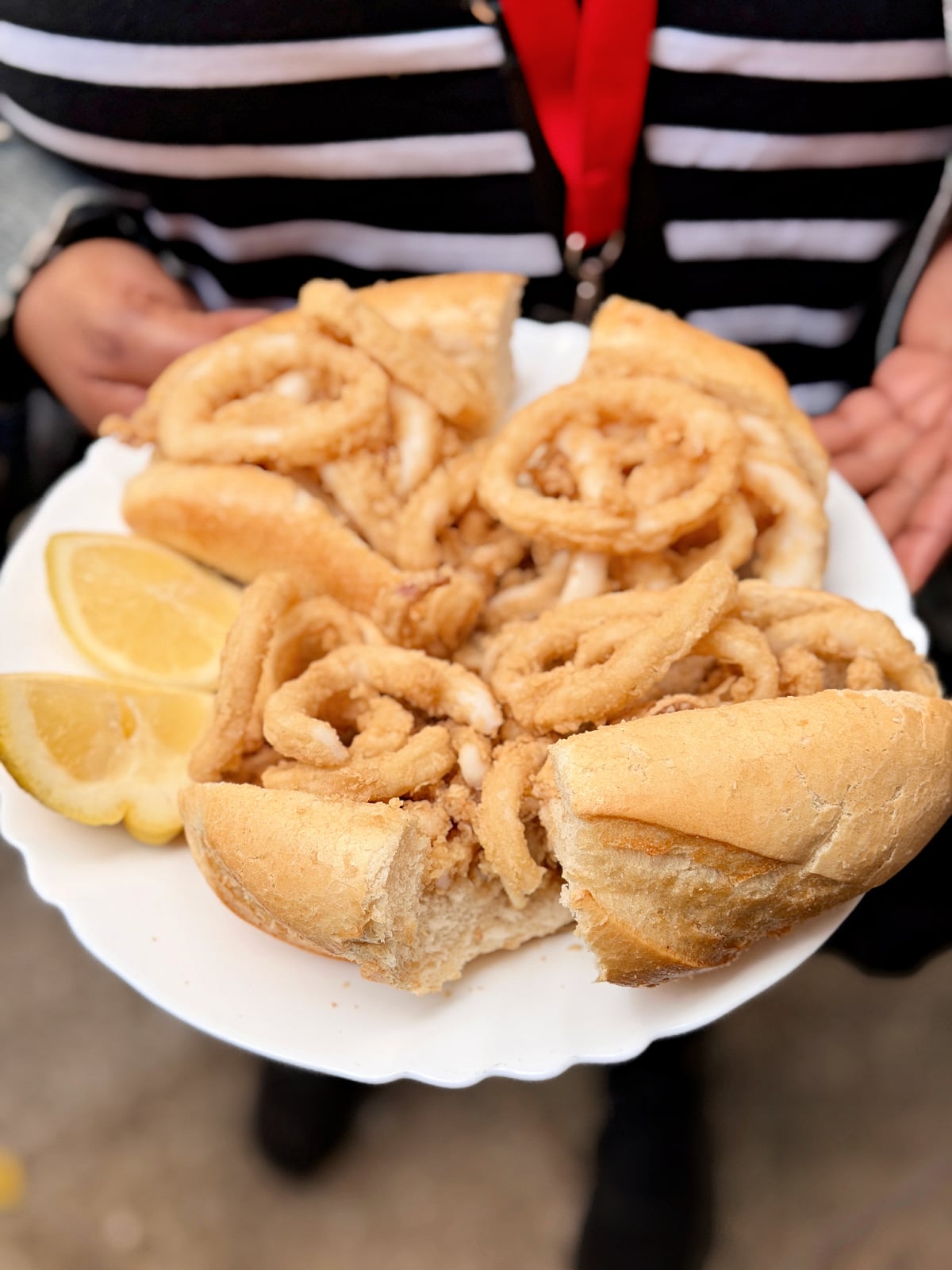
Ending on a Classic: Madrid’s Calamari Sandwich
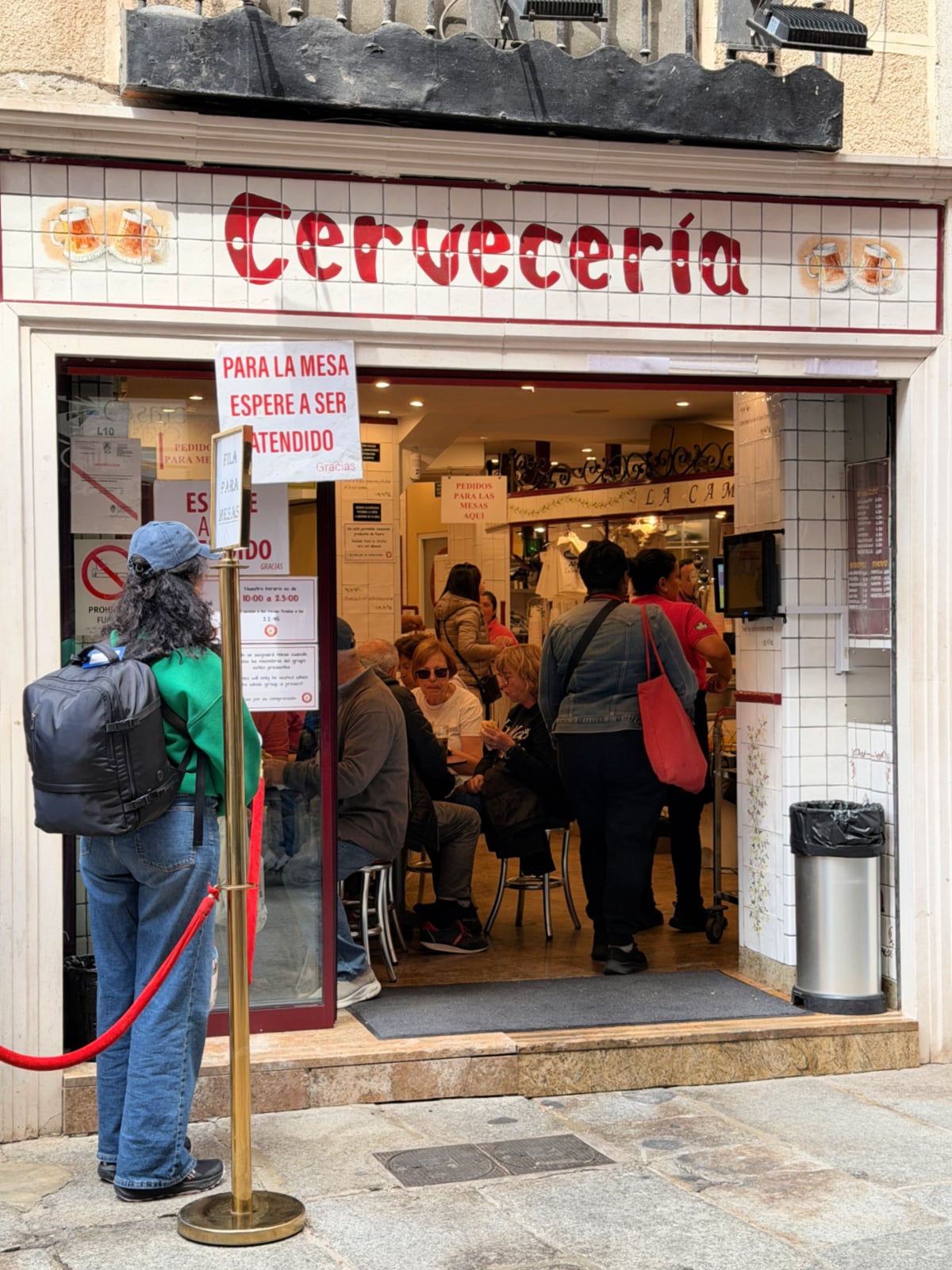
We wrapped up the tour the Madrid way—with a calamari sandwich. Crispy fried squid piled into a soft roll, finished with a squeeze of lemon that cuts through the richness and pulls it all together.
Madrid’s History Is Everywhere
This wasn’t just a food tour.
It was a history tour disguised as lunch.
As we walked, we passed:
- Historic buildings connected to Cervantes
- Plaza Mayor, once used for public events and Inquisition trials.
- Old taverns with political history hidden behind back rooms
We also discussed Spain under dictator Francisco Franco, who ruled until his death in 1975.
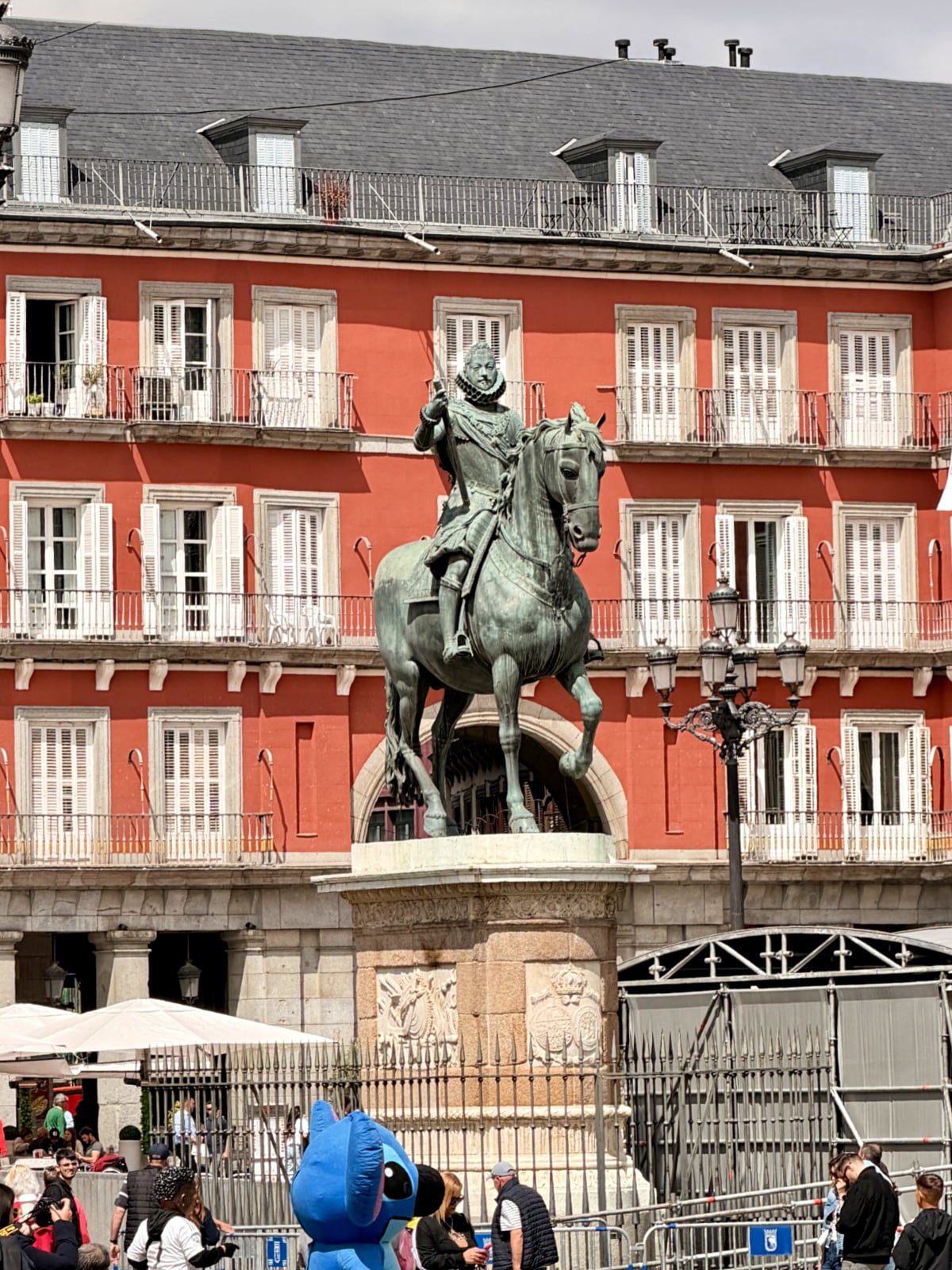
Madrid feels layered in a way that’s hard to explain until you walk through it.
Helpful Madrid Tips I Picked Up
Here are a few practical tips from the tour:
- Buy Olive Oil in a Tin – If you plan to bring Spanish olive oil home, buy extra virgin olive oil packaged in a metal tin rather than a glass bottle.
- Don’t Touch the Produce – At traditional produce stalls, shoppers generally allow merchants to select the produce.
- Watch Your Personal Space – Spanish conversational distance is often closer than what many Americans are used to.
- Best Time to Visit Madrid – When asked, our guide recommended September, especially after the peak summer heat begins easing.
If your travels through Spain extend beyond Madrid, a little Spanish can go a long way when ordering food. Before your trip, check out my guide on How to Order Tacos in Spanish for helpful phrases that can make dining a little less intimidating and a lot more fun. And if you’re planning to walk the Camino de Santiago, you’ll want to read about our stay at Hotel Airas Nunes, a charming hotel tucked into the heart of Santiago de Compostela, as well as the historic Parador de Santiago de Compostela, one of the most iconic and luxurious places to stay in Spain. Together, these experiences offer a wonderful glimpse into Spain’s food, culture, and hospitality from Madrid to Santiago.
Last Bite
I signed up for this tour expecting good food.
What I got was a crash course in Spanish culture, history, daily life, and traditions — all delivered one bite at a time.
Madrid already had my attention.
After this tour, my appetite too.
And honestly? Any city that builds an entire social structure around multiple daily snack opportunities is operating at a level the rest of us should probably study.
Madrid gave me beautiful architecture, fascinating history, and some of the best bites I’ve had in Spain — but this food tour helped me understand the city in a much deeper way. Between the churros, vermouth, jamón, and centuries-old traditions, every stop told a story.\n\nIf you’re planning a trip to Madrid, I highly recommend taking a food tour early in your visit. Not only will you eat well, but you’ll also leave with a much better understanding of Spanish culture and local customs.
Leave a comment below if you’ve ever taken a food tour or if Madrid is on your travel bucket list! And if you found this post helpful, please share it with a fellow foodie or traveler who dreams about wandering Spain one tapa at a time.
